
Ear Mites in Cats: Signs, Diagnosis and Treatment
Medically reviewed by Dr. Hasan AlDahhak, DVM ·
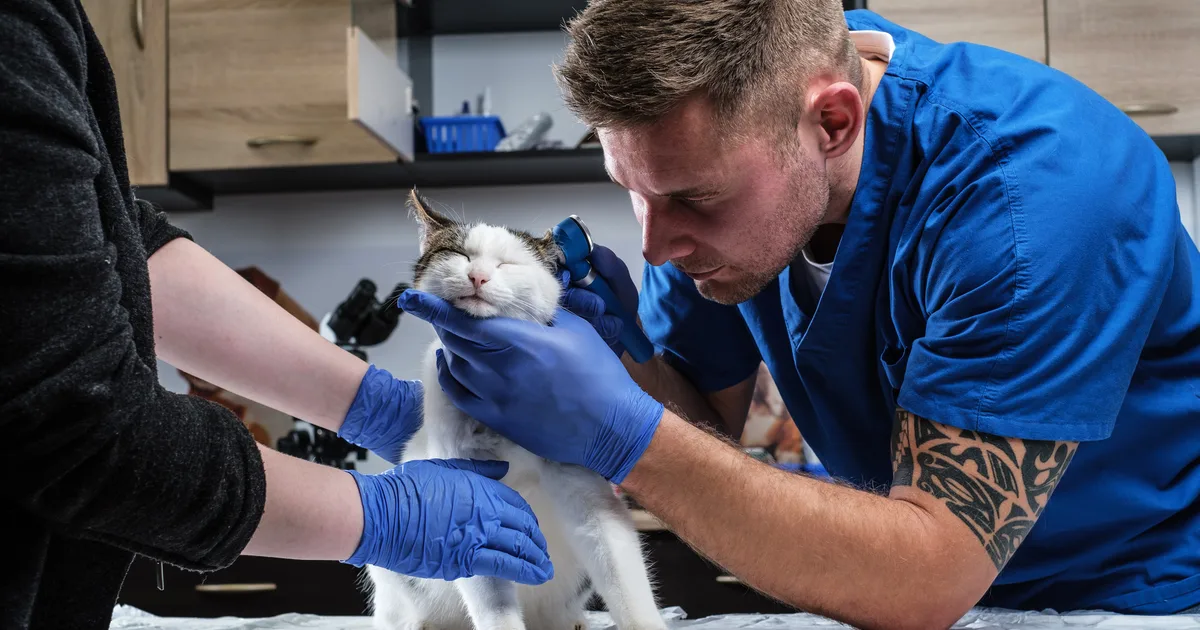
Ear mites in cats can cause intense itching, head shaking and dark ear debris, but those signs can also come from yeast, bacteria, allergies, polyps or a foreign body. A veterinary ear examination is the safest way to confirm the cause before treatment. If your cat has painful, recurrent or complicated ear disease, arrange a cat dermatology and ear assessment.
Key takeaways
- The usual feline ear mite is Otodectes cynotis, a contagious surface mite that often lives in the external ear canal.
- Coffee-ground-like debris raises suspicion but does not prove that mites are present.
- A vet may use an otoscope and microscopy to look for mites, eggs and secondary infection.
- Do not put peroxide, essential oils, human drops or unprescribed insecticides into a cat's ear.
- Other pets in close contact may need assessment or treatment to prevent reinfestation.
What do ear mites in cats look like?
You usually notice the cat's reaction rather than the mite itself. Common signs include frequent scratching, head shaking, red ear canals and dark waxy or crumbly debris. Some cats develop scratches or hair loss around the ears from self-trauma.
The MSD Veterinary Manual cat-owner guide explains that Otodectes cynotis often inhabits the external ear, can cause severe itching and may lead to inflammation or a damaged eardrum in severe cases.
| Sign | What it may mean | How quickly to act |
|---|---|---|
| Head shaking and scratching | Mites, infection, allergy or another irritant | Arrange a veterinary exam soon |
| Dark, coffee-ground-like debris | Ear mites are possible, but not confirmed | Avoid cleaning before the vet unless instructed |
| Bad smell, pus or marked redness | Secondary bacterial or yeast infection may be present | Prompt appointment |
| Swollen ear flap | Possible aural haematoma from forceful shaking or scratching | Same-day advice |
| Head tilt, loss of balance or abnormal eye movement | Middle or inner ear involvement is possible | Urgent veterinary care |
| Bleeding, severe pain or sudden collapse | Trauma or another emergency | Emergency care now |
Do not assume that a clean-looking ear excludes mites. Cats can have different levels of debris and inflammation, so diagnosis depends on the examination and samples.
How do cats catch ear mites?
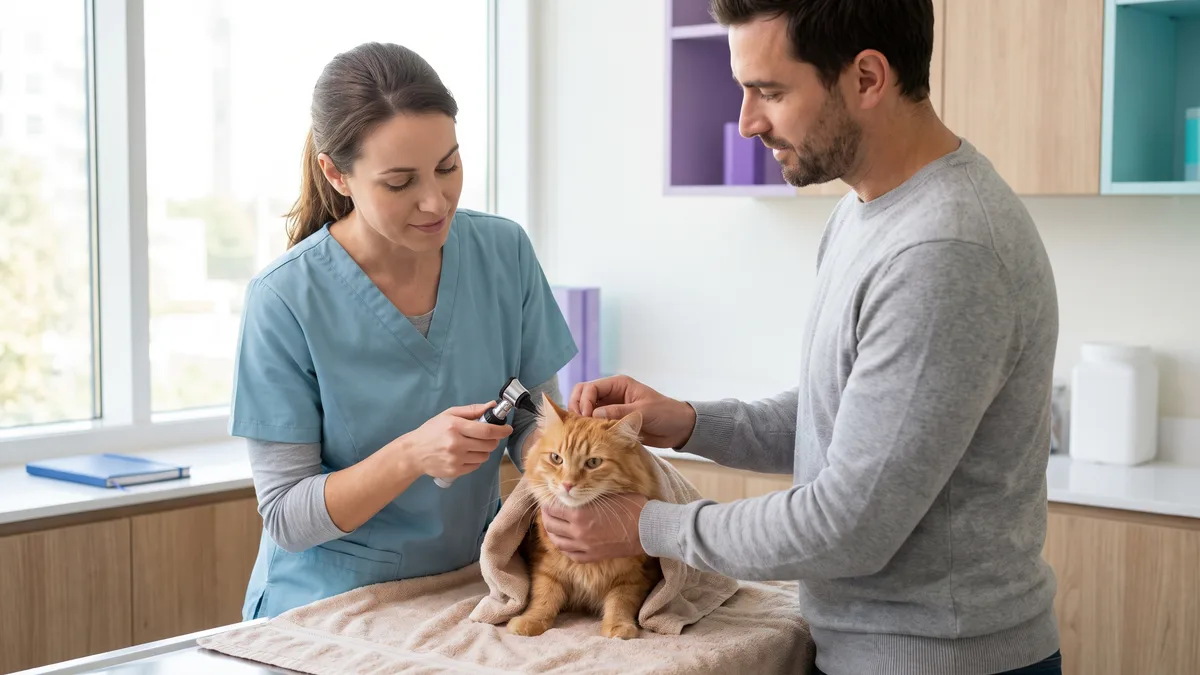
Ear mites spread mainly through close contact with an infested animal. Cats, dogs and ferrets can carry Otodectes, which makes kittens, recently adopted cats, outdoor cats and animals in multi-pet homes more likely to be exposed.
The Companion Animal Parasite Council guideline notes that the mite occurs worldwide, is more common in cats than dogs and can sometimes be found on skin away from the ear. This is one reason a complete skin and ear history helps.
Ear mites are contagious between susceptible pets, but they are not a sign that a home is dirty. Ask the veterinarian which in-contact animals need examination or treatment. Treating only the visibly itchy cat can leave another carrier in the household.
Why symptoms alone cannot confirm ear mites
Dark debris is a clue, not a diagnosis. Bacterial or yeast otitis, allergies, polyps, foreign material and other mites can cause overlapping signs. Putting an inappropriate product into an inflamed ear may worsen pain, obscure diagnostic samples or cause harm if the eardrum is damaged.
The MSD professional guide to otitis externa recommends microscopic examination of ear debris for mite eggs, larvae and adults alongside tests that look for yeast, bacteria and inflammatory cells.
A veterinary work-up may include:
- History of itching, preventives, outdoor access and contact animals
- Examination of both ear flaps and surrounding skin
- Otoscopic inspection of the ear canal and eardrum when pain and debris allow
- Microscopy of a small debris sample
- Cytology to check for secondary yeast or bacterial infection
- Further tests if disease is severe, recurrent or does not respond as expected
Very painful cats may need sedation for a safe, useful examination. That decision protects the cat and allows the vet to assess the deeper canal without force.
How are cat ear mites treated?
Treatment should kill the mites, address secondary infection and break transmission between contact animals. The exact medicine depends on age, weight, health, eardrum status, other pets and products already used.
| Part of the plan | Why it matters |
|---|---|
| Vet-selected antiparasitic | Uses a cat-appropriate product and schedule |
| Ear cleaning when safe | Removes debris that can block examination or topical treatment |
| Treatment of secondary infection | Addresses yeast or bacteria shown on examination or cytology |
| Contact-pet plan | Reduces the chance that an untreated carrier reinfests the cat |
| Recheck when advised | Confirms that mites and inflammation have resolved |
The Cornell Feline Health Center describes otoscopy or microscopic examination as the route to diagnosis and notes that cleaning is often part of veterinary treatment. Cleaning is not always the first home step, however. A painful, obstructed or damaged ear needs veterinary assessment before fluid is introduced.
Finish the prescribed course even if scratching improves quickly. Do not use leftover medicine from another pet. Dog products and some household insecticides can be toxic to cats, and an expired bottle may no longer be safe or effective.
What should you avoid putting in a cat's ear?
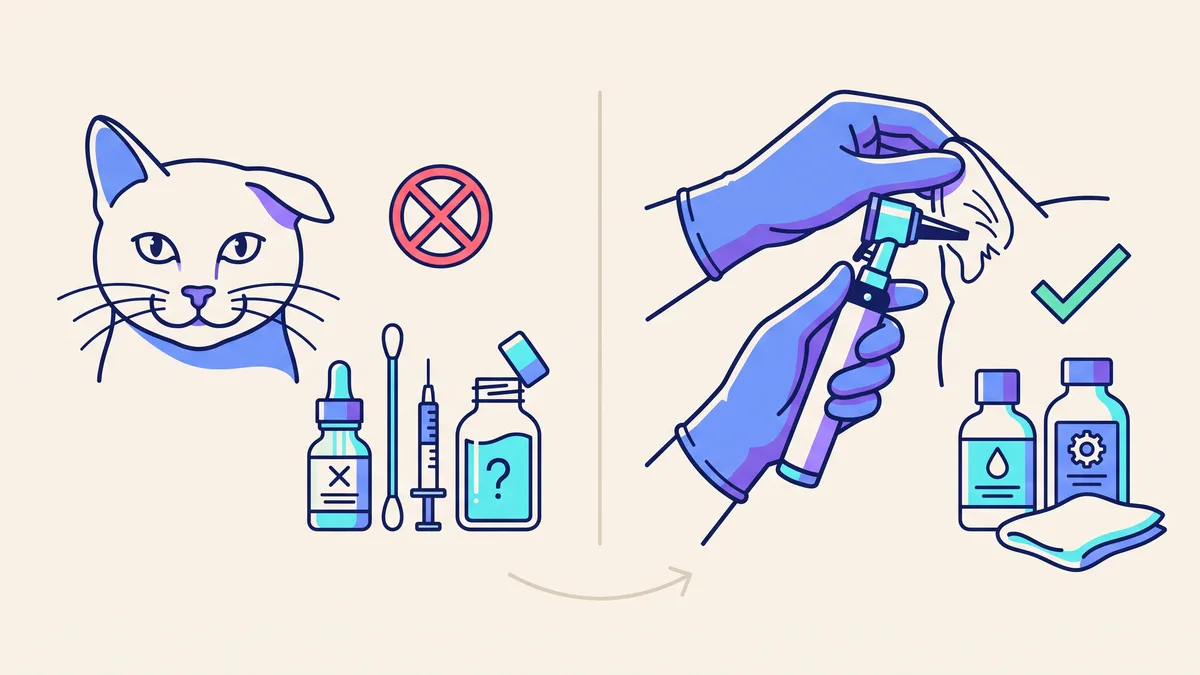
Avoid home mixtures and any product not approved by the attending veterinarian. This includes hydrogen peroxide, vinegar, alcohol, essential oils, cooking oils, human ear drops and unprescribed insecticides.
Do not push cotton swabs into the canal. They can pack debris deeper, injure inflamed tissue or damage the eardrum. If the vet recommends cleaning at home, ask for a demonstration and use only the named solution, amount and schedule.
Also avoid cleaning the ears immediately before the appointment unless the clinic asks you to. The debris may contain the evidence needed for microscopy and cytology.
How can you prevent reinfestation?
Prevention focuses on exposure and consistent parasite control rather than frequent ear cleaning.
- Use a veterinarian-recommended parasite preventive that covers the risks relevant to your cat.
- Keep every household pet's prevention plan current.
- Have newly adopted cats examined before close contact with resident pets.
- Wash shared bedding and clean carriers and grooming tools after an infestation.
- Avoid sharing uncleaned grooming equipment between households.
- Check ears regularly, but do not clean normal ears on an automatic schedule.
If your cat also needs flea or tick control, ask for one coordinated parasite prevention plan to avoid duplicated active ingredients or unsafe combinations.
When is an ear problem urgent?
Seek urgent care if your cat develops a head tilt, stumbling, circling, rapid side-to-side eye movement, facial weakness or repeated vomiting. MSD Veterinary Manual guidance on middle and inner ear infections explains that head tilt, poor coordination and abnormal eye movement can accompany deeper ear disease.
Same-day advice is also sensible for severe pain, a suddenly swollen ear flap, significant bleeding, pus, loss of appetite or marked lethargy. Use emergency veterinary care if the cat is collapsing, struggling to breathe, seizing or unable to stand.
Frequently asked questions
Can I see ear mites with the naked eye?
Sometimes a moving white speck may be visible against dark debris, but most owners cannot identify the cause reliably. A vet confirms mites with otoscopy or microscopy.
Are ear mites contagious to other cats?
Yes. They spread readily through close contact, and dogs or ferrets may also carry them. Ask the vet which contact pets need treatment even if they are not scratching.
Can indoor cats get ear mites?
Yes. A newly adopted animal, visiting pet or previously unnoticed carrier can introduce mites. Indoor living reduces some exposure but does not make infestation impossible.
How long does treatment take?
It depends on the product, severity, secondary infection and whether all contact animals are managed. Follow the prescribed schedule and attend a recheck if advised rather than stopping when the ears look cleaner.
Should I clean dark debris before the appointment?
Usually it is better to ask the clinic first. Leaving some debris can help the veterinarian identify mites, yeast, bacteria or inflammatory cells.
About this guidance
This article summarizes current veterinary guidance for owners and cannot diagnose the cause of an itchy ear. Ear medication should be selected after the canal and, where possible, the eardrum are assessed. For diagnosis and treatment, book with Paw Sisters.