
Surgery
Safe, Monitored Pet Surgery in Dubai.
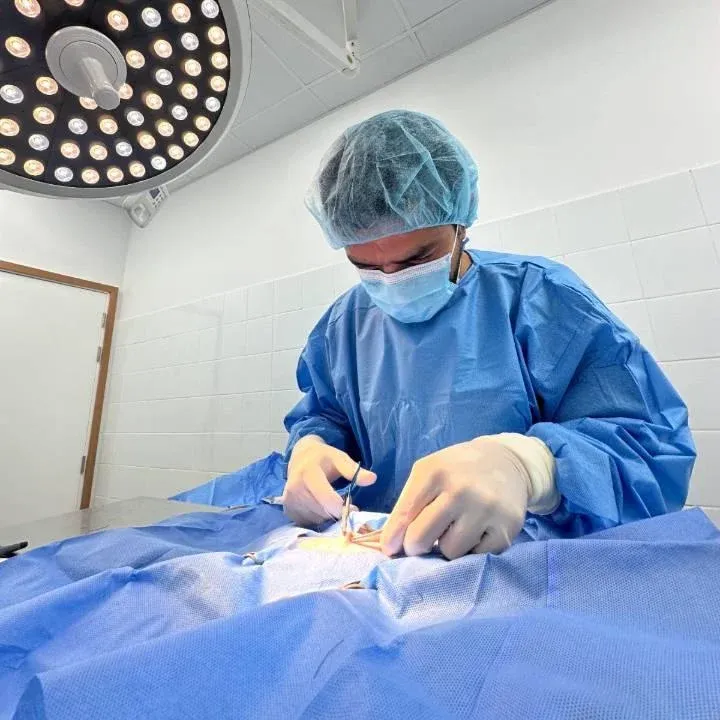
Deciding on surgery for your pet is one of the most stressful moments of pet ownership. At Paw Sisters, we make that decision as clear and informed as possible. Our surgical team combines careful pre-operative assessment, precise technique, and thorough post-operative monitoring to give your pet the best possible outcome and a smooth recovery.
Medically reviewed by Dr. Hasan AlDahhak, DVM , Paw Sisters Veterinary Clinic · Reviewed 24 July 2026
Safe pet surgery in four managed steps
Every surgical case at Paw Sisters follows four carefully managed stages, from pre-operative assessment through to post-operative recovery support:
- Pre-surgical assessment: physical examination, blood pressure measurement, cardiac auscultation, and a review of relevant history, with pre-anaesthetic bloodwork standard for elective surgery to catch hidden conditions
- Meticulous preparation: the surgical site is clipped, cleaned, and sterilised using a veterinary-grade aseptic protocol, with all instruments autoclaved and laid up fresh for each procedure
- Performing the procedure: from routine spays, neuters, and wound repair to tumour removal, fracture repair, and emergency interventions, each procedure is planned individually and explained to you first
- Post-surgery care: continuous vital-sign monitoring until your pet is fully conscious, followed by clear, procedure-specific recovery guidance at discharge
Surgical procedures we perform
Our surgical team manages a wide range of procedures in cats and dogs:
- Spay (ovariohysterectomy) and neuter (castration)
- Soft tissue surgery: tumour and mass removal, wound repair, abscess drainage
- Orthopaedic procedures: fracture repair, joint surgery
- Emergency surgery: bowel obstruction, internal bleeding, urinary blockage
- Caesarean section
- Dental extractions performed under anaesthesia
- Exploratory laparotomy
- Eyelid and entropion corrections
If you are unsure whether your pet’s condition requires surgery, book a consultation and our vet will advise you clearly on all available options.
Typical recovery timelines
Recovery varies by procedure and individual patient. General guidance is:
- Spay or neuter: 10 to 14 days to full healing, restricted exercise for the first week
- Minor soft tissue surgery: 10 to 14 days
- Dental extractions: 3 to 7 days, soft food recommended
- Orthopaedic surgery: 4 to 12 weeks depending on procedure
- Abdominal surgery: 2 to 4 weeks, strict rest required
- Caesarean section: 2 to 3 weeks for the mother, with immediate neonatal monitoring
Safe anaesthesia and continuous monitoring
Anaesthesia is often the part of surgery that worries pet owners most, and we take it seriously. Every patient receives a personalised anaesthetic protocol based on species, weight, age, breed, and health status. Pre-anaesthetic bloodwork is recommended before elective procedures to assess organ function and identify risk factors. During surgery, a dedicated team member continuously monitors heart rate, respiratory rate, blood pressure, and oxygen saturation, from induction to full recovery.
Before and after your pet’s surgery
Your pet does not go into surgery without a full pre-operative evaluation, and does not go home without a clear post-operative care plan:
- Before surgery: pre-operative examination, bloodwork, fasting instructions, and a pre-anaesthetic health assessment, with the procedure and what to expect explained in full
- After surgery: recovery in a supervised, warm area until fully conscious. Most routine procedures are same-day discharge; more complex cases may need an overnight stay, and we tell you which applies beforehand
- Pain management and follow-up: written home-care instructions, medication and wound-care guidance, and a scheduled follow-up to confirm your pet is healing as expected
Caring for your pet at home after surgery
The first days at home matter as much as the procedure itself, and clear guidance makes them far less stressful. We take the time to explain exactly what to watch for and how to help your pet settle:
- Rest and confinement: a quiet, warm space away from stairs, other pets, and rough play, so the surgical site is not disturbed while it heals
- The wound and the cone: keep the incision clean and dry, use the recovery collar as advised, and check daily for swelling, redness, or discharge
- Medication and appetite: give pain relief and any other medication exactly as prescribed, and reintroduce food gently, as some pets are a little subdued for a day after anaesthesia
- When to call us: contact the clinic if you notice bleeding, a reopened wound, repeated vomiting, refusal to eat, or if your pet seems unusually painful or lethargic
Why choose Paw Sisters for your pet’s surgery
Having surgery, monitoring, diagnostics, and recovery care together under one roof in Al Garhoud means your pet is never passed between facilities at a vulnerable time, and your vet has the full picture from assessment to discharge.
- Everything under one roof: in-house laboratory, digital X-ray, and ultrasound let us assess and plan quickly, without referring you elsewhere for tests
- Full anaesthetic monitoring: a dedicated team member tracks your pet’s vital signs continuously, from induction through to full recovery
- A calmer, fear-free approach: gentle, unhurried handling to reduce stress for anxious patients before and after their procedure
- Costs explained upfront: we talk you through the recommended procedure and the costs involved before we begin, so there are no surprises
- Open 7 days and on call 24/7: should a concern arise during recovery, our team is reachable when you need reassurance
References
Clinical and official references
These sources support the general guidance above. Your veterinarian’s individual recommendation and the current authority or destination rules remain controlling for your pet.
- AAHA: Anesthesia and monitoring guidelines Individual pre-anesthetic assessment, monitoring, recovery and client communication.
- AAHA: Pain-management guidelines Recognizing, assessing and managing pain as part of perioperative and recovery care.
Links verified on .
Helpful pet-owner guides
Prepare for the next step.
Use these focused guides to understand warning signs, decisions and what to discuss with your veterinary team.
Good to know
Questions, answered .
How safe is anaesthesia for my pet during surgery?
Every patient receives a personalised anaesthetic protocol based on species, weight, age, breed, and health status. Pre-anaesthetic bloodwork is recommended before elective procedures to check organ function and identify risk factors. During surgery, a dedicated team member continuously monitors heart rate, respiratory rate, blood pressure, and oxygen saturation from induction through to full recovery.
What types of surgery does Paw Sisters perform?
The surgical team in Al Garhoud manages spay and neuter, soft tissue surgery such as tumour and mass removal, wound repair, and abscess drainage. It also covers orthopaedic procedures like fracture repair, emergency surgery for conditions such as urinary blockage and internal bleeding, caesarean sections, dental extractions, and eyelid corrections. If you are unsure whether surgery is needed, a consultation will explain the options clearly.
How long does recovery take after pet surgery?
Recovery depends on the procedure and the individual patient. A routine spay or neuter usually heals in ten to fourteen days with restricted exercise in the first week, and dental extractions take about three to seven days with soft food. Orthopaedic surgery can need four to twelve weeks, and abdominal surgery two to four weeks of strict rest. Every pet goes home with a written recovery plan and a scheduled follow-up.
Does my pet need to fast before surgery?
Yes, most surgical patients need to fast before a general anaesthetic to reduce the risk of vomiting and aspiration. We give you specific fasting instructions when you book, which usually means withholding food overnight before the procedure while allowing access to water. Always follow the exact guidance for your individual pet, as fasting advice differs for very young animals, diabetics, and some other cases.
Will I know the cost of surgery before it goes ahead?
Yes. We explain the recommended procedure and the costs involved before any treatment begins, so you can make an informed decision without surprises. As a guide, our current cat spay package is AED 799 and cat neuter is AED 660, both VAT included. See current offers for full details. Because surgery, in-house diagnostics, anaesthetic monitoring, and recovery care are all provided under one roof in Al Garhoud, we can give you a clear picture of what your pet needs from the outset. If circumstances change during a complex case, we keep you informed.
How do I care for my pet at home after surgery?
Give your pet a quiet, warm space to rest, restrict activity as advised, and keep the incision clean and dry using the recovery collar to stop licking. Give any pain relief and medication exactly as prescribed, and reintroduce food gently. Contact the clinic if you notice bleeding, a reopened wound, repeated vomiting, refusal to eat, or if your pet seems unusually painful or lethargic.
Have another question? Browse our full FAQ or contact us.
More at Paw Sisters
Complete care, under one roof.
Areas we serve: Vet near Deira Vet near Festival City Vet near Mirdif