Heatstroke in Dogs: Dubai Signs, First Aid and Risks
Sources and guidance checked
Medically reviewed by Dr. Hasan AlDahhak, DVM ·
Heatstroke in dogs is an emergency. Move the dog out of the heat, start active cooling immediately, call emergency veterinary services while cooling and transport the dog without waiting to see whether it recovers. Do not delay cooling to find lukewarm water, and do not wrap the dog in wet towels.
Emergency Steps 1. Stop exercise and move the dog to shade or air conditioning. 2. Apply cold tap water to the body and add airflow, or use cold-water immersion for an otherwise healthy young dog when safe and practical. 3. Call the emergency clinic for patient-specific instructions while cooling. 4. Transport promptly and continue safe cooling if possible. 5. Do not force water into a weak, vomiting, confused or unconscious dog.
The Royal Veterinary College's Cool First, Transport Second guidance supports starting rapid cooling before transport. The phrase does not mean delaying veterinary care. Call while you cool, then leave for the clinic.
What are the early signs of heatstroke in dogs?
Suspect heat-related illness when panting becomes excessive for the conditions or the dog is distressed, reluctant to move, weak or poorly coordinated. A measured temperature is not required before starting first aid. Waiting for collapse or vomiting allows injury to progress.
| Stage | Possible signs | Action |
|---|---|---|
| Early concern | Excessive panting, seeking shade, reluctance to continue, drooling, distress | Stop activity, move to a cool place, begin cooling and call a vet |
| Worsening | Weakness, vomiting, diarrhoea, confusion, poor coordination, very red or pale gums | Continue cooling and arrange immediate emergency transport |
| Critical | Collapse, seizure, reduced responsiveness, severe breathing difficulty | Emergency transport now while following clinic cooling instructions |
The RVC hot-dog cooling guide lists excessive panting, reluctance to move and collapse among signs that require immediate veterinary advice. The Merck Veterinary Manual summer guidance also identifies rapid panting, drooling, vomiting, loss of coordination and collapse as danger signs.
How should you cool a dog with suspected heatstroke?
Use water that is colder than the dog, including cold tap water, and combine water application with airflow where possible. For a young, otherwise healthy dog, cold-water immersion may cool rapidly when it can be done without delaying transport or creating a handling risk. For older, very large, distressed or medically fragile dogs, continuous water application plus fan or air conditioning may be more practical. The emergency clinic can guide the method by phone.
Water application plus airflow
Wet the body continuously, avoiding water entering the nose or mouth, and direct a fan or air conditioning across the wet coat. Continue while arranging transport. Do not place a wet towel over or around the dog because it warms and can trap heat.
Cold-water immersion
If an otherwise healthy young dog can be handled safely, immerse the body while keeping the head above water and the airway clear. This is not suitable if the dog is unconscious, vomiting, struggling to breathe, medically fragile or impossible to handle safely.
Call and transport
Tell the clinic the dog's breed, age, medical problems, signs, heat exposure, cooling method and response. Follow the clinic's instruction about when to stop active cooling during the journey. Apparent improvement does not prove the internal effects have resolved.
A UK retrospective study of veterinary cases found that early active cooling was uncommon and older practices such as wet-towel use remained frequent. The peer-reviewed cooling-methods study supports correcting those first-aid delays, but it does not provide a Dubai outcome rate.
What should you not do?
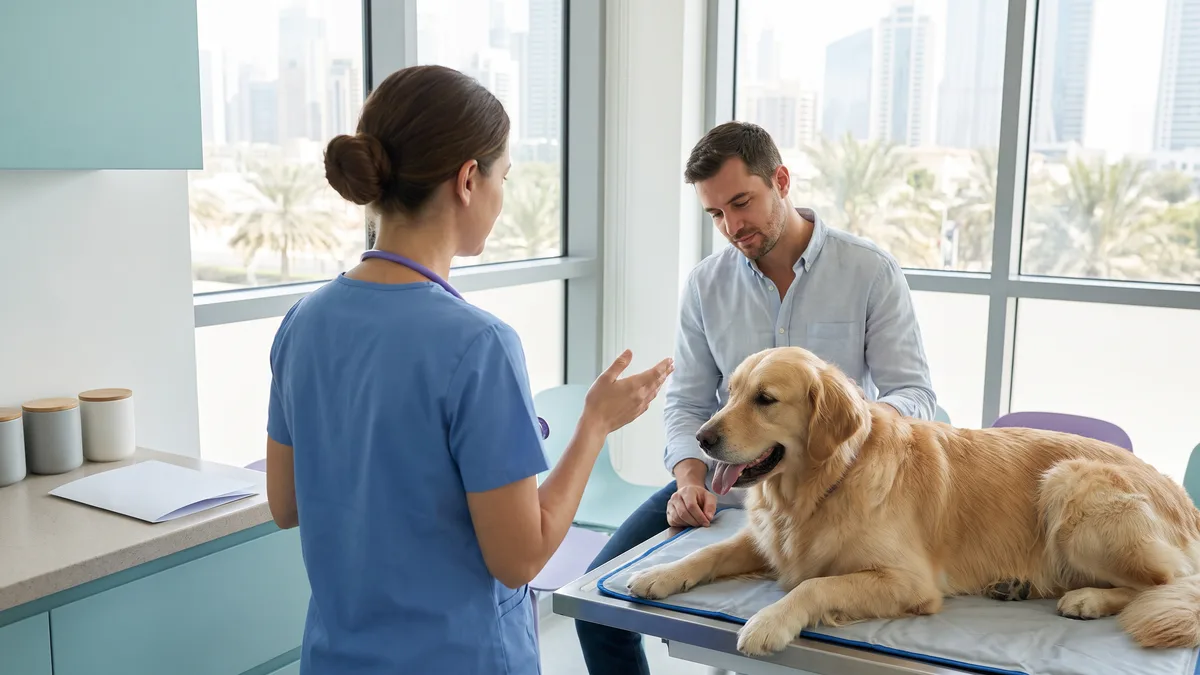
The most dangerous mistake is waiting. Heat-related injury can continue while an owner searches for a thermometer, watches for improvement or drives without cooling.
Do not:
- wait for collapse, vomiting or a temperature reading before acting;
- wrap the dog in wet towels;
- force water into a dog that is weak, confused, vomiting or unconscious;
- use alcohol rubs or leave ice packs pressed against the skin;
- delay cooling while looking for lukewarm water;
- give human medicines;
- assume normal panting after cooling means veterinary assessment is unnecessary.
If the dog is alert and swallowing normally, allow access to water without forcing it. The priority remains cooling and emergency assessment.
Why does a dog still need a vet after cooling?
Heatstroke can affect circulation, the nervous system, kidneys, liver, gastrointestinal tract and blood clotting. Some complications are not visible at home and may develop after the dog looks calmer. The veterinary team may assess temperature trend, circulation, hydration, neurological status and organ function, then choose monitoring and treatment from the findings.
Do not give food, supplements or medicines unless the treating veterinarian directs them. Be ready to describe how long the dog was exposed, what activity occurred, when signs began and exactly how cooling was performed.
Which dogs are at higher risk?
Any dog can develop heat-related illness, including fit dogs exercising in warm conditions. Risk rises when a dog cannot cool effectively, carries excess body fat, is very large, has a short muzzle, is older or has underlying heart, airway or neurological disease.
A large UK primary-care study found associations between heat-related illness and breed, brachycephalic skull shape, higher weight relative to breed and age. The peer-reviewed risk-factor study is useful for identifying vulnerable groups, but it cannot be converted into Dubai prevalence.
Use extra caution with:
- French Bulldogs, English Bulldogs, Pugs and other brachycephalic dogs;
- overweight dogs;
- older dogs and young puppies;
- dogs with airway, heart, lung, neurological or mobility disease;
- very large dogs;
- thick-coated or poorly acclimatised dogs;
- dogs taking medicines that may affect hydration, circulation or alertness.
An overweight dog plan can reduce one modifiable risk, but weight loss must not be attempted through hard exercise in hot weather.
Can a dog get heatstroke without being in a car?
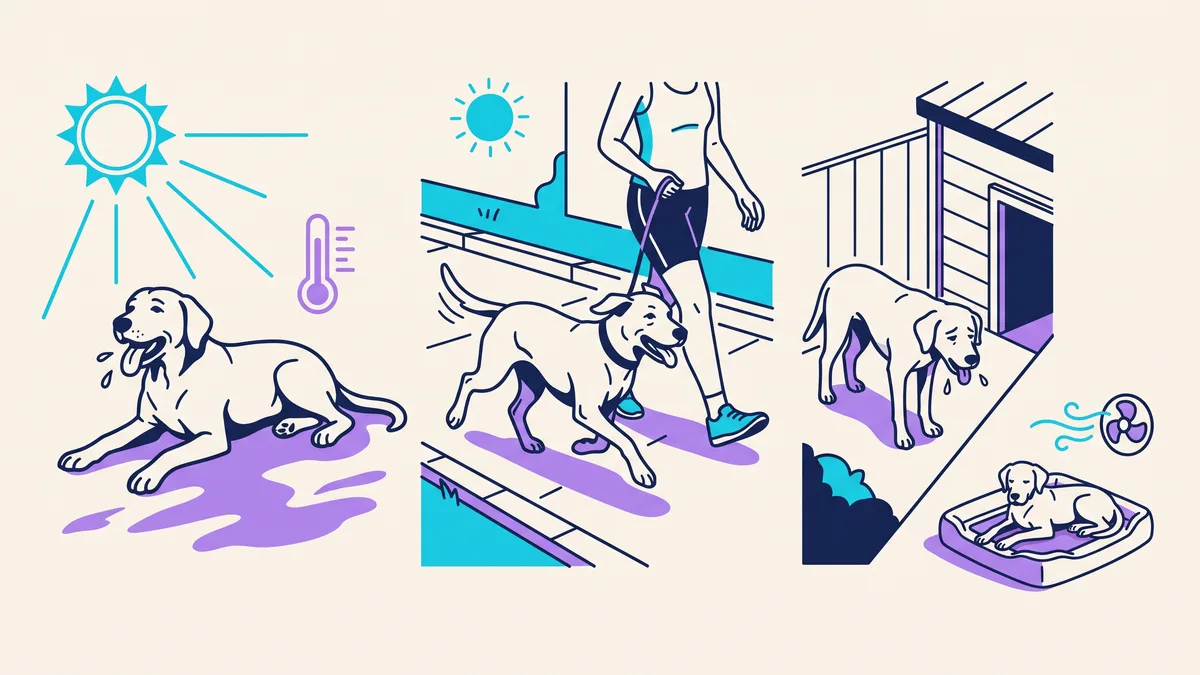
Yes. Exercise is a major trigger, so prevention must cover walks, play, training and work as well as parked vehicles. A UK surveillance study found exertion was the predominant trigger among recorded canine cases. The Dogs Don't Die Just in Hot Cars study supports this wider prevention message, not a local Dubai incidence estimate.
High-risk situations include:
- walking or running in direct sun;
- vigorous play in humid conditions;
- hot balconies, courtyards or gardens without a cool escape;
- parked vehicles, even for a short stop;
- hot sand, artificial grass, tiles or asphalt;
- enclosed rooms during air-conditioning failure;
- muzzles or equipment that restrict effective panting.
How can Dubai owners prevent heatstroke?
Prevention starts by choosing not to exercise when conditions are unsafe. Use the coolest window, usually before sunrise or after surfaces have cooled well beyond sunset, then check the actual route and dog. The safe summer dog-walking guide explains why a fixed clock time is not enough.
| Risk | Practical control |
|---|---|
| Hot pavement or sand | Test the exact surface and use cooler shaded ground |
| Exertion | Replace outdoor intensity with short indoor enrichment |
| Humidity and poor airflow | Use air conditioning and monitor panting closely |
| Parked vehicle | Never leave a dog inside, even with shade or a partly open window |
| Air-conditioning failure | Have a backup cool location and transport plan |
| High-risk dog | Ask a vet for an individual summer activity plan |
Keep fresh water available, provide shade and airflow, and supervise outdoor access. Boots may protect paws from some surface contact but do not prevent core overheating. Water recreation also needs supervision; the dog pool-safety guide covers entry, exit, fatigue and water-ingestion risks.
What belongs in a heat emergency kit?
Prepare before summer travel or outdoor activity:
- emergency clinic number and route;
- clean water and a container for cooling;
- battery fan or reliable vehicle air conditioning;
- spare lead and a safe way to move a weak dog;
- medication and medical-condition list;
- a plan for air-conditioning failure at home;
- contact details for another adult who can help transport.
If a dog is already symptomatic, do not spend time assembling equipment. Start cooling with what is available, call and transport. The guide to signs needing immediate veterinary care covers other emergencies that can resemble heat illness.
Frequently asked questions
Should I use ice water for a dog with heatstroke?
Current RVC guidance supports rapid cooling with cold water. Avoid leaving ice packs pressed against the skin, keep the airway safe and call the emergency clinic while cooling.
Should I wrap the dog in a wet towel?
No. A towel can warm and trap heat. Apply water directly and use airflow instead.
Can I give the dog water?
Allow access only if the dog is alert and can swallow normally. Do not force water into a weak, confused, vomiting or unconscious dog.
Is heavy panting always heatstroke?
No. Pain, stress, airway disease and heart disease can also cause panting. In hot conditions, excessive or worsening panting with distress should be treated as urgent while a veterinarian assesses the cause.
Can a dog recover at home after cooling?
Do not assume so. Internal complications may continue after visible signs improve. Suspected heatstroke needs urgent veterinary assessment.
About this guidance
This emergency guide was materially reviewed on 23 August 2026 against RVC cooling guidance, current veterinary evidence and the Merck Veterinary Manual. It is first aid, not a diagnosis or substitute for treatment. If heatstroke is suspected, cool, call and transport immediately.