Can Dogs Swim in Pools? A Dubai Vet Safety Guide
Sources and guidance checked
Medically reviewed by Dr. Hasan AlDahhak, DVM ·
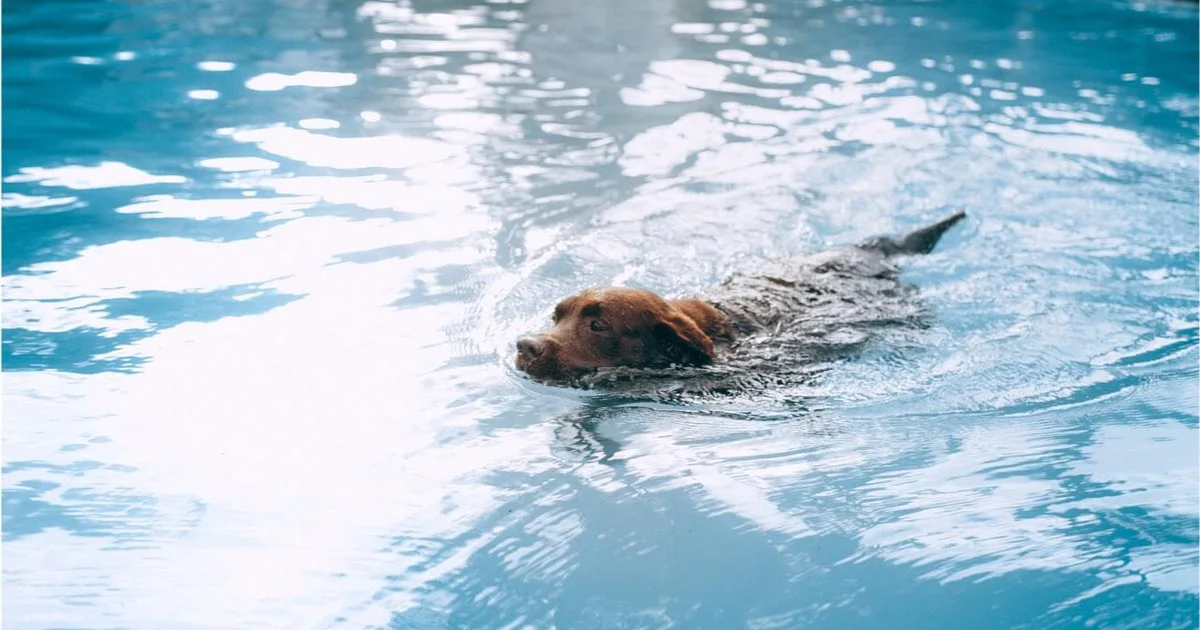
Some dogs can swim in a well-maintained pool, but swimming is not safe for every dog. If you are asking can dogs swim in pools, the safe answer depends on the individual dog's health, swimming ability, supervision, and access to an easy exit. A veterinary checkup in Dubai is the right first step for a dog with breathing, heart, mobility, seizure, or other health concerns.
Key takeaways
- Stay within arm's reach and watch continuously. A dog should never have unsupervised pool access.
- Show the dog the exit before swimming and use a properly fitted canine flotation aid when extra support is needed.
- Offer fresh drinking water, schedule rest in the shade, and rinse the coat after pool or sea water exposure.
- Pools, sea water, stagnant water, and water with a suspected harmful algal bloom present different risks.
- Breathing difficulty, blue or grey gums, collapse, seizure, or severe weakness after swimming is an emergency.
- Do not force a dog or cat into water.
Can dogs swim in pools safely?
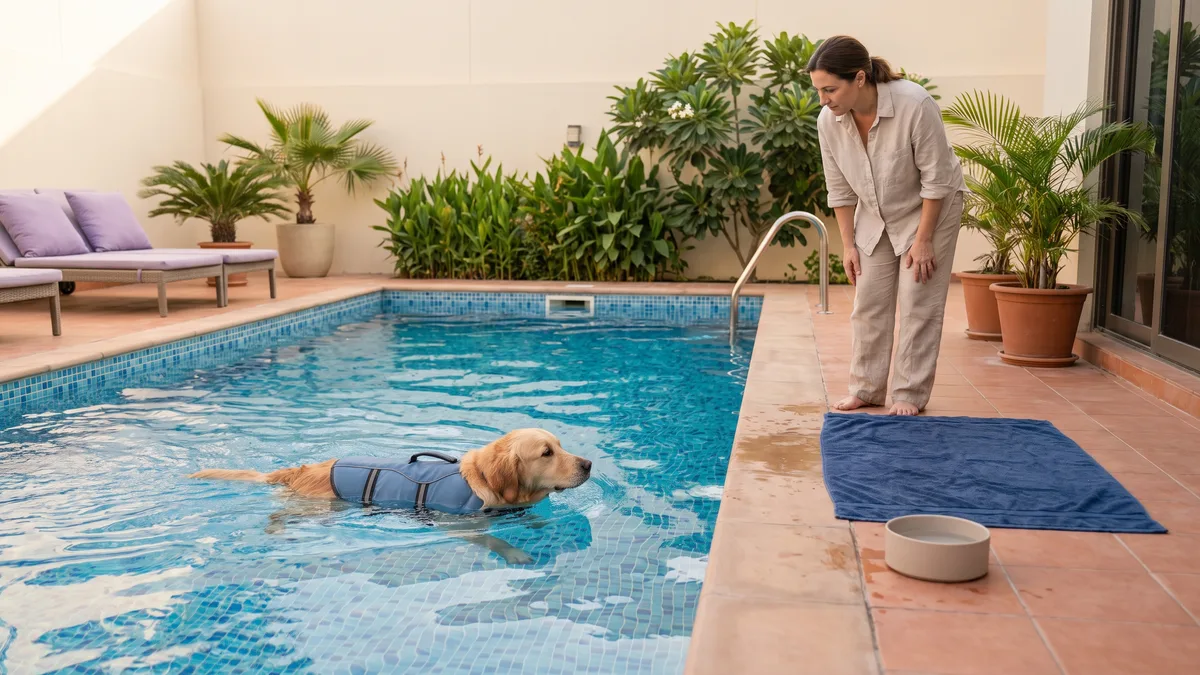
Many dogs can enjoy supervised swims, but being a dog does not make an animal a natural swimmer. The American Animal Hospital Association's water-safety guidance recommends continuous supervision, a familiar exit, fresh water, and attention to coughing, vomiting, or breathing changes after a water incident.
The following dogs need extra caution and may need veterinary clearance first:
- dogs with a flat face or known airway problem
- dogs with heart or lung disease
- puppies, senior dogs, or dogs with poor stamina
- dogs with arthritis, weakness, pain, or recent surgery
- dogs with seizures, vision loss, or poor coordination
- dogs that panic, sink at the front, or cannot reliably find the exit
Breed can suggest possible risk, but it does not determine whether an individual dog is safe in water. Stop if your dog appears frightened, tired, uncoordinated, or focused on repeatedly biting at or drinking the water.
A pool safety checklist for before, during, and after
| Stage | What to do | Why it matters |
|---|---|---|
| Before | Block unsupervised access, check that the exit is easy to use, and remove floating hazards | Dogs may enter silently and then struggle to climb out |
| During | Keep active adult supervision, stay close, offer breaks, and provide fresh water | Fatigue and excessive water ingestion can develop while a dog still looks excited |
| After | Rinse the coat, dry the ears and skin folds gently, and observe breathing and behaviour | Rinsing reduces residue, while observation helps detect delayed signs |
A canine life jacket can add buoyancy, especially for inexperienced swimmers, but it does not replace supervision. Select one that fits securely, allows normal breathing and movement, and has a sturdy handle. Practise using the pool steps or ramp from the water so the dog knows where to leave.
Dubai heat can add exertional risk even when the water feels cool. Plan swimming outside the hottest conditions, keep rest areas shaded, and stop if panting becomes excessive. Our Dubai heatstroke guide explains warning signs and first actions.
Is a swimming pool safe for dogs if it contains chlorine?
A properly maintained pool may be suitable for some dogs, but no chlorine or pH number can act as a veterinary guarantee for an individual pet. Recently treated water, concentrated pool chemicals, and poorly maintained water can irritate skin, eyes, or the digestive tract. Keep chemical containers secured and never allow a pet near a spill or an area being treated.
Discourage drinking from the pool and keep a bowl of fresh water close by. Swallowing a small accidental mouthful is different from repeatedly gulping water. Large water intake can cause serious illness, whether the source is fresh, salt, or pool water. Cornell's summer safety advice recommends breaks and fresh drinking water and notes that both repeated fresh-water and saltwater ingestion can be dangerous.
Persistent redness, itching, ear discomfort, or skin irritation after rinsing deserves a veterinary dermatology assessment.
Pool water, sea water, and stagnant water are different
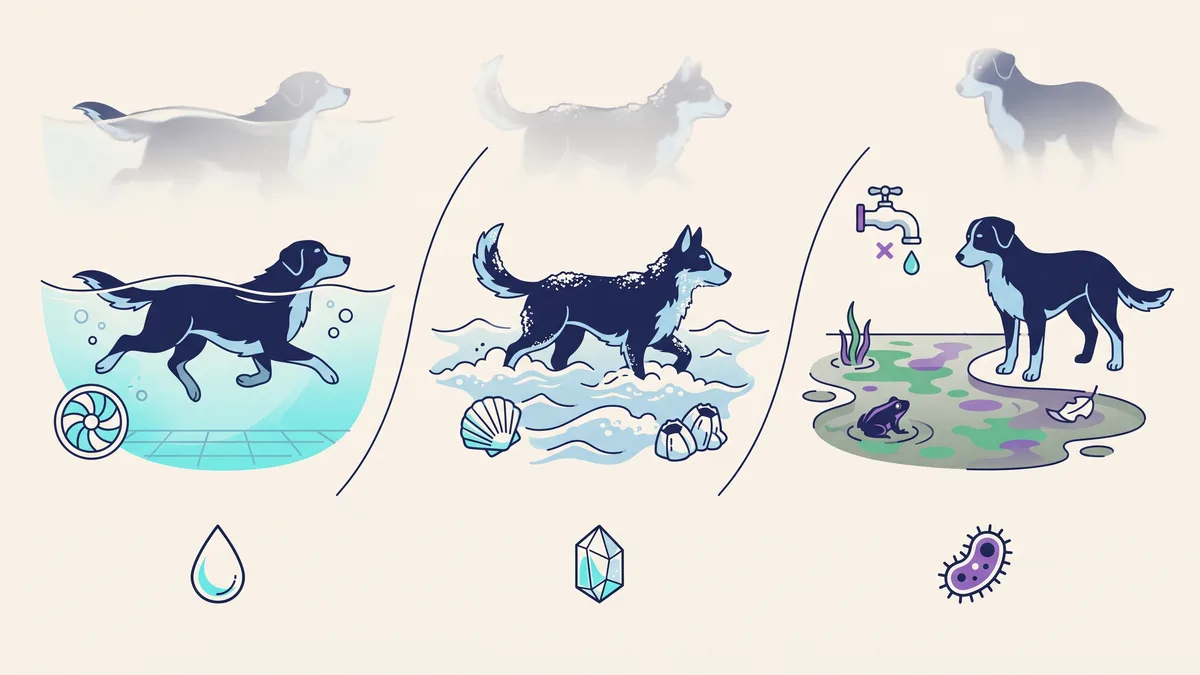
| Water setting | Main concerns | Safer decision |
|---|---|---|
| Maintained pool | Fatigue, aspiration, excessive drinking, irritation, inability to exit | Supervise closely, provide an exit and fresh water, then rinse |
| Sea | Waves, currents, heat, sharp debris, saltwater ingestion | Check local conditions, use a flotation aid when appropriate, and prevent drinking |
| Stagnant or slow water | Contamination, including possible exposure to infected animal urine | Avoid questionable water and ask a Dubai vet about local leptospirosis risk |
| Scummy or unusually coloured water | Possible harmful algal bloom | Keep pets out and prevent licking contaminated fur |
The CDC explains that leptospirosis exposure can occur through water or soil contaminated with infected urine, including in urban areas. This does not mean every pond is contaminated, but stagnant or slow-moving water deserves caution.
Water that looks foamy, slimy, scummy, mat-like, unusually coloured, or foul-smelling may contain a harmful algal bloom. Appearance cannot prove that water is safe. The US Environmental Protection Agency advises keeping dogs out when a bloom is suspected and rinsing them immediately after possible contact without allowing them to lick their coat.
Cats should not be encouraged or forced into a pool. Prevent unsupervised access, give them a clear escape route around the pool area, and move them away calmly if they approach the edge.
When swimming signs need urgent veterinary care
Go to emergency veterinary services now for:
- difficult, noisy, or open-mouth breathing
- blue, grey, or very pale gums
- collapse, seizure, severe weakness, or inability to stand
- a significant submersion or aspiration event
- symptoms after suspected harmful algal bloom exposure
- known contact with concentrated pool chemicals
Cornell's respiratory-distress guidance lists abnormal effort, extended head and neck posture, unusual breathing noise, weakness, and collapse among emergency signs. Keep the pet calm, call the nearest emergency hospital while travelling, and do not wait for breathing trouble to resolve at home.
Call a veterinarian promptly for persistent coughing, repeated vomiting, marked lethargy, unusual behaviour, or a large water-ingestion event, even if the pet initially looks better. Read the broader pet emergency warning signs before the next outing.
Frequently asked questions
Should I let my dog drink pool water?
No. Offer fresh water and interrupt repeated pool drinking calmly. A brief accidental mouthful may cause no problem, but repeated or large-volume ingestion can cause vomiting or more serious illness. Call a veterinarian if you are unsure how much was swallowed or signs develop.
Does my dog need a life jacket in a pool?
It can help puppies, senior dogs, inexperienced swimmers, and dogs with less buoyancy, but fit and supervision still matter. A jacket cannot make a medically unfit or panicking dog safe to swim.
Should I rinse my dog after swimming?
Yes. Rinse with fresh water after a pool or sea swim, then dry the ears and skin folds gently. Seek veterinary advice if irritation, ear pain, or persistent itching develops.
How long can a dog swim?
There is no universal safe duration. Fitness, water conditions, temperature, health, and swimming effort differ. Use frequent breaks and stop at the first sign of fatigue, distress, uncoordinated movement, or excessive water drinking.
Can cats swim in pools?
Some cats can swim physically, but they should never be forced into water. Prevent unsupervised pool access and provide a safe route away from the edge.
About this guidance
This article provides general water-safety education and is not individual medical clearance or emergency first-aid training. It was reviewed against current veterinary and public-health guidance on 23 August 2026. A veterinarian must assess your pet's health, symptoms, and exposure. In an emergency, contact the nearest veterinary hospital immediately.