Have you ever seen your dog suddenly lift one of its hind legs while walking, skip a few steps, and then resume walking normally? This classic movement, known as “hopping,” is a hallmark of patellar luxation. It is one of the most common orthopedic problems in small dogs.
Luxating patella in dogs is classified into 4 complex grades, through which the symptoms associated with each stage are identified, and then the appropriate treatment is determined after diagnosis.
In this guide, we will cover everything related to dog knee problems in Dubai, including the symptoms of luxating patella, when your dog needs surgical intervention, and the patella surgery cost in Dubai.
What Is a Luxating Patella?
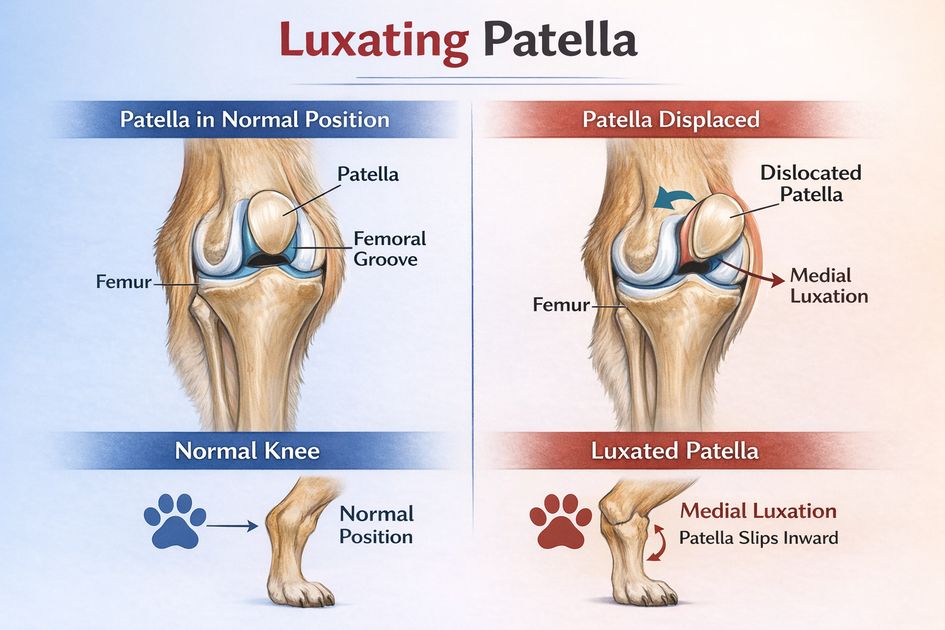
Kneecap dislocation in dogs is a common condition, often resulting from the slippage of the patella (kneecap) bone from its normal position in the femoral groove, which allows dogs to move smoothly and naturally.
It is worth noting that there are two types of luxating patella: internal luxation, which accounts for 80% of cases, and external luxation, which is less common. As for the causes of patellar dislocation, it may be due to a genetic factor, as most puppies are born with kneecap defects that affect the smoothness of movement. It may also result from an injury, accident, or fracture that impacts the dog’s mobility.
The 4 Grades Explained
Luxating patella is divided into four grades. Each grade determines the extent of the dislocation, the symptoms associated with each stage, and the ideal treatment.
Grade 1 — Mild
In this stage of dog knee problems, the injury is mild. The patella can be manually moved but returns to its original position spontaneously. This stage is usually asymptomatic and is often discovered during veterinary checkups. Immediate intervention is not required; you can manage the extent of the injury through observation, weight management, and supplementation with bone-supporting supplements.
Grade 2 — Moderate
In this stage of luxating patella, the injury is moderate. The patella may occasionally slip during movement, and the dog may exhibit a characteristic “hopping” or “leaping” motion. The patella can sometimes be manually reduced, and occasionally it may relocate spontaneously. The appropriate treatment at this stage is conservative management or surgery, depending on the progression of the condition.
Grade 3 — Severe
At this stage of dog knee problems, the injury is severe. The dog experiences significant lameness and a noticeable change in gait. While the bone can be manually reduced, it often relocates immediately. The ideal treatment for this condition is immediate surgery.
Grade 4 — Very Severe
This is a permanent dislocation of the kneecap. Relocating the bone is extremely difficult, and the dog may suffer from significant bone deformity in the knee and walk with a hunched posture. The ideal treatment for this stage is surgery, which may require complex reconstruction.
Which Breeds Are Most at Risk?
| Small Breeds (Higher Risk) | Large Breeds (Lower Risk) |
|---|---|
| Pomeranian | Labrador Retriever |
| Chihuahua | Great Dane |
| Yorkshire Terrier | Akita |
| French Bulldog | St. Bernard |
| Maltese | — |
| Toy Poodle | — |
| Cavalier King Charles | — |
Symptoms to Watch For
Luxating patella manifests in varying degrees, ranging from mild to severe, with symptoms becoming quite pronounced and the dog exhibiting significant lameness. Other key signs that your dog may have patellar dislocation include:
- A “rabbit jump” gait (suddenly lifting both hind legs together).
- Suddenly lifting one hind leg for several seconds before returning to a normal walk.
- Reluctance or refusal to jump onto or down from furniture.
- Unnatural sitting posture, such as stretching one leg to the side.
- A clicking or popping sound from the knee joint during movement.
- Difficulty climbing or descending stairs.
- Reduced activity level or inability to exercise as usual.
- Intermittent lameness (appearing and disappearing), which can mislead owners and delay diagnosis.
Conservative (Non-Surgical) Management
In some cases of kneecap dislocation, surgery may not be necessary. The extent of the injury can be managed through physical therapy or weight management. Surgical intervention is a primary alternative if these methods fail.
Weight Management
It’s worth noting that excess weight puts extra pressure on unstable joints, resulting in varying degrees of patellar dislocation in dogs. At Paw Sisters, we provide nutritional guidance to help your dog lose weight and reduce the risk of patellar dislocation without resorting to surgery.
Physical Therapy & Exercise
Physical therapy and exercise play a crucial role in managing patellar dislocation. This can be achieved through:
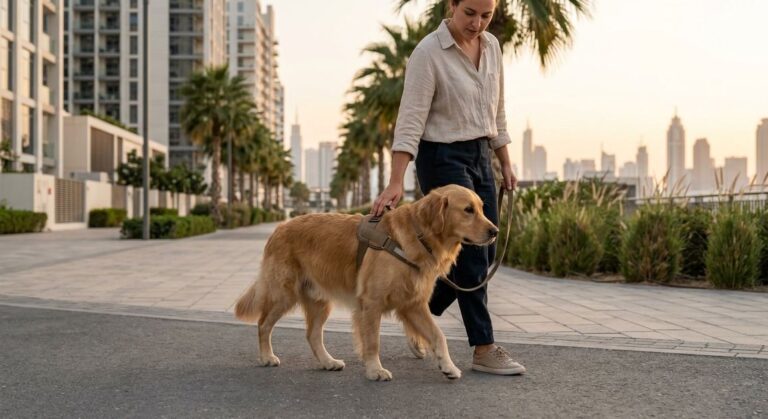
- Walking your dog gently on a leash (avoiding sudden runs).
- Swimming (light exercise).
- Avoiding slippery floors by using rugs.
Joint Supplements
Supplements that support joint health can be very effective in reducing the risk of patellar dislocation. Some of the most beneficial supplements include glucosamine, chondroitin, and omega-3 fatty acids, which help support cartilage health.
Anti-Inflammatory Medication
In grade 3 and 4 kneecap injuries, the pain can be extremely severe for dogs. Anti-inflammatory medications can be very effective in controlling the pain associated with the injury. However, it is always recommended that these medications be administered under the supervision of the veterinarian in charge of the case, and the use of human medications is strictly prohibited.
When Is Surgery Necessary?
Grade 3 & 4
Small dog knee surgery in the UAE is often necessary in these cases because the kneecap is out of place most of the time, causing significant pain and persistent mobility problems.
Grade 2
Surgery is recommended if the condition worsens over time, if the dog is young, or if lameness is frequent and noticeable.
Grade 1
Surgery is rarely needed unless the condition begins to deteriorate or more pronounced symptoms appear.
The Goal of Surgery
The primary goal of surgical intervention is to permanently realign the kneecap into its proper position to improve mobility, reduce pain, and prevent further progression of the condition.
Surgical Techniques Used
- Trochlear Groove Deepening: The area where the kneecap rests is deepened to prevent slippage.
- Tibial Crest Transposition: The tendon attachment point is repositioned to improve knee stability.
- Soft Tissue Reconstruction: The tissues surrounding the joint are tightened or reshaped to support kneecap stability.
Surgery Recovery Timeline
| Timeline | What to Expect |
|---|---|
| Days 1–3 | Rest, pain medication, ice packs, minimal movement |
| Week 1–2 | Short leash walks for bathroom only, surgical site monitoring |
| Week 3–4 | Gentle short walks, still restricted activity |
| Week 6–8 | Gradual increase in activity, follow-up X-rays |
| Week 10–12 | Most dogs return to normal activity |
Costs of Patella Surgery in Dubai
It’s important to note that the final patella surgery cost in Dubai depends on several factors, including:
- Severity of injury (moderate or severe)
- Type of knee (one or both knees)
- Body size
- Your dog’s overall health
What’s Included in the Surgery Price?
The patella surgery cost Dubai includes:
-
Pre-operative blood tests
-
Anesthesia
-
Surgery
-
Hospital stay
-
Follow-up
For transparent and appropriate pricing for your dog, please book a surgical consultation.
FAQs
Can luxating patella fix itself?
No, it usually worsens over time without intervention. Therefore, in advanced or severe cases, we always recommend surgery followed by rehabilitation.
At what age should surgery be done?
Usually after 6 months, but it’s best to perform it before arthritis develops.
Can my dog walk after patella surgery?
Limited walking begins within days, and full recovery occurs within 8-12 weeks.
Is luxating patella painful?
Grades 1 and 2 may cause intermittent discomfort, while grades 3 and 4 cause chronic pain.
Conclusion
Luxating patella dog Dubai is a common health problem in dogs. The injury usually begins subtly and is typically discovered during a routine veterinary examination. However, in more complex cases, such as skeletal deformities or fractures, immediate surgical intervention may be required. In all cases, we always recommend early examination at the first sign of any symptoms suggesting a patellar dislocation, as early diagnosis offers a variety of treatment options that avoid surgery.
Book an Orthopedic Consultation at Paw Sisters.