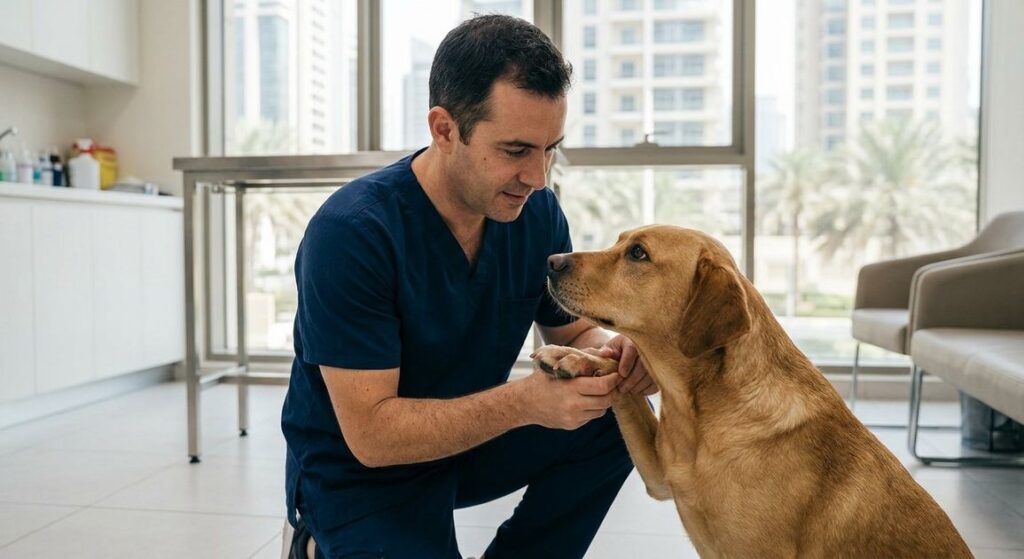
Have you noticed any unusual symptoms in your dog recently, such as red claws, hair loss, a red belly, or excessive itching? These symptoms indicate that your dog may be suffering from dog skin allergies in Dubai. These conditions are widespread, especially in this region, due to high temperatures, humidity, and the prevalence of dust and dirt in the air.
This guide will discuss the types of dog skin allergies in Dubai, the most common triggers, how to correctly diagnose them, and how to treat them at PawSisters Veterinary Clinic.
If you are a dog lover or owner, this guide will serve as a reference for the most common types of allergies among different dog breeds. You can also Book a Dermatology Consultation to examine your dog and determine the type of allergy he has. Remember that a correct diagnosis is the first step towards effective treatment.
Why Are Skin Allergies So Common in Dubai?
Pet skin problems in the UAE are very common, especially since the weather is a major contributing factor to the spread of these types of infections among different dog breeds:
- Dubai’s hot climate and high humidity levels are considered major causes of dog skin allergies.
- Dust and sand particles in the air accumulate on dogs’ skin, causing itching and scratching.
- It’s not just the outdoors that’s a problem; homes are also a source of skin allergies. Air conditioning systems play a key role in spreading dust and mold particles inside, which can irritate a dog’s skin.
- Fleas and ticks, which are sometimes invisible to the naked eye, are among the most common skin infestations, especially if your dog comes into contact with other animals.
- Furthermore, Dubai’s environment and climate may be unsuitable for your dog, as many imported breeds are not adapted to this climate.
Types of Skin Allergies in Dogs
Accurate diagnosis of skin allergies in dogs requires a thorough understanding of the specific type of allergy and its symptoms. This allows a pet dermatologist in Dubai to prescribe effective treatment tailored to your dog’s needs.
Environmental / Atopic Dermatitis
- Dog atopic dermatitis is one of the most common types of skin allergies in dogs.
- The primary cause of this allergy is the presence of dust mites, mold, and pollen in airborne particles.
- Dogs between one and three years old are most susceptible.
- Symptoms typically appear on various parts of the body, including the ears, paws, abdomen, and armpits.
- Unfortunately, this condition is chronic. While symptoms may lessen with proper treatment, they do not disappear completely.
Food Allergies
- Food allergies are the least common type of allergy, representing only about 10-15% of all allergies.
- The main triggers for this type of allergy are beef, chicken, dairy products, wheat, and soy.
- Food allergies are usually diagnosed by following an elimination diet for 8 to 12 weeks.
Contact Dermatitis
- This is an allergic reaction to chemicals used during dog grooming or to certain plants.
- The infection appears on the skin of the abdomen, paws, and areas with light fur.
- The inflammation usually clears up once the irritant or allergen is removed.
Flea Allergy Dermatitis
- Fleas are the most prevalent parasite in Dubai. Although invisible to the naked eye, a single flea bite can cause skin irritation in dogs.
- Symptoms of flea infestation often include hair loss and scaly patches on the back and base of the tail.
- Due to the widespread flea infestation in Dubai, veterinarians always recommend learning about Tick & Flea Prevention.
Symptoms Checklist — When to Visit the Vet
If your dog shows any of these signs, please see a specialist for pet allergy treatment in Al Garhoud:
- Excessive scratching, licking, or chewing
- Redness and inflammation of the skin
- Hot spots (wet, sore patches)
- Hair loss or thinning
- Frequent ear infections
- Darkening or thickening of the skin
- Unpleasant skin odor
- Chewing paws (especially between the toes)
- Rubbing the face on furniture or carpets
If your dog shows two or more of these signs, schedule an appointment with a dermatologist.
How We Diagnose Skin Allergies at Paw Sisters
At Paw Sisters, dog skin allergies in Dubai are diagnosed in a multi-step process to ensure we identify the specific allergy your dog has and prescribe the most effective treatment.
Comprehensive Skin Examination
The first step is a comprehensive skin examination, which includes a visual and physical assessment of all affected or suspected areas using a dermatoscope.
Skin Scraping & Cytology
In some cases, skin scraping and examination of internal cells are performed to rule out parasitic infections, including Demodex mites and Sarcoptes. We determine the type of bacterial or parasitic infection your dog has.
If your dog is experiencing allergy symptoms, you can book a diagnostic appointment with PawSisters Veterinarians.
Allergy Testing
Intradermal Skin Testing (IST)
This test involves injecting a very small amount of potential allergens into the superficial layer of the skin using a fine needle. The doctor then observes the skin’s reaction over a short period:
- It accurately identifies environmental allergens, such as dust mites, pollen, mold, or pet dander.
- It shows how the immune system responds to each allergen.
- It helps in accurately diagnosing atopic dermatitis.
- It is often used to determine the appropriate allergy immunotherapy.
Blood-Based Allergy Panels – Serum IgE Testing
This test involves taking a blood sample and measuring the level of IgE antibodies associated with allergic reactions to specific substances:
- It identifies allergies to certain foods or environmental triggers without the need for a direct skin test.
- It measures the level of IgE antibodies in the blood, indicating the activity of the allergic immune system.
- Useful in cases where skin testing is not possible (such as in cases of severe skin infections or when taking medications that prevent accurate results).
- It helps in assessing potential food allergies, along with medical history and symptoms.
Elimination Diet Trial
This type of treatment is used in cases of food allergies. It involves an 8- to 12-week dietary protocol that eliminates suspected foods from the diet.
Treatment Options
At Paw Sisters, we offer a variety of treatment options to suit the type of allergy your dog is experiencing. Some of our key treatment options include:
Medicated Baths & Topical Therapy
- Medicated Shampoo (Chlorhexidine, Antifungal)
- Topical Sprays and Creams for Treating Localized Infections
- Recommendations on Frequency of Use Based on Dubai’s Climate
Oral Medications
- Apoquil (Oclacitinib) for Itching Relief
- Antibiotics for Treating Secondary Bacterial Infections
- Antifungals for Fungal Infections
Immunotherapy (Allergy Shots)
- Customized Formula Based on Allergy Testing Results
- Long-Term Management
- 60-80% of Dogs Show Significant Improvement
Dietary Management
- Prescription Hypoallergenic Diets
- Omega-3 Fatty Acid Supplements
- Probiotic Support to Enhance the Gut-Skin Connection
Dubai-Specific Prevention Tips
To keep your dog allergy-free, here are some tips that may help keep their skin healthy:
- Wipe your pet’s paws after outdoor walks (to remove sand and pollen).
- Bathe your dog every two to four weeks with a gentle, veterinary-approved shampoo.
- Use indoor air purifiers.
- Wash bedding weekly in hot water.
- Take flea and tick preventatives year-round (not just in the summer).
- Avoid walking on hot pavements (as this can irritate your dog’s paws).
- Keep your air conditioner filters clean.
Breeds Most Prone to Skin Allergies in Dubai
Many dog breeds in Dubai are increasingly prone to various types of allergies. Some of the most common breeds include: French Bulldog, Golden Retriever, German Shepherd, Labrador Retriever, Bulldog, West Highland Terrier, Cocker Spaniel, and Shih Tzu. If you own one of these breeds, proactive dermatology checkups are recommended to help protect them from developing allergies.
FAQs
Can Dubai’s weather cause skin allergies in dogs?
Absolutely, yes. High temperatures, humidity, and the presence of dust, sand, and mold particles in the air all contribute to the prevalence of dog skin allergy Dubai.
How much does allergy testing cost in Dubai?
At Paw’s Sisters, we strive to offer fair prices for dog allergy testing, so please contact us directly for current rates.
How long does allergy treatment take?
This depends on the type of allergy. Environmental allergies require ongoing monitoring, while food allergies usually resolve within a few weeks.
Can I give my dog Benadryl for allergies?
It is not recommended to give this medication without consulting a veterinarian. The dosage is crucial, and there are better alternatives.
Conclusion
Although pet skin problems UAE are prevalent due to various factors, dog skin allergy Dubai can be managed with accurate and correct diagnosis. At Paw Sisters, the diagnostic process involves several steps and stages, including the use of a dermatoscope, dermal testing, and, in some cases, dietary changes to rule out food allergies. Furthermore, we offer a variety of treatment options, including topical medications, antibiotics, and creams formulated for the affected skin layers. If your dog shows any signs of an allergic reaction, you can book a dermatological consultation today, or call us 042598688.