
Cat UTI Symptoms: Emergency Signs and Diagnosis
Medically reviewed by Dr. Hasan AlDahhak, DVM ·
Cat UTI symptoms are not specific to infection. Straining, frequent litter-tray visits, blood in urine and urinating outside the tray can also result from feline idiopathic cystitis, stones or a urethral blockage.
If a cat, especially a male cat, repeatedly strains while producing little or no urine, seek emergency veterinary care now. A blockage is painful and life-threatening. Do not wait for vomiting, weakness or collapse.
Is your cat's urinary problem an emergency?
Use the amount of urine and your cat's overall condition to decide how quickly to act.
Go to an emergency vet now:
- Repeated straining with little or no urine produced
- Crying, severe restlessness or obvious pain in the litter tray
- Vomiting, profound lethargy, weakness, collapse or altered responsiveness with urinary signs
- A firm, painful abdomen or rapidly worsening condition
Arrange a same-day assessment:
- Blood in the urine
- Frequent trips that produce small amounts of urine
- Painful urination or persistent genital licking
- Sudden urination outside the litter tray
Caregivers sometimes mistake urinary straining for constipation. If you cannot tell which is happening, have the cat assessed urgently. The 2025 iCatCare consensus guideline and Cornell's FLUTD guide both treat a complete urethral obstruction as an immediate emergency.
Common cat UTI symptoms and what they mean
Possible lower urinary tract signs include:
- Straining to urinate
- Frequent attempts to urinate
- Passing only small amounts
- Blood-tinged urine
- Urinating outside the litter tray
- Licking around the genital area
- Vocalising or showing discomfort while urinating
These are signs of lower urinary tract disease, not a diagnosis by themselves. Odour alone is also unreliable. A cat may have inflammation without bacteria, while another cat with a bacterial infection may need a urine culture to identify it.
UTI, FIC, stones or obstruction: what is the difference?
Feline lower urinary tract disease, or FLUTD, is an umbrella term for conditions that affect the bladder and urethra. It is not one specific disease.
| Condition | Are bacteria the cause? | Emergency status | How vets distinguish it |
|---|---|---|---|
| Bacterial UTI | Yes | Prompt assessment; urgency rises if the cat is unwell | Urinalysis plus sterile urine culture |
| FIC | No identified infection | Same-day assessment for new painful signs | Other causes are considered or excluded |
| Urinary stones | Usually not | Urgent if pain is severe or urine output falls | Imaging, urine tests and stone analysis when available |
| Urethral obstruction | Not necessarily | Emergency now | Examination, bladder assessment and appropriate tests |
Bacterial urinary tract infection
A bacterial UTI occurs when clinically relevant bacteria infect part of the urinary tract. The 2025 iCatCare guideline reports that it accounts for fewer than 3% of lower urinary presentations in otherwise healthy adult cats. Infection becomes more likely in cats over 10 years old and in cats with conditions such as chronic kidney disease or diabetes.
Feline idiopathic cystitis
Feline idiopathic cystitis, or FIC, is bladder inflammation without an identified infection or other specific cause after appropriate investigation. It is the most common diagnosis in cats with lower urinary signs. Stress can contribute to FIC, but that does not mean stress directly causes a bacterial UTI.
Urinary stones
Bladder or urethral stones can irritate tissue, cause blood in urine and contribute to obstruction. Different stone types require different treatment. Some struvite stones may dissolve with a veterinarian-prescribed diet, while calcium oxalate stones do not dissolve with food and may need removal.
Urethral obstruction
An obstruction prevents urine from leaving the bladder. Male cats are more vulnerable because their urethra is longer and narrower. That anatomy increases blockage risk, not bacterial-UTI risk.
How vets diagnose urinary signs in cats
The goal is to find the cause before choosing treatment. A vet starts with the history and a physical examination, including careful assessment of the bladder.
Tests may include:
- Urinalysis: checks concentration, blood, inflammation, crystals and other abnormalities
- Urine culture: identifies clinically relevant bacteria and helps select an antibiotic
- Blood tests: assess kidney function, diabetes and systemic illness
- Radiographs or ultrasound: look for stones, masses and structural changes
The Merck Veterinary Manual identifies quantitative urine culture as the diagnostic gold standard for bacterial cystitis. A sterile sample helps separate infection from contamination. Crystals in urine do not automatically prove that a cat has stones.
Our pet diagnostic services in Dubai can support the tests selected after examination. Turnaround and the exact test plan depend on the case.
When are antibiotics appropriate?
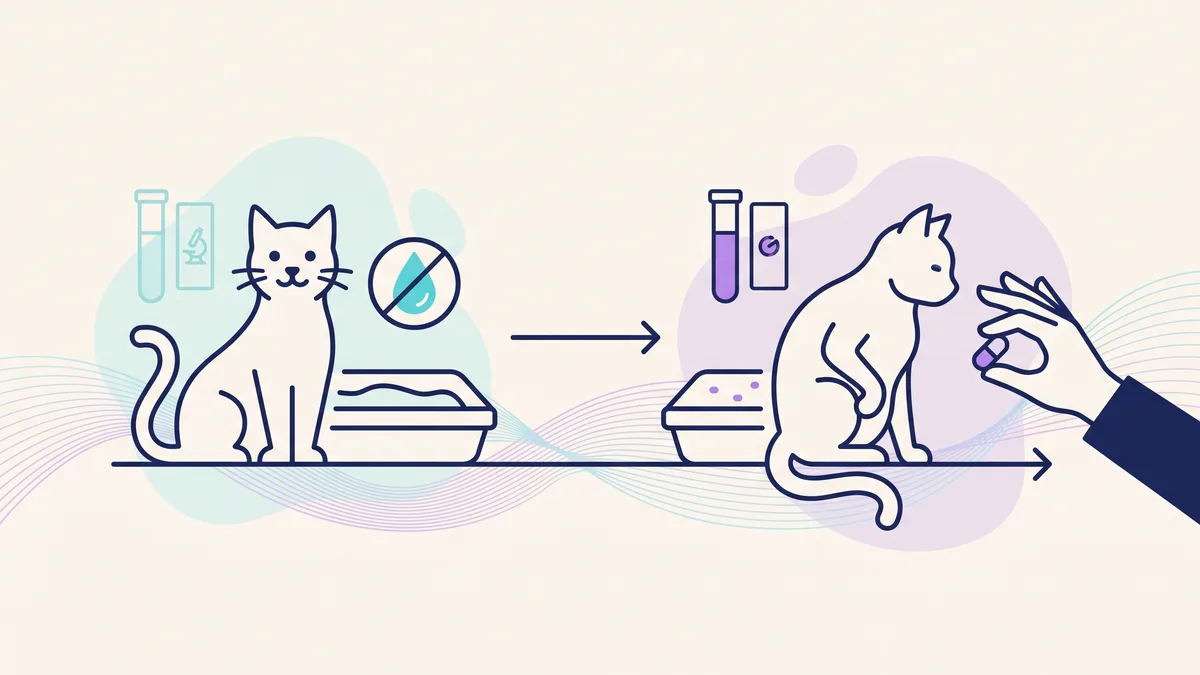
Antibiotics are appropriate when a veterinarian finds evidence of bacterial infection. Urinary signs alone are not enough, especially in a young otherwise healthy cat.
The AAFP and AAHA antimicrobial stewardship guideline recommends diagnostic testing that distinguishes infection from contamination and guides treatment. Do not give leftover antibiotics or reuse a previous prescription for a new episode.
Treatment depends on the actual diagnosis and may involve:
- Emergency relief of an obstruction
- Veterinarian-directed pain relief
- Culture-guided antibiotics for a bacterial infection
- A prescription diet for a confirmed stone type
- Environmental and hydration changes for FIC
- Treatment of underlying kidney disease, diabetes or another condition
This is why treating every urinary episode as a simple UTI can delay the care a cat really needs.
How to reduce recurrence after diagnosis
Prevention should match the diagnosed cause. Broad measures that may support urinary health include:
- Offer fresh water in several quiet locations.
- Ask whether wet food or a prescription diet is appropriate for this cat.
- Provide enough litter trays in calm, accessible locations and keep them clean.
- Maintain a healthy body weight.
- Provide predictable routines, play, hiding areas and separated resources in multi-cat homes.
- Attend follow-up testing when the veterinarian recommends it.
Do not assume that cranberry, D-mannose, probiotics or urinary supplements will prevent recurrence. Evidence for several popular products is poor or insufficient in cats. Likewise, a dirty litter tray may discourage normal urination, but it should not be described as a proven direct cause of bacterial UTI.
For FIC, the current iCatCare consensus supports multimodal environmental modification rather than relying on one food, supplement or medicine. A cat health checkup can turn general advice into a plan based on age, diet, weight, home environment and previous test results.
A practical urinary triage plan for Dubai cat owners
The safest decision order is simple:
- Check urine output first. Little or no urine with repeated straining means emergency care now.
- Do not guess the diagnosis. Infection, FIC, stones and obstruction overlap in appearance.
- Test before targeting treatment. Urinalysis, culture or imaging may change the plan.
- Prevent according to the cause. Hydration and litter resources help, but diets and medicines must fit the diagnosis.
For transport, keep the cat in a secure carrier and call the clinic while preparing to leave. Do not press the abdomen or attempt to empty the bladder at home.
Frequently asked questions
Can a cat UTI go away on its own?
Do not wait on urinary signs. The problem may not be a bacterial UTI, and a dangerous obstruction must be excluded. A veterinarian should decide whether infection is present and whether antibiotics are needed.
Is a male cat straining to urinate an emergency?
Yes, if he repeatedly strains and produces little or no urine. Male cats have a higher obstruction risk because of their urethral anatomy. Seek emergency care immediately.
How do vets confirm a cat UTI?
A vet evaluates the cat and urine. When bacterial infection is suspected, culture of a sterile urine sample is the diagnostic gold standard and can guide antibiotic choice.
Does stress cause a cat UTI?
Stress is strongly associated with feline idiopathic cystitis, not established as a direct cause of bacterial infection. Because the signs overlap, diagnosis matters.
Will wet food prevent urinary problems?
Increasing water intake is broadly encouraged, and wet food may help some cats consume more water. It is not a universal treatment, and evidence for preventing FIC recurrence through wet food alone is not conclusive.
About this guidance
This information is educational and cannot identify the cause of urinary signs. If your cat is still passing urine but shows new symptoms, book a veterinary appointment. If little or no urine is coming out, use emergency care instead.