Veterinary Grooming Dubai: Vet Clinic or Salon?
Medically reviewed by Dr. Hasan AlDahhak, DVM ·
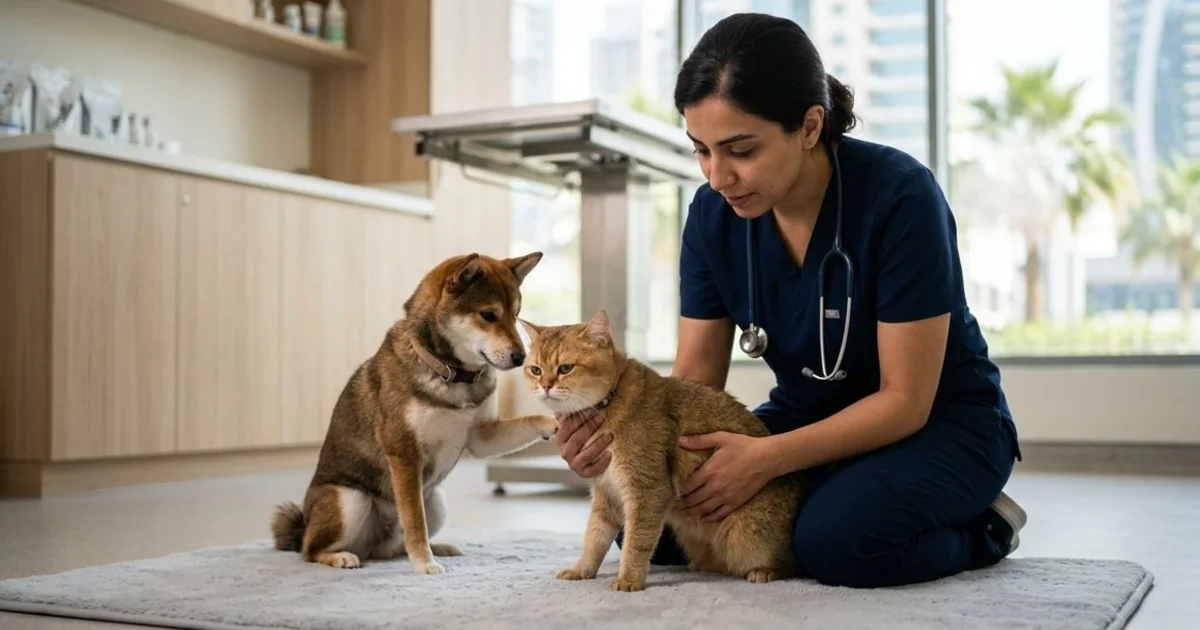
Veterinary grooming in Dubai has a meaningful advantage when a pet has skin or ear disease, painful mats, wounds, severe handling fear, medical fragility or a need for veterinarian-directed products. A reputable salon can still suit a healthy, comfortable pet needing routine coat care. Compare the patient and provider, then choose a pet grooming service with safe handling, sanitation and a clear plan if a concern appears.
Key takeaways
- Veterinary grooming is not automatically better for every pet. The health and behaviour of the individual animal should drive the choice.
- A groomer can notice a lump, lesion, parasite or painful reaction, but diagnosis and prescription treatment belong to a veterinarian.
- Low-stress handling includes stopping when fear or pain is escalating. No provider can promise a completely stress-free visit.
- Cosmetic tooth brushing is not a veterinary dental cleaning and cannot assess disease below the gumline.
Veterinary grooming in Dubai versus a pet salon
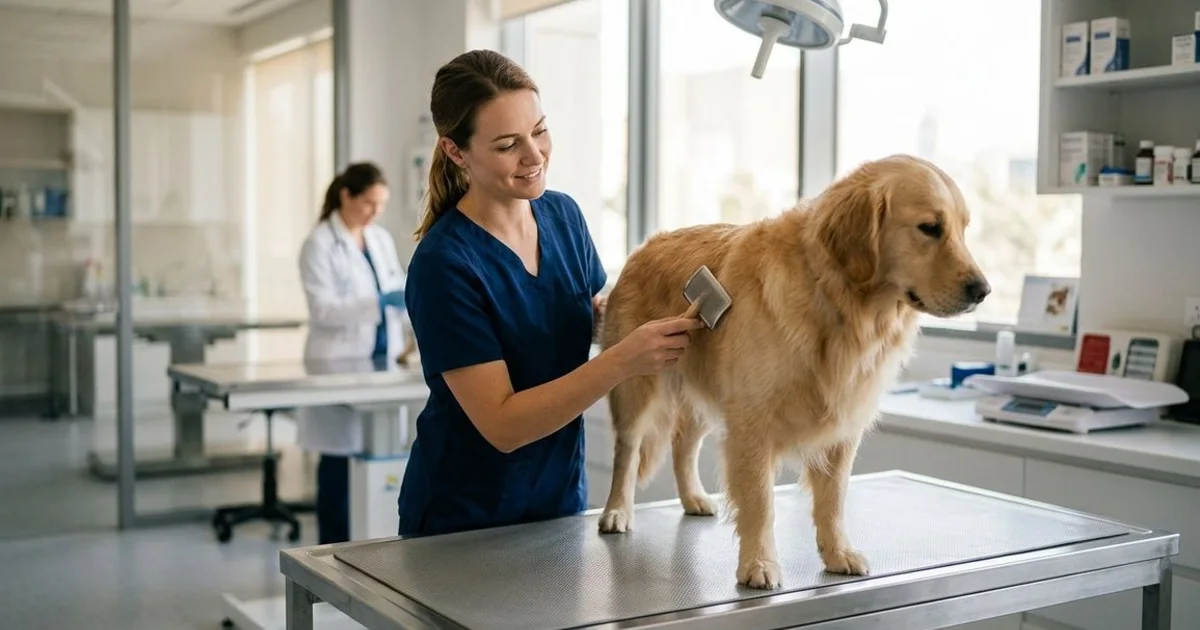
The main difference is access to veterinary assessment when grooming overlaps with a medical problem. It is not the logo on the door. A salon with skilled staff, careful handling, good sanitation and an emergency plan may be appropriate for routine bathing, brushing, coat trimming and nail care in a healthy pet.
The Merck Veterinary Manual overview of preventive care and husbandry describes grooming as part of routine care and an opportunity to notice changes in skin, coat, ears, eyes, teeth and nails. Noticing is different from diagnosing.
| Decision factor | Reputable grooming salon | Veterinary grooming setting |
|---|---|---|
| Healthy pet needing routine coat care | Often suitable when handling and sanitation standards are strong | Also suitable if the service scope matches the pet |
| Active skin, ear or wound concern | Should pause and refer for assessment | Can coordinate grooming with veterinary examination when available |
| Prescription shampoo or topical medicine | Should follow written veterinary instructions | Can align product use with the treating clinician's plan |
| Severe fear, aggression or painful handling | Needs a clear stop and referral policy | Can assess pain, anxiety and whether clinician-directed medication is appropriate |
| Medical fragility or advanced age | Requires detailed disclosure and provider capability review | May offer closer medical coordination, but protocols must still be confirmed |
| Unexpected collapse, breathing trouble or product reaction | Needs an emergency response plan | Veterinary access may shorten escalation if a clinician is present |
Before assuming a clinic has these advantages, ask whether a veterinarian is physically present, what the groomer's training covers and how medical concerns are escalated.
When a grooming salon may be appropriate
A healthy dog or cat that tolerates handling and needs routine coat maintenance may do well with a reputable salon. The provider should ask about health, behaviour, allergies and previous grooming experiences before starting.
The RSPCA guide to choosing a dog groomer recommends inspecting the environment, discussing supervision and emergency plans, and asking how the team handles nervous animals. Its UK regulatory context should not be treated as Dubai law, but its practical questions apply anywhere.
A strong salon should be willing to explain:
- who handles the pet and how they were trained;
- whether pets are supervised during bathing and drying;
- how equipment, tables, tubs and tools are cleaned;
- how water, airflow and drying temperature are controlled;
- how products are selected by species, coat and skin history;
- when a groom is stopped or referred;
- what happens in a medical emergency.
Avoid providers who promise that every pet will be calm, insist on completing a groom despite panic or pain, or diagnose a skin or ear condition from appearance alone.
When a veterinary setting has a meaningful advantage
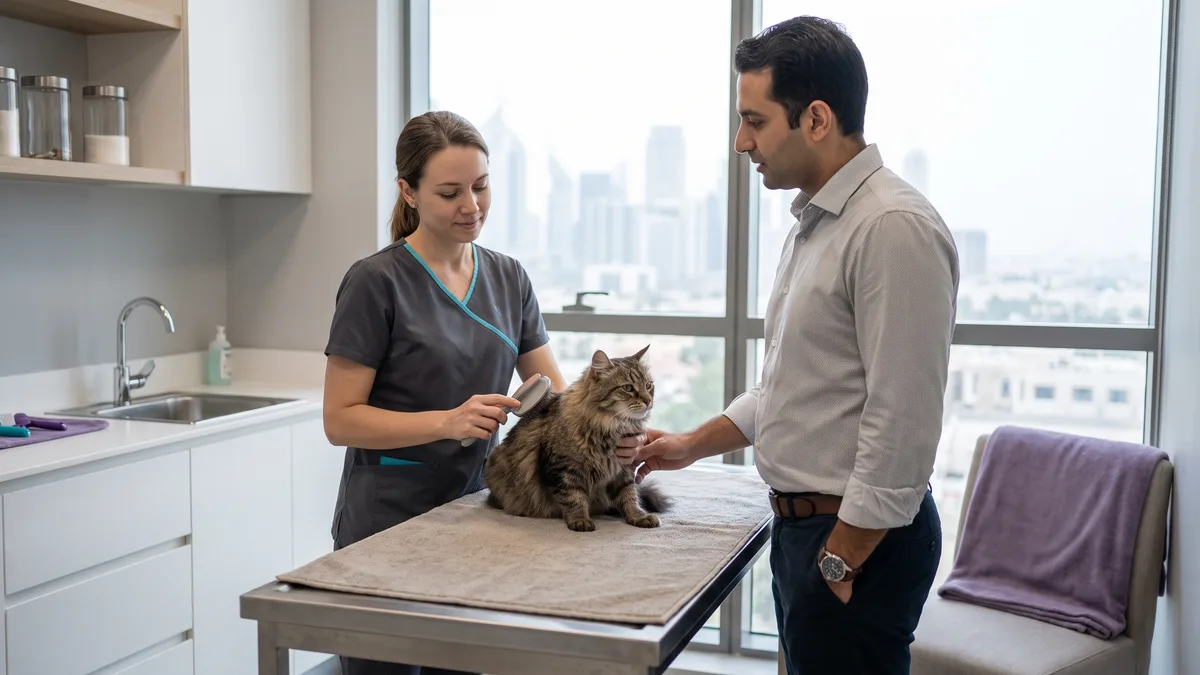
A veterinary setting becomes more relevant when grooming cannot be separated safely from health. Examples include active dermatitis, recurrent ear disease, wounds, painful or tightly adhered mats, a new lump, parasite infestation, breathing disease, significant mobility limits, severe anxiety or a history of collapse.
It can also be useful when a veterinarian has prescribed a topical treatment. The Merck principles of topical treatment distinguishes cleansing products from medicated therapies and explains that contact time, rinsing, frequency and prevention of licking all affect use. Natural ingredients are not automatically safer. Plant-derived products can still irritate skin or be unsafe when licked.
Choose a veterinary setting only after confirming what it actually provides. Ask whether the service includes routine grooming only, a veterinary examination when indicated, clinician-directed medicated bathing, or another defined scope. Do not assume every vet clinic has a groomer, every grooming appointment includes an exam or every veterinarian is present throughout.
Pets with recurrent or active skin disease may need a separate pet dermatology consultation before grooming. A visible tick or flea should prompt a patient-specific parasite treatment review rather than an improvised salon treatment.
Skin, ears, nails and mats: observation versus diagnosis
Grooming gives the handler close contact with the pet, so new findings may become visible. The safe response is to document and refer, not label the condition.
| Finding during grooming | Appropriate response | Unsafe assumption |
|---|---|---|
| Red, wet, painful or crusted skin | Stop irritating steps and recommend veterinary assessment | Naming an allergy or infection without examination |
| Ear odour, discharge, redness or pain | Avoid deep cleaning and refer for diagnosis | Treating every dirty ear as mites or yeast |
| Lump or swelling | Record the location and recommend assessment | Declaring it harmless from touch or appearance |
| Attached tick or flea evidence | Prevent spread, inform the owner and seek a species-safe plan | Applying whichever product is on hand |
| Tight painful mat against fragile skin | Stop if removal risks cutting or tearing the skin | Pulling, brushing or clipping through pain |
| Bleeding or damaged nail | Control minor bleeding if trained and escalate when persistent | Continuing the session regardless of pain |
The Merck Veterinary Manual guide to otitis externa identifies pain, odour, redness, swelling and discharge as reasons for diagnosis. Routine ear-canal hair removal is not needed when hair is not causing a problem and can trigger inflammation. Deep swabbing can also injure the canal or push debris further inside.
Low-stress handling and when a session should stop
Good handling reduces fear where possible, watches body language and adjusts before distress escalates. It does not force completion at any cost.
The AAHA guide to preparing pets for veterinary visits supports gradual positive practice around paws, ears, mouth and body. Short sessions at home can help a pet learn that brushes, towels and gentle handling predict rewards.
During grooming, warning signs include repeated escape attempts, freezing, frantic struggling, growling, snapping, excessive panting unrelated to heat, loss of balance or a sudden pain response. The AAHA cooperative-care article supports reading escalation and stopping when the patient is no longer tolerating the procedure.
A safe plan may involve a shorter groom, splitting tasks over several visits, changing technique or asking a veterinarian about pain and anxiety. Sedatives, anti-anxiety medicine and pain relief require veterinary direction. They should not be used as an unreviewed convenience.
For cats, restraint tolerance, coat condition and carrier stress can differ substantially from dogs. Our cat grooming Dubai guide covers cat-specific coat and handling needs. Pets with intense fear may benefit from a broader pet anxiety assessment.
Questions to ask any groomer before booking
Use the same core checklist whether the provider is a salon or clinic:
- What services are included, and which are not?
- Who will handle my pet, and what training do they have?
- How do you respond to fear, aggression, pain or breathing difficulty?
- Are pets continuously supervised during drying?
- How are tools, tables, tubs and shared spaces cleaned?
- Which products will be used, and are they appropriate for my pet's species and skin history?
- Will you stop and contact me if you find a wound, parasite, lump or painful area?
- Is a veterinarian physically present, and when does a concern become a separate medical consultation?
Disclose heart or breathing disease, seizure history, allergies, arthritis, recent surgery, skin or ear problems, medicines and previous grooming reactions. A provider cannot plan safely around information they do not have.
Dental care is a separate veterinary service
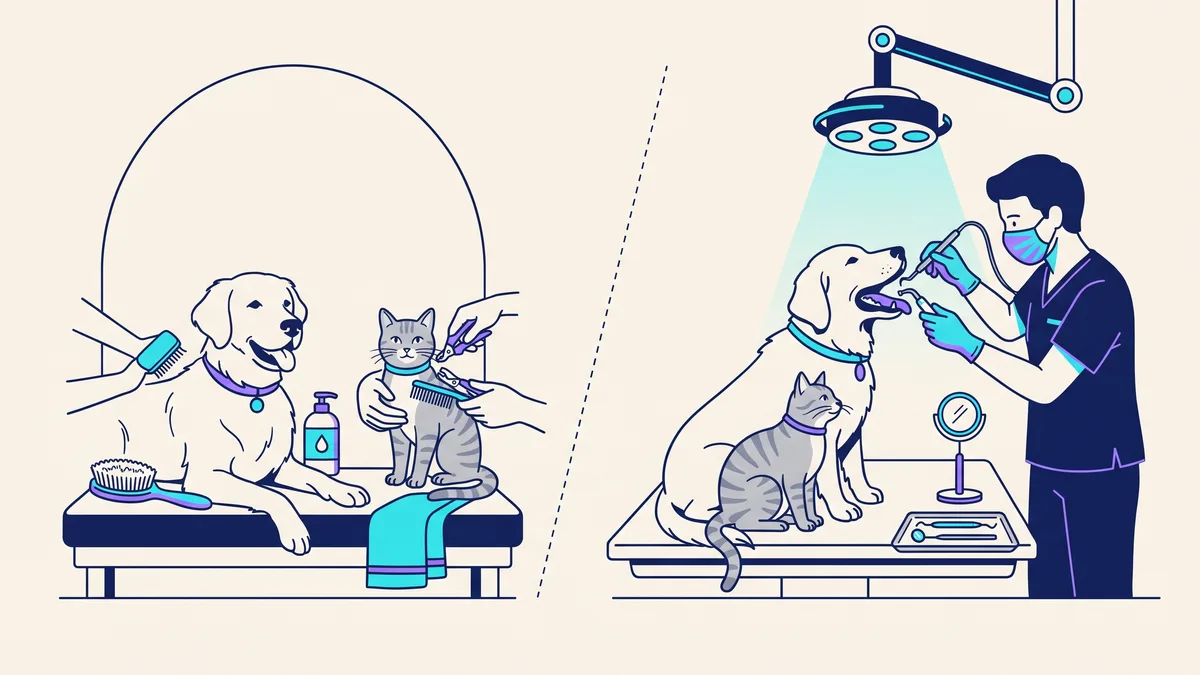
Tooth brushing or wiping during a groom is cosmetic home-style care. It is not a complete dental cleaning. Disease below the gumline requires veterinary diagnosis, periodontal probing and dental radiographs under general anaesthesia.
The AAHA dental care guidelines do not support anaesthesia-free scaling as equivalent to complete dentistry. A groomer should not scrape tartar, probe gums or promise to treat dental disease. Persistent bad breath, red gums, oral bleeding, loose teeth, facial swelling or chewing pain belongs in a dental assessment.
How often does a pet need grooming?
There is no universal six-week rule. Frequency depends on species, breed, coat type, hair length, shedding, skin health, age, mobility, home brushing, lifestyle and tolerance.
Long or continuously growing coats may need frequent brushing and planned trims. Short coats may need less professional grooming but still benefit from regular skin, nail and ear checks. Older, arthritic or overweight pets may need more help because self-grooming and comfortable positioning become difficult.
Set the interval after considering how quickly the coat mats, whether nails affect movement, how the skin responds to bathing and how well the pet tolerates the process. More grooming is not always better. Overbathing, harsh products and repeated ear manipulation can create irritation.
Signs that need veterinary care before grooming
Postpone routine grooming and contact a veterinarian for active wounds, hot or painful skin, pus, marked swelling, persistent bleeding, severe ear pain, sudden lameness or a suspected product reaction. Breathing difficulty, collapse, heat distress or uncontrolled bleeding is an emergency.
Do not ask a groomer to work through severe pain, panic or aggression. The underlying cause may need medical assessment before coat care can continue safely.
Frequently asked questions
Is veterinary grooming safer than a salon?
It can be safer when medical assessment, prescription treatment or management of a fragile patient is genuinely available. A reputable salon may be suitable for a healthy, comfortable pet needing routine coat care. Verify the provider's actual staffing and protocols.
Does veterinary grooming include a health examination?
Not automatically. A groomer may notice an abnormality, but a veterinary examination is a separate clinical service unless the provider clearly states otherwise. Ask what is included before booking.
Can a groomer clean my pet's teeth without anaesthesia?
Brushing visible tooth surfaces is not a complete dental procedure. Scaling and polishing without anaesthesia cannot replace full periodontal probing, radiographs and cleaning below the gumline.
Should my pet be sedated for grooming?
Sedation is not a routine convenience. A veterinarian must assess whether medicine is appropriate after considering health, fear, pain and the planned procedure. Never give an unprescribed sedative.
How often should a dog or cat be professionally groomed?
There is no single interval. Coat type, matting risk, skin condition, nail growth, lifestyle, age, mobility and home care determine the plan. Ask the groomer and veterinarian to coordinate when medical needs affect grooming.
If a veterinary setting fits your pet's needs, book a grooming consultation after confirming the service scope.
About this guidance
The Paw Sisters Veterinary Team prepared this comparison using current Merck, RSPCA and AAHA guidance. It is educational and does not verify a specific provider's staffing, certification or emergency capability. See our editorial policy for sourcing and update standards.