Hot Pavement Dog Paws: Dubai Burn Prevention Guide
Sources and guidance checked
Medically reviewed by Dr. Hasan AlDahhak, DVM ·
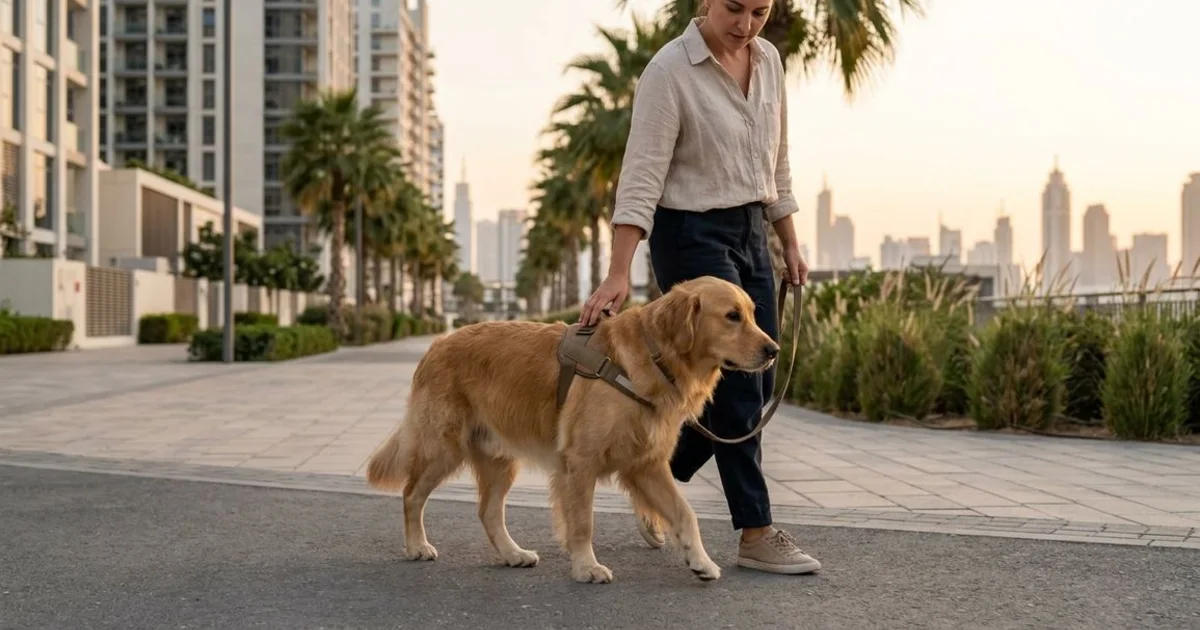
Hot pavement dog paws are preventable, but Dubai does not have one universally safe walking hour. Sun, shade, cloud, wind, surface material and stored heat all matter. Check the local forecast and the actual route before every walk, keep outings brief when conditions are uncertain, and choose a cooler alternative if the surface feels uncomfortably hot.
If your dog suddenly lifts a paw, limps, refuses to continue or has a damaged pad after a walk, move off the surface and assess every foot. Blisters, raw skin, bleeding, dark discoloration or inability to bear weight need prompt veterinary care. Contact an emergency veterinary service if the injury is severe or heat illness is also possible.
Key Takeaways
- There is no fixed clock time or air-temperature cutoff that guarantees pavement is safe.
- Shade, grass and a checked route are safer choices, but every surface still needs assessment.
- The hand test is a quick screen, not proof that a long walk is safe for your dog's paws.
- Cool a suspected burn with cool running water, prevent licking and arrange veterinary advice.
- Confusion, collapse, seizures, repeated vomiting or breathing distress are heat emergencies.
Why Pavement Risk Changes From Walk to Walk
Air temperature does not tell you the exact temperature of asphalt, concrete, tile, sand or artificial turf. A surface exposed to direct sun may store heat, while the same material in shade may be cooler. Conditions can also change along one route.
The AAHA guidance on protecting paws from hot pavement advises checking surfaces, choosing cooler periods and watching for discomfort. Before leaving, review the current Dubai weather information from the National Center of Meteorology, then check the surface where the dog will actually walk.
Risk may be higher when a dog:
- has a previous pad injury, thin or irritated pads, or a mobility problem
- is a puppy, senior or reluctant to signal discomfort
- must cross long stretches without shade or a quick exit
- is exercising intensely or wearing poorly fitted footwear
- is also vulnerable to heat stress because of age, body shape or illness
Do not try to harden pads by deliberately exposing them to hot ground. Heat tolerance is not a safe training goal.
A Go, Shorten or Stop Walk Check
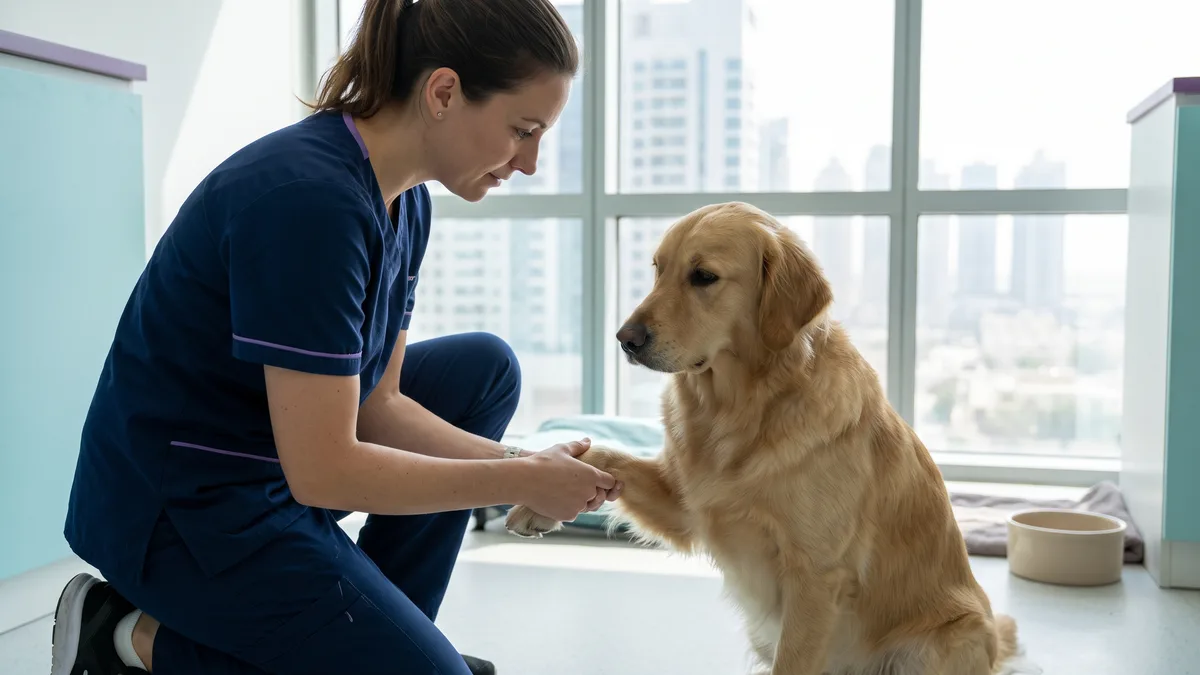
Use this decision sequence each time rather than relying on a summer timetable.
| Check | Lower-risk choice | Reason to shorten, reroute or stop |
|---|---|---|
| Weather | Cooler conditions with no heat alert and a planned short route | High heat, strong sun, humid conditions or a weather warning |
| Surface | Shaded route or cooler natural ground checked in several places | Surface is uncomfortable to your hand or route has long exposed sections |
| Dog | Walking normally, alert and comfortable | Paw lifting, slowing, seeking shade, heavy distress or reluctance to move |
| Exit plan | Water, shade and quick access home or to transport | No shade, no water or no way to leave the route promptly |
For routine exercise, consider indoor enrichment or a short toilet break when outdoor conditions are poor. This Dubai summer dog-walking guide offers more ways to adjust activity without gambling on a fixed hour.
Is the Seven-Second Hand Test Reliable?
Placing the back of your hand against the walking surface for several seconds can reveal obvious heat. If it is uncomfortable for you, do not ask your dog to walk on it. However, passing this quick test does not guarantee safety because:
- sensitivity differs between human skin and canine paw pads
- the route may contain hotter patches than the test spot
- exposure accumulates as a walk continues
- a dog's health, gait and existing pad condition affect risk
- conditions can change during the outing
Treat the hand test as one screening step. Also inspect the route, keep the first outing short and watch the dog's movement. Never force a dog forward if they begin lifting paws or resisting.
Signs of a Paw-Pad Burn
Check all four feet, including between the toes, after a suspicious exposure. Signs may not all be obvious at once.
| What you notice | What to do |
|---|---|
| Repeated licking, mild tenderness, paw lifting or a new limp | Stop the walk, cool the paw and call a veterinarian for advice if signs persist |
| Marked redness, swelling, blisters or peeling | Arrange prompt same-day veterinary assessment |
| Raw or open pad, bleeding, dark or pale tissue, severe pain | Seek urgent veterinary care and limit walking |
| Unable to bear weight, multiple paws affected or worsening weakness | Treat as urgent, especially if heat exposure occurred |
| Confusion, collapse, seizure, repeated vomiting or breathing distress | Go to emergency care immediately for possible heat illness |
A limp can also result from glass, thorns, nail damage, an interdigital lesion or an orthopedic injury. Do not assume every post-walk limp is a burn. A veterinarian can assess the pad and look for other causes.
First Aid for a Suspected Paw Burn
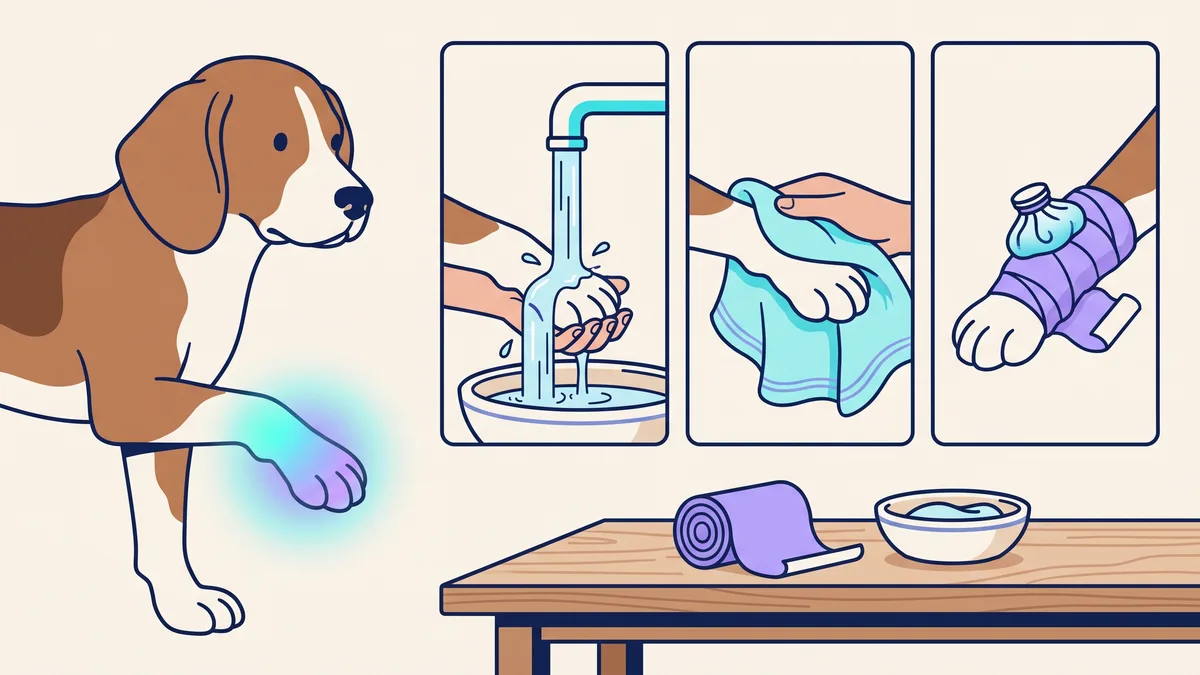
That AAHA hot-pavement first-aid guidance recommends moving the dog off the hot surface, rinsing with cool water, avoiding ice and contacting a veterinarian. For a suspected paw-pad burn:
- Move the dog off the hot surface. Carry them if it is safe and practical, or use the coolest available route for only the distance needed.
- Use cool running water. Gently cool the affected paw without scrubbing. Do not use ice or very cold packs directly on the tissue.
- Look without peeling tissue. Check each pad and between the toes. Do not puncture blisters or pull loose skin.
- Prevent licking. Use a properly fitted cone if available and safe. Licking can add trauma and contamination.
- Protect during transport. If a covering is needed, place a clean, non-stick layer loosely over the paw. Avoid a tight bandage that could impair circulation.
- Call a veterinary clinic. Describe the exposure, signs, affected paws and whether the dog has any heat-illness symptoms.
Do not apply butter, oils, essential oils, toothpaste, disinfectant, human burn cream or an unknown ointment. Do not give human pain medicines. Some are dangerous to dogs, and a coating can make assessment more difficult.
When Paw Injury and Heat Illness Overlap
A dog walking on heat-retaining surfaces may also overheat. Paw first aid must not delay emergency treatment for whole-body illness. AAHA's heatstroke guidance lists warning signs including excessive panting, drooling, vomiting, weakness, confusion, collapse and seizures.
Move the dog to a cooler area, begin cooling with cool water if advised or while arranging urgent transport, and contact the clinic. Do not immerse an unstable dog or force water into the mouth. The Cornell canine heat-safety guide emphasizes immediate veterinary care when heatstroke is suspected.
If you are unsure whether signs are urgent, use this guide to signs that need immediate veterinary care and call a clinic for triage.
How to Reduce Paw-Burn Risk
Plan a route, not just a departure time
Choose shade, natural ground and short loops with easy exits. Walk the route yourself when possible and remember that a shaded section on one outing may be exposed on another. Keep toilet breaks functional when conditions are marginal and provide enrichment indoors.
Check paws before and after walking
Look for cracks, irritation, damaged nails or foreign objects before going out. Recheck after the walk and dry between the toes if the paws are wet. A pre-existing lesion can make even moderate surfaces uncomfortable.
Use protective footwear carefully
Well-fitted dog booties can create a barrier, but they do not make an unsafe outing safe. Introduce them gradually indoors, check that the dog can walk normally and inspect for rubbing. Boots may also trap heat or moisture, so remove them after the outing and recheck the skin.
Build an alternative exercise plan
Food puzzles, scent games, training sessions and safe indoor play can reduce the pressure to complete a long outdoor walk. Dogs with medical or mobility needs may benefit from an individualized activity plan at a veterinary checkup.
Prepare before an urgent trip
Save the clinic route, keep a cone and clean non-stick dressing material available, and know how you will transport a painful dog. An advanced pet-care clinic can advise what should be examined in person and what information to bring.
Frequently Asked Questions
What is the safest time to walk a dog in Dubai?
There is no hour that is safe under every condition. Check the forecast, sun exposure and actual surface immediately before each walk. If the surface is uncomfortable, choose a cooler route, shorten the outing or exercise indoors.
Can a dog's paws burn even when the air feels comfortable?
Yes. Sun-exposed surfaces can retain heat differently from the surrounding air. Surface material, shade and duration of contact matter, so test the route and observe your dog.
Is the seven-second pavement test enough?
No. It is a useful quick screen for obvious heat, but it cannot account for hotter patches, changing conditions, walk duration or an individual dog's sensitivity. Combine it with route checks and close observation.
Should I put ice or burn cream on a burned paw?
Do not place ice directly on a burn or use an unapproved human cream. Move the dog off the surface, use cool running water, prevent licking and ask a veterinarian how urgently the injury should be examined.
When does a paw burn need a vet?
Seek prompt care for blisters, open or discoloured tissue, bleeding, severe pain, persistent limping or inability to bear weight. Collapse, confusion, seizures, repeated vomiting or breathing distress require emergency care. You can book a veterinary appointment for a non-life-threatening concern.
About this guidance
This article was prepared by the Paw Sisters Veterinary Team for dog owners in Dubai and updated on 23 August 2026. It is general first-aid and prevention information, not a diagnosis or a substitute for veterinary examination. Surface conditions and individual risk change, so current local conditions and the dog's behaviour should guide every outing.