
Import Pet to Dubai: Current Step-by-Step Guide
Sources and guidance checked
Medically reviewed by Dr. Hasan AlDahhak, DVM ·

To import pet to Dubai, obtain the UAE import permit before travel, make sure the microchip matches every record, complete the required vaccinations and any origin-risk testing, arrange an official health certificate in the departure country, and secure airline acceptance. The pet is then inspected and released at an approved UAE entry point.
If your move also involves later departure or return travel, save the requirements for our pet travel and export service before records expire. UAE entry, UAE export, and airline rules are separate processes.
For one timeline that covers the carrier, transit points, veterinary records, and arrival plan, use the pet relocation Dubai guide alongside the UAE entry checklist.
Key takeaways
- Use the current MOCCAE service page as the controlling UAE checklist.
- The UAE import permit is required before entry and is currently valid for 90 days from issue.
- A permanent microchip must match the number on the official health certificate and vaccination record.
- A rabies antibody titre is linked to the source country's risk category, not required for every pet.
- Airline approval does not guarantee UAE border release, and an import permit does not guarantee airline carriage.
Import Pet to Dubai Requirements at a Glance
The current MOCCAE pet import service is the primary source for cats and dogs entering the UAE. Its current service conditions state that individuals may import up to two companion animals per person per year, excluding qualifying returning resident animals, and that the permit is valid for 90 days.
| Requirement | What to verify before travel |
|---|---|
| Legal eligibility | Species, breed or type, age, source-country status, and personal-use limit |
| Import permit | Correct owner and animal details; valid on arrival |
| Microchip | Permanent chip; number matches every document |
| Vaccination document or passport | Pet description, chip, vaccine product, batch, and dates |
| Official health certificate | Issued and authenticated by the competent authority in the country of export |
| Rabies antibody test | Required when the source-country risk category calls for it |
| Parasite treatment | Administered and recorded within the official UAE window when required |
| Air transport | Airline acceptance and IATA-compliant handling or container |
| Port release | Shipment record, original documents, inspection, and release process |
Step 1: Check Whether Your Pet Is Eligible
Before paying for tests or flights, check the live MOCCAE rules for the animal's species, breed or type, age, origin, and ownership purpose. If you plan to bring a dog to Dubai, confirm breed eligibility before making financial commitments. Rules for assistance animals, commercial imports, hybrids, and protected wildlife can differ from ordinary personal imports of cats and dogs.
Dog breed restrictions are a legal issue, not merely an airline preference. The UAE Ministry of Justice's Federal Law No. 22 of 2016 sets the wider dangerous-animal and dog-licensing framework. Confirm the current MOCCAE import list before making financial commitments.
Step 2: Apply for the MOCCAE Import Permit

Apply through the official MOCCAE digital service before the animal enters the UAE. Enter the owner, pet, and journey details exactly as they appear in the supporting records.
The service currently describes a 90-day permit validity period. That does not mean every supporting veterinary document is valid for 90 days. The health certificate, laboratory report, vaccination status, and airline acceptance each follow their own rules.
Before submitting, verify:
- the travel date falls within the permit period;
- the owner's name matches the passport and booking;
- the species, breed, sex, colour, and date of birth are consistent;
- the microchip number is copied correctly;
- the entry point and shipment information are accurate.
Government fees and processing details can change, so check the amount and service time shown in the portal at payment rather than relying on an old quotation.
Step 3: Scan the Microchip
The pet must have a permanent microchip, and its number must match the health certificate and vaccination document. Have a veterinarian scan the animal before the final records are prepared.
Use pet microchipping and registration in Dubai after arrival if local records need updating, but the import paperwork must be prepared correctly in the departure country. If the chip cannot be read or the number is wrong, ask the competent authorities how to correct the sequence before travel.
Step 4: Complete the Required Vaccinations
MOCCAE requires a detailed vaccination document or pet passport. The record should identify the pet and show the required vaccine names, manufacturer, batch details, and administration dates.
For dogs, the current UAE list includes rabies and specified core canine vaccines. For cats, it includes rabies and specified core feline vaccines. Because the official list and health conditions can change, use the live MOCCAE page rather than copying a saved list into the travel file.
A vaccine marked "valid" on a clinic card may still fail if the animal was too young, the chip sequence was wrong, the primary-vaccination waiting period was incomplete, or required product details are absent.
Step 5: Determine Whether a Rabies Titre Is Required
A rabies antibody titration test is not mandatory for every origin. MOCCAE links the test to the source country's current risk classification. When it is required, the official rules govern the sampling sequence, accepted laboratory, result threshold, report details, and validity.
Ask the exporting country's official veterinarian to confirm that the laboratory and certificate format meet UAE conditions. Do not assume a titre prepared for the EU, UK, Australia, or another destination will automatically meet the UAE process.
Step 6: Obtain the Official Health Certificate
The official veterinary health certificate must come from the competent veterinary authority in the country of export and meet UAE wording and authentication requirements. A UAE clinic cannot retrospectively issue the origin-country export certificate after the animal lands.
Before the certificate is finalised, compare it against the pet and permit:
- scan the microchip again;
- match the owner's identity and pet description;
- verify every vaccine date and batch entry;
- include required test and treatment details;
- confirm the certificate's issue and travel window;
- obtain all official signatures, stamps, or endorsements.
Step 7: Book the Correct Flight and Crate
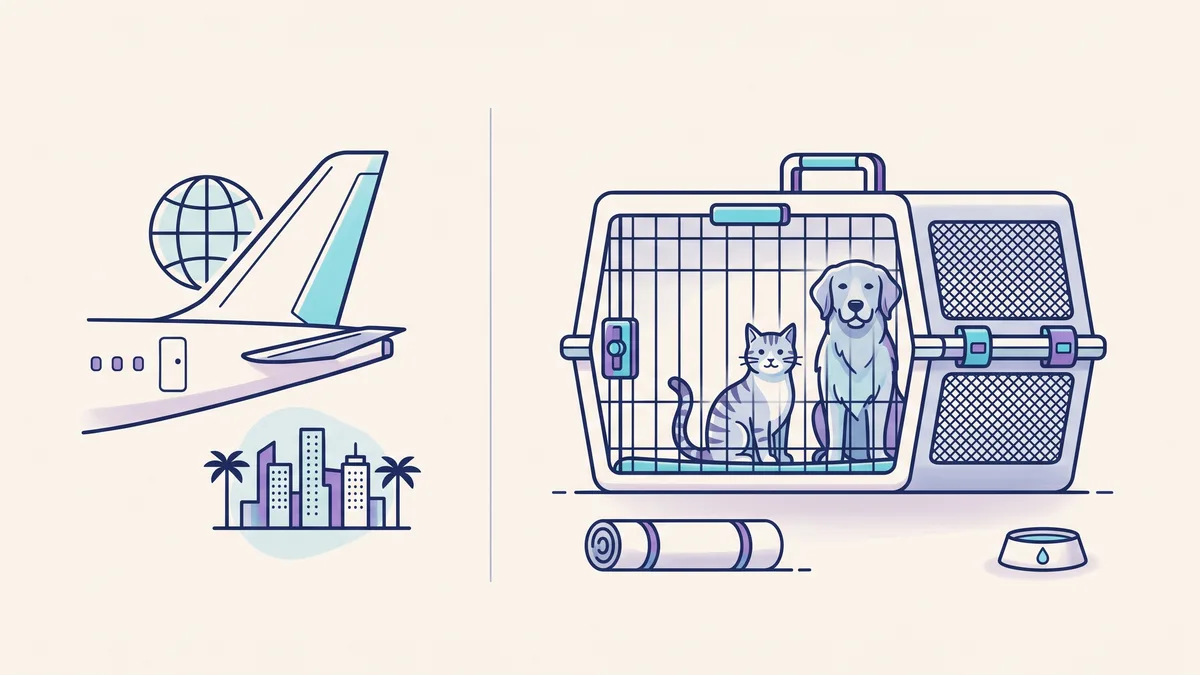
MOCCAE requires cats and dogs to be shipped according to IATA conditions. The operating airline then applies its own route, animal, crate, and booking rules.
The IATA live-animal transport guidance highlights ventilation, hydration, temperature, journey length, handling, and container suitability. Confirm directly with the operating carrier whether the pet travels in cabin, as baggage, or as cargo. Also confirm the acceptance terminal and arrival release location.
Do not rely on an "IATA approved" marketing label alone. The carrier must accept the specific crate with the animal able to stand, sit, turn, and lie naturally.
Step 8: Prepare for Arrival and Release
At the UAE entry point, officials compare the animal, shipment, permit, health certificate, vaccination record, and any required laboratory report. The current MOCCAE process includes visual inspection before release.
Prepare one clearly ordered travel file:
- owner passport and contact details;
- valid MOCCAE import permit;
- airway bill or shipment document;
- original official health certificate;
- original vaccination document or pet passport;
- original titre report when required;
- copies and digital backups;
- agent or consignee contact details, if applicable.
Confirm who will clear the pet, where they must go, what payment method is accepted, and whether an appointment is needed. A pet arriving as cargo may not be collected from the passenger baggage hall.
Step 9: Arrange Care After Arrival
Once the pet is released and settled, book a veterinary checkup in Dubai to establish a local medical record, scan the chip, review vaccine continuity, and plan parasite prevention for the UAE environment.
Keep all import documents. They can help with future relocation, insurance, local registration, and proof of uninterrupted rabies vaccination. If onward travel is likely, schedule pet vaccinations in Dubai before any record lapses.
Common Reasons for Delay or Refusal
- The permit expired before arrival.
- The chip number does not match the certificate.
- A required vaccine, batch number, or date is missing.
- The health certificate was not issued or authenticated by the competent origin authority.
- A required titre report is absent or from an unacceptable laboratory.
- The pet is not eligible because of age, breed, origin, or movement type.
- The airline has not confirmed the animal or crate.
- The owner arrives at the passenger terminal when cargo clearance is required elsewhere.
- The itinerary changed after the permit and certificate were prepared.
Use a single master checklist and initial each item only after comparing it with the animal, itinerary, and current official page.
Frequently Asked Questions
How many pets can I import to Dubai?
MOCCAE's current personal-import rule allows up to two companion animals per individual per year, with an exception for qualifying returning resident pets. Check the live rule for your circumstances before applying.
How long is the UAE pet import permit valid?
The current MOCCAE service states 90 days from issue. Other documents have separate validity periods, so the permit alone does not set the whole timeline.
Is a rabies titre required from every country?
No. The current UAE process ties titre requirements to source-country risk classification. Use MOCCAE's current classification and instructions for the planned travel date.
Can a puppy or kitten be imported?
Only if it meets the current minimum-age, vaccination, and source-country rules. High-risk and low-risk origins can have different minimum timelines.
Can my pet fly in the cabin to Dubai?
That depends on the operating airline, route, airport, animal, and UAE entry conditions. Get written airline acceptance before booking, and remember that cabin carriage does not replace the import permit or border inspection.
About this guidance
This guide was materially reviewed on 23 August 2026 using current MOCCAE, UAE government, and IATA information. UAE animal-health conditions, country risk classifications, service fees, airline policies, and port procedures can change after publication. Confirm the current rules with MOCCAE, the exporting country's competent authority, and the operating airline. Veterinary advice supports document preparation but cannot guarantee transport or border release.
After arrival, book a new-pet checkup to verify the chip and build a continuous Dubai medical record.