Pet Relocation Dubai: Current Step-by-Step Guide
Sources and guidance checked
Medically reviewed by Dr. Hasan AlDahhak, DVM ·
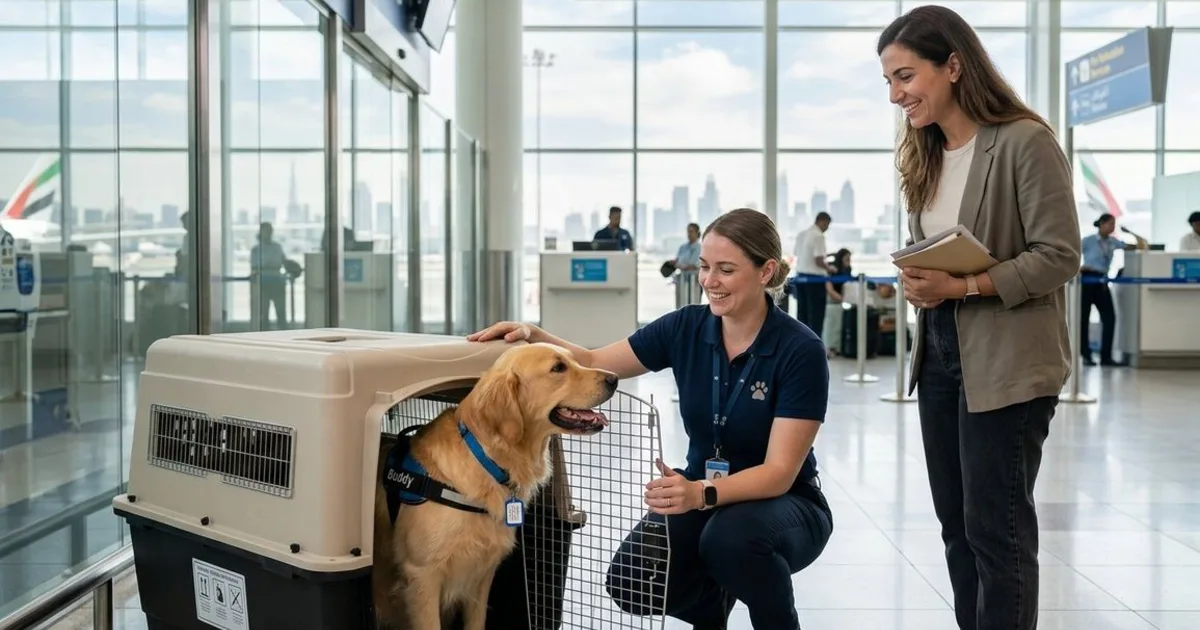
Successful pet relocation Dubai planning starts by separating the journey into rule sets. Moving a pet into the UAE is not the reverse of exporting one. The destination, the UAE authority, each transit point, and the operating airline can all ask for different documents.
Begin with the exact route and our pet travel and export service. Do not commit to a flight until the longest health, permit, quarantine, or residence requirement has been identified.
Key takeaways
- First decide whether the pet is entering Dubai, leaving Dubai, returning to the UAE, or only transiting.
- Government entry approval and airline acceptance are separate. You need both.
- The microchip number must match every veterinary and government document.
- Work backward from the destination's longest mandatory step, not from a generic relocation timeline.
- Recheck official rules close to travel because country classifications, forms, and approved routes can change.
Choose the Correct Relocation Path
The first planning decision is direction. It determines which authority leads the process.
| Journey | Primary rule owner | Core starting point |
|---|---|---|
| Importing into Dubai | UAE Ministry of Climate Change and Environment, MOCCAE | UAE import eligibility and permit |
| Exporting from Dubai | Destination authority, plus UAE export process | Destination checklist and certificate model |
| Returning a UAE resident pet | MOCCAE plus destination or departure-country authority | Return permit and continuous records |
| Transiting through another country | Transit authority and airline | Confirm whether the pet clears a border or stays airside |
| Commercial movement or ownership transfer | Authorities at origin and destination | Commercial rules, not ordinary private-pet guidance |
If your move is specifically into the UAE, use the detailed guide to importing a pet to Dubai. If you are leaving, build the document pack with our pet passport Dubai guide.
Pet Relocation Dubai Process

1. Confirm Legal Eligibility
Check that the destination accepts the species, breed or type, age, origin country, ownership purpose, and intended route. Some countries restrict particular dog breeds, hybrid animals, pregnant animals, or movements that involve sale or transfer.
For UAE entry, use the current MOCCAE pet import service, not an old blog or saved screenshot. MOCCAE currently requires prior permission, compliant identification and health documents, and port inspection before release. It also distinguishes low-risk and high-risk source countries.
2. Confirm the Operating Airline and Transit
Ask the operating carrier whether the animal can travel in the cabin, as accompanied baggage, or as manifest cargo on the specific route. A carrier may accept a pet generally but reject a particular aircraft, connection, breed, crate, or season.
The IATA Live Animals Regulations are the air-transport standard used across the industry, but they do not replace an airline's booking conditions or a country's border rules. Confirm the check-in terminal, cargo agent, documentation cut-off, connection handling, and arrival release location in writing.
3. Scan the Microchip Before New Veterinary Work
The live scan should match the vaccination book and every new form. If the chip is missing, unreadable, or recorded incorrectly, resolve that before vaccine or laboratory steps whose validity depends on identification.
Use microchipping and registration in Dubai to verify the chip number. Carry a copy of the scan record, but keep all originals the authority or airline requires.
4. Review Vaccination Continuity
Do not look only at the expiry date printed on a card. The destination may care about the pet's age on vaccination day, whether the chip was already in place, whether the course was primary or a continuous booster, and how long must pass before travel or blood sampling.
Bring the complete record to a pet vaccination appointment. A veterinarian can identify gaps, but only the destination authority decides what qualifies for entry.
5. Complete Tests, Treatments, and Waiting Periods
A rabies antibody titre is route-specific. When required, confirm the sampling date, accepted laboratory, qualifying result, government endorsement, and any wait after sampling. Parasite treatments can also have narrow administration and recording windows.
Do not copy a titre timeline from an EU, UK, Australian, Japanese, or New Zealand checklist into a different journey. Those systems are not interchangeable.
6. Obtain Permits and the Correct Health Certificate
The destination may require prior permission, a specific model certificate, quarantine booking, owner declaration, or advance notice. The final health certificate is usually time-sensitive, so it should not be issued before every prerequisite is complete.
Schedule a pre-travel veterinary checkup when the certificate window is known. The clinic can complete the examination and veterinary sections within its authority. Government endorsement and border approval remain with the relevant authorities.
7. Prepare the Crate and Animal
Crate acceptance is based on the animal and the route, not the product label. The pet should be able to stand naturally, sit, turn, and lie down. Ventilation, secure fasteners, water access, and correct labels matter.
Introduce the crate gradually before travel. IATA discourages sedatives and tranquilizers for air transport because of potential adverse effects. If medication is medically necessary, the treating veterinarian and operating carrier should assess and document it for the specific journey.
8. Run a Final Document Audit
Compare every page against the live microchip scan and itinerary. Check names, flight details, dates, signatures, stamps, certificate model, test laboratory, treatment times, permit validity, and original-document requirements.
Keep one document set with the person or agent handling the pet, not in inaccessible checked luggage. Store encrypted digital copies for recovery, but do not assume authorities will accept copies in place of originals.
How Long Does Pet Relocation Take?
There is no universal lead time. The correct timeline is set by the longest mandatory rule on your exact route.
| Complexity | What may drive the schedule | Planning approach |
|---|---|---|
| Lower | Current chip and vaccines, no titre or quarantine | Still verify before booking |
| Moderate | Permit, official certificate, treatment window, limited flight capacity | Build a dated checklist early |
| Higher | Titre, post-test wait, official identity check, quarantine, residence condition | Start many months ahead |
| Very high | Ineligible origin, complex transit, restricted breed, medical condition, commercial movement | Seek authority and specialist advice before spending |
Australia's Department of Agriculture tells owners to allow at least six months and use its country-specific cat and dog guides. New Zealand introduced revised rules in 2026 with a transition period and future identification deadlines, so owners should use the current New Zealand government process for their intended travel date.
Destination Checks for Common Dubai Routes
These links are starting points, not substitute checklists. The animal's species, travel history, purpose, and date can change the answer.
| Destination | Official starting point | Important distinction |
|---|---|---|
| European Union | European Commission non-EU pet entry rules | EU health certificate is different from an EU pet passport |
| Great Britain | UK pet travel document checker | Great Britain and Northern Ireland use different guidance |
| United States | CDC dog import navigator | Dog rules depend on recent country history and vaccine status; state and USDA rules may also apply |
| Australia | Australian government guide linked above | Country group, permit, tests, and quarantine can drive a long schedule |
| New Zealand | New Zealand government guide linked above | Use the process that applies on the planned travel date |
Cost Planning Without Misleading Estimates

Avoid one advertised package price until the route is known. A relocation budget can include:
- veterinary examinations, vaccinations, tests, and treatments;
- government permit, endorsement, inspection, or quarantine charges;
- laboratory and courier costs;
- airline or cargo fees;
- travel crate and handling equipment;
- transport-agent or customs-clearance fees;
- rebooking, boarding, or repeat-document costs if plans change.
Request itemised quotes and note the currency, validity date, inclusions, and refund terms. Government and airline charges can change independently of veterinary fees.
Common Relocation Mistakes
- Starting with a flight date instead of the official checklist.
- Treating UAE entry rules as UAE export rules.
- Assuming a valid rabies vaccine removes every titre requirement.
- Using an EU pet passport explanation for travel to Great Britain.
- Ignoring a transit country's conditions.
- Booking the marketing airline without checking the operating carrier.
- Buying a crate before confirming route-specific acceptance.
- Letting a rabies booster lapse during a long preparation period.
- Asking a veterinarian to guarantee government or airline approval.
Frequently Asked Questions
Is a relocation agent always required?
Not for every route. Some carriers or complex destinations may require or strongly favour an experienced shipper. Even when self-management is allowed, the owner remains responsible for meeting official requirements.
Is pet air travel safe?
Risk depends on the individual animal, route, weather, handling, crate, and health. A veterinary fitness assessment and airline-compliant plan reduce avoidable risk, but no journey is risk-free.
Can a flat-faced pet fly from Dubai?
It depends on the airline, aircraft, season, route, and individual animal. Obtain veterinary advice and written carrier acceptance before booking because airlines can apply separate conditions to flat-faced breeds.
What if my pet has a medical condition?
Discuss the condition, medication, stress tolerance, and journey length with the treating veterinarian. Also ask the airline and destination authority about medication documents and transport restrictions.
Who gives the final approval?
No single party approves the whole move. The destination authority controls entry, the UAE authority controls relevant UAE permits and endorsements, transit authorities control transit, and the airline controls carriage.
About this guidance
This guide was materially reviewed on 23 August 2026 using current MOCCAE, IATA, European Commission, UK government, CDC, Australian government, and New Zealand government sources. Regulations and airline policies can change after publication. Confirm the latest route-specific requirements with every competent authority and the operating airline. Veterinary support prepares the health steps but cannot guarantee carriage or entry.
Once the route is confirmed, book a relocation planning appointment to turn the official requirements into a veterinary schedule.