Pet Passport Dubai: Travel Documents & Booking Guide
Sources and guidance checked
Medically reviewed by Dr. Hasan AlDahhak, DVM ·
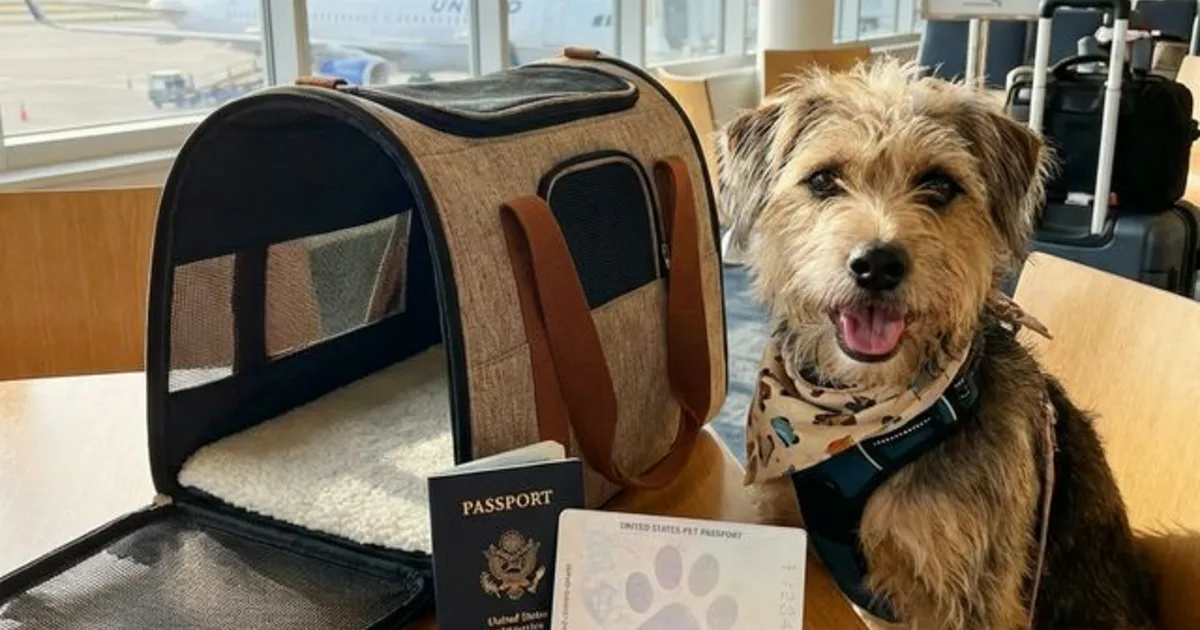
For pet passport documents in Dubai, start with your destination, travel date, microchip record and vaccination history. Dubai does not issue one universal booklet that works everywhere. Your file is built around the destination's rules, the UAE export process, any transit rules, and the airline's acceptance policy.
Book a pet travel consultation at Paw Sisters in Al Garhoud and share your route and existing records so the team can help plan the clinical steps.
Start by checking your route with our pet travel and export service. Do this before booking a non-refundable flight, because one missing blood test or waiting period can change the feasible departure date.
If the journey also involves carrier selection, transit handling, arrival release, or a transport agent, use the broader pet relocation Dubai guide to coordinate those steps with the veterinary file.
Key takeaways
- A Dubai travel file is not automatically an EU pet passport. It may contain a microchip record, vaccination proof, laboratory reports, an import permit, and an official health certificate.
- The destination government sets entry rules. The UAE authority controls export endorsement, while the airline controls how and whether it will carry the animal.
- Complete the microchip and rabies sequence first, then work backward from the longest destination requirement.
- Check every rule again shortly before travel because forms, approved routes, and health conditions can change.
What Does Pet Passport Mean in Dubai?
In Dubai, "pet passport" is useful shorthand for a travel document pack. The exact pack depends on where the animal is going and whether the journey is a private move, a commercial movement, or a return trip.
An EU pet passport is a specific document issued by EU countries and certain recognised non-EU countries. A pet leaving the UAE for the EU will usually need an EU animal health certificate instead. The European Commission's current non-EU entry guidance explains the certificate, identification, rabies, entry-point, and non-commercial movement conditions.
| Document or record | Who controls it | When it may apply |
|---|---|---|
| Microchip record | Destination authority and airline | Nearly every international route |
| Vaccination record | Destination authority | Rabies and any destination-specific vaccines |
| Rabies antibody test | Destination authority | Only when the route or origin category requires it |
| Destination import permit | Destination authority | Countries that require prior permission |
| Veterinary health certificate | Destination authority, issued and endorsed through the departure-country process | Most international moves |
| UAE import permit | MOCCAE | Returning to or importing into the UAE |
| Crate and booking confirmation | Airline or cargo handler | Air transport |
Pet Passport Dubai Checklist

1. Fix the Route Before Starting Tests
Write down the final country, every transit airport, the operating airline, and whether your pet will travel with you. A codeshare can matter because the operating carrier's animal policy may apply. A change of airport or an overnight transit may also create a new border or handling requirement.
Ask four separate questions:
- What does the destination government require?
- What does the UAE require for export and later re-entry?
- Does the transit country require approval or documents?
- What will the operating airline accept for this species, breed, crate, and date?
This separation prevents a common error: treating an airline confirmation as permission to enter the destination.
2. Scan the Microchip and Match Every Record
Have the chip scanned before new paperwork is created. The number on the scanner must match the vaccination card, laboratory submission, health certificate, and permit. If your pet needs a new chip, your veterinarian should confirm how that affects the order of vaccination and testing for the destination.
Our microchipping and registration service can verify the number and record it accurately. Do not rely only on an old sticker without scanning the animal.
For the difference between the implanted chip, the readable number, and the owner database record, see the pet microchip Dubai guide.
3. Check Rabies and Other Vaccinations
The rabies record should show the chip-linked animal, vaccination date, product details, validity, and veterinary authentication required by the destination. A first vaccination, a lapsed vaccination, and an on-time booster may be treated differently.
Book pet vaccinations in Dubai early enough to leave room for any official waiting period. Do not assume that a commonly quoted number of days applies to every route.
4. Complete a Rabies Antibody Test Only When Required
A titre test measures the rabies antibody response, but it is not universal. The destination decides whether it is needed, when blood may be drawn, which laboratory is accepted, what result qualifies, and whether a wait follows the blood draw.
For example, current EU rules distinguish between listed and other non-EU origins. Australia uses a separate country-group process and advises owners to follow the matching official cat and dog import guide. A result that works for one country may not satisfy another country's timing or endorsement rules.
5. Get the Destination Permit and Correct Certificate
If the destination requires an import permit, secure it at the correct point in the sequence. Some applications depend on test results, residence history, or a quarantine booking.
The final certificate must be the model accepted by the destination. Great Britain, for example, lists the UAE as a country whose pets use a Great Britain pet health certificate in its official travel-document checker. The EU uses its own certificate model for qualifying non-commercial movements from outside the EU.
Your veterinarian can complete the clinical examination and veterinary sections that fall within their authority. Government endorsement, destination approval, and border clearance remain government functions.
6. Confirm UAE Export and Return Requirements
If your pet will return to Dubai, plan the return before departure. The current MOCCAE pet import service says an import permit is required for pets entering the UAE, including returning resident pets, and ties release to compliant identification, health, and vaccination documents.
Keep digital scans and paper originals, but do not assume a screenshot replaces an original or endorsed document. Ask the relevant authority which format it will accept.
7. Prepare the Airline Booking and Crate
Airline approval is a separate step. Confirm cabin, accompanied baggage, or manifest cargo eligibility directly with the operating carrier. Ask about species, breed, age, medical fitness, seasonal restrictions, crate construction, water access, and check-in location.
The IATA Live Animals Regulations overview identifies container suitability, ventilation, hydration, temperature, and journey duration as welfare-critical factors. A crate that looks large enough may still fail acceptance if the animal cannot stand, turn, sit, and lie naturally.
A Safer Planning Timeline
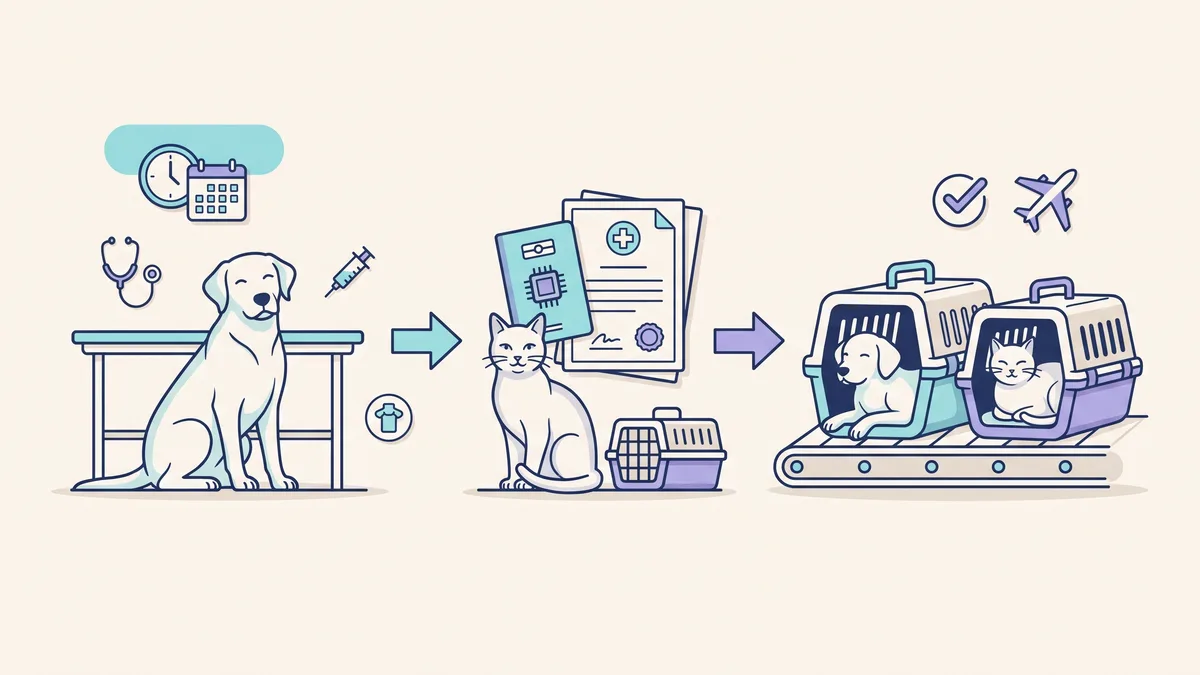
There is no single pet passport timeline. Start with the earliest date and longest rule in your destination checklist.
| Planning stage | Action |
|---|---|
| Before booking | Confirm legal eligibility, route, airline acceptance, and destination process |
| Early preparation | Scan the chip, review vaccine continuity, identify tests and permits |
| After prerequisites | Complete laboratory work and any official waiting period |
| Before departure | Obtain the destination permit and correct veterinary certificate at the permitted time |
| Final days | Reconfirm airline, originals, crate, health, and border or cargo appointment |
| After arrival | Complete inspection, release, quarantine, or local registration if required |
High-complexity destinations can require many months of preparation. Simpler routes may be shorter, but booking first and checking later is still risky.
Common Document Errors
- The microchip number differs by one digit between records.
- A vaccine was given before identification when the destination requires the opposite order.
- The wrong health-certificate model was used.
- The certificate was issued outside the destination's validity window.
- A titre was performed by a laboratory the destination does not accept.
- The owner checked the marketing airline but not the operating airline.
- Transit, commercial-movement, or return-to-UAE rules were overlooked.
- Originals, endorsements, or signatures were missing at cargo acceptance.
A pre-travel veterinary checkup is the right time to compare the live microchip scan with every page in the file.
Frequently Asked Questions
Can a Dubai vet issue an EU pet passport?
An EU pet passport and an EU animal health certificate are different documents. For a pet travelling from the UAE, check the European Commission rules for your exact movement and use the required certificate. Whether a passport can be issued depends on the issuing country's rules, not simply on having a vaccination record in Dubai.
Does every pet leaving Dubai need a rabies titre test?
No. The destination and the pet's travel history determine whether a test is required. Do not order one from a generic country list without confirming the current official route-specific rules.
How early should I start?
Start before committing to a flight. If the destination requires a titre, residence period, import permit, quarantine booking, or official identity check, preparation can take months. Work backward from the longest mandatory step.
Can my pet travel in the cabin?
Only if the operating airline, route, destination, and animal meet the carrier's current conditions. Cabin approval does not replace government entry approval.
What if the documents are incomplete?
The airline may refuse carriage, or an authority may delay release, quarantine the animal, return it, or apply another legal remedy. The exact outcome depends on the jurisdiction and defect, so resolve inconsistencies before check-in.
About this guidance
This guide was materially reviewed on 23 August 2026 using current MOCCAE, IATA, European Commission, UK government, and Australian government guidance. Travel rules can change after publication. Confirm the latest requirements with the destination and transit authorities, MOCCAE, and the operating airline before paying for travel. A veterinary consultation can prepare medical records but cannot guarantee a permit, airline acceptance, or border entry.
When your route is set, confirm the clinical steps against the correct destination timeline with your veterinarian.