Gum Disease in Dogs: Stages, Signs and Treatment
Medically reviewed by Dr. Hasan AlDahhak, DVM ·
Gum disease in dogs starts with plaque and gum inflammation, but periodontitis means the tissues and bone supporting a tooth have already been damaged. Red gums and tartar can raise concern, yet they cannot show the full stage. A complete pet dental care assessment in Dubai uses examination, periodontal probing and dental radiographs to assess each tooth.
Key takeaways
- Gingivitis affects the gums without attachment loss. Periodontitis damages the structures that hold a tooth in place.
- Visible tartar does not reveal how much disease is below the gumline.
- Staging and treatment are tooth-specific, so different teeth in one mouth may need different care.
- Brushing can slow new plaque after the mouth is comfortable, but it cannot restore lost bone or attachment.
Gum disease in dogs: gingivitis versus periodontitis
Gingivitis is inflammation limited to the gum tissue. It may appear as redness, swelling or bleeding at the gumline. When plaque remains, inflammation can extend into the periodontal tissues around a tooth. Periodontitis then causes loss of the attachment and bone that support that tooth.
The Cornell University College of Veterinary Medicine guide to periodontal disease explains that disease can progress below the gumline while a dog continues to eat. Appetite alone is therefore a poor pain test. A dog may chew on one side, drop food, resist face handling or become less interested in hard treats before refusing meals.
The same disease process affects cats, although cats can also have other painful conditions such as tooth resorption. This page focuses on dogs because that matches the search intent, but any cat with oral pain or abnormal gums also needs a veterinary assessment.
Why tartar alone does not reveal the stage
Tartar is hardened plaque on the tooth surface. Its colour and thickness do not show the depth of a periodontal pocket, the condition of a root or the amount of supporting bone that has been lost. A tooth that looks fairly normal above the gumline may still have disease underneath it.
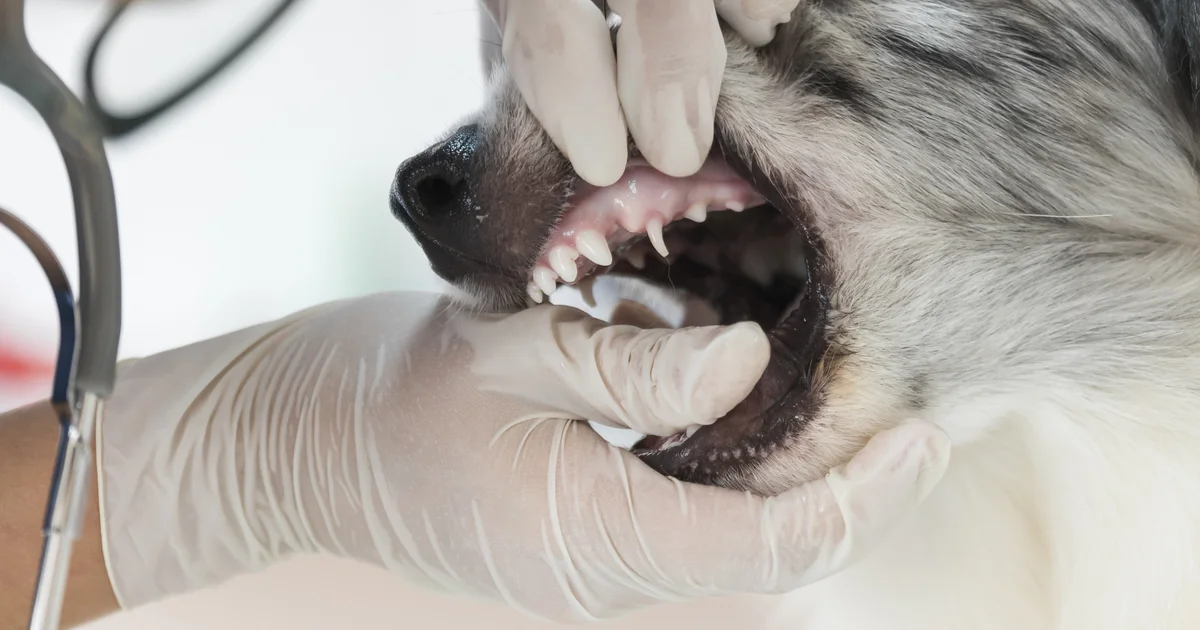
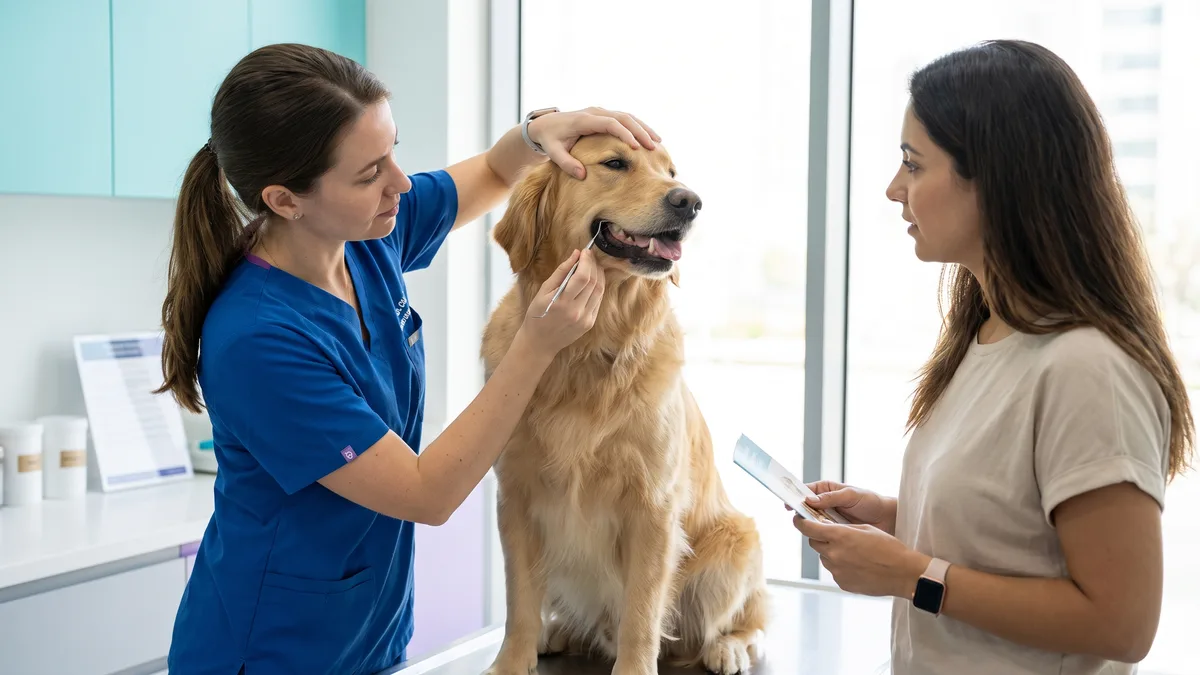
An awake oral check is useful for spotting visible deposits, inflammation, broken teeth, masses and obvious pain. It is not a complete periodontal examination. The AAHA essential dental steps include probing around every tooth, full-mouth intraoral radiographs, charting and cleaning above and below the gumline while the patient is under general anaesthesia.
That distinction matters. Photographs, home checks and cosmetic tooth scraping cannot establish an accurate periodontal stage.
How veterinarians stage periodontal disease
Veterinarians combine several findings rather than using one visible sign. They assess gum inflammation, pocket depth, gum recession, tooth mobility, attachment loss and changes to the surrounding bone on dental radiographs. Findings are recorded tooth by tooth.
| Stage | Main finding | What it means | Typical planning question |
|---|---|---|---|
| Stage 1 | Gingivitis without attachment loss | Inflammation is limited to the gums | Can professional care and daily plaque control return the gums to health? |
| Stage 2 | Early periodontitis | Supporting attachment has begun to be lost | Can the tooth be stabilised with appropriate periodontal treatment and home care? |
| Stage 3 | Moderate periodontitis | More attachment and bone have been lost | Is tooth-preserving treatment realistic, or will extraction better control pain and infection? |
| Stage 4 | Advanced periodontitis | Support around the tooth is severely compromised | Which treatment will remove pain and diseased tissue safely? |
This table is a clinical framework, not a home diagnostic tool. One dog can have Stage 1 disease around one tooth and advanced disease around another.
What dental radiographs reveal below the gumline
Dental radiographs show roots and surrounding bone that cannot be assessed from the visible crown. They can reveal bone loss, retained roots, root changes, impacted teeth and other problems that alter the treatment plan. The American Veterinary Dental College periodontal disease fact sheet describes radiographs as essential for evaluating periodontal bone support.
Periodontal probing adds a second view. It measures pockets and identifies attachment loss around different surfaces of a tooth. Charting those results creates a record that can guide treatment and later comparison.
General anaesthesia makes a complete, controlled examination and treatment possible while protecting the airway. Current AAHA dental anaesthesia guidance does not consider anaesthesia-free scaling an acceptable substitute for complete veterinary dentistry. Awake scraping may make crowns look cleaner, but it cannot provide full probing, radiographs or treatment below the gumline.
Our step-by-step dental cleaning guide explains how assessment, imaging, cleaning and treatment fit together.
Treatment is planned tooth by tooth
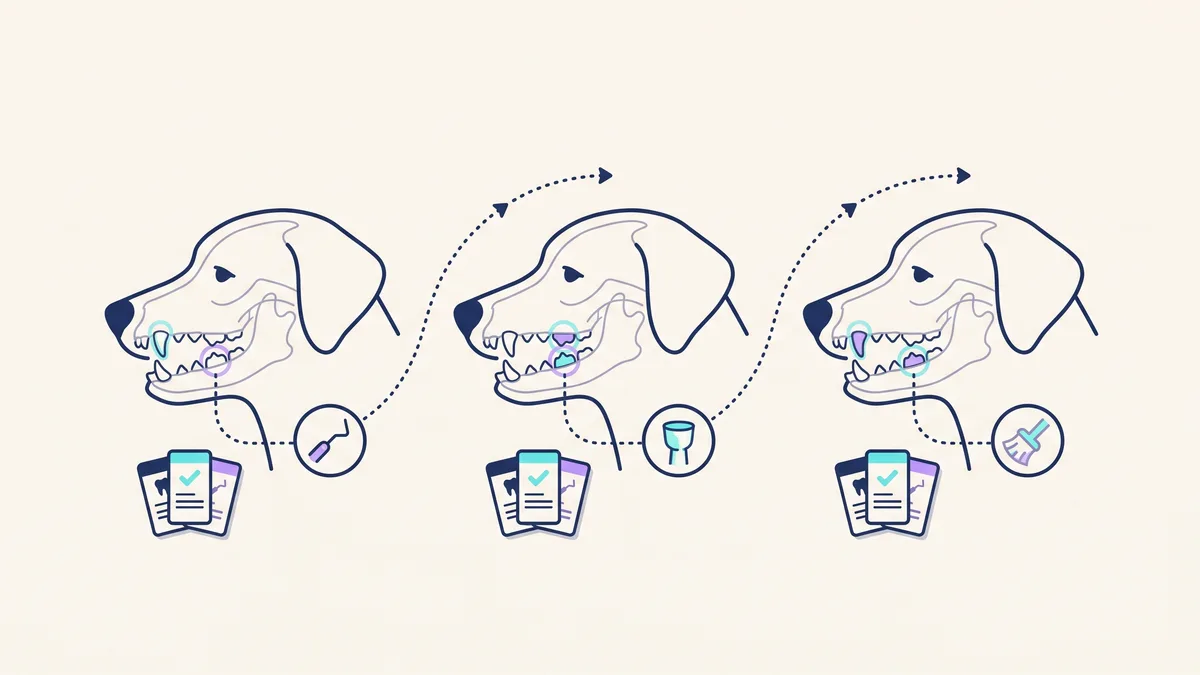
There is no single treatment for every mouth or every stage. A veterinarian considers each tooth, the dog's pain, overall health, anaesthetic plan and whether the remaining support makes preservation reasonable.
Treatment may include:
- cleaning above and below the gumline;
- polishing and irrigation after scaling;
- periodontal therapy for selected teeth;
- extraction of a tooth that is painful or cannot be predictably maintained;
- local pain control and a patient-specific recovery plan;
- follow-up examination and home-care instructions.
Antibiotics do not remove plaque, calculus, diseased tissue or an unsalvageable tooth. They may be appropriate in selected cases, but they do not replace definitive dental treatment. The broader AAHA dental care guidelines support professional treatment paired with ongoing home plaque control.
What home care can prevent and what it cannot reverse
Daily brushing is the most direct home method for disrupting new plaque when the mouth is comfortable. The Cornell home dental care guide recommends regular brushing as a preventive measure for many dogs.
Home care cannot remove established calculus below the gumline, restore lost attachment or rebuild bone. Do not brush a painful, bleeding mouth until a veterinarian says it is safe. Never use human toothpaste, scrape tartar with a sharp tool or try to pull a loose tooth.
After treatment, build the routine gradually. Use pet toothpaste and a brush or tool suited to the dog's mouth. A veterinarian may also recommend a tested dental diet, chew, wipe or water additive. Our dog toothbrushing guide covers safe technique, while the pet dental prevention guide explains how to evaluate supporting products.
Signs that need prompt assessment
Arrange a dental examination if your dog has persistent bad breath, red or bleeding gums, drooling, visible tartar, food falling from the mouth, chewing on one side, pawing at the face or a loose or fractured tooth. The guide to signs that need a dental checkup separates common warning signs from urgent problems.
Seek prompt or emergency help for:
- facial swelling or rapidly increasing oral swelling;
- uncontrolled bleeding;
- facial trauma or inability to close the mouth;
- breathing difficulty;
- severe pain or collapse;
- refusal of both food and water.
Do not force the mouth open if the dog is painful or likely to bite. A veterinary team can examine the mouth with safer handling and decide what level of care is needed.
Questions to ask before a dental procedure
Useful questions focus on diagnosis, monitoring and consent rather than cosmetic results:
- Will full-mouth dental radiographs be taken?
- How will anaesthesia, pain control and recovery be monitored?
- How are findings charted for each tooth?
- What happens if imaging reveals a tooth that needs unexpected treatment?
- Which home-care steps should start after healing?
Our guide to choosing a pet dental clinic offers a fuller comparison checklist. If your dog has oral pain or abnormal gums, book a dental assessment instead of trying to assign a stage at home.
Frequently asked questions
Can Stage 1 gum disease in dogs be reversed?
Gingivitis without attachment loss can often resolve after appropriate professional care and consistent plaque control. A veterinarian must first confirm that deeper periodontal disease is not present. Home brushing cannot remove established calculus.
Can I tell the stage from my dog's tartar?
No. Tartar may indicate plaque accumulation, but staging depends on attachment, pocket depth, tooth mobility and bone findings. Much of that information is below the gumline.
Does a dog need anaesthesia for a complete dental cleaning?
Yes. Complete veterinary dentistry requires a secured airway, monitoring, probing, radiographs and cleaning below the gumline. Anaesthesia-free scaling is not equivalent care.
Will every dog with periodontitis need an extraction?
No. Treatment is selected for each tooth. Some teeth may be candidates for periodontal therapy, while others may need extraction because support is poor or pain cannot be controlled predictably.
When can I start brushing after dental treatment?
Follow the veterinarian's recovery instructions. Brushing may need to wait while extraction sites or inflamed tissues heal. Starting too soon can cause pain and disrupt healing.
About this guidance
The Paw Sisters Veterinary Team prepared this educational guide from the cited AAHA, Cornell and AVDC dental guidance. It does not diagnose your pet or replace an examination. See our editorial policy for how health content is sourced and updated.