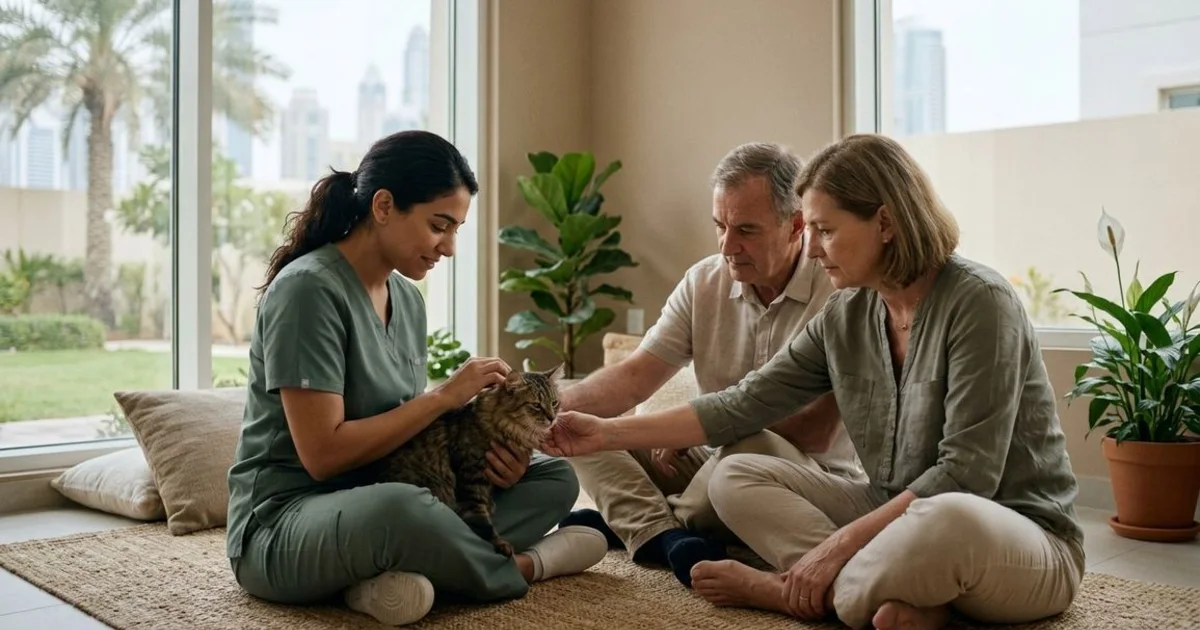
Best Vet in Dubai: A Practical Clinic Checklist
Medically reviewed by Dr. Hasan AlDahhak, DVM ·
The best vet in Dubai is the clinic that is licensed, suited to your pet's needs, clear about costs and treatment options, and reachable when care becomes urgent. A glossy reception or a five-star review cannot confirm those things on its own.
Start with a routine veterinary checkup in Dubai. It lets you assess the team's examination, handling and communication before an emergency makes the decision for you.
Key takeaways
- Verify the clinic and treating veterinarian are properly licensed.
- Match the clinic's services, diagnostic equipment and referral plan to your pet.
- Ask how emergencies, estimates, records and follow-up are handled.
- Choose calm, transparent care over unsupported "best clinic" claims.
What should the best vet in Dubai provide?
A strong primary-care clinic should cover prevention, illness assessment, treatment planning and continuity of records. It should also tell you clearly what it cannot manage and how referral works.
Dubai Municipality's Veterinary Services Section says it monitors and certifies veterinary establishments, clinics and pharmacies for compliance with health conditions. Federal Ministerial Resolution No. 27 of 2026 also requires veterinary facilities to obtain the necessary federal and local licences and sets technical requirements for different facility types.
Use those rules as the baseline, then compare the experience that matters to your animal.
| What to check | Evidence to ask for | Why it matters |
|---|---|---|
| Licensing | Current facility and veterinarian credentials | Confirms the clinic can legally provide veterinary care |
| Scope of care | Written service list and referral process | Shows whether routine, diagnostic and urgent needs can be managed |
| Diagnostics | Tests available on site and when referral is needed | Helps you understand how quickly the cause of illness can be investigated |
| Communication | Written estimates, records and discharge instructions | Makes decisions and follow-up easier to understand |
| Pet handling | Calm examination and a plan for anxious pets | Reduces avoidable fear and improves cooperation |
| Emergency cover | Exact hours, call-ahead process and backup location | Prevents uncertainty during a time-critical problem |
How do you verify a veterinary clinic in Dubai?
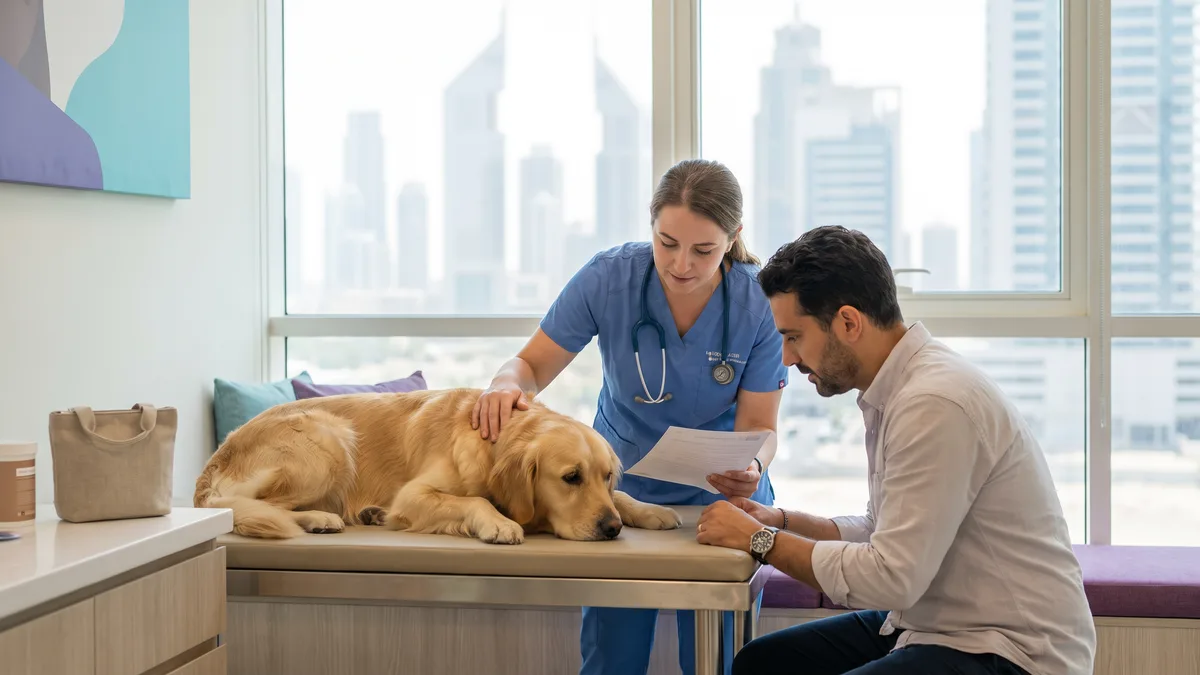
Ask the clinic directly for its legal name, facility type and current licensing details. Do not assume that a social profile, map listing or influencer recommendation proves approval.
The 2026 federal framework defines a veterinary clinic as a licensed place for examination and therapeutic or preventive practice. It also defines a veterinarian as someone with a recognised veterinary degree and a licence to practise. The current MOCCAE rules for veterinary practice are useful if you want to understand those definitions.
You can also review the clinic's real team and credentials. A useful veterinary team page should name the practitioners rather than relying on a generic "expert team" label.
Which clinical capabilities matter for your pet?
The right capability depends on why you are visiting. A healthy young pet may need preventive exams, vaccination and parasite planning. A senior animal or pet with a chronic condition may need laboratory testing, imaging, dental care or a dependable referral relationship. The broader pet-care guide for Dubai maps routine home care to the clinic services that support it.
The Royal College of Veterinary Surgeons clinic guide suggests checking the species treated, service scope, costs, emergency arrangements and practical access. This is a better comparison framework than searching for a universal ranking.
Before choosing, ask:
- Can the clinic perform the likely examination and tests for my pet?
- Which services are available on site, and which require referral?
- Who monitors a pet during anaesthesia or hospitalisation?
- How are results, records and discharge instructions shared?
- What happens if the case becomes urgent after normal hours?
For complex illness, read what the clinic's pet diagnostic services include. For a planned procedure, also ask who provides anaesthetic monitoring and post-procedure pain control.
How can you judge communication and transparency?
Good communication is specific. The vet should explain the likely problem, the purpose of recommended tests, reasonable alternatives, expected next steps and signs that require faster reassessment.
Ask for a written estimate before non-urgent diagnostics or treatment. An estimate is not always a fixed final bill because findings can change the plan, but the clinic should explain what is included and seek consent when the scope changes. The AAHA guide to choosing a veterinarian also recommends checking emergency protocols, treatment options, facility conditions and how anxious pets are handled.
At the first visit, notice whether the team:
- Takes a full history instead of rushing to one conclusion
- Invites questions and explains unfamiliar terms
- Gives you a clear plan for results and follow-up
- Provides medication and home-care instructions in writing
- Encourages a second opinion or referral when appropriate
What does good handling look like for dogs and cats?
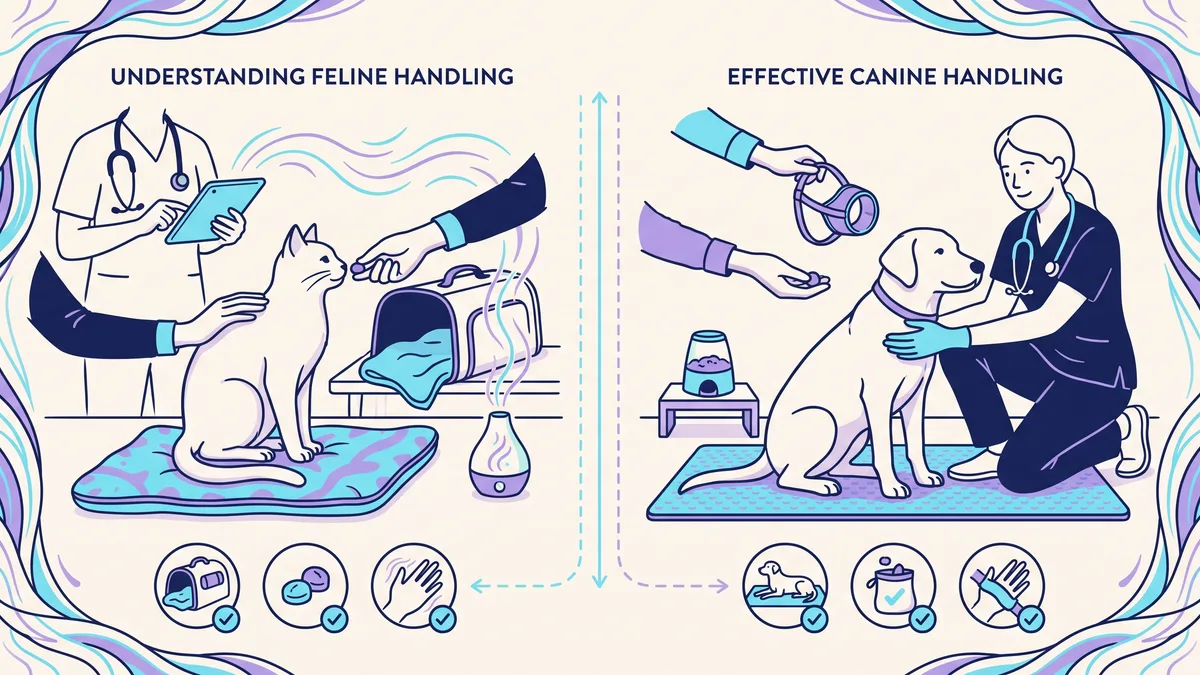
Calm handling should be adapted to the individual pet. A cat may be safer in its carrier until the room is ready. A fearful dog may need distance, treats or a slower approach rather than force.
For cats, the AAHA guidance on improving veterinary visits recommends preparation at home, thoughtful handling and advance communication with the veterinary team. Tell the clinic about previous fear, aggression, motion sickness or handling sensitivities before arrival. Never give a calming medicine unless a veterinarian has prescribed it for that pet.
How should you compare emergency arrangements?
Confirm emergency access before you need it. "Emergency service" can mean an on-site team, an on-call arrangement, limited urgent slots or referral to another hospital.
| Ask before an emergency | A useful answer should include |
|---|---|
| Who do I call first? | A monitored phone number and clear call-ahead instruction |
| When is care available? | Exact staffed or on-call hours, not a vague availability claim |
| What can be treated? | Stabilisation capabilities and referral limits |
| Where do I go if you cannot help? | A named backup or referral pathway |
| What should I bring? | Medication, records and suspected toxin packaging when relevant |
Difficulty breathing, collapse, uncontrolled bleeding, a seizure, suspected poisoning or repeated straining with little or no urine can require immediate help. The Merck Veterinary Manual emergency guide advises calling the clinic and following its transport instructions. Save the number and route for an emergency veterinarian in Dubai now.
A five-minute clinic comparison checklist
Use this before booking:
- [ ] I can identify the clinic and veterinarian's licensing details.
- [ ] The clinic handles my pet's species and likely needs.
- [ ] The team explains what is on site and what is referred.
- [ ] I know how estimates, consent and records work.
- [ ] The handling plan suits my pet's temperament.
- [ ] I know the emergency and after-hours process.
- [ ] The location and appointment system are practical for follow-up.
Reviews can reveal patterns in communication or waiting time, but read them critically. Look for repeated, specific experiences and the clinic's response. Do not treat a star average as evidence of clinical quality.
Frequently asked questions
Is there one officially ranked best vet in Dubai?
The official Dubai and UAE sources reviewed for this update do not publish a universal "best" ranking. Verify licensing, then compare services, handling, communication, emergency arrangements and fit for your pet.
Should I choose the closest vet clinic?
Distance matters for urgent care and repeat visits, but it should not replace licensing, capability and communication checks. Choose a practical primary clinic and know the route to emergency care.
How often should a healthy pet visit a vet?
Visit frequency depends on species, age, lifestyle and health. WSAVA's wellness principles include annual veterinary checkups as a general preventive action, while senior or medically complex pets may need closer monitoring. The regular pet-checkup guide explains what a preventive visit may cover; your veterinarian should still set the individual schedule.
What should I bring to a first appointment?
Bring identification, prior medical and vaccination records, a medication list, diet details, insurance information if relevant, and notes or videos showing intermittent symptoms.
Can online reviews tell me which vet is best?
Reviews can show service patterns, but they cannot verify licensing, diagnostic quality or whether advice fits your pet. Use them as one input, not the decision.
About this guidance
This checklist is educational and cannot assess a clinic or diagnose a pet. If you want to test the fit through a routine visit, book an appointment and bring your pet's records and questions.