
Pet Health Checkup: What Happens and How Often
Medically reviewed by Dr. Hasan AlDahhak, DVM ·
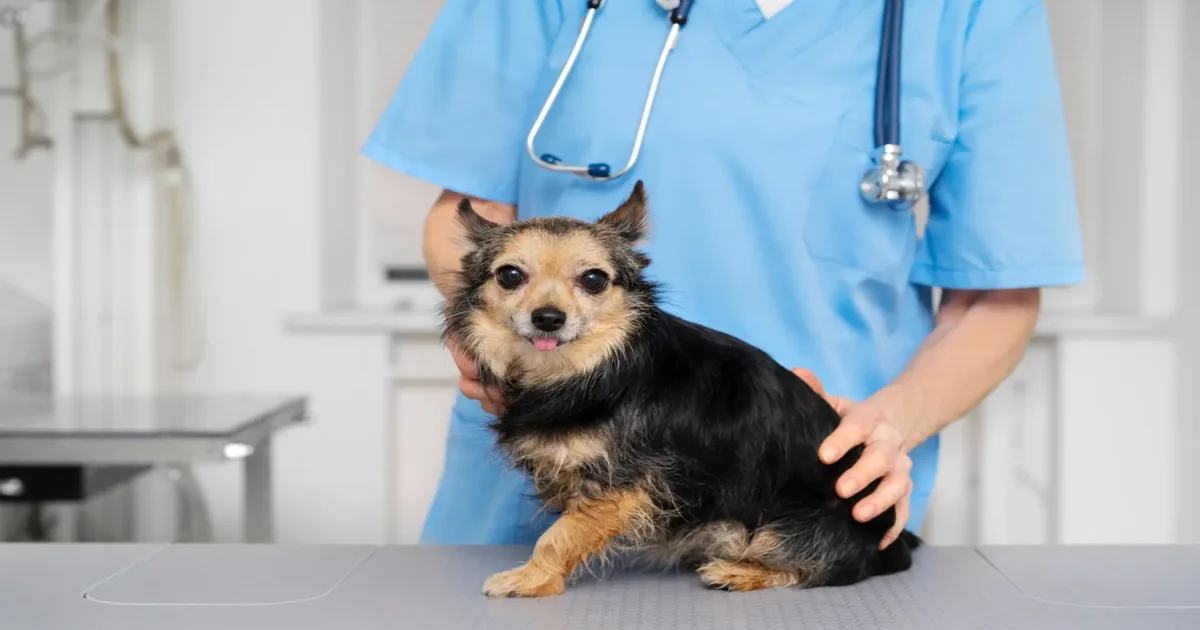
A pet health checkup is a preventive veterinary examination tailored to your dog or cat's age, species, lifestyle, medical history and current findings. Most healthy adult pets should be examined at least once a year, while young, senior or medically affected pets may need more frequent care. A veterinary checkup in Dubai should review the whole patient before tests, vaccines or treatments are recommended.
Key takeaways
- An annual examination is a starting point for many healthy adults, not a universal interval for every pet.
- A checkup reviews history, behaviour, nutrition, weight, teeth, skin, mobility, vaccination and parasite risk.
- Bloodwork, imaging, parasite tests and vaccines are selected from the patient's needs rather than bundled into every visit.
- Breathing difficulty, collapse, active seizure, severe bleeding or inability to urinate should bypass routine scheduling.
Pet health checkup frequency by life stage
Most healthy adult dogs and cats need at least an annual examination. The AAHA guide to regular veterinary visits, updated in June 2026, recommends yearly care for most pets and more frequent visits for seniors or pets with chronic conditions.
Frequency changes when a pet is growing, ageing, taking medicine or developing symptoms. The schedule below is a planning guide, not a prescription.
| Pet or situation | General starting point | Why visits may be closer together |
|---|---|---|
| Puppy or kitten | Several visits during the first year | Growth, vaccine series, parasites, nutrition, behaviour and identification need staged review |
| Healthy adult | At least once a year for many pets | Weight, oral health, lifestyle and risk can change between visits |
| Mature or senior pet | More often when age or findings justify it | Mobility, muscle loss, dental disease, medicine use and chronic-disease risk may need closer monitoring |
| Chronic condition | Set by the treating veterinarian | Response, medicine safety and disease stability determine timing |
| New symptom or sudden change | Contact the clinic promptly | A problem-focused visit should not wait for the next preventive appointment |
The AAHA frequency guidance stresses that age, species, breed, health, behaviour and environment all influence timing. Cat owners can use our cat visit schedule for more species-specific detail, while the senior dog care guide explains changes that deserve closer attention in older dogs.
What happens during a veterinary checkup
A useful checkup begins before the physical examination. The veterinarian asks what has changed at home, then interprets the exam in that context. The AAHA/AVMA preventive healthcare overview includes history, lifestyle, behaviour, nutrition, weight, oral health, parasite control, vaccination and identification.
| Part of the visit | What may be reviewed | Why it helps |
|---|---|---|
| History | Appetite, thirst, urination, stool, coughing, vomiting, sleep, activity and behaviour | Changes at home can reveal problems that are not obvious in the clinic |
| Physical examination | Eyes, ears, mouth, skin, coat, heart, lungs, abdomen, joints and visible lumps | Creates a current clinical picture and identifies findings that need follow-up |
| Weight and nutrition | Weight trend, body condition, muscle condition, food, treats and supplements | Detects change and supports an individual feeding plan |
| Preventive review | Vaccines, parasite exposure, travel, grooming, dental care and microchip details | Keeps prevention aligned with actual lifestyle and records |
| Plan | Monitoring, home changes, tests, treatment or referral | Turns findings into clear next actions and follow-up timing |
A checkup is not a guarantee that a pet is free from every condition. Some diseases are intermittent, early or hidden. The examination helps decide whether further investigation is warranted and creates a baseline for future comparison.
What to bring to the appointment
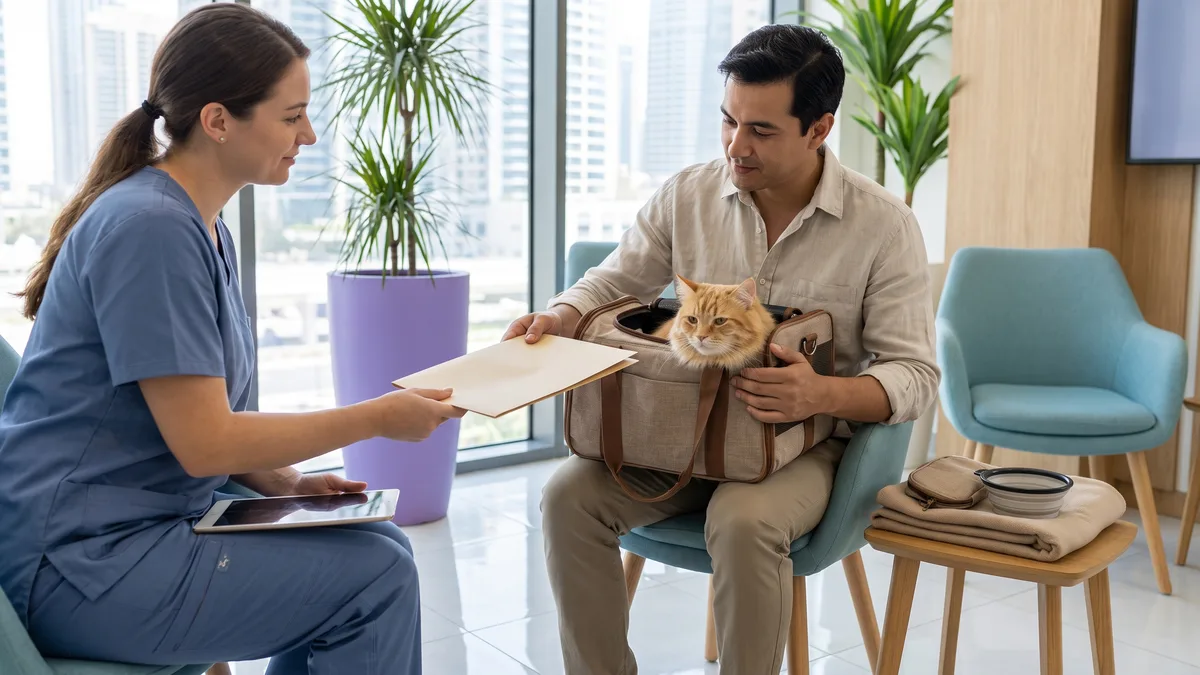
Good information improves the value of the visit. Bring details that are difficult to reconstruct from memory.
Prepare:
- vaccination, laboratory and treatment records from other clinics;
- names, strengths and schedules for medicines and supplements;
- the exact food, daily amount, treats and feeding routine;
- parasite products with the last application date;
- travel, boarding and contact with other animals;
- notes about appetite, thirst, urination, stool, sleep and activity;
- photos or short videos of coughing, limping, episodes or unusual behaviour;
- a list of your main questions in priority order.
Mention changes even if they seem small. Drinking more, avoiding stairs, missing the litter box or becoming irritable during handling can provide useful context. Do not stop prescribed medicine before the visit unless the clinic tells you to do so.
Vaccines, parasite tests and screening are individualized
A wellness visit is not the same as automatically giving every vaccine or ordering one standard laboratory panel. Current WSAVA vaccination guidelines for dogs and cats distinguish core from non-core vaccines and support decisions based on age, health, lifestyle, geography and exposure.
At the visit, the veterinarian may review:
- which vaccines are due and appropriate;
- travel or boarding requirements;
- flea, tick, heartworm and intestinal-parasite exposure;
- whether faecal, blood or urine testing is useful;
- whether age, medicine or a clinical finding changes the screening plan.
The CAPC general parasite guidelines support risk-based testing and consistent parasite control. A flea and tick prevention review can help when exposure or product choice has changed. Vaccination questions belong in an individualized pet vaccination plan, not a copied online schedule.
When wellness testing may be discussed
Laboratory testing can establish a baseline, investigate a finding or monitor medicine and disease. It is not automatically required at every visit for every pet. The AAHA wellness-testing guide recommends discussing screening according to life stage, history and clinical judgment.
Examples include:
- blood count and chemistry when age, disease, medicine or examination supports them;
- urinalysis when urinary signs, kidney risk or broader screening makes it useful;
- faecal or vector-borne disease testing based on exposure and test timing;
- blood pressure or endocrine testing for selected patients;
- imaging when the history, examination or earlier results justify it.
Ask what each test is intended to answer, what a normal result can and cannot exclude, and how the result would change care. A test is most useful when it addresses a clear clinical question.
What a checkup can identify and what it cannot guarantee
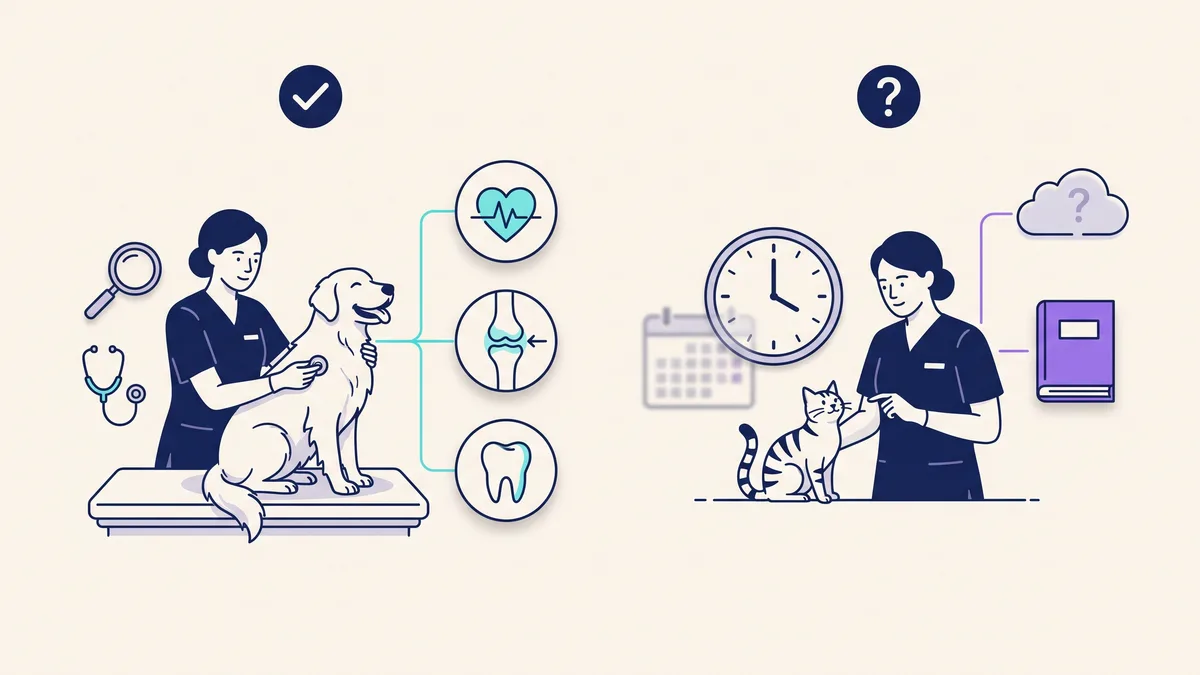
Preventive care creates an opportunity to notice change, discuss risk and plan next steps. It does not guarantee a longer life, lower future costs, stronger immunity or painless treatment. Those outcomes depend on the condition, timing, patient and available care.
A checkup can still provide meaningful value by:
- comparing weight and body condition with previous visits;
- finding a new murmur, lump, oral problem or mobility change;
- reviewing whether prevention still fits the pet's life;
- identifying when a symptom needs testing or treatment;
- helping the owner understand what to watch at home.
An oral look may identify visible tartar, gingivitis or a broken tooth, but it cannot fully assess disease under the gums. Our pet dental care service explains when a separate dental assessment and imaging may be needed. Identification can also be checked, including whether pet microchipping details remain current.
Signs that should bypass a routine appointment
Routine scheduling is for a stable pet. Contact an emergency clinic immediately for breathing difficulty, collapse, active seizure, severe bleeding, major trauma, toxin exposure, a swollen painful abdomen or inability to urinate.
Ask for prompt advice if your pet has repeated vomiting, refuses food, develops marked weakness, strains to urinate, has sudden severe pain or changes rapidly. The clinic can decide whether the pet needs same-day, urgent or emergency assessment.
Do not wait for an annual checkup when a pet is unstable. Preventive and emergency care solve different problems.
Preparing an anxious pet for a calmer visit
Preparation should start before appointment day. Leave a cat carrier accessible as a familiar resting place, or practise short positive car and clinic-related steps with a dog. Pair gentle handling of paws, ears and the body with rewards only while the pet remains comfortable.
Tell the clinic in advance about hiding, freezing, escape attempts, growling, snapping or a previous difficult visit. Ask about quieter appointment times, direct room entry or veterinarian-prescribed pre-visit medication when appropriate. Never give a sedative or human medicine without veterinary direction.
Frequently asked questions
How often should a healthy adult pet have a checkup?
At least once a year is a common starting point for healthy adult dogs and cats. The veterinarian may recommend a different interval based on species, breed, age, lifestyle, findings and medical history.
Does every pet health checkup include blood tests?
No. Bloodwork may be useful for a baseline, a clinical finding, medicine monitoring or life-stage screening. The veterinarian should explain why a test is recommended and how the result could change the plan.
Are vaccinations given at every checkup?
Not necessarily. The team reviews the vaccine record, lifestyle and exposure, then recommends vaccines that are appropriate and due. A checkup and an injection are not the same thing.
Should an indoor pet still have regular examinations?
Yes. Indoor living changes some exposure risks but does not remove dental, weight, urinary, mobility, behaviour or chronic-health needs. The prevention plan should reflect the individual indoor lifestyle.
What if my pet seems healthy?
A stable pet can still benefit from a baseline examination and risk review. The goal is not to create fear or promise that hidden disease will be found. It is to understand the pet's current health and decide what, if anything, needs attention.
To arrange preventive care for a stable pet, book a checkup. Use urgent care instead if any emergency sign is present.
About this guidance
The Paw Sisters Veterinary Team prepared this educational guide using current AAHA, CAPC and WSAVA preventive-care guidance. It does not replace a patient-specific examination. See our editorial policy for how medical content is sourced and maintained.