Pet Vaccination Cost Dubai: Prices & Schedule Guide
Sources and guidance checked
Medically reviewed by Dr. Hasan AlDahhak, DVM ·
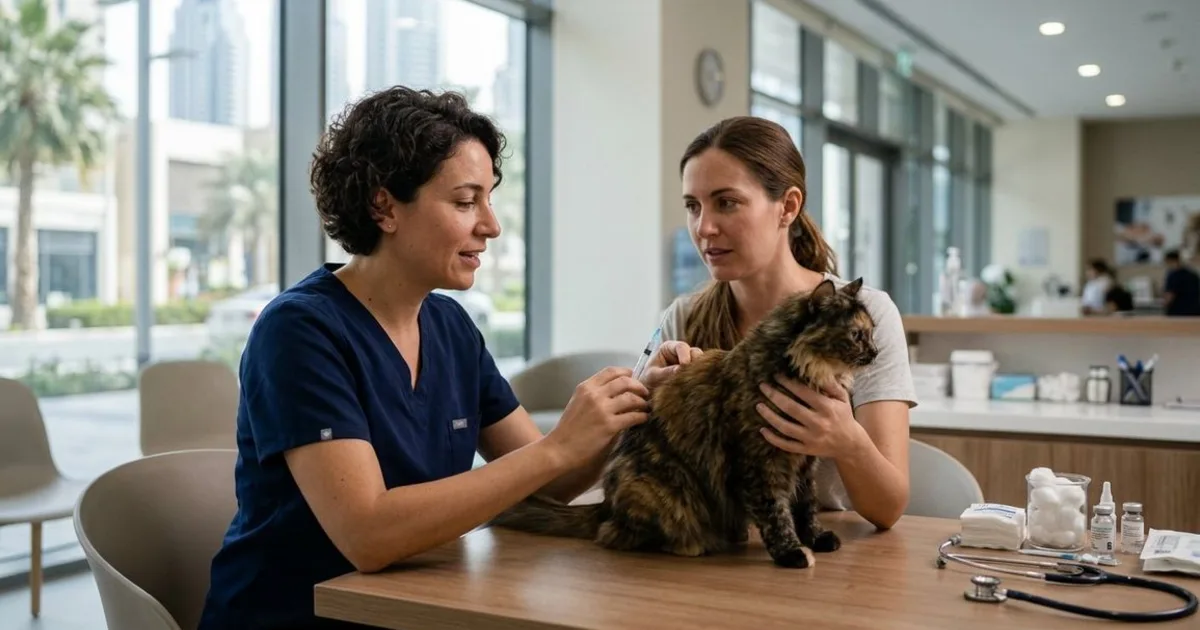
The advertised pet vaccination cost in Dubai at Paw Sisters is AED 439 for the annual cat-and-dog package and AED 599 for the puppy-and-kitten package, including VAT. These prices were checked on 19 September 2026. Confirm the vaccines, visits and documents included when you book a vaccination appointment.
For appointments in Al Garhoud, see the pet vaccination service and current offers. This guide explains costs, schedules and the questions to ask before booking.
Vaccination schedules are not identical for every pet. Age, previous records, health, lifestyle, travel plans, boarding requirements and the licensed vaccine label all affect the plan.
Pet vaccination cost in Dubai at a glance
The clinic's currently advertised packages are:
- Annual cat and dog vaccination package: AED 439 including VAT
- Puppy and kitten vaccination package: AED 599 including VAT
| Package | Advertised price | Best question to ask before booking |
|---|---|---|
| Annual cat and dog vaccination | AED 439 including VAT | Which vaccines and examination steps are included for this pet? |
| Puppy and kitten vaccination | AED 599 including VAT | How many visits and doses are included in the primary series? |
Before paying, ask:
- Which vaccines are included for this pet?
- How many visits and doses are included?
- Is the pre-vaccination examination included?
- Are the certificate and record updates included?
- Are lifestyle vaccines, microchipping or municipality registration separate?
- What happens if the vet decides the pet is not well enough to vaccinate that day?
Prices at other Dubai clinics vary. The main drivers are the vaccine product, number of doses and appointments, examination, risk-based vaccines and documentation. Breed alone does not determine the vaccination price.
How vaccines protect cats and dogs
A vaccine trains the immune system to recognise specific pathogens and respond more effectively to future exposure. It does not make a pet immune to every illness, and pets do not all have "fragile" immune systems.
Core vaccines protect against diseases with serious health or public-health consequences. Non-core vaccines are selected according to exposure risk. A dog that boards frequently, for example, may need a different plan from a dog with limited animal contact.
The WSAVA 2024 vaccination guidelines emphasise individual assessment and avoiding unnecessary vaccination more often than the evidence or product label supports.
Vaccination schedule by life stage

| Life stage | Core schedule focus | What changes the plan |
|---|---|---|
| Puppy or kitten | Repeat core doses until at least 16 weeks | Start age, maternal antibodies, exposure and product label |
| Around 26 weeks | Consider a core booster or appropriate serology | Previous doses and veterinary guidance |
| Adult | Maintain protection without unnecessary repeat doses | Vaccine type, risk, records, rabies rules and product duration |
| Travel or boarding | Meet documented destination or facility rules | Country, facility, microchip, certificates and timing |
Puppy vaccination schedule
For the core canine viral combination covering distemper, adenovirus and parvovirus, the AAHA canine vaccination guideline and WSAVA recommend:
- Start at 6 to 8 weeks of age.
- Repeat every 2 to 4 weeks until at least 16 weeks of age.
- In especially high-risk settings, the series may continue to 20 weeks.
- Consider a core booster around 26 weeks of age, or serology after the final puppy dose.
- After a successful response, core viral vaccines are generally given no more often than every 3 years.
Rabies follows UAE requirements and the licensed product label. Leptospirosis is selected where relevant local strains, exposure risk and suitable vaccines justify it. When indicated, the initial leptospirosis course commonly requires two doses 2 to 4 weeks apart, followed by annual boosters.
Bordetella, canine parainfluenza and canine influenza are lifestyle-based rather than universal for every dog. Discuss boarding, daycare, dog-park use and travel with the vet.
Kitten vaccination schedule
For the feline viral combination covering panleukopenia, herpesvirus and calicivirus, often called FVRCP, WSAVA recommends the schedule below. The separate feline panleukopenia guide explains transmission, warning signs and household prevention without replacing vaccination advice.
- Start at 6 to 8 weeks of age.
- Repeat every 2 to 4 weeks until at least 16 weeks of age.
- Continue to 20 weeks in especially high-risk situations.
- Consider a booster around 26 weeks of age.
- Low-risk adult cats generally receive later FVRCP vaccination no more frequently than every 3 years. Higher-risk cats may need a different interval.
Rabies follows local requirements and the licensed product duration. Feline leukaemia virus vaccination is important for many young cats and for older cats with outdoor or infected-cat exposure. It begins as a two-dose course, then continues according to risk and product instructions.
The AAHA/AAFP feline vaccination guidelines support lifestyle-based decisions rather than a single schedule copied to every cat.
What is legally required in Dubai?
Clinical recommendations and legal requirements are related, but they are not the same thing.
Dubai's Law No. 5 of 2025 concerning public health establishes pet ownership licensing, tagging and registration obligations. It also gives the responsible authority powers to set animal-disease prevention requirements. Confirm current vaccination and registration procedures with Dubai Municipality. The law itself does not publish one vaccination schedule for every resident pet.
For importing or returning a pet to the UAE, federal rules are more specific. The current MOCCAE pet import service requires a permanent microchip and listed vaccinations.
For dogs, those import vaccinations include:
- Rabies
- Distemper
- Parvovirus
- Infectious canine hepatitis
- Leptospirosis, or the permitted alternative test
For cats, they include:
- Rabies
- Panleukopenia
- Rhinotracheitis
- Calicivirus
For an initial rabies vaccination under these import rules, the animal must be at least 12 weeks old. Import rules should not be presented as a generic rule for ordinary travel between emirates.
Vaccination, microchipping and travel records
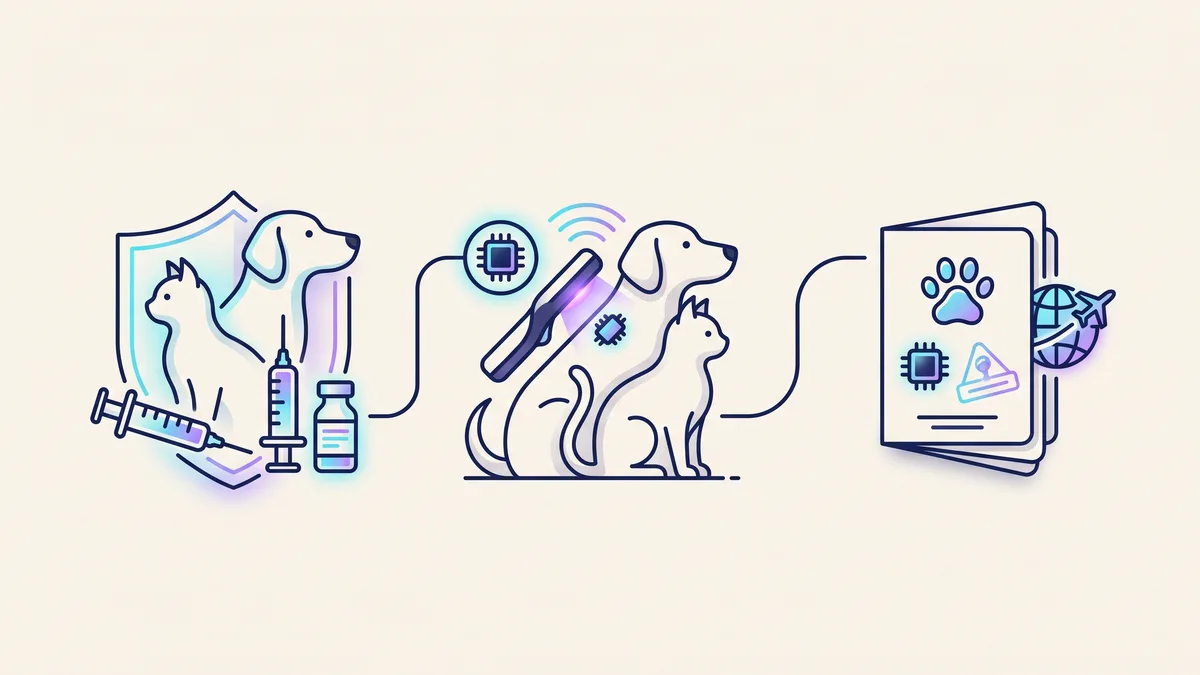
A permanent microchip connects the animal to vaccination and ownership records. Dubai's current public-health law applies registration obligations to pets generally, while international travel destinations may impose additional sequencing and documentation rules.
If you plan to import, export or relocate a pet, start early. Rabies timing, microchip date, titre testing, permits and waiting periods vary by destination. Use the pet microchipping and registration guide and pet travel service as planning starting points, then confirm the current government requirements for the destination.
What happens during a vaccination visit?
A responsible vaccination visit begins with history and examination. Tell the veterinarian about previous reactions, current medicine, illness, pregnancy, travel, boarding and exposure to other animals.
The vet may:
- Review the pet's age and available vaccine records.
- Examine the pet to decide whether vaccination is appropriate that day.
- Separate core vaccines from lifestyle-based options.
- Explain expected short-term effects and warning signs.
- Record the product and date and plan the next dose.
If the pet is unwell or records are missing, the plan may change. A missed vaccine is not always "simply rescheduled." Catch-up depends on the product, elapsed time, prior documentation and age.
A better way to compare Dubai vaccine packages
The cheapest headline price is not always the lowest complete-course cost. Compare packages by the protected diseases, required number of visits, examination, records and follow-up.
For a puppy or kitten, calculate the whole primary series rather than one injection. For an adult, ask whether the recommended interval comes from current guidelines, risk and the product label. This prevents both under-vaccination and unnecessary repeat vaccination.
If a record is unclear, book a veterinary checkup and bring every certificate, adoption record and travel document you have. The vet can build a catch-up plan without assuming a dose that cannot be verified.
Frequently asked questions
How much does it cost to vaccinate a dog in Dubai?
As checked on 23 August 2026, the clinic lists an annual cat-and-dog package at AED 439 and a puppy-and-kitten package at AED 599, including VAT. Confirm the current price and inclusions when booking.
How much does it cost to vaccinate a cat in Dubai?
The same currently advertised packages apply: AED 439 for the annual package and AED 599 for the kitten-and-puppy package, including VAT. A cat's actual plan depends on age, records and lifestyle.
Does every adult pet need every vaccine each year?
No. Some vaccines require annual boosters, while core viral vaccines may have longer intervals after a successful primary series. Rabies must follow local rules and the licensed product. Your vet should document the reason and next due date.
What if my pet missed a vaccination?
Bring the record to a veterinarian. Catch-up depends on the vaccine, age, time elapsed and documented previous doses. Do not restart or repeat a series without individual advice.
Are rabies and core vaccines the same requirement?
No. Rabies has public-health and regulatory importance. Other core vaccines are strongly recommended based on disease severity and exposure, while exact legal obligations depend on the situation, such as residency, registration or import.
About this guidance
Prices are a dated snapshot, not a permanent quote. Confirm the current package and an individual schedule with the clinic before your visit.