Giardia in Dogs: Symptoms, Testing, and Care in Dubai
If your dog is suffering from recurrent or intermittent diarrhea, Giardia is one possible cause, but several other conditions can cause similar signs. Giardia is a parasite that inhabits a dog’s digestive system. Some infected dogs develop gastrointestinal upset, while others show no symptoms at all.
Diagnosis involves a veterinary assessment and appropriate stool testing; symptoms alone cannot confirm Giardia. Managing Giardia in dogs involves more than just monitoring symptoms. Understanding how it spreads is important for protecting your dog and reducing reinfection.
What Is Giardia in Dogs?
Giardia is a single-celled parasite that enters the dog’s digestive system and transforms into its active form. Infected dogs shed cysts in their feces; when another dog ingests these cysts, the disease cycle begins. 6
How Giardia Affects the Digestive System
Giardia affects the intestines and can interfere with digestion and nutrient absorption. The impact varies: some dogs have persistent or intermittent diarrhea, while others show no signs of illness. Not every instance of diarrhea indicates Giardia, so a veterinarian needs to evaluate the dog’s condition. 2
Can Dogs Have Giardia Without Symptoms?
Yes, some dogs can carry Giardia without displaying symptoms such as diarrhea or lethargy. Your veterinarian interprets a positive test alongside your dog’s health and household circumstances. 1
Giardia Symptoms in Dogs: What Should You Look For?
Symptoms vary from dog to dog. Possible signs include:
- Diarrhea that is persistent, recurrent or intermittent.
- Soft or poorly formed stools, sometimes with a strong odor or mucus.
- Vomiting in some dogs.
- Loss of appetite, reduced energy or weight loss.
- Abdominal discomfort or gas. 1 2 Watery diarrhea can occur, but it is not the typical stool description in veterinary guidance. Stool appearance alone cannot identify the cause. 2
When Does Diarrhea Require Urgent Veterinary Attention?
Seek urgent veterinary assessment for severe lethargy, bloody or black stools, suspected dehydration, or rapid deterioration. Do not wait for several signs to occur together. 4 7
These signs need urgent veterinary attention whether the cause is Giardia or another illness. Contact your vet promptly if diarrhea persists or keeps returning, even without other symptoms.
How Do Dogs Get Giardia?
Infection is not limited to direct contact with another infected dog. It occurs when your dog ingests cysts from fecal contamination, including contaminated water or surfaces.
Fecal-Oral Transmission
This means your dog has swallowed the infectious cysts. Exposure can happen through contaminated water, food or objects, or when a dog licks contaminated fur or paws. 3
Common Exposure Situations
Exposure is possible wherever fecal contamination occurs, including:
- Public parks frequented by many dogs.
- Shelters.
- Kennels, especially if an infected dog is present.
- Shared areas with contaminated surfaces.
- Walking on contaminated ground and subsequently licking their paws.
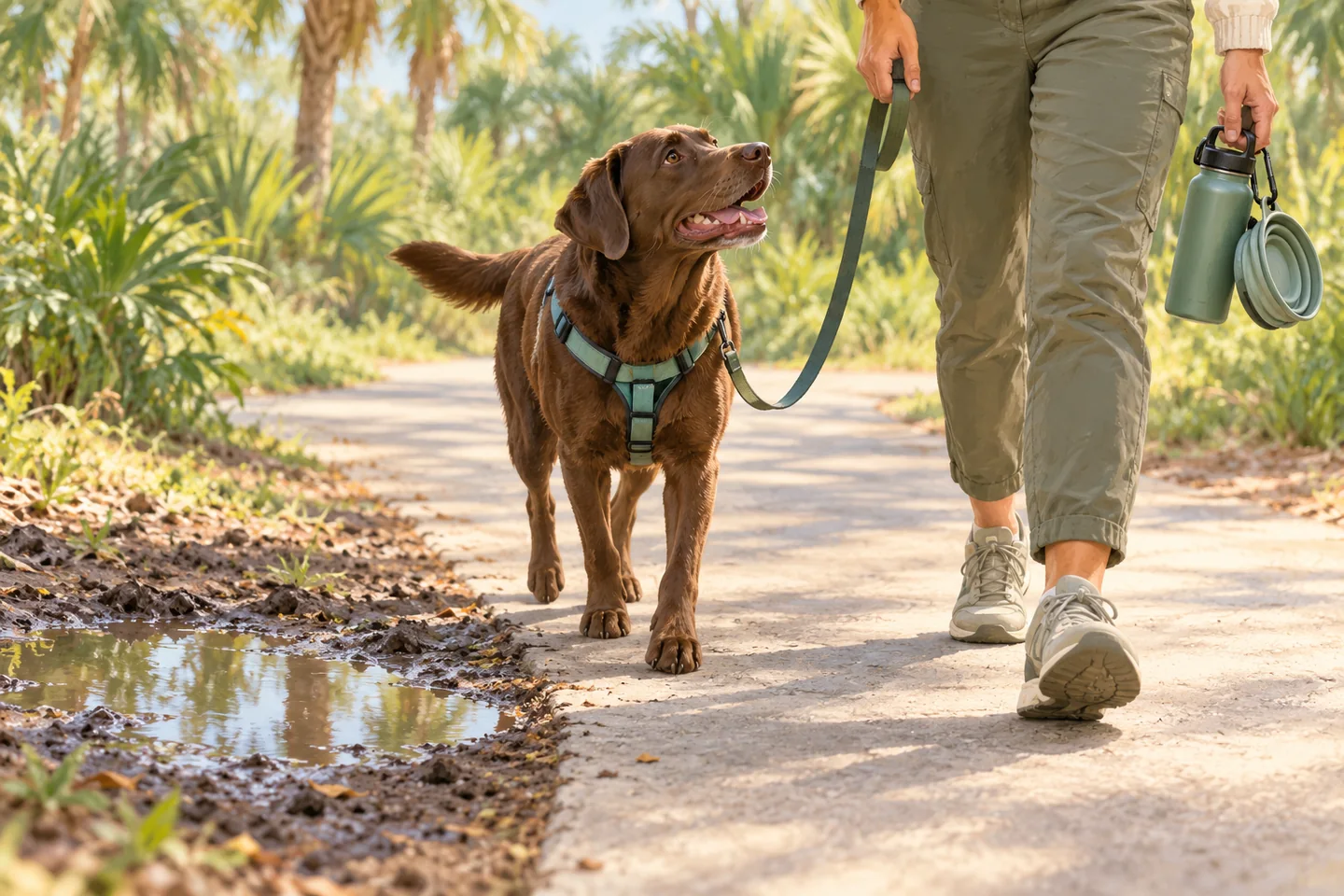
AI-generated illustration of keeping a dog away from potentially contaminated water.
How Is Giardia in Dogs Diagnosed?
Diarrhea alone is not sufficient to confirm Giardia. The veterinarian will perform a clinical examination, review the medical history and assess the symptoms. If the dog has recently started a new diet, it is also important to discuss this with the veterinarian.
Your vet selects stool tests to check for Giardia. These may look for cysts, Giardia antigens or DNA. The results need to be interpreted alongside the examination and history. 2
Why One Stool Sample May Not Tell the Whole Story
Dogs do not shed cysts in their stool consistently. Consequently, some dogs may require repeated testing or a combination of different testing methods to identify the infection. 1
How Does the Veterinarian Decide Which Test Is Appropriate?
The veterinarian considers the dog’s health status, medical history, symptoms and the tests available at the clinic or laboratory.
When discussing diagnostic testing with Paw Sisters, ask which tests are appropriate for your dog and whether samples will be processed on site or sent to a laboratory.
Preparing for Your Dog’s Giardia Testing Appointment
Testing requirements vary from dog to dog. If the veterinarian requests a stool sample, ask the clinic to explain:
- The method for collecting the sample.
- How the sample should be stored.
- When it needs to be delivered to the laboratory or clinic.
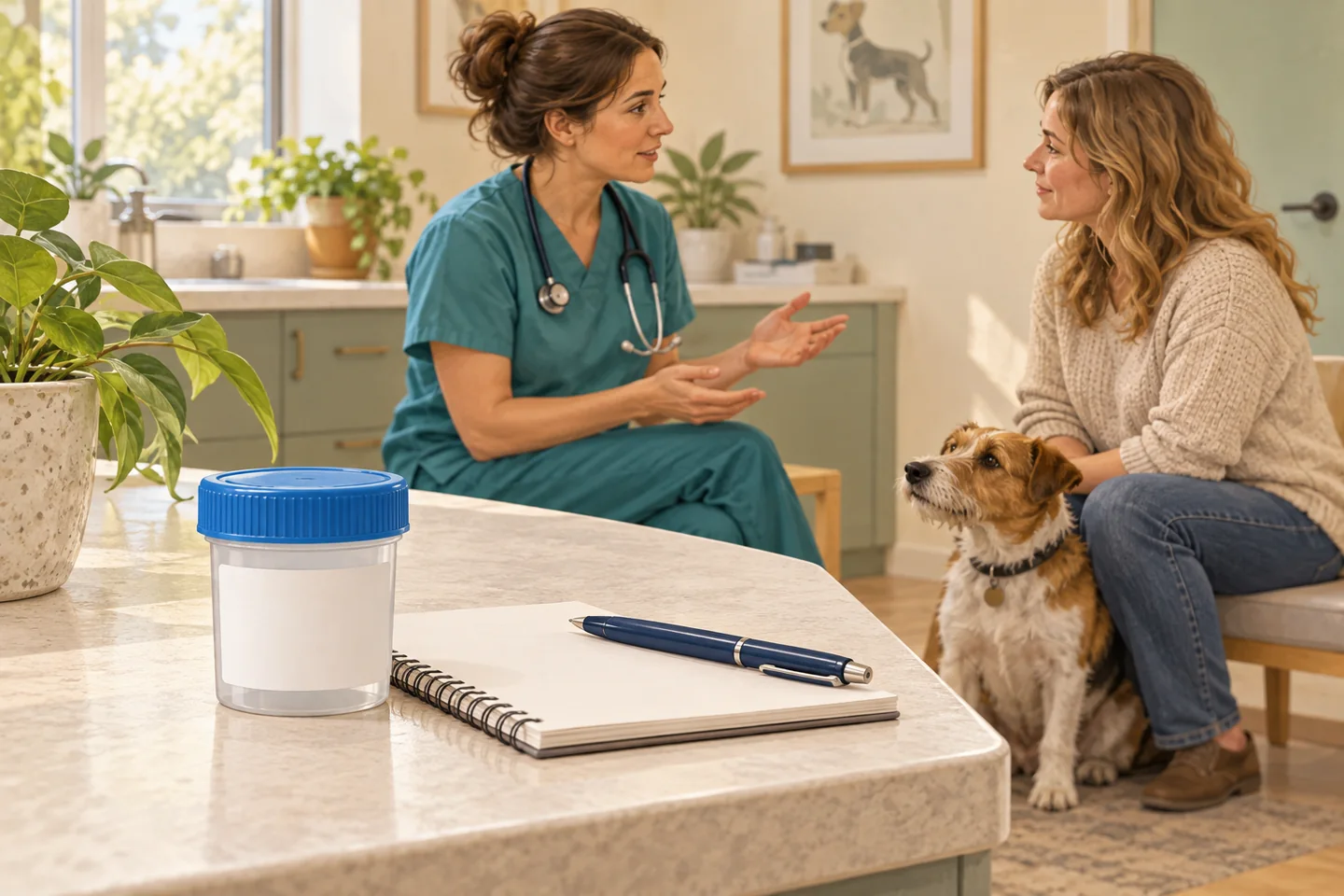
AI-generated illustration of a veterinary testing discussion; no real patient or test result is depicted.
Giardia Treatment in Dogs: What to Expect
The treatment and care plan is determined by the veterinarian and varies based on:
- The dog’s symptoms and when they first appeared.
- The results of the dog’s laboratory tests.
- The dog’s overall health, including any underlying chronic conditions. A positive result in a dog without symptoms does not automatically mean medication is needed. Your vet considers the dog’s health, lifestyle and household risks, including vulnerable people or pets. 1
Do not administer Giardia medication on your own or rely on treatments found online. Follow your veterinarian’s instructions regarding the treatment plan and any prescribed medication. Treatment may also include support for dehydration or dietary advice, depending on your dog’s needs. 6
Why Giardia Can Come Back: Reinfection and Follow-Up
If your dog is frequently exposed to a contaminated environment, reinfection is a possibility. Hygiene and follow-up therefore remain important during care. 2
Environmental Contamination
An infected dog sheds infectious cysts in its feces. Prompt waste disposal and regular cleaning of the dog’s living environment help reduce exposure.
Other Dogs in the Household
Tell your veterinarian about other dogs or cats at home, even if they appear well. The vet can advise whether they need assessment and how to reduce spread. 3
Daycare, Boarding, and Shared Dog Areas
Tell your veterinarian if your dog attends daycare or boarding. Ask when it is safe to return, and check the facility’s requirements. Limit access to shared dog areas while your dog has diarrhea or is being treated. 3
When Is Follow-Up Testing Considered?
Contact your vet if diarrhea persists or returns. The vet will decide whether to reassess your dog or repeat testing; there is no single retest rule for every dog. Some antigen and PCR tests can remain positive after treatment, so a positive result alone does not prove reinfection or treatment failure. 1
How to Reduce the Risk of Giardia Reinfection at Home
Follow your veterinarian’s hygiene instructions and remember to:
- Safely dispose of your dog’s feces as quickly as possible and wash your hands afterward.
- Clean bowls, bedding, toys and affected surfaces regularly.
- Follow cleaning product instructions and allow cleaned items and areas to dry thoroughly. 5
- Keep your dog away from potentially contaminated water.
- Ask your veterinarian how and when to bathe your dog to remove fecal contamination from the coat.
- Do not use bleach or other disinfectants on soil or grass; they do not reliably remove Giardia there. 3
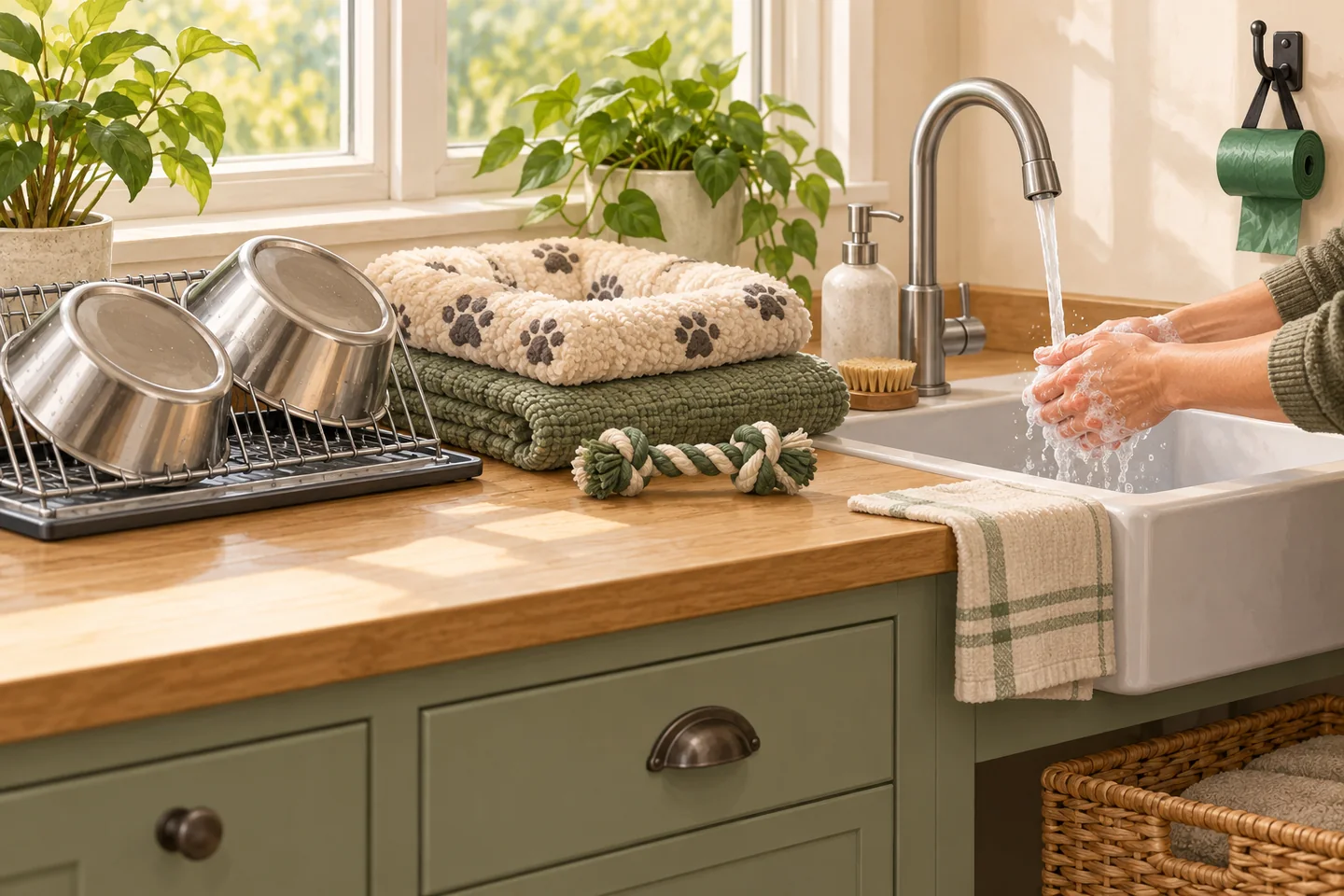
AI-generated illustration of household hygiene during Giardia care.
Can Giardia Spread From Dogs to People?
Giardia can infect humans, although transmission from dogs to humans appears to be rare. Take care when handling an infected dog’s feces and always wash your hands thoroughly after disposal. 3
If someone in the household has a weakened immune system, discuss precautions with the veterinarian and that person’s doctor.
FAQs
Can a dog have Giardia without diarrhea?
Yes; some dogs can be infected without showing clear symptoms, particularly diarrhea.
How is Giardia diagnosed in dogs?
Your veterinarian assesses the symptoms and history, then selects stool tests to check for Giardia. Repeated or combined testing may be needed because cyst shedding can be intermittent.
Can Giardia come back after treatment?
Yes, especially if your dog is exposed to a contaminated environment. If diarrhea returns, contact your vet rather than assuming Giardia is the cause.
Can dogs contract Giardia from contaminated water?
Yes, a dog can become infected by swallowing Giardia cysts in contaminated water.
Can Giardia spread from dogs to humans?
Transmission from dogs to humans appears to be rare. Follow hygiene advice, particularly when disposing of an infected dog’s feces.
When to See a Vet About Suspected Giardia in Dubai
If your dog experiences persistent or recurrent diarrhea, a veterinary assessment is important, even without other symptoms. Tell the veterinarian about possible exposure to contaminated environments, other dogs and recent diet changes.
Do not administer medication on your own. Arrange a veterinary checkup in Dubai with Paw Sisters Veterinary Clinic in Al Garhoud and discuss the tests and care appropriate for your dog.
For severe lethargy, bloody or black stools, suspected dehydration or rapid deterioration, seek urgent veterinary attention rather than waiting for a routine booking.