Feline Panleukopenia: Signs, Spread and Prevention
Medically reviewed by Dr. Hasan AlDahhak, DVM ·
Feline panleukopenia is a highly contagious viral disease that can become life-threatening quickly, especially in kittens and unvaccinated cats. If a kitten is vomiting, has diarrhoea, refuses food or becomes profoundly weak, separate it from other cats and call a veterinarian immediately. Ask about urgent care now, then review cat vaccinations in Dubai once the immediate risk is managed.
Key takeaways
- Isolate a possibly infected cat and call the clinic before arrival so the team can reduce exposure to other cats.
- Vomiting, diarrhoea and appetite loss are not specific to panleukopenia, so veterinary testing matters.
- Treatment is intensive supportive care. Antibiotics may address secondary bacterial risk but do not kill the virus.
- Vaccination is the main preventive tool, supported by sanitation, isolation and careful intake of new cats.
- Ordinary household cleaning products may not inactivate feline parvovirus.
What is feline panleukopenia?
Feline panleukopenia is caused by feline parvovirus. The virus targets rapidly dividing cells, particularly in the intestinal tract, bone marrow and lymphoid tissues. This can lead to severe gastrointestinal illness, dehydration and low white blood cell counts.
The Merck Veterinary Manual clinical review describes the disease as highly contagious and often fatal in susceptible cats, with kittens at greatest risk of severe disease.
Cats cannot pass feline panleukopenia to people. People can still move infectious material between cats on hands, shoes, clothing, carriers, bowls and cleaning tools, so careful hygiene remains essential.
Which signs need urgent veterinary care?
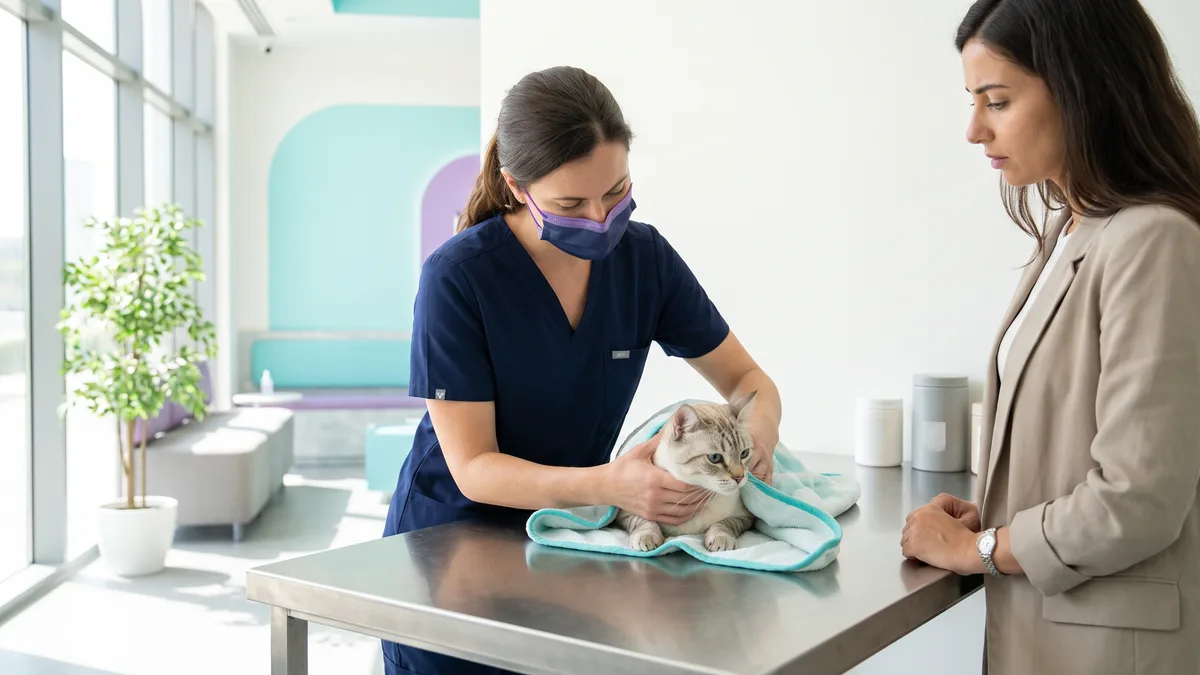
A sick kitten can deteriorate rapidly. Do not wait for every possible sign to appear.
| What you notice | What to do |
|---|---|
| Refusing food, repeated vomiting, diarrhoea or marked lethargy | Separate from other cats and request same-day veterinary advice |
| Pale gums, obvious dehydration, profound weakness or inability to stand | Seek urgent or emergency veterinary care |
| Collapse, seizure, breathing difficulty or very low responsiveness | Treat as an emergency now |
| Mild appetite change in an otherwise alert adult cat | Call for advice, especially with exposure to a sick or unvaccinated cat |
| Another household cat becomes unwell | Separate the cats and tell the veterinarian about the shared exposure |
Do not force-feed, give human medicine or attempt home fluid treatment. Do not delay the appointment to collect a stool sample unless the clinic specifically asks you to do so.
How feline panleukopenia spreads
The virus spreads primarily through infected faeces and contaminated environments or objects. Direct cat-to-cat contact is not required. A cat may encounter the virus through a shared litter tool, carrier, bowl, bedding, footwear or hands that have contacted contaminated material.
The European Advisory Board on Cat Diseases guideline explains that feline parvovirus can persist for months in the environment and can travel on contaminated objects. This environmental durability makes isolation and correct disinfection as important as keeping visibly sick cats apart.
| Exposure route | Risk-reduction step |
|---|---|
| Shared litter tray or scoop | Use separate equipment for the sick cat and do not move it between rooms |
| Bowls, bedding and carriers | Keep items separate until a veterinarian gives a cleaning plan |
| Hands, shoes and clothing | Clean hands and change contaminated outerwear before handling other cats |
| Newly adopted cat | Arrange a health and vaccine-record review before close contact |
| Clinic arrival | Call ahead so the team can direct entry and isolation |
How veterinarians diagnose the disease
No single symptom confirms panleukopenia. The veterinarian combines exposure history, vaccination status, physical findings and laboratory results. Testing may include a patient-side antigen test, complete blood count and, in selected cases, PCR or repeat testing.
A negative rapid antigen test may not exclude infection when clinical suspicion remains high. Timing, sample quality and prior vaccination can affect interpretation. The veterinarian may repeat a test or use a different method rather than relying on one result.
Other conditions can also cause vomiting, diarrhoea, weakness or low white cell counts. Prompt examination helps the team assess dehydration and rule out obstruction, toxin exposure, parasites and other infectious disease. If vomiting is ongoing, use a veterinary vomiting service rather than trying home remedies.
What treatment can and cannot do
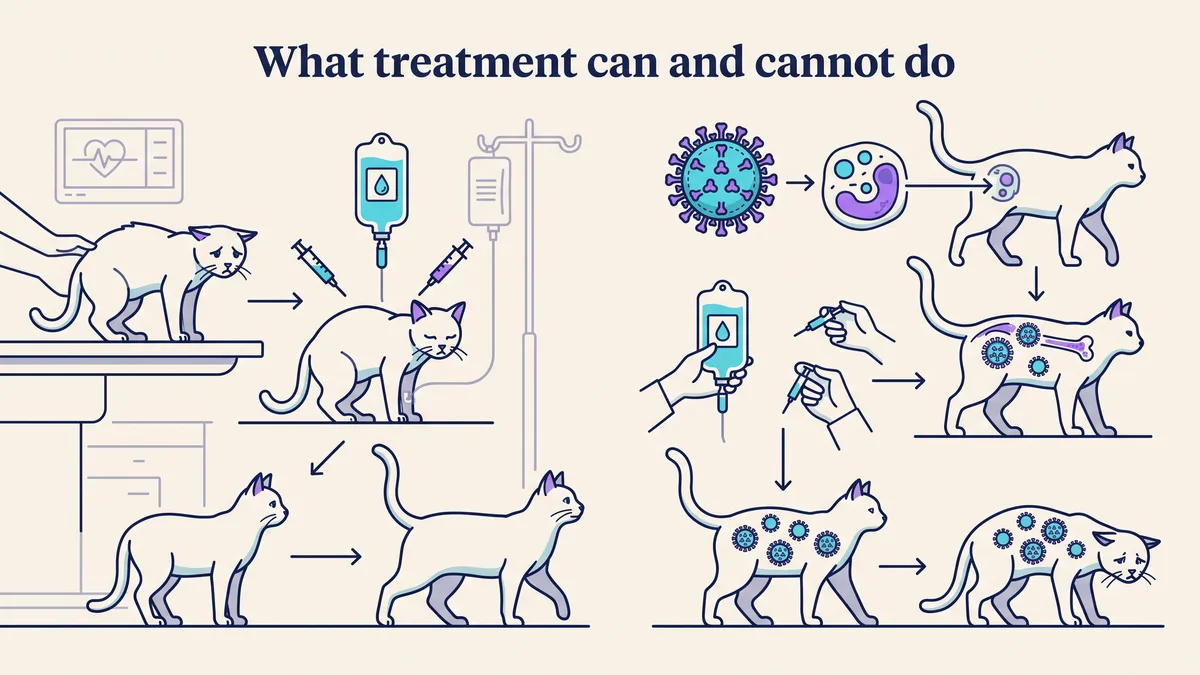
There is no simple home medicine that clears feline parvovirus. Veterinary treatment supports the cat while its immune system responds and manages complications.
Depending on severity, care may include:
- Intravenous or other veterinarian-selected fluid therapy
- Correction of glucose and electrolyte problems
- Medicines to control nausea and vomiting
- Nutritional support when it is safe
- Pain management
- Antimicrobials when intestinal damage and low white cell counts create secondary bacterial or sepsis risk
- Isolation nursing, temperature support and close monitoring
Antibiotics do not kill feline panleukopenia virus. Their role, when prescribed, is to manage bacterial complications. Prognosis depends on age, immune status, disease severity and response to supportive care. Prompt care gives the cat the best available chance but cannot guarantee recovery.
How vaccination helps prevent panleukopenia
Panleukopenia vaccination is a core part of feline preventive care. Kittens need a series because maternal antibodies can interfere with early doses, creating a period in which one injection may not produce reliable protection.
The WSAVA 2024 vaccination guidelines recommend starting core kitten vaccination no earlier than six weeks and repeating through at least 16 weeks, with adjustments for higher-risk settings. The veterinarian must set the actual schedule using the kitten's age, health, product label, exposure and prior records.
Adult cats with unknown or incomplete records need an individual catch-up plan. The 2020 AAHA/AAFP feline vaccination guidelines emphasize that life stage, environment, lifestyle and health all affect vaccine decisions. Do not copy another cat's dates.
For a broader local planning view, compare the veterinarian's plan with the Dubai pet vaccination schedule guide, but let the clinic's verified record remain the source of truth.
Cleaning after a confirmed or suspected case
Feline parvovirus resists many routine disinfectants. Cleaning must remove organic material first, then use a product proven effective against non-enveloped viruses and follow its label exactly.
The ABCD disinfectant-choice guideline explains why product spectrum, dilution, contact time, surface compatibility and pre-cleaning all matter. Do not improvise a bleach recipe from social media. Incorrect concentration or mixing can injure people and pets and may damage surfaces without reliably disinfecting them.
Ask the veterinarian:
- Which surfaces and objects can be disinfected safely
- Which porous items should be discarded
- How long to keep exposed cats separate
- When another cat can enter the area
- Whether exposed cats need an examination or vaccination review
Keep cats out of the cleaning area, ventilate as directed and never mix cleaning chemicals.
Frequently asked questions
Can a kitten recover from feline panleukopenia?
Some kittens recover with prompt intensive supportive care, but the disease can be fatal. Prognosis depends on the kitten's condition and response to treatment. Seek urgent advice rather than trying to predict the outcome at home.
Does vomiting mean my cat has panleukopenia?
No. Vomiting has many possible causes. Panleukopenia becomes more concerning with diarrhoea, severe weakness, poor appetite, low white cell counts, incomplete vaccination or known exposure, but testing is needed.
Can a vaccinated cat catch panleukopenia?
No vaccine guarantees complete protection. A veterinarian should investigate illness even in a vaccinated cat and check whether the series was complete, correctly timed and documented.
How long can the virus remain in a home?
The virus can persist for months under suitable conditions. The safe re-entry plan depends on surfaces, cleaning, vaccination status and exposure, so follow a veterinarian-directed disinfection plan.
Should other cats in the home be vaccinated immediately?
Call the veterinarian before arranging vaccination. The plan depends on each cat's health, age, records and exposure. A currently sick cat may need examination and stabilization first.
About this guidance
This article summarizes current veterinary guidelines and cannot diagnose a sick cat. Separate a suspected case, call ahead and seek urgent care for repeated vomiting, diarrhoea, refusal to eat, collapse or profound weakness. For preventive planning or record review, book with Paw Sisters.