How to Brush Dog Teeth Safely: Step-by-Step Guide
Medically reviewed by Dr. Hasan AlDahhak, DVM ·
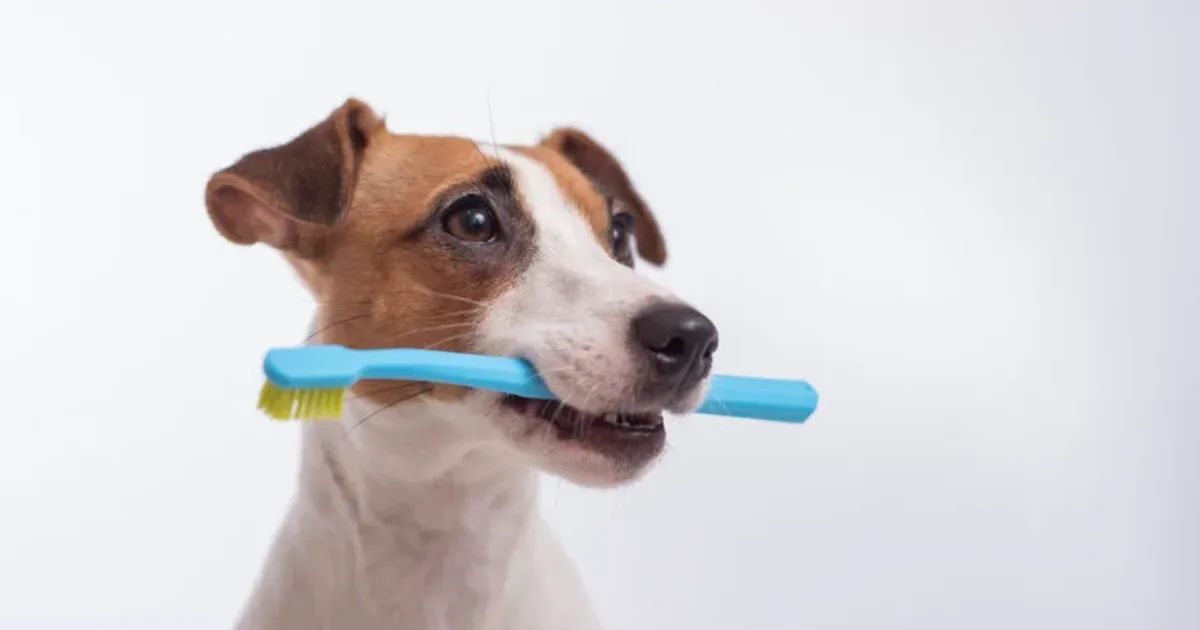
The safest way to brush dog teeth is to use a soft pet toothbrush, toothpaste made for dogs and gradual reward-based training. Aim for once daily. The mechanical action along the gumline is what removes soft plaque; coconut oil, olive oil, parsley and other pantry remedies are not proven substitutes.
Do not brush a painful mouth. Red or bleeding gums, loose or broken teeth, swelling, difficulty eating or a strong persistent odour need a veterinary dental examination first.
What does brushing dog teeth naturally mean?
For safe home care, "naturally" should mean a gentle routine that works with normal behaviour. It should not mean a homemade toothpaste.
Dental plaque is a soft bacterial film that forms on teeth. Daily brushing disrupts plaque before it mineralises into hard calculus, also called tartar. A toothbrush cannot remove established calculus once it has hardened.
The American Animal Hospital Association dental guidelines identify daily brushing as the most effective home method for plaque control. Veterinary examinations and professional care are still needed when disease is present.
What you need to brush your dog's teeth
Keep the kit simple:
- A soft toothbrush sized for your dog's mouth
- Toothpaste formulated specifically for pets
- Small dog-safe rewards, play or praise
- A calm, well-lit place with secure footing
A long-handled pet brush can reach the cheek teeth. A finger brush may help some dogs learn, but it gives less protection from a sudden bite. Ask your vet which design suits your dog's size, mouth and handling comfort.
Never use human toothpaste. Some human products contain xylitol, which can cause rapid, life-threatening poisoning in dogs. The US Food and Drug Administration advises using toothpaste intended for pets and seeking immediate veterinary help after suspected xylitol ingestion.
How to brush dog teeth step by step
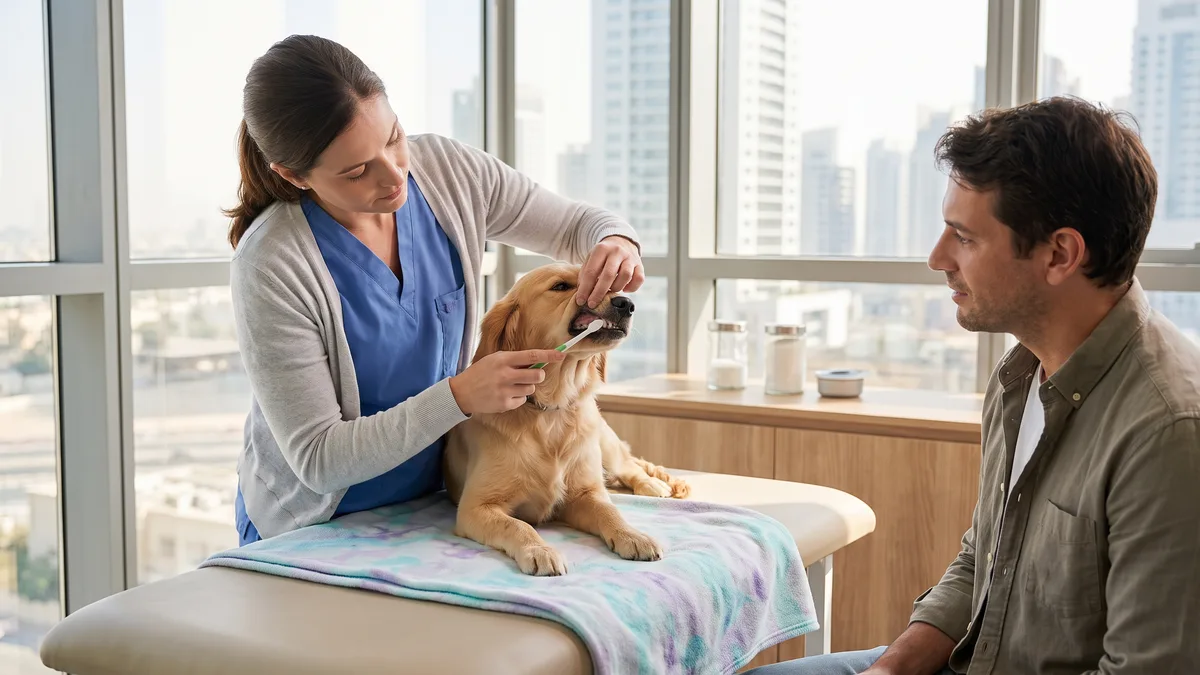
Training may take days or weeks. Move to the next step only when your dog remains relaxed.
- Choose a calm moment. Begin after exercise or at another quiet time. Keep the first sessions very short.
- Reward face handling. Touch the cheek and muzzle gently, then reward calm behaviour.
- Lift the lip. Avoid forcing the mouth open. Briefly expose one canine tooth and reward.
- Introduce tooth contact. Touch one tooth with a finger, then add more teeth over several sessions.
- Introduce the toothpaste. Let the dog taste a small amount of pet toothpaste before the brush appears.
- Add the brush. Place it at the gumline and make small, gentle movements.
- Prioritise outer surfaces. Start with the cheek-facing surfaces of the upper teeth, especially the large back teeth where plaque and calculus collect quickly.
- Expand gradually. Clean more outer surfaces as cooperation improves. Add inner surfaces only if your dog comfortably allows it.
- Finish positively. Stop before patience runs out and reward with praise, play or a small dog-safe treat.
The WSAVA toothbrushing toolkit supports this gradual sequence. Do not hold the dog's head down, scrub hard or rush around every surface in the first session.
How long and how often should you brush?
Aim for once daily because plaque reforms quickly. Consistency matters more than a long session. A calm, thorough pass over the reachable outer surfaces is more useful than an occasional forceful scrub.
If daily brushing is not yet possible, keep training toward it. Ask your veterinarian about an evidence-backed supplement rather than assuming that three sessions per week guarantee clean teeth.
Look for products accepted by the Veterinary Oral Health Council. VOHC acceptance means a product has met defined standards for controlling plaque or calculus. It does not mean that every product suits every dog.
What not to use as dog toothpaste
Coconut oil, olive oil and parsley
Coconut oil, olive oil and parsley do not have a VOHC-accepted canine plaque-control claim. They should not replace pet toothpaste or daily brushing. They also cannot remove hardened tartar. Persistent bad breath needs a dental assessment rather than a scented home remedy.
Baking soda, essential oils and vinegar
Skip homemade pastes. Dogs swallow toothpaste, and household ingredients are not formulated or tested as canine dental products. Use a toothpaste made for pets instead.
Human toothpaste
Human toothpaste is not designed to be swallowed by dogs. Xylitol is especially dangerous. If your dog may have swallowed a xylitol-containing product, contact an emergency veterinarian immediately and bring the packaging.
Can chews, food or water additives replace brushing?
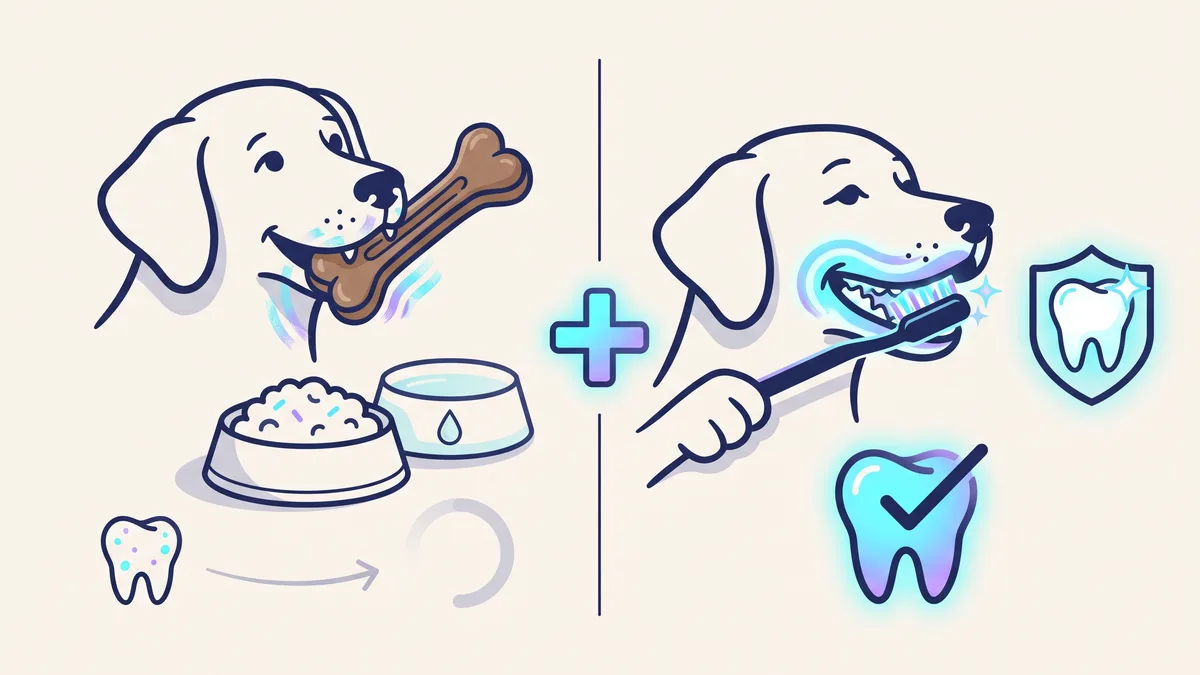
No single chew, diet or additive replaces daily mechanical brushing, but evidence-backed products may complement it when used correctly.
Choose a dog product from the current VOHC accepted-products list and match it to the dog's body size. Supervise chews and remove pieces that could be swallowed whole. Very hard objects can fracture teeth, so avoid using hardness as a sign that a chew cleans better.
| Option | Main role | Important limit |
|---|---|---|
| Daily brushing | Removes soft plaque at the gumline | Does not remove established tartar |
| VOHC-accepted home product | Can support plaque or calculus control | Does not replace an oral examination |
| Appropriately sized dental chew | Adds supervised mechanical cleaning | Hard or poorly sized items can injure teeth or be swallowed |
| Professional dental care | Examines and treats disease above and below the gumline | Requires veterinary assessment and usually anaesthesia for full cleaning |
Carrots and apples should not be described as toothbrushes. They may be suitable treats for some dogs in appropriate portions, but they do not provide proven plaque control and may not suit dogs with certain diets or medical conditions.
When home brushing is not enough
Home care removes plaque above the gumline. It cannot inspect or clean disease hidden below the gumline, take dental radiographs or safely treat painful teeth.
Arrange a dental assessment for:
- Persistent bad breath
- Red, swollen or bleeding gums
- Brown or yellow calculus buildup
- Drooling or pawing at the mouth
- Dropping food, chewing on one side or reduced appetite
- Loose, fractured or discoloured teeth
- Facial or jaw swelling
- Nasal discharge or obvious mouth pain
Do not start brushing inflamed or bleeding tissue before assessment. Pain can create a lasting fear of mouth handling.
The Cornell canine dental guide explains why a complete examination and cleaning below the gumline generally requires anaesthesia. Dental radiographs may reveal problems that cannot be seen from the crown of the tooth. Learn what a professional visit involves in the complete pet dental care guide.
A realistic seven-session training plan
Progress depends on the dog, so treat "session" as a stage rather than a fixed day.
- Reward calm cheek and muzzle touches.
- Lift the lip for one second, then reward.
- Touch one canine and one cheek tooth.
- Massage the outer gumline gently with a finger.
- Offer a taste of pet toothpaste.
- Brush two or three outer teeth briefly.
- Build toward all reachable outer surfaces and a daily routine.
If your dog freezes, turns away, growls or snaps, stop. Those signals mean the task is too difficult or uncomfortable. A vet can check for pain, and a behaviour-aware plan can rebuild cooperation without force.
Frequently asked questions
How often should I brush my dog's teeth?
Aim for once daily. Daily brushing is the most effective home method for controlling plaque. Build the habit gradually if your dog is new to mouth handling.
Can I brush my dog's teeth with coconut oil?
It is not recommended as a replacement for dog toothpaste. Coconut oil has no recognised VOHC plaque-control claim and does not remove tartar.
Can dogs use human toothpaste?
No. Human toothpaste is not formulated for dogs to swallow and may contain xylitol, which is dangerous to dogs. Use toothpaste made specifically for pets.
Do I need to brush the inside of every tooth?
Start with the outer, cheek-facing surfaces, especially the upper cheek teeth. Add inner surfaces only when your dog comfortably allows it. A consistent safe routine is the priority.
Can brushing remove tartar?
No. Brushing removes soft plaque but not mineralised calculus. Established tartar and disease below the gumline require veterinary assessment and, when indicated, professional cleaning.
About this guidance
This guide is educational and does not replace an oral examination. If your dog has pain, bleeding gums or hard tartar, book a dental appointment before starting home brushing.