Pet Vomiting Treatment Dubai: Emergency Signs
Sources and guidance checked
Medically reviewed by Dr. Hasan AlDahhak, DVM ·
When searching for pet vomiting treatment Dubai, start with triage rather than a home remedy. Go to an emergency veterinary service now if a dog or cat has repeated unproductive retching, a swollen or painful abdomen, blood in vomit with weakness or deterioration, collapse, breathing difficulty, severe weakness, pale or blue gums, a seizure, suspected poison exposure or possible foreign-object ingestion. Call ahead when possible and follow the team's transport instructions. Cat vomiting treatment also needs a low threshold for professional advice when episodes repeat or appetite, energy, thirst or urination changes.
Key takeaways
- Vomiting is a sign, not a diagnosis. Causes range from a short-lived stomach upset to obstruction, poisoning or serious systemic disease.
- Repeated retching with little or nothing produced and abdominal enlargement is an emergency, especially in a dog.
- Puppies, kittens, older pets and animals with diabetes, kidney disease or another chronic condition can deteriorate faster.
- Do not give human medicines, force food or water, induce vomiting or start a home fasting plan without veterinary direction.
- A photograph, timeline, exposure list and medication record can make clinical triage more useful.
Decide how urgently your pet needs care
The number of episodes matters, but it is not the only factor. Age, species, body size, existing disease, possible exposure, hydration and accompanying signs change the risk.
| Situation | Safer next step |
|---|---|
| Repeated dry retching, swollen abdomen, severe restlessness or collapse | Emergency assessment now |
| Blood with deterioration, breathing difficulty, seizure, pale or blue gums, severe weakness or marked pain | Emergency assessment now |
| Known or possible toxin, medicine, string, bone, toy, corn cob or other object swallowed | Contact an emergency veterinary service or animal poison resource immediately |
| Repeated vomiting, inability to keep water down, diarrhoea plus lethargy, or worsening signs | Prompt veterinary assessment |
| One episode in an otherwise bright adult pet with no exposure concern | Call your veterinary clinic for individual monitoring and feeding advice |
The Merck Veterinary Manual explains that vomiting can accompany many digestive and non-digestive disorders. Cornell Feline Health Center similarly advises prompt evaluation when feline vomiting is frequent or accompanied by signs such as lethargy, reduced appetite, blood or altered thirst and urination.
Any blood in vomit warrants prompt veterinary advice, even if the pet otherwise appears stable. Weakness, collapse, pain or rapid deterioration makes the situation an emergency.
If you are uncertain, describe the pet's age, size, illnesses, possible exposures and current behaviour to a veterinary professional. The urgent warning-sign guide provides additional triage context.
Is it vomiting, regurgitation or coughing?

These events can look similar on a phone description but suggest different locations and tests. A short video, if it can be recorded without delaying care, is often useful.
| Feature | Vomiting | Regurgitation |
|---|---|---|
| Effort | Often nausea, lip licking, salivation and abdominal contractions | Often passive and sudden |
| Material | May be partly digested food, fluid, foam or bile | Often undigested food, water or saliva |
| Timing | Can occur independently of eating | Often soon after eating or drinking, but not always |
| Main concern | Stomach, intestine or systemic disease | Oesophageal or swallowing problem |
Coughing may end with gagging or foam and can be confused with vomiting. Do not rely on this table to diagnose the event. Breathing difficulty remains an emergency regardless of the label.
Why pets vomit
Vomiting has many possible causes, and similar-looking episodes can require very different treatment.
- Dietary and gastrointestinal causes: abrupt diet change, spoiled food, inflammation, parasites or infection.
- Foreign material or obstruction: toys, fabric, string, bones, corn cobs and other objects can block or damage the digestive tract. The Merck overview of gastrointestinal obstruction describes vomiting, appetite loss, lethargy and abdominal pain among possible findings.
- Toxins and medicines: human medicines, cleaning products, plants, chemicals and certain foods can be dangerous. The US FDA pet-hazard guide lists common household items that can harm pets.
- Disease outside the gut: kidney, liver, hormonal, pancreatic, metabolic and other disorders can cause nausea and vomiting.
- Acute abdominal emergencies: repeated unproductive retching and abdominal enlargement can occur with gastric dilatation and volvulus. Merck's GDV guidance describes this as an acute, life-threatening condition requiring immediate treatment.
A cat that repeatedly vomits and stops eating needs prompt attention. Cats can have important nutritional and medical complications when food intake falls; see the guide to a cat not eating for safe triage rather than appetite tricks.
What to record before the examination
Do not delay urgent transport to complete a checklist. If safe, note:
- when the first episode happened and how many followed
- whether there was retching, abdominal effort, coughing or passive return of food
- the appearance of the material, including blood, foreign material or unusual colour
- appetite, thirst, urination, stool, energy, pain and abdominal size
- every food, treat, chew, rubbish, plant, chemical, medicine and supplement recently accessible
- current diagnoses and all prescribed or accidental medicines
- any missing toy, string, fabric, bone or packaging
- recent travel, boarding, diet changes and contact with unwell animals
Bring the product container or a clear label photograph after a possible exposure. Do not handle suspected toxic material without protecting yourself.
What not to do at home
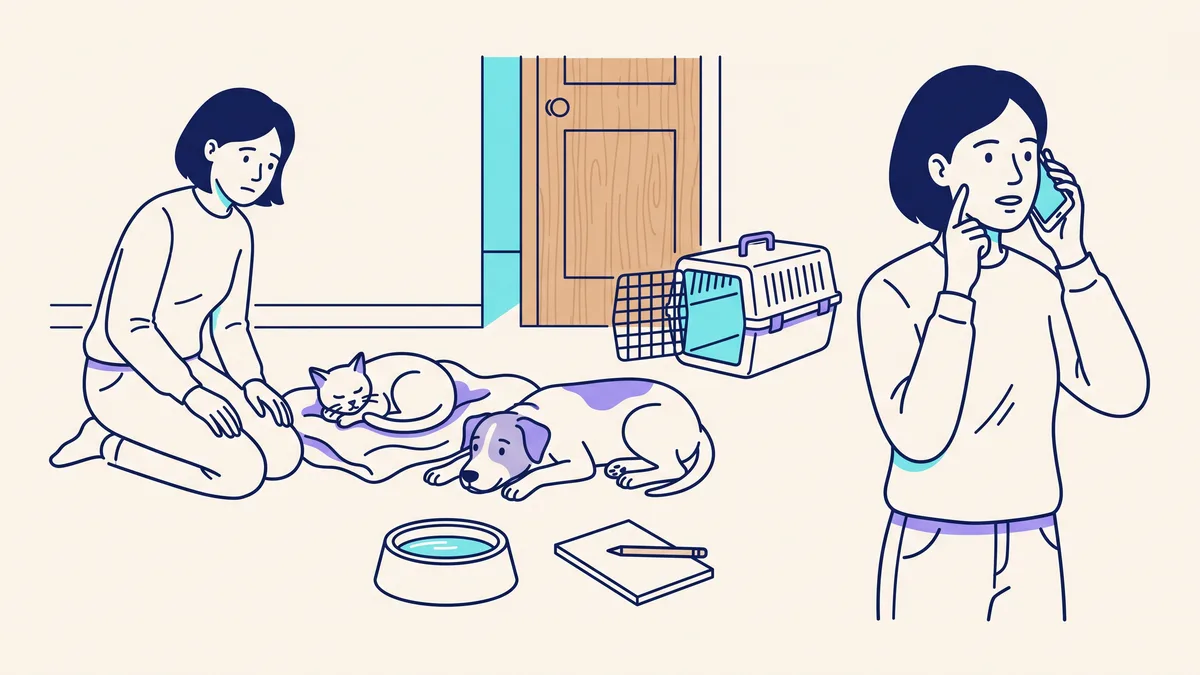
The wrong home action can worsen aspiration, obstruction, poisoning, dehydration or organ injury.
- Do not induce vomiting unless a veterinarian or recognised poison service specifically directs it for that patient and substance.
- Do not give hydrogen peroxide, salt, oil, milk, activated charcoal or another household antidote on your own.
- Do not give human anti-nausea, pain, diarrhoea or acid medicines.
- Do not pull string from the mouth or anus. It may be anchored internally and can damage the intestine.
- Do not force food or syringe water into a nauseated, weak or poorly responsive animal.
- Do not use a generic fasting period for every patient. Very young, small, diabetic or otherwise ill animals need individual instructions.
The Merck principles of toxicosis treatment emphasise that decontamination decisions depend on the poison, timing, clinical condition and aspiration risk. Call for professional instructions instead of trying to make the pet vomit.
How a veterinarian investigates vomiting
The clinician first stabilises urgent problems and assesses hydration, circulation, pain, temperature, abdomen and other body systems. History and examination determine which tests are justified. These may include blood or urine analysis, faecal testing, radiographs, ultrasound or targeted tests for a suspected disease.
A pet diagnostic service can help distinguish dehydration or metabolic disease from obstruction and other causes, but no single test fits every patient. Imaging may miss some material, and test results must be interpreted together with the examination and timeline.
If a cat has compatible signs and risk factors, pancreatic disease may be considered. The ACVIM consensus statement on pancreatitis in cats notes that feline pancreatitis can present variably and diagnosis requires integration of clinical findings and testing. Vomiting alone cannot confirm it.
Treatment depends on the cause and the patient's stability
Veterinary treatment may involve stabilisation, fluid support, nausea control, pain management, nutritional planning, monitoring, treatment of an underlying disease or removal of an obstruction. The safe choices depend on hydration, circulation, age, species, concurrent disease and test findings.
Do not request a particular injection or medicine based on a previous episode. A drug that was appropriate before may be unsafe now or may mask a surgical emergency. Follow the written discharge plan and return instructions after the examination.
For pets with cat diabetes symptoms or cat kidney disease symptoms, vomiting can disrupt hydration, food intake and an existing treatment plan. Contact the treating team promptly and do not independently change prescribed medicine.
Frequently asked questions
When is pet vomiting an emergency?
Seek emergency help for repeated dry retching, a swollen or painful abdomen, collapse, breathing difficulty, pale or blue gums, seizure, blood with deterioration, severe weakness, suspected toxin or possible foreign-object ingestion. Any blood warrants prompt advice, and rapid worsening warrants urgent care.
Can I give my pet water after vomiting?
Ask a veterinary professional for instructions tailored to the patient. Do not force water or allow rapid gulping when the pet is repeatedly vomiting, weak, distended or poorly responsive.
Should I make my dog or cat vomit after it eats something dangerous?
No, not without professional direction. Inducing vomiting is unsafe for some substances and patients and can cause aspiration or further tissue injury.
What information will the veterinarian need?
Provide a timeline, episode count, video or photograph if safe, appetite and toileting changes, health conditions, medicines and every possible food, object or chemical exposure.
Why might my pet need imaging or blood tests?
Vomiting can arise from obstruction, inflammation, poisoning or disease outside the digestive tract. Examination guides tests that assess hydration, organs, metabolism and the abdomen.
About this guidance
This veterinary-team article provides general triage and harm-prevention information, not a diagnosis or individual treatment plan. It was reviewed against Merck Veterinary Manual, Cornell, FDA and ACVIM sources on 23 August 2026. If signs are severe, worsening or uncertain, contact an emergency veterinary professional now.