Pet Dental Cleaning in Dubai: Step-by-Step Guide
Sources and guidance checked
Medically reviewed by Dr. Hasan AlDahhak, DVM ·
Pet dental cleaning is a veterinary procedure that examines and cleans every tooth, including the areas below the gumline that owners cannot reach at home. A complete cleaning usually involves general anaesthesia, airway protection, dental X-rays, scaling, polishing and a treatment plan for any disease found. If your pet has bad breath, red gums or trouble eating, start with a dog and cat dental cleaning assessment in Dubai rather than booking a cosmetic scrape.
Key takeaways
- A proper veterinary dental procedure treats disease below the gumline, not only visible tartar.
- General anaesthesia allows airway protection, monitoring, full-mouth X-rays and a pain-free examination.
- The final treatment and cost cannot be confirmed until the veterinarian has assessed the mouth and, when indicated, reviewed dental X-rays.
- Daily brushing and products accepted by the Veterinary Oral Health Council can slow new plaque, but they cannot remove hardened calculus.
When does a pet need dental cleaning?
A pet needs a dental examination when there is persistent bad breath, visible tartar, inflamed gums, oral pain or a change in eating. Many dogs and cats continue eating despite painful dental disease, so an apparently normal appetite does not rule it out. The AAHA pet dental care guide notes that bad breath is often an early sign and that most dogs and cats have some periodontal disease by three years of age.
Book an examination sooner if you notice:
- red, swollen or bleeding gums;
- yellow or brown deposits on teeth;
- drooling, pawing at the mouth or resisting face handling;
- food falling from the mouth or chewing on one side;
- loose, fractured or missing teeth;
- facial swelling, reduced appetite or unexplained weight loss.
These signs do not tell you how many teeth need treatment. An awake examination gives the veterinarian a useful first look, but disease beneath the gums and inside roots may only become clear during an anaesthetised examination with dental imaging.
What happens during pet dental cleaning?
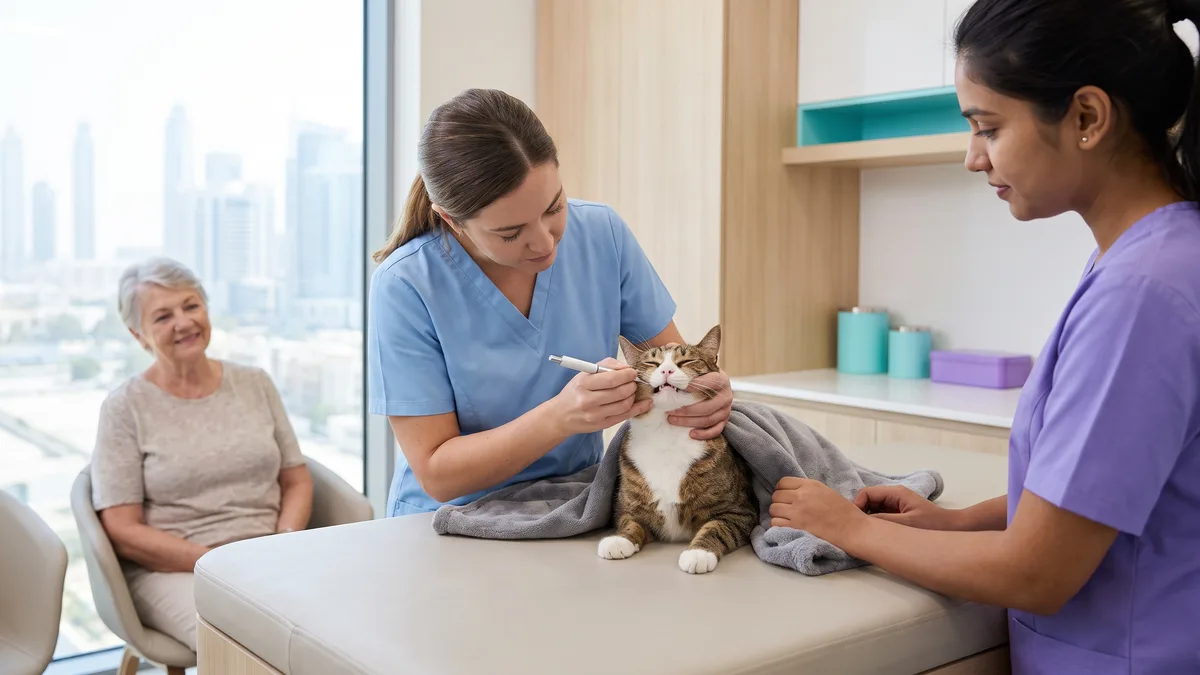
A comprehensive procedure follows a sequence designed to find disease, protect the patient and clean above and below the gumline. The exact order can vary with the patient and clinic protocol. The AAHA essential dental steps include a conscious examination, full-mouth intraoral radiographs, supra- and subgingival scaling, polishing, periodontal probing and irrigation.
| Stage | What the veterinary team does | Why it matters |
|---|---|---|
| Pre-anaesthetic assessment | Reviews history, examines the pet and selects any needed tests | Identifies individual risks and informs the anaesthetic plan |
| Anaesthesia and monitoring | Protects the airway and monitors vital signs throughout | Allows controlled, pain-free examination and treatment |
| Oral exam and dental X-rays | Charts each tooth, probes the gums and images roots and surrounding bone | Finds disease that is hidden below the gumline |
| Scaling and subgingival cleaning | Removes plaque and calculus from crowns and beneath gums | Treats the area where periodontal disease is active |
| Polishing and irrigation | Smooths cleaned tooth surfaces and flushes debris | Completes cleaning and supports a clean field for final review |
| Treatment and recovery | Treats diseased teeth when consented, then monitors recovery | Addresses pain and infection rather than leaving the cause behind |
1. Pre-anaesthetic assessment
The veterinarian reviews previous anaesthesia, current medicines and health conditions before examining the pet. Blood testing or other diagnostic services may be recommended according to age, clinical findings and medical history. Testing helps the team plan, but no test can make anaesthesia risk-free.
2. General anaesthesia and monitoring
General anaesthesia with a secured airway is the standard for a complete dog or cat dental procedure. The AAHA anaesthesia guidance for dentistry explains that endotracheal intubation, monitoring and physiologic support are necessary for dental scaling and treatment. The anaesthetic protocol should be tailored to the individual patient rather than based on age alone.
This is different from anaesthesia-free tooth scraping. The American Veterinary Dental College position statement states that scraping visible tooth surfaces is not a substitute for a comprehensive anaesthetised procedure because it cannot provide full radiographs, probing, subgingival cleaning and treatment of discovered disease.
3. Dental X-rays and complete charting
Dental X-rays show tooth roots, surrounding bone and problems hidden beneath the gumline. The veterinarian combines the images with probing and visual findings to stage disease and decide which teeth can be preserved. An estimate made before anaesthesia may therefore change once imaging reveals the full extent of disease.
4. Scaling below the gumline
The team removes deposits above and below the gumline with appropriate ultrasonic and hand instruments. Cleaning only the visible crown may improve appearance, but it does not treat the subgingival area where periodontal disease causes tissue and bone loss.
5. Polishing, irrigation and treatment decisions
After scaling, each crown is polished with veterinary dental equipment and the mouth is irrigated. If the examination finds a fractured, loose or severely diseased tooth, the veterinarian may recommend extraction or another treatment. Ask before the procedure how the clinic handles consent if unexpected treatment becomes necessary.
Is anaesthesia safe for dental cleaning?
Anaesthesia always carries some risk, but the risk is assessed and managed for each pet. A responsible plan considers the physical examination, relevant test results, airway protection, pain control, monitoring and recovery. Older age does not automatically disqualify a pet from needed dental care, although senior pets and those with heart, kidney, liver or breathing conditions may need additional planning.
Useful questions to ask a dental clinic include:
- Will my pet be intubated to protect the airway?
- Which vital signs will be monitored, and by whom?
- Are full-mouth dental X-rays available?
- How is pain prevented and treated if extractions are needed?
- When will you contact me if findings change the treatment estimate?
- What recovery instructions and records will I receive?
Our guide to choosing a pet dental clinic explains how to compare these safety and quality details.
How should I prepare my pet?
Follow the clinic's instructions for food, water and regular medicines. Do not invent a fasting schedule from online advice because age, species, health conditions and appointment time can change the plan. Tell the team about every medicine, supplement, previous anaesthetic reaction and recent change in coughing, vomiting, appetite or energy.
Before arrival, confirm:
- when food and water should stop, if at all;
- which morning medicines should be given;
- how the clinic will obtain consent for additional treatment;
- whether an itemised estimate separates cleaning, imaging and possible extractions;
- what time the clinic expects to provide a recovery update.
What is recovery like after cleaning?
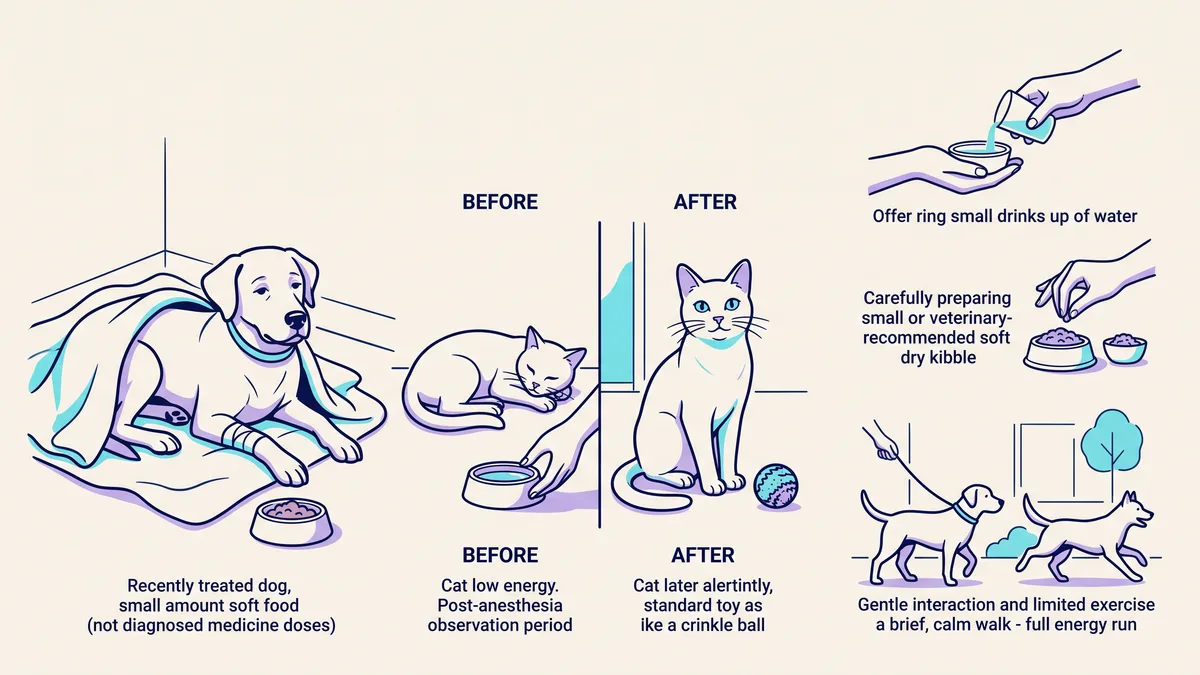
Recovery depends on the anaesthetic, the pet's health and whether treatment such as extraction was required. Mild sleepiness can occur after discharge. Pets with oral surgery may receive a tailored feeding plan, pain medicine and activity guidance. Give only medicines prescribed for that patient, and never substitute a human painkiller.
Contact the clinic promptly if recovery seems to worsen or if you see repeated vomiting, breathing difficulty, collapse, uncontrolled bleeding, severe swelling, marked pain or refusal of food beyond the discharge instructions. If breathing is difficult or your pet collapses, use an emergency veterinary service.
How do I protect the teeth after cleaning?
Daily home care is the best way to slow plaque after professional treatment. The AAHA home oral-care recommendations distinguish plaque from hardened calculus: brushing removes plaque but does not remove calculus, and inflamed gums may be painful to brush. Wait until the veterinarian says the mouth is ready after any procedure.
| Home-care option | Best use | Important limit |
|---|---|---|
| Daily brushing with pet toothpaste | First-line plaque control for pets that tolerate it | Does not remove hardened calculus |
| Dental diets, chews or additives | Extra support selected for the individual pet | Product evidence varies |
| Regular oral checks | Finds odour, redness, fractures or new tartar early | Cannot assess roots or bone below the gumline |
| Veterinary dental reviews | Sets a personalised recall interval | Timing is based on disease risk, not a universal annual rule |
Choose products from the VOHC accepted-products list when possible. Avoid human toothpaste and very hard objects that may fracture teeth. For a practical routine, use our guide to brushing a dog's teeth safely.
Frequently asked questions
Can a groomer remove tartar without anaesthesia?
Visible tartar may be scraped from some surfaces, but this is not a complete dental procedure. It does not allow full-mouth X-rays, periodontal probing, safe subgingival cleaning or treatment of painful disease.
Does every pet need cleaning once a year?
No single interval fits every pet. The veterinarian should base timing on the oral examination, home care, previous disease, tooth alignment, age and other individual risks.
Will my pet definitely need extractions?
Not necessarily. The decision depends on examination and X-ray findings. Ask how the clinic obtains consent and updates estimates if a tooth needs treatment.
Can brushing replace professional cleaning?
Brushing is excellent prevention, but it cannot remove hardened calculus or diagnose disease below the gums. It works alongside veterinary examinations and treatment.
About this guidance
This article explains the usual components of veterinary dental care and was materially reviewed on 23 August 2026 against AAHA, AVDC and VOHC guidance. It cannot diagnose your pet or replace an individual anaesthetic assessment. If dental disease is suspected, book a dental assessment so the veterinary team can examine your pet and provide a patient-specific plan.