Dog Dental Disease Symptoms: When to See a Vet
Sources and guidance checked
Medically reviewed by Dr. Hasan AlDahhak, DVM ·

Common dog dental disease symptoms include persistent bad breath, red or bleeding gums, visible tartar, drooling, pawing at the mouth, dropping food, chewing on one side, avoiding hard food, loose or broken teeth, and facial swelling. Dogs often keep eating despite oral pain, so a normal appetite does not rule out dental disease.
An awake mouth check can identify visible concerns, but it cannot show every root, pocket, or area below the gumline. A veterinary dental assessment determines whether further examination, dental radiographs, cleaning, or treatment under anesthesia is indicated.
Key takeaways
- Bad breath is a warning sign, not a normal part of aging.
- Continuing to eat does not prove the mouth is comfortable.
- Facial swelling, severe pain, uncontrolled bleeding, trauma, breathing difficulty, or refusal of food and water needs prompt or emergency care.
- Visible tartar does not reveal the full stage of disease or the correct treatment.
- Home brushing can slow plaque buildup after the mouth is assessed, but it cannot treat established disease below the gumline.
Dog dental disease symptoms owners notice first
Dental disease can change eating, behavior, grooming, and facial appearance. The Cornell University guide to dental disease and home care lists bad breath, difficulty eating, bleeding, drooling, nasal discharge, and facial or jaw swelling among possible signs.
| Possible sign | What you may notice | What else could cause it |
|---|---|---|
| Persistent bad breath | Strong or unusual mouth odor | Oral infection, retained material, a mass, or systemic disease |
| Red or bleeding gums | Inflamed margin or blood on a toy | Gingivitis, trauma, clotting problems, or another oral lesion |
| Visible tartar | Yellow or brown deposits near the gumline | Does not reveal root or bone disease by itself |
| Eating change | Dropped food, one-sided chewing, avoiding hard food | Dental pain, jaw pain, nausea, or neurological disease |
| Drooling or pawing | Wet chin, face rubbing, repeated pawing | Pain, foreign material, nausea, toxin exposure, or injury |
| Loose or broken tooth | Movement, missing piece, exposed inner tooth | Trauma, periodontal support loss, or tooth resorption |
| Facial or jaw swelling | One-sided swelling below an eye or along the jaw | Tooth-root disease, trauma, salivary disease, or a mass |
| Behavior change | Withdrawal, irritability, head shyness | Pain can arise from the mouth, ears, eyes, neck, or elsewhere |
These signs justify an examination, not an automatic cleaning. A veterinarian may find periodontal disease, a fractured tooth, resorption, oral trauma, a foreign body, a mass, or a non-dental cause.
Which oral signs need urgent veterinary attention?
Seek prompt or emergency care when the problem affects breathing, hydration, bleeding, or severe pain.
Urgent warning signs include:
- breathing difficulty or swelling that is rapidly increasing
- uncontrolled mouth bleeding
- major facial or jaw trauma
- inability to close the mouth
- a suspected electrical or chemical burn
- severe pain, collapse, or marked weakness
- refusal of both food and water
- a foreign object lodged in the mouth that cannot be removed safely
Do not force the mouth open, pull embedded string or material, scrape tartar, or attempt to extract a tooth. Call a veterinarian for immediate instructions. For severe signs, use the emergency veterinary service.
Why can a dog still eat with dental pain?
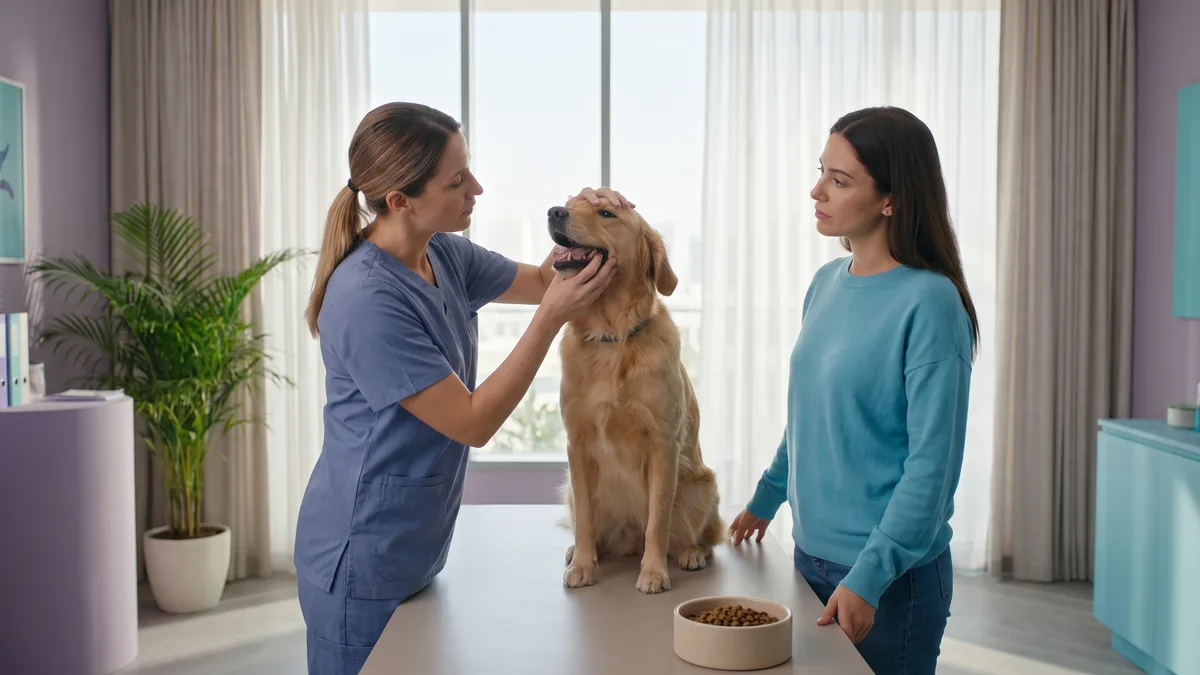
Eating is necessary for survival, and dogs can compensate for a painful area. They may swallow pieces with less chewing, use the other side of the mouth, choose softer food, eat more slowly, or approach the bowl and stop.
The Cornell University periodontal disease guide explains that dogs can hide dental pain and continue eating. Look for changes in method and enthusiasm, not appetite alone.
Subtle clues include:
- carrying food away from the bowl
- dropping pieces while chewing
- taking longer to finish
- refusing a familiar chew or toy
- rubbing the face after eating
- reduced grooming or play
- flinching when the head is touched
Record a short video if the behavior is intermittent. Do not delay assessment until the dog stops eating completely.
What can an awake dental check show?
An awake examination is a useful first screen. The veterinarian can look for visible plaque, tartar, gum inflammation, broken teeth, asymmetry, swelling, obvious masses, pain, and jaw movement.
An awake look cannot reliably evaluate every surface or structure below the gumline. A painful or anxious pet may also limit safe inspection.
| Awake oral screen may show | Complete dental assessment can add |
|---|---|
| Visible gum redness and deposits | Probing around each tooth under anesthesia |
| Obvious fractures or loose teeth | Tooth-by-tooth mobility and attachment assessment |
| Facial asymmetry or swelling | Full-mouth intraoral dental radiographs |
| Visible mass or ulcer | Examination of hidden and painful areas |
| Need for further investigation | Cleaning below the gumline and treatment planning |
The AAHA Dental Care Guidelines for Dogs and Cats support a complete approach that includes structures below the gumline. A photograph or visible tartar score cannot independently diagnose disease stage or decide which teeth require treatment.
Why may dental radiographs and anesthesia be needed?
Complete veterinary dental evaluation and treatment requires a still, protected patient so the team can examine, probe, image, clean below the gumline, and treat painful disease safely.
The AAHA essential dental steps include an awake preliminary assessment followed by anesthetized evaluation, full-mouth intraoral radiographs, probing, subgingival scaling, polishing, and an individual treatment plan. The AAHA anesthesia and analgesia considerations support general anesthesia with intubation, monitoring, and physiological support for a complete dental procedure.
Anesthesia is not risk free. The veterinarian assesses the dog's history, examination, current disease, medicines, and any indicated tests before designing the plan. Age alone neither guarantees safety nor automatically prevents necessary dental treatment.
An anesthesia-free cosmetic scaling does not replace this process. It cannot provide a complete examination and treatment below the gumline.
For a step-by-step overview, read what happens during pet dental cleaning.
What can owners safely do before the visit?
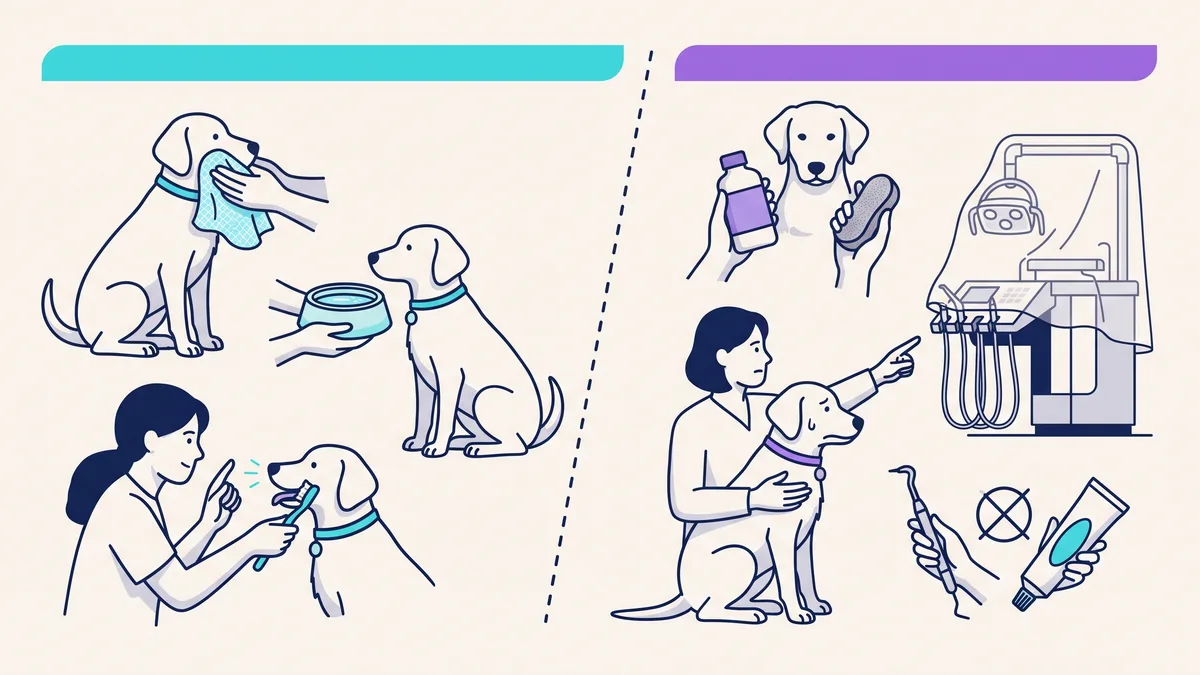
Protect the mouth from further injury and keep the veterinarian informed. Safe steps include:
- ask the clinic whether feeding should change before the visit and do not apply a generic fasting schedule
- avoid hard chews, bones, antlers, or toys if chewing appears painful
- prevent pawing or rubbing from causing injury when this can be done without distress
- photograph visible swelling or bleeding without forcing the mouth open
- record eating changes, odor, drooling, behavior, and when signs began
- list all medicines, supplements, recent trauma, and possible toxin exposure
Do not brush a painful, bleeding, fractured, or severely inflamed mouth before examination. Never use human toothpaste, sharp tools, household disinfectants, essential oils, or human pain medicine.
Prevention after treatment
Daily brushing with pet-safe toothpaste is the most effective home preventive method for many dogs when the mouth is comfortable and the dog accepts handling. Brushing slows plaque accumulation but does not remove established tartar or treat disease below the gumline.
After assessment or treatment, ask the veterinarian:
- when brushing can start or resume
- which brush and pet toothpaste suit the dog
- whether a dental diet, chew, wipe, or water additive is appropriate
- which products have evidence for plaque or tartar control
- how calories and chewing safety affect product choice
- when the next oral recheck should occur
The AAHA Dental Care Guidelines linked above support early examination and individualized daily home care based on species, breed, size, anatomy, and existing disease.
Use the dog tooth-brushing guide only after a veterinarian confirms that brushing is safe. For broader prevention choices, see how to prevent pet dental problems.
How often should a dog have a dental check?
There is no universal cleaning interval. Oral examinations should be part of routine veterinary care, while the need and timing for professional dental treatment depend on the individual dog's mouth, anatomy, age, home care, prior disease, and symptoms.
Small dogs and dogs with crowded teeth may need closer monitoring, but breed alone does not diagnose disease. Follow the veterinarian's recheck plan rather than waiting for a fixed number of months or assuming every annual visit requires cleaning.
The WSAVA Dental Guidelines provide global evidence-based standards for recognizing, diagnosing, and managing oral and dental disease in companion animals.
Frequently asked questions
Is bad breath normal in an older dog?
No. Persistent bad breath can signal dental or oral disease and deserves examination. Age does not make a strong mouth odor normal.
Does visible tartar show how severe dental disease is?
No. Visible deposits do not reveal every periodontal pocket, root, fracture, resorptive lesion, or area of bone loss. A complete assessment may require probing and dental radiographs under anesthesia.
Does my dog need anesthesia for dental cleaning?
A complete veterinary dental procedure requires general anesthesia with airway protection and monitoring so the team can examine, image, clean below the gumline, and treat disease safely.
Can I brush away established tartar?
No. Brushing helps control new plaque but cannot safely remove mineralized tartar or treat disease below the gumline. Do not scrape teeth at home.
How quickly should facial swelling be checked?
Promptly. Rapid swelling, breathing difficulty, severe pain, trauma, uncontrolled bleeding, or refusal of food and water can require urgent or emergency assessment.
About this guidance
This article is general education and cannot diagnose the cause or stage of an oral problem. It was materially updated on 23 August 2026 using AAHA, Cornell University, and WSAVA dental guidance.
If you have noticed dog dental disease symptoms, book a dental examination with Paw Sisters Veterinary Clinic. Seek emergency care for breathing difficulty, severe swelling, major trauma, uncontrolled bleeding, or severe distress.