
Cat Neutering Dubai: Spay, Cost and Recovery Guide
Sources and guidance checked
Medically reviewed by Dr. Hasan AlDahhak, DVM ·
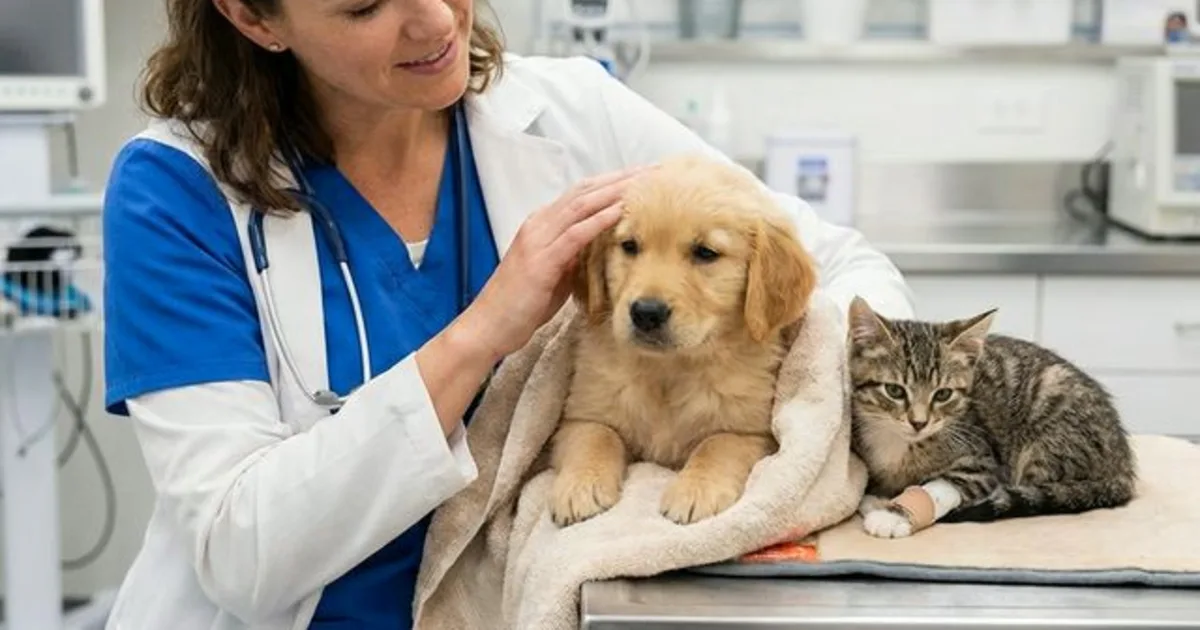
Cat neutering Dubai care includes more than the operation itself. Owners should compare the examination, anaesthesia, monitoring, pain control, discharge support and recheck included in a quote. Female cat spaying and male cat neutering are different procedures, so their estimates and recovery needs may differ. A pet surgery consultation can confirm the right procedure and timing for your cat.
This guide focuses on cats while also explaining where dog timing differs. If you need male dog-specific detail, use the dog neutering cost and aftercare guide.
Key takeaways
- Major feline veterinary groups support sterilisation of cats by about five months in many cases, but the veterinarian must still assess the individual cat.
- A female spay is abdominal surgery. A routine male neuter is usually less invasive, so cost and recovery are not directly comparable.
- Do not follow generic online fasting instructions. Use the exact plan supplied for your cat.
- Prevent licking and jumping, inspect the incision daily and give only prescribed medicines.
What do spaying and neutering mean?
Spaying sterilises a female cat by surgically removing the ovaries, often with the uterus. Neutering or castration sterilises a male cat by removing both testicles. Both require anaesthesia, pain control and patient monitoring.
These procedures prevent pregnancy. They also remove heat-cycle behaviour in females and may reduce hormone-driven roaming, fighting, spraying and mating behaviour in males. Results are not identical for every cat, especially when a behaviour has already become established or has a stress-related cause.
The 2024 WSAVA reproduction control guidelines emphasise science-based, patient-specific decisions and discuss benefits, drawbacks and alternatives. That balanced approach matters because sterilisation is preventive surgery, not an emergency that should be scheduled without an examination.
When should a cat be spayed or neutered?
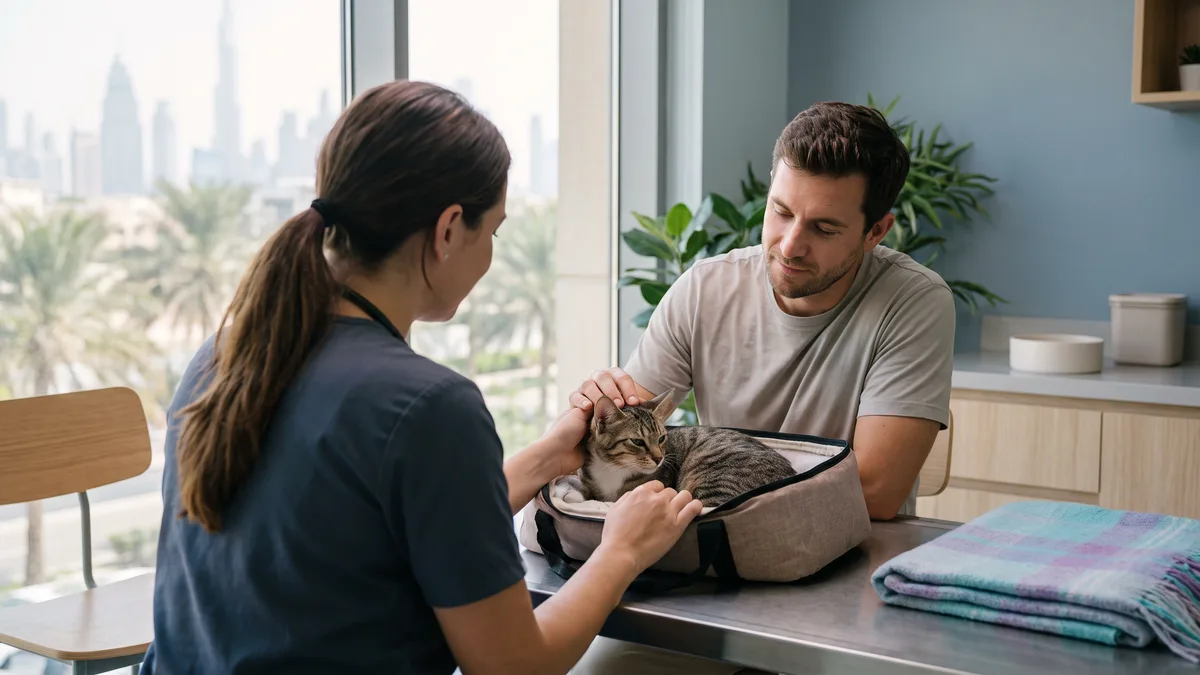
For many healthy pet cats not intended for breeding, the discussion should happen early. The Feline Veterinary Medical Association supports sterilisation of cats not intended for breeding by five months while leaving the final decision to the veterinarian's judgment about the individual patient's health and the procedure.
Timing may change if the cat is underweight, unwell, pregnant, in heat, has a retained testicle, takes medicine or has another anaesthetic consideration. Tell the clinic about coughing, sneezing, vomiting, diarrhoea, appetite changes and every medicine or supplement before the operation.
Dogs need a different timing discussion. The AAHA sterilisation timing guidance separates smaller and larger dogs because growth and breed-related risks matter. Do not apply a cat's timetable to a puppy.
How is cat spaying Dubai care different from male neutering?
A female spay enters the abdomen to remove reproductive tissue. A routine male neuter uses small scrotal incisions and is generally less invasive. A retained testicle may be in the groin or abdomen and turns a routine male procedure into a more complex surgery.
| Decision point | Female cat spay | Male cat neuter |
|---|---|---|
| Surgical access | Abdominal procedure | Usually small external incisions |
| Quote | Often reflects greater surgical time and resources | Often lower for an uncomplicated routine case |
| Incision protection | Recovery suit or collar may be advised | Collar may still be needed if the cat licks |
| Activity control | Jumping can strain an abdominal incision | Activity restriction still protects healing tissue |
| Complexity changes | Heat, pregnancy or illness can affect planning | A retained testicle can require abdominal or groin surgery |
This distinction is also why one advertised figure should never be assumed to cover every cat.
What should a cat neutering Dubai quote include?
Ask for a written estimate that identifies included and optional items. Do not assume a package includes testing or follow-up unless the estimate says so.
| Item | Why it matters | Useful question |
|---|---|---|
| Pre-operative examination | Confirms the cat's current condition | When will the vet examine my cat? |
| Blood tests if advised | May reveal anaesthetic or health concerns | Which tests are recommended for this patient? |
| Anaesthesia | Protocols are adjusted to the patient and procedure | How will anaesthesia be planned? |
| Monitoring | Vital signs need active observation through recovery | Who monitors my cat, and what is measured? |
| Pain management | Comfort planning begins before the cat goes home | Which medicines are included? |
| Protective equipment | A collar or suit may be needed | Is it included or purchased separately? |
| Recheck | Confirms healing and return to activity | Is the scheduled recheck included? |
Dubai Municipality says its Veterinary Services Section monitors and certifies veterinary establishments and clinics for compliance with health conditions. Its page on veterinary establishment oversight in Dubai provides local regulatory context.
What happens on surgery day?
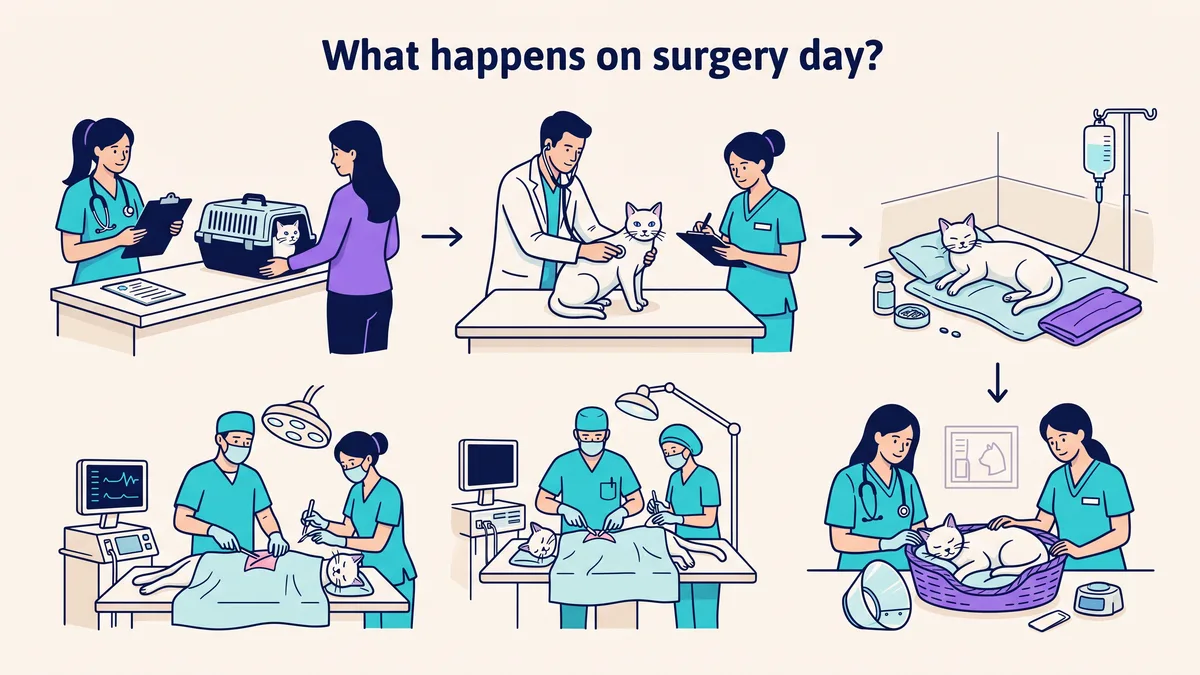
Before arrival, follow the clinic's exact food, water and medicine instructions. Kittens, diabetic cats and cats with other conditions may need a plan that differs from a healthy adult cat. If the cat accidentally eats or receives a medicine outside the instructions, tell the team rather than hiding it.
At admission, confirm the procedure, contact number and discharge plan. The team induces anaesthesia, prepares the surgical site, performs the operation and monitors recovery. The AAHA anaesthesia and monitoring guidelines treat evaluation, preparation, monitoring and recovery as connected safety stages.
Before leaving the clinic, make sure you understand:
- when to offer food and water
- the name, purpose and timing of every prescribed medicine
- how long the collar or suit must stay on
- which activity is allowed
- what the incision should look like
- the recheck date and urgent contact route
How should you care for a cat after surgery?
Set up a quiet indoor recovery space with food, water and a litter tray nearby. Prevent access to high furniture if jumping is restricted. Keep the cat separate from children or animals that may trigger chasing or rough play.
Inspect the incision in good light every day without pressing it. Keep it dry and do not apply antiseptics, creams or dressings unless the veterinarian directs you. The cat may look energetic before deeper tissue has healed, so continue restriction for the full period in the discharge plan.
Give only the prescribed medicine. The US FDA warns that human pain relievers and medicine prescribed for another animal can harm a pet; its owner guide explains why pain relievers for pets require veterinary direction.
For room setup, collar use and incision monitoring, see the pet surgery recovery checklist. A veterinary checkup may also be needed if another health concern is found before surgery.
When should you call the vet after surgery?
Call the surgical clinic promptly if redness, swelling, pain, bleeding, discharge or odour is increasing; the incision opens; the cat repeatedly vomits; the cat will not eat within the limit given at discharge; or you cannot give the prescribed medicine.
Trouble breathing, collapse, very pale or blue gums, uncontrolled bleeding, profound weakness or reduced responsiveness requires urgent veterinary help. If the surgical clinic is unavailable, go to the nearest available emergency veterinary hospital.
Frequently asked questions
How much does cat neutering cost in Dubai?
There is no universal fee. Sex, health, examination findings, tests, anaesthesia, a retained testicle, medicines and follow-up all affect the estimate. Ask for an itemised quote after assessment.
Is cat spaying more expensive than male cat neutering?
It often can be because a female spay is abdominal surgery, while an uncomplicated male neuter is generally less invasive. The included care still matters more than comparing headline figures alone.
Will neutering stop a male cat from spraying?
It may reduce hormone-driven urine marking, particularly when performed before the behaviour is established, but it is not guaranteed. Urinary disease and household stress can also cause marking or inappropriate urination.
Can a cat be sterilised while in heat?
It may be possible, but tissues can be more vascular and the plan may change. Tell the clinic if you suspect heat and let the surgeon decide whether to proceed or reschedule.
Will a cat become overweight after neutering?
Energy needs and activity can change after sterilisation, but weight gain is not inevitable. Ask the vet to record body condition and set a feeding and monitoring plan instead of automatically reducing food without guidance.
About this guidance
This page provides general education, not a diagnosis, fixed price or individual surgical plan. It was materially updated on 23 August 2026 using WSAVA, AVMA, AAHA, FDA and Dubai Municipality material. Recommendations from the veterinarian who examines your cat take priority.
To discuss timing and receive a patient-specific estimate, book a pre-surgery appointment with Paw Sisters Veterinary Clinic.