Luxating Patella Dog Guide: Dubai Surgery Factors
Sources and guidance checked
Medically reviewed by Dr. Hasan AlDahhak, DVM ·
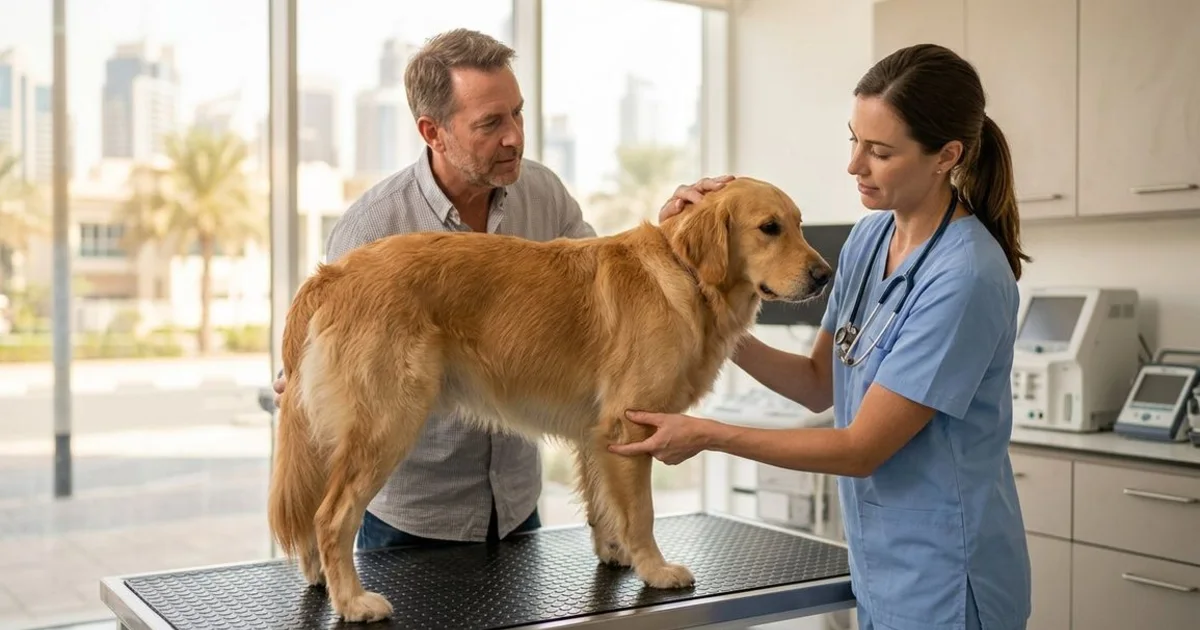
A dog with a luxating patella has a kneecap that moves out of its normal groove. Surgery is not automatic for every grade, and a reliable Dubai cost cannot be quoted from a web page. It requires an examination, grading, imaging when indicated, a patient-specific procedure and anaesthetic plan, and a clear list of aftercare. Start with a pet surgery consultation in Dubai for an individual recommendation and written estimate.
Key takeaways
- A skipping step or briefly held-up hind leg is common, but other knee, hip, paw, or nerve problems can look similar.
- Veterinarians grade patellar luxation from 1 to 4, yet grade is only one part of the treatment decision.
- Stable, mild cases may be monitored; persistent pain, lameness, progression, deformity, or reduced function can make surgery more appropriate.
- The planned technique, one or both knees, anaesthesia, imaging, medicines, rechecks, and rehabilitation all influence a Dubai estimate.
- Surgery can improve function, but complications and recurrence are possible. No outcome can be guaranteed.
What a luxating patella means in a dog
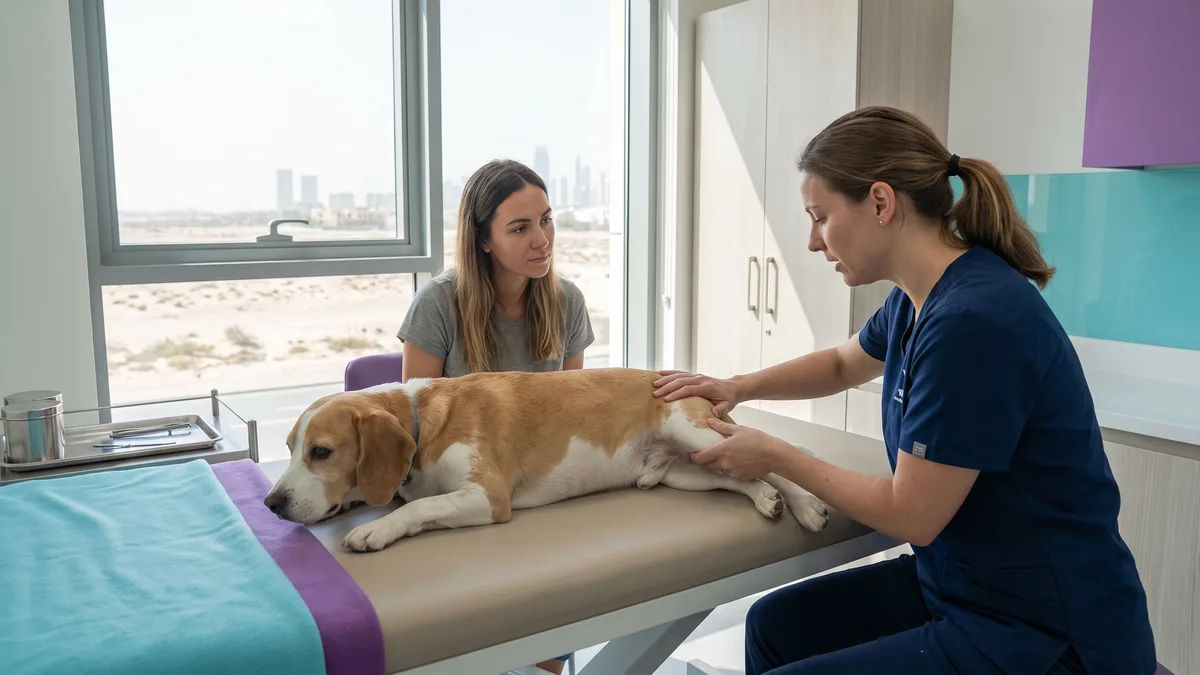
The patella is the kneecap. It normally tracks within a groove at the end of the thigh bone as the knee bends. With patellar luxation, it moves to one side of that groove. The problem may be developmental, associated with limb alignment and inherited tendencies, or follow trauma. One or both knees may be affected.
Typical signs include intermittent skipping, carrying one hind leg for a few steps, a sudden kick or stretch before normal walking resumes, stiffness, lameness, reluctance to jump, altered posture, or reduced activity.
Do not repeatedly try to push a dog's kneecap into place. Arrange an orthopaedic veterinary assessment even when skipping is brief and the dog seems comfortable between episodes. Sudden inability to bear weight, severe pain, trauma, an obviously deformed limb, or a cold paw needs prompt emergency veterinary assessment.
Luxating patella grades from 1 to 4
The examining veterinarian grades the kneecap by how easily and how often it leaves the groove and whether it returns. The Merck Veterinary Manual overview describes a four-grade system and stresses that clinical signs and treatment vary.
| Grade | General examination finding | What it does not decide alone |
|---|---|---|
| 1 | The patella can be moved out during examination but returns | Whether the dog needs treatment now |
| 2 | The patella luxates intermittently and may remain out temporarily | Whether monitoring or surgery is best |
| 3 | The patella is out most of the time but can be replaced manually | The exact procedure or timing |
| 4 | The patella is persistently out and cannot be replaced manually | Prognosis for an individual patient |
Grade does not capture pain, gait, skeletal alignment, age, activity, progression, arthritis, or another condition in the same limb. Those factors help shape the recommendation.
When monitoring may be reasonable and when surgery is considered
Monitoring may be reasonable when clinical signs are absent or mild and the veterinarian finds no concerning progression. A plan can include observation, an appropriate activity level, and weight management where needed. Supplements do not put a luxating kneecap back into its groove and should not replace assessment.
Surgery may be discussed when a dog has persistent or worsening lameness, pain, reduced function, a higher-grade luxation, meaningful skeletal deformity, or progression despite conservative care. The American College of Veterinary Surgeons explains that surgeons may use soft-tissue and bone procedures, selected for the individual anatomy rather than from grade alone.
Excess body weight can add load to painful joints. If relevant, build a veterinary weight-management plan that protects nutrition and accounts for restricted activity.
Examination, imaging, and surgical planning
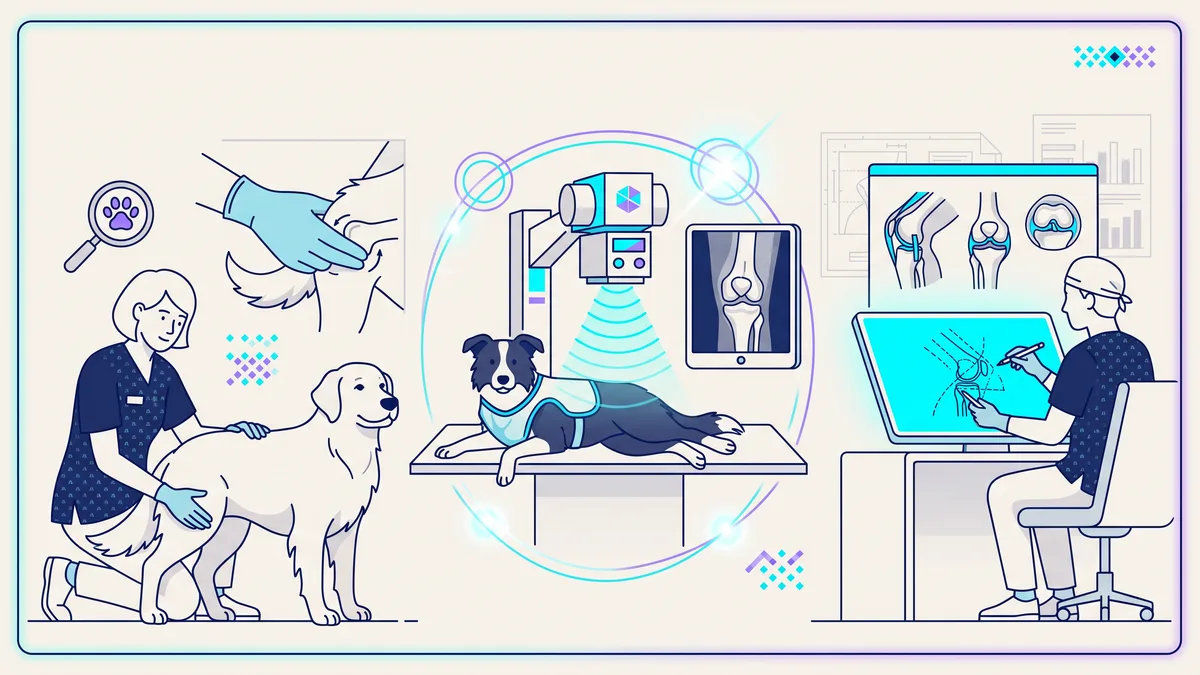
An orthopaedic examination assesses patellar movement, gait, pain, limb alignment, range of motion, and the rest of the leg. Radiographs can show bone shape, arthritis, growth-plate status, or concurrent disease. The patellar grade itself comes from physical examination. More advanced imaging may be considered when anatomy or another injury needs clarification.
Pre-operative planning may also include bloodwork and other testing based on age, health, procedure, and anaesthetic risk. The AAHA anaesthesia guidelines emphasise patient-specific evaluation and monitoring through recovery. A normal blood panel contributes useful information, but it cannot make anaesthesia risk-free.
Depending on the dog, planning may involve deepening the groove, realigning the patellar tendon attachment, balancing soft tissues, or correcting a more substantial bone deformity. Not every dog needs every technique.
What changes a Dubai luxating patella surgery estimate?
There is no responsible citywide price for this procedure. A written estimate should define the patient and the included care.
| Estimate factor | Questions to ask |
|---|---|
| Diagnosis and anatomy | Is one knee or both affected? Is extra imaging needed? |
| Surgical plan | Which procedure or combination is proposed, and why? |
| Anaesthesia and monitoring | What pre-operative assessment and recovery monitoring are included? |
| Hospital care and medicines | Are admission, pain control, implants, and take-home medicines included? |
| Follow-up | Are rechecks, repeat radiographs, dressing care, or rehabilitation included? |
| Contingencies | What could change the estimate during treatment? |
If you have insurance, ask the licensed insurer or broker about exclusions, waiting periods, limits, pre-authorisation, and required records before treatment. Coverage and reimbursement cannot be assumed.
Recovery, rechecks, and possible complications
Recovery is structured around controlled movement, incision care, pain management, and scheduled rechecks. Follow the discharge plan exactly. Prevent running, jumping, stairs, and slippery-floor accidents for as long as the surgeon advises. Do not add human pain medicine or change a prescribed medicine without asking the treating veterinarian.
Use the dog surgery recovery checklist to prepare the home, while treating the dog's individual discharge instructions as the final authority. Recovery time varies with the procedure, age, knee anatomy, healing, concurrent disease, and rehabilitation needs.
Recognised complications include infection, implant problems, delayed bone healing, fracture, persistent lameness, progression of arthritis, and reluxation. A veterinary review indexed by PubMed describes why combined techniques may be required and why complication risk varies with anatomy and procedure. A small 2024 retrospective outcome study reported generally favourable owner assessments in dogs under 10 kg, but also complications, reluxation, intermittent lameness, and radiographic arthritis progression. Those findings are not a prediction for every dog.
Call the surgeon promptly for increasing pain, swelling, discharge, wound opening, repeated vomiting, marked lethargy, or a sudden decline in limb use. Follow the clinic's emergency instructions after hours.
Questions to ask before accepting a surgery quote
- What examination findings and imaging support the diagnosis?
- Why is surgery recommended now, and what are the alternatives?
- Which procedure or combination is planned?
- What is included and excluded from the written estimate?
- What restrictions, rechecks, rehabilitation, and home equipment will be needed?
- Which complications should trigger an urgent call?
For a stable dog with skipping or intermittent lameness, book an orthopaedic consultation and bring previous records, images, medicine lists, and a video of the gait if safe to record.
Frequently asked questions
Does every luxating patella in a dog need surgery?
No. Some mild, stable cases can be monitored. Surgery becomes more likely when pain, persistent lameness, progression, reduced function, or significant deformity is present. The recommendation should follow examination.
Can an X-ray diagnose the grade?
The grade is assigned through orthopaedic examination. Radiographs help assess bone shape, arthritis, growth, and other problems that influence planning.
How much does luxating patella surgery cost in Dubai?
The cost depends on the individual dog, one or both knees, procedure, imaging, anaesthesia, implants, hospital care, medicines, rechecks, and rehabilitation. Request an itemised written estimate after assessment rather than relying on a generic online figure.
How long is recovery after patella surgery?
There is no single timeline for every patient. The surgeon will set restrictions and rechecks based on the technique, healing, age, and concurrent conditions. Follow that plan rather than a generic calendar.
Can a luxating patella return after surgery?
Reluxation is a recognised complication, although it does not happen to every patient. The individual risk depends on anatomy, severity, technique, healing, and other factors.
About this guidance
This educational article cannot diagnose a knee problem, recommend surgery, predict an outcome, or provide a personalised price. It was reviewed against current surgical and anaesthesia references on 23 August 2026. An examining veterinarian or surgeon must determine the diagnosis, plan, estimate, and aftercare.