Dog Surgery Recovery: A Dubai Aftercare Checklist
Sources and guidance checked
Medically reviewed by Dr. Hasan AlDahhak, DVM ·
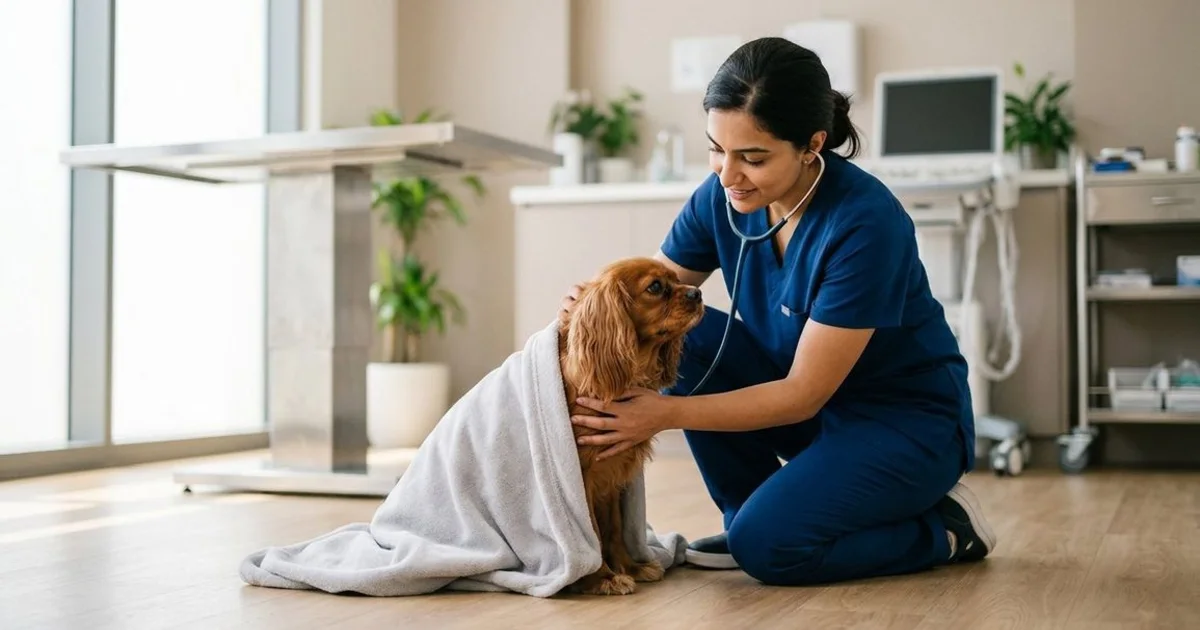
Dog surgery recovery should follow the operating team's written discharge instructions, because the procedure, anaesthetic, wound and individual patient determine what is safe. Before leaving a pet surgery clinic in Dubai, confirm the medicine plan, food and water instructions, activity restriction, wound care, recheck date and who to contact if recovery changes.
Key takeaways
- The surgeon's patient-specific instructions take priority over general online advice.
- Prepare a quiet, non-slip recovery area before the dog returns home.
- Prevent licking, chewing, running and jumping for exactly as long as the surgical team directs.
- Give only prescribed medicines, by the written route and schedule. Never add a human pain medicine.
- Repeated vomiting, breathing difficulty, collapse, severe pain, uncontrolled bleeding or a rapidly swollen abdomen needs urgent veterinary assessment.
Confirm the discharge plan before going home
The American College of Veterinary Surgeons advises owners to understand home care, medications, activity restriction and incision monitoring at discharge. Ask the team to demonstrate anything unclear, including collar fit, bandage protection or safe lifting.
| Before leaving | What to record |
|---|---|
| Procedure | What was done and whether there were complications |
| Medicines | Name, purpose, route, written timing and what to do if a dose is missed or vomited |
| Food and water | When and how much this individual patient may have |
| Activity | Allowed toileting walks, confinement and prohibited movements |
| Wound or bandage | What normal healing should look like and whether cleaning is allowed |
| Follow-up | Recheck date, suture or staple plan and after-hours contact route |
Do not improvise if the printed instructions conflict with something remembered from a conversation. Call the treating team and ask them to clarify the record.
Prepare a low-risk recovery space
Choose a quiet, clean area away from stairs, slippery floors, rough play, children who may disturb the dog and other animals. A crate or small room may be appropriate only if it matches the dog's discharge plan and allows comfortable standing, turning and lying down.
Use a short lead for permitted toilet trips. Support the dog only as demonstrated by the team, particularly after abdominal, spinal or orthopaedic surgery. Do not lift by the front legs, collar or surgical area.
Dubai heat can make a car or outdoor toilet break unsafe quickly. Keep transport and rest areas comfortably climate controlled, but do not place ice, heat packs or cooling devices on the incision unless the surgeon specifically prescribed them.
Food, water and toileting after anaesthesia
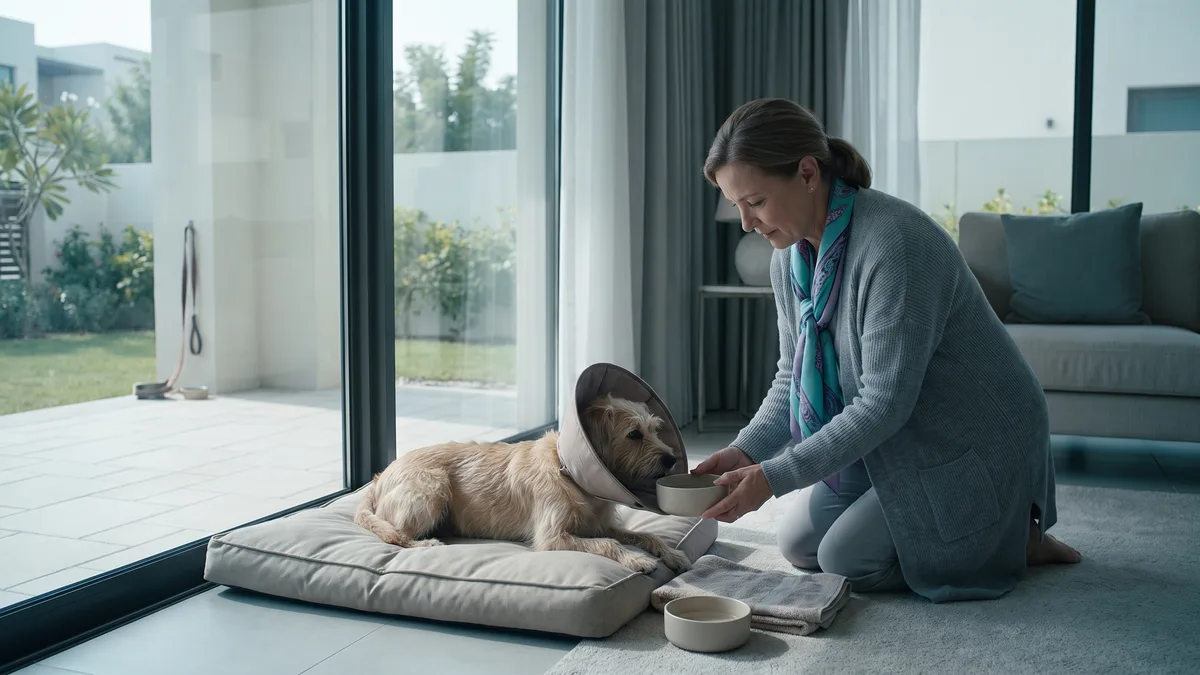
Anaesthesia and some medicines can affect alertness, appetite, nausea and bowel movements. The AAHA anesthesia guidelines describe recovery as a monitored phase of anaesthesia, not simply the moment a patient wakes up.
Follow the exact discharge directions for the first meal and access to water. Do not force food, syringe water into a sleepy dog or introduce a rich meal to encourage eating. Contact the surgical team if the dog cannot keep water down, repeatedly vomits, has difficulty swallowing, does not urinate as expected or remains unusually sedated.
Check the incision without treating it yourself
Look at the incision at the frequency requested by the team. Taking one well-lit photograph each day from a similar distance can make change easier to describe. Do not apply disinfectant, cream, powder, essential oil or a human wound product unless it appears in the written instructions.
| Finding | What to do |
|---|---|
| Edges closed, clean and changing as the team predicted | Continue the prescribed checks and protection |
| New discharge, bad smell, increasing redness, heat, pain or swelling | Contact the surgical team promptly and send a clear photograph if requested |
| Open wound, active bleeding or tissue visible | Prevent licking and seek urgent veterinary care |
| Wet, slipped, tight, chewed or foul-smelling bandage | Contact the team promptly; do not rewrap it without instruction |
| Drain moved, detached or stopped behaving as explained | Contact the team and do not push it back in |
An Elizabethan collar or another prescribed barrier must stop the mouth reaching the entire wound. Removing it for an unobserved moment can be enough for a dog to damage sutures. Clothing is not automatically a safe substitute because it can trap moisture or still allow chewing.
Recognise pain without changing medicine yourself
Pain can appear as restlessness, trembling, panting at rest, guarding, an unusual posture, reluctance to move, repeated waking, reduced interaction or aggression when approached. The AAHA pain management guidelines support repeated pain assessment and a plan tailored to the patient.
If pain appears uncontrolled, contact the treating team. Do not increase, repeat, stop or combine medicines without veterinary direction. Never give ibuprofen, naproxen, paracetamol, aspirin or another human medicine unless the veterinarian responsible for that dog explicitly prescribes it. Accidental administration should be reported immediately with the product, strength, amount and time.
Respect the procedure-specific activity restriction
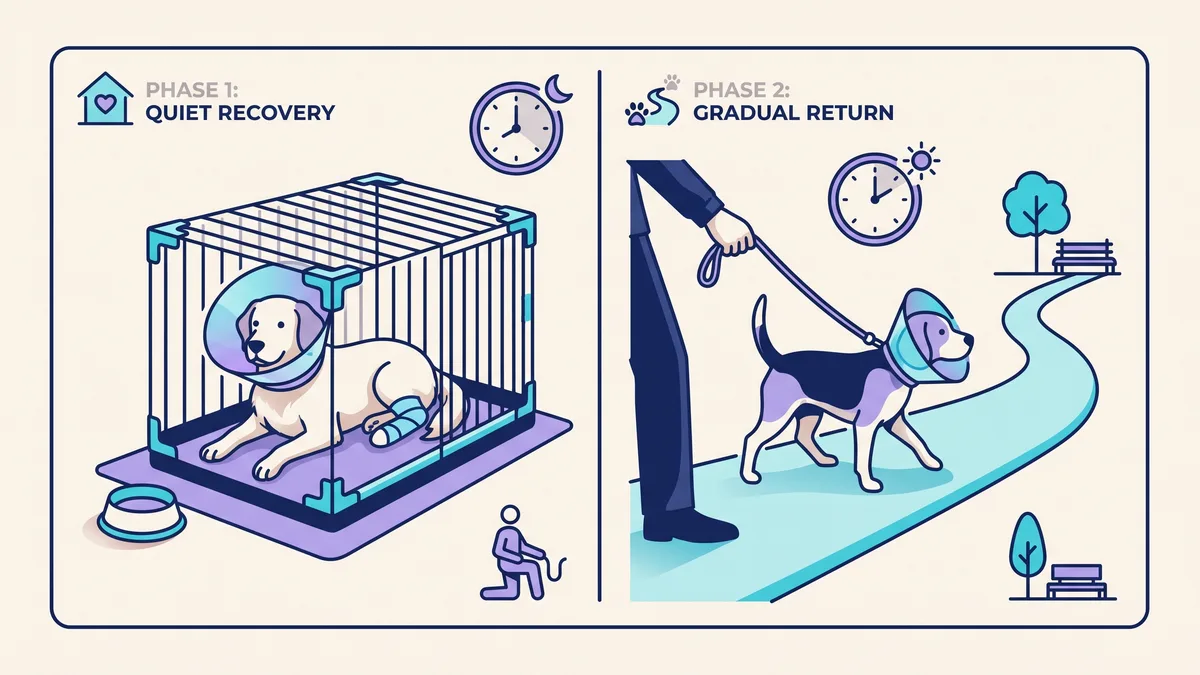
There is no universal recovery timeline. A skin procedure, abdominal operation, fracture repair and luxating patella surgery place different demands on healing tissue. Recovery after an emergency delivery also follows a patient-specific plan; the dog C-section guide explains the maternal and puppy warning signs that need urgent reassessment. Feeling more energetic does not mean the repair is ready for running, stairs or jumping onto furniture.
The AAHA acute-pain guidance explains that acute pain requires ongoing assessment. Follow the operating team's rules for lead walks, crate or room rest, lifting and return to normal activity. If your dog slips, jumps or has an uncontrolled run, report the event rather than waiting for visible damage.
Orthopaedic rehabilitation should also be prescribed for the individual operation. The WSAVA Global Pain Council provides clinician resources that support multimodal, patient-specific pain management. Do not begin stretching, massage, swimming or online exercises unless the surgeon or rehabilitation professional has cleared them.
Keep rechecks even when recovery looks normal
A recheck can identify a problem that is difficult to judge at home and can determine whether activity may safely change. Attend the scheduled review for the wound, bandage, drain, sutures, staples, imaging or mobility assessment. Bring the medicine list and any daily photographs.
If the original procedure followed a diagnostic work-up, ask when pending laboratory or pathology results will be discussed. Do not assume silence means a result was normal.
Seek urgent help for postoperative warning signs
Use the contact route in the discharge plan. Go to an emergency veterinary service without delay for:
- collapse, inability to stand, severe weakness or unresponsiveness
- difficult, noisy or unusually rapid breathing
- pale, blue or grey gums
- uncontrolled bleeding or a wound that opens
- a rapidly enlarging or painful abdomen
- repeated retching, repeated vomiting or inability to keep water down
- a seizure, sudden severe disorientation or rapidly worsening pain
- suspected medicine overdose, wrong medicine or toxic exposure
Call the treating team promptly for worsening redness, swelling or discharge, a damaged bandage, persistent appetite loss, unexpected difficulty urinating or defecating, or any recovery pattern that differs from the written plan. The general urgent-care warning-sign guide can help with triage, but it does not replace the surgical team's instructions.
Frequently asked questions
How long does dog surgery recovery take?
It depends on the operation, tissue, complications and dog. Use the surgeon's staged plan rather than a generic number of days, and do not increase activity simply because the dog seems brighter.
Should my dog wear a cone after surgery?
Use the protective device prescribed by the team for the full instructed period. It must prevent contact with the whole incision. Ask for a fit check if your dog can reach the wound, cannot eat safely or is distressed.
Can I clean my dog's surgical wound?
Only if the operating team has provided a specific method. Routine application of household antiseptics, creams or powders may irritate tissue or obscure a developing problem.
What if my dog vomits a prescribed medicine?
Do not automatically repeat the dose. Contact the prescribing clinic with the medicine name, timing and what you observed so they can give patient-specific instructions.
When can my dog run, climb stairs or play again?
Only when the surgical team changes the restriction. The safe progression differs greatly between soft-tissue, abdominal and orthopaedic procedures.
About this guidance
This veterinary-team article provides general postoperative safety education and was reviewed against ACVS, AAHA and WSAVA guidance on 23 August 2026. It cannot replace the discharge plan, examination or judgement of the clinician who performed the operation.
For a planned procedure or patient-specific follow-up, book an appointment with Paw Sisters. Availability, suitability and timing require clinical confirmation.