Ringworm in Cats: Signs, Treatment and Cleaning
Medically reviewed by Dr. Hasan AlDahhak, DVM ·
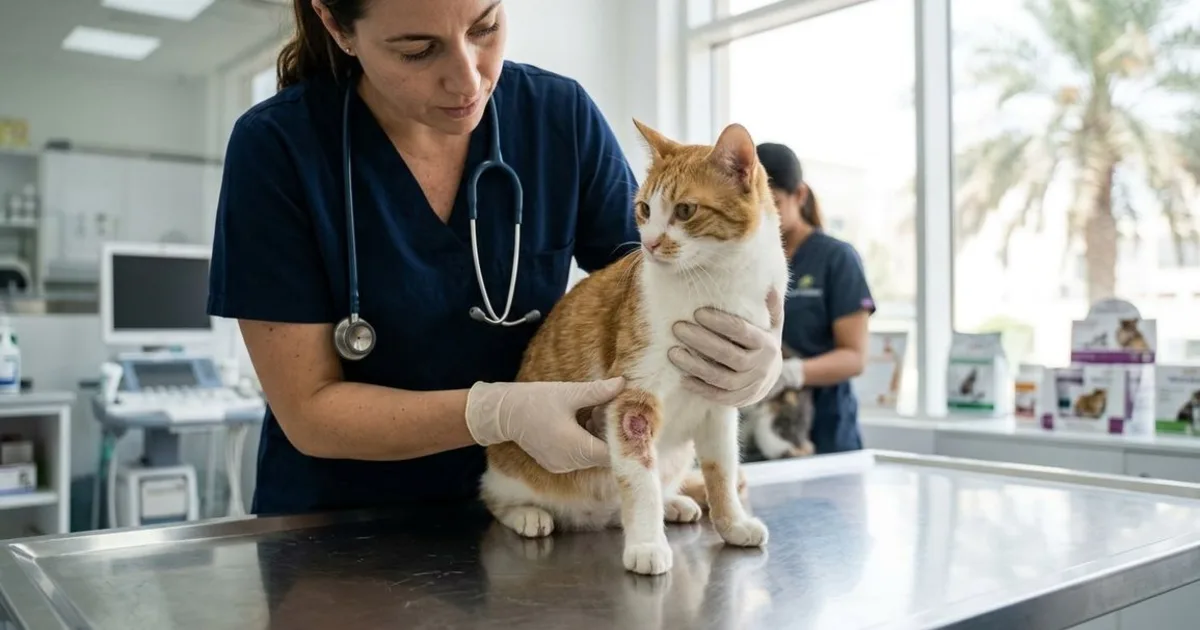
Ringworm in cats is a contagious fungal infection of the skin and hair. It can also affect dogs and people. Patchy hair loss, broken hairs, scale or crust can be clues, but appearance alone cannot confirm it. Other skin problems can look similar.
If you notice a new bald or scaly patch, arrange a veterinary skin examination in Dubai. Until you know the cause, wash your hands after handling your pet, avoid sharing grooming tools, and reduce close contact with other animals.
What is ringworm in cats?
Ringworm, also called dermatophytosis, is a superficial fungal infection of keratin-rich tissue such as skin and hair. Despite the name, no worm is involved. Claws are affected less often.
The infection can move between animals and people through direct contact. Fungal material can also travel on contaminated brushes, clippers, bedding and surfaces. Exposure does not guarantee infection, but early assessment helps reduce ongoing spread.
Young animals, free-roaming animals, and pets living in crowded or stressful conditions may face greater risk. A warm environment can also be a risk factor, but there is no reliable evidence that Dubai pets automatically develop ringworm because of the local climate.
Ringworm signs in cats and dogs
Possible signs include:
- Patchy hair loss or broken hairs
- Scaling, dandruff-like flakes or crusts
- Red or inflamed skin
- Changes around the face, ears, paws or limbs
- Claw changes in less common cases
- Itching that may be mild, severe or absent
A classic circular bald patch is possible, but lesions do not have to be round. Ringworm can resemble allergies, mites, bacterial infection, excessive grooming and other causes of hair loss. That is why a photo or symptom checklist cannot replace testing.
If your pet is very itchy, a vet may also consider skin allergies or parasites such as fleas and ticks.
Can people catch ringworm from cats?
Yes. Ringworm is zoonotic, which means it can pass between animals and people. The CDC ringworm guidance explains that spread can occur through direct contact or contaminated objects. Anyone can become infected. People with weakened immune systems may have a higher risk of severe infection.
The CDC prevention advice supports these precautions while your pet is being assessed or treated:
- Wash hands with soap and running water after contact.
- Wear gloves and long sleeves when handling an infected pet or cleaning its area.
- Do not share brushes, towels, blankets or clippers between pets.
- Ask your veterinarian whether other pets in the home should be examined.
- If someone has a weakened immune system, let another household member provide care when possible.
Contact a human healthcare professional if a household member develops a suspicious skin lesion. Your veterinarian treats the pet, while a doctor treats people.
How vets diagnose ringworm
A veterinary examination is the starting point, not the final proof. The Merck Veterinary Manual review and veterinary dermatology consensus guideline support using the examination with appropriate tests rather than relying on appearance alone.
Depending on the case, diagnosis may combine:
- The pet's history and a full skin examination
- A Wood's lamp examination to locate suspect hairs
- Microscopic examination of hair or scale
- Fungal culture
- PCR testing
A Wood's lamp does not confirm every case. PCR can detect fungal DNA, but it may not show whether spores are still alive. Your vet interprets test results alongside the examination and treatment history. Paw Sisters can arrange appropriate pet diagnostic testing when a skin case needs confirmation.
Ringworm treatment for cats and dogs
Veterinary treatment commonly combines a systemic antifungal with whole-coat topical therapy. Systemic medicine reaches infected hair follicles. Topical treatment helps reduce infectious material on the coat and in the home.
The exact medicine, product and schedule depend on the species, age, health, disease extent and test results. Do not use human creams, leftover medicine or household disinfectant on your pet unless a veterinarian specifically directs you to do so.
Many infections take about 6 to 12 weeks to resolve. Some take longer. Hair regrowth or a better-looking lesion does not always mean the fungus has cleared, so continue the plan until your veterinarian confirms cure.
How to stop ringworm spreading at home
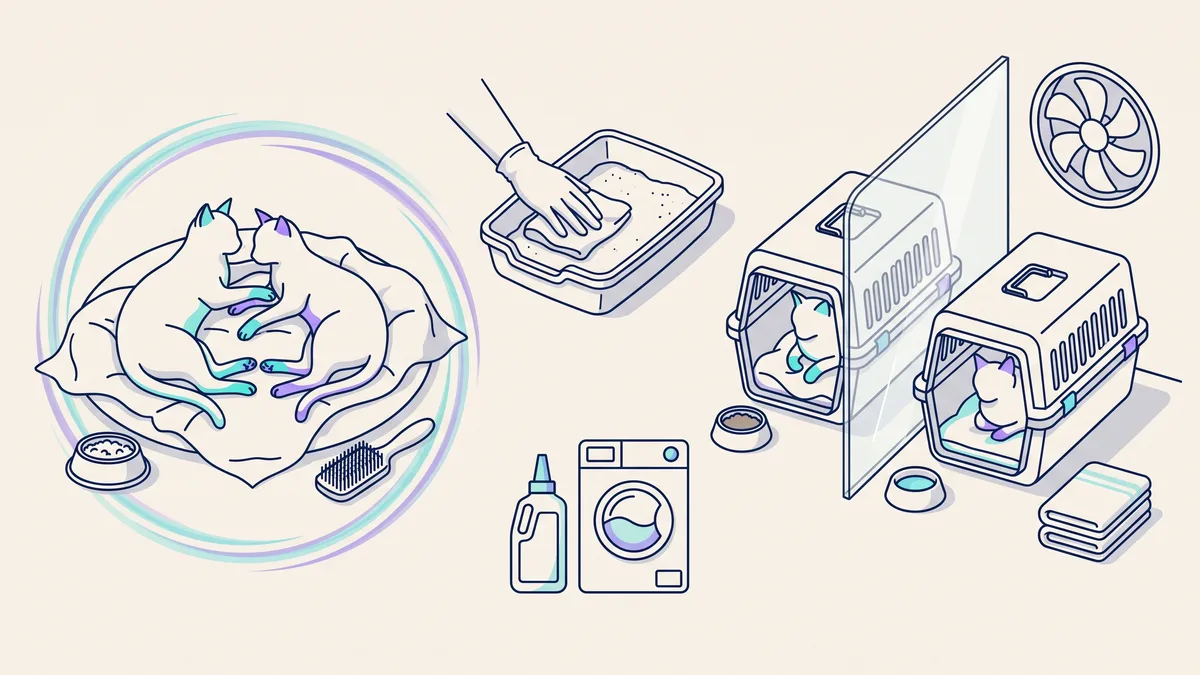
Cleaning works best when you remove hair and debris before disinfecting. Disinfectant cannot remove contaminated hairs by itself.
| Task | Typical frequency | Stop condition |
|---|---|---|
| Remove shed hair and debris | Frequently between full cleans | Continue until testing supports clearance |
| Thoroughly clean affected areas | Once or twice weekly | Continue until your veterinarian confirms clearance |
| Wash bedding and towels | During each full clean and when soiled | Follow the household treatment plan |
| Separate grooming tools | Throughout treatment | Reintroduce only after veterinary clearance |
Use this order:
- Keep the affected pet in an easy-to-clean area as advised by your vet. Protect the wellbeing and social development of young animals.
- Vacuum or wipe up shed hair and debris frequently. Empty or clean the vacuum as directed by its manufacturer.
- Wash hard surfaces with detergent until visibly clean.
- Apply a pet-area-safe product whose label states activity against Trichophyton. Follow its dilution, contact time and ventilation instructions.
- Wash bedding, towels and washable toys thoroughly. Shampoo or steam-clean suitable carpets and soft furnishings.
- Never mix cleaning products, and never apply household disinfectants to an animal.
The Merck guidance advises thorough cleaning once or twice weekly, with hair and debris removal between cleanings, until testing supports that the infection has cleared. Your veterinarian may tailor this plan for a multi-pet home.
A practical Dubai household action plan
The useful local distinction is not a special Dubai cure. It is how quickly a household can separate grooming items, obtain testing and clean shared indoor spaces without compromising the pet's welfare.
- Today: Photograph the lesions for your own timeline, call the clinic, wash your hands and stop sharing grooming tools.
- After diagnosis: Follow the exact medication and whole-coat treatment plan. Tell the vet about every pet and vulnerable person in the home.
- Each week: Remove hair frequently and complete one or two thorough cleans using label-directed products.
- Before stopping: Ask what clinical and laboratory evidence your vet wants before declaring cure.
This sequence turns a vague instruction to "disinfect everything" into a manageable plan based on how fungal material actually persists.
When should you see a vet?
Book promptly when a cat or dog develops unexplained patchy hair loss, scaling or crusting, especially after contact with an affected animal. Earlier diagnosis is particularly helpful in multi-pet homes and households with a person who has a weakened immune system.
Seek faster advice if lesions are spreading, your pet is unwell, or treatment prescribed elsewhere is not working. A routine veterinary checkup can assess general health, but suspected ringworm may need targeted skin tests.
Frequently asked questions
Is ringworm dangerous for cats?
It is usually treatable, but it is contagious and can be persistent. Prompt veterinary care helps limit discomfort, unnecessary medication and spread to other animals or people.
Can a cat's ringworm go away without treatment?
Some healthy animals may eventually clear infection, but waiting can prolong household contamination and exposure. Veterinary treatment is generally used to shorten infection and control contagion.
Does a circular bald patch prove ringworm?
No. Ringworm may cause circular hair loss, but allergies, parasites, infection and self-trauma can look similar. A vet may use microscopy, fungal culture, PCR or a combination of tests.
Should I isolate a cat with ringworm?
Limit contact with other pets in an easy-to-clean area, following veterinary advice. Complete isolation is not always appropriate for a young animal's welfare, so ask how to balance infection control with safe handling and social contact.
How long is a pet contagious?
There is no reliable visual cutoff. Many cases need 6 to 12 weeks of treatment, and the veterinarian should use clinical progress and appropriate testing to decide when infection has cleared.
About this guidance
This information is educational and cannot diagnose a skin lesion. For testing and an individual treatment plan, book an appointment with the clinic in Al Garhoud.