Separation Anxiety in Dogs: Signs and Dubai Help
Sources and guidance checked
Medically reviewed by Dr. Hasan AlDahhak, DVM ·

Separation anxiety in dogs is distress linked to being apart from an attachment figure, but barking, toileting, destruction, or pacing alone cannot confirm it. Video of the dog while alone, a detailed history, and a veterinary checkup for a behaviour change help separate anxiety from pain, illness, noise fear, frustration, insufficient enrichment, or confinement distress.
Key takeaways
- Record what happens around departure, while the dog is alone, and after the owner returns.
- Do not punish anxiety-related behaviour or force a dog to endure panic.
- Keep training absences below the dog's distress threshold and progress gradually.
- A sitter, walker, safe room, or routine change can reduce exposure while treatment develops, but it does not prove a cure.
- Medication may support a behaviour plan, but only a veterinarian should prescribe and monitor it.
- Sudden behaviour change with pain, illness, injury, or neurological signs needs prompt veterinary assessment.
What separation anxiety in dogs looks like on camera
Signs often begin around departure cues or soon after the person leaves. They can include vocalising, pacing, panting, drooling, scratching exits, destructive behaviour near doors, toileting, escape attempts, or inability to settle. Some dogs become distressed only during particular absences or when confined.
The AAHA separation-anxiety guide recommends video as part of assessment and explains that treatment may combine environmental management, behaviour modification, and veterinarian-directed medication. Set a camera where it cannot be chewed and, when practical, record:
| What to capture | Useful detail |
|---|---|
| Before departure | Keys, shoes, bags, feeding, and the dog's response to cues |
| First 30 to 60 minutes | Time until the first sign, pacing, vocalising, salivation, toileting, destruction, and recovery |
| Environment | Outside noise, building activity, other animals, confinement, temperature, and available water |
| Return | Whether the dog settles before the person returns and how recovery unfolds |
One video is not always representative. Record several ordinary departures if it is safe, without deliberately provoking severe distress.
What can look like separation anxiety but is not

Behaviour is a symptom, not a diagnosis. The Merck Veterinary Manual's diagnostic guidance explains that history, physical assessment, and video help distinguish behavioural and medical causes.
Possible alternatives or contributors include:
- pain, arthritis, dental disease, or injury
- itching, ear disease, or excessive licking linked to skin discomfort
- gastrointestinal or urinary illness
- cognitive dysfunction or sensory decline in an older dog
- adverse medicine effects
- noise fear, barrier frustration, insufficient toilet opportunities, or unmet activity needs
- crate or confinement distress
- a recent move, household change, or disrupted routine
Dubai apartment living may influence noise, lift routines, exercise timing, and access to outdoor areas, but apartments do not inherently cause anxiety. If a move is approaching, use gradual pet relocation planning to protect routine and identify stressors early.
What to do today without increasing fear
Management reduces the number of overwhelming episodes while a tailored plan is built.
- Avoid punishment. The dog is not acting out of spite. Scolding after a return does not connect clearly to earlier behaviour and can add fear.
- Prevent unsafe confinement. Do not leave a panicking dog in a crate if escape attempts risk broken teeth, nails, or other injury.
- Reduce unavoidable absences when possible. A trusted sitter, walker, family member, or suitable daycare may help some dogs.
- Keep departures and returns calm. Follow the individual plan rather than creating intense rituals.
- Meet normal needs. Provide appropriate toileting, exercise, rest, food enrichment, and predictable care without presenting any one item as a cure.
- Track patterns. Note duration, severity, triggers, food interest, elimination, and recovery.
The AVSAB humane training position supports reward-based methods and advises against aversive approaches. Avoid shock, prong, or intimidation-based tools and any forced exposure designed to make the dog “get used to it.”
How gradual behaviour treatment works
Desensitisation means practising a trigger at an intensity that does not cause distress, then progressing in small steps. Counterconditioning pairs a mild trigger with something the dog values. The training pace must be based on the individual dog's behaviour, not a generic absence schedule.
For example, treatment may begin with departure cues that are not followed by leaving, or an absence shorter than the time at which video shows distress. If the dog pants, paces, vocalises, stops eating, or rushes the exit, the step may be too difficult. Return to an easier version with professional guidance.
The Merck behaviour overview describes management, desensitisation, and counterconditioning as common treatment tools. A veterinarian can refer severe, complex, or non-improving cases to a veterinary behaviourist or coordinate with a qualified reward-based professional.
| Helpful approach | Avoid |
|---|---|
| Gradual practice below the distress threshold | Long forced absences intended to exhaust fear |
| Reward-based learning and predictable routines | Punishment for barking, toileting, or damage |
| Safe management during necessary absences | Crating a dog that injures itself trying to escape |
| Veterinary review for sudden or severe signs | Using another pet's or a human's medicine |
When a veterinarian may discuss medication
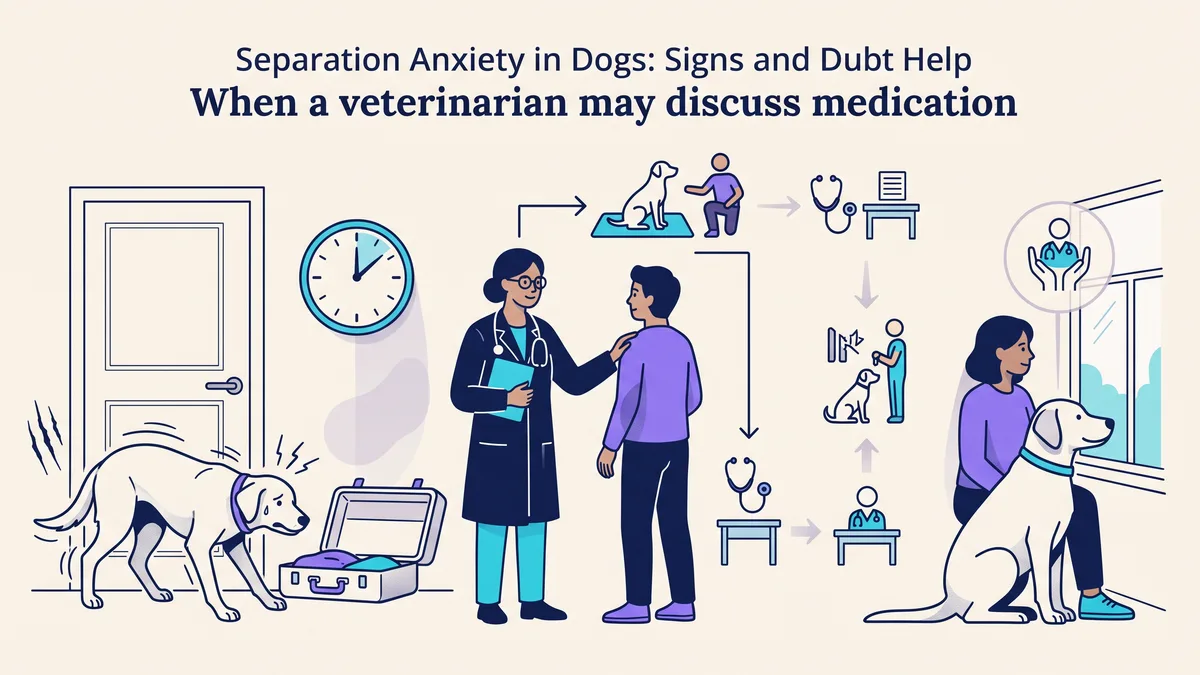
Medication can be appropriate for some dogs, especially when distress is severe enough to block learning or welfare. It works best as part of a broader plan that also addresses safety, triggers, and gradual behaviour change. Only a veterinarian should select, prescribe, and monitor it.
Do not share medicines, change a dose, or stop a prescribed medicine suddenly without veterinary instruction. Pheromones, music, supplements, pressure wraps, CBD products, and extra exercise do not have guaranteed effects. A 2024 systematic review of compression wraps indexed by PubMed found limited evidence with important study-bias concerns.
A separate note about anxiety signs in cats
Cats can show distress through hiding, vocalisation, appetite changes, overgrooming, toileting changes, aggression, or altered social contact. These signs are nonspecific and should not be diagnosed from a dog checklist. Urinary difficulty, pain, skin disease, gastrointestinal illness, and other medical problems can look behavioural.
Use a calm, predictable environment with safe hiding and elevated resting places, and arrange a cat-friendly veterinary visit for new or persistent changes. Never force a fearful cat to interact.
When behaviour signs are urgent
Seek emergency veterinary care for self-injury, escape injury, collapse, breathing difficulty, seizure, suspected toxin ingestion, inability to urinate, or a severe sudden change with physical illness. Review the broader urgent pet warning signs.
Ask for same-day veterinary advice when the change comes with pain, appetite loss, repeated vomiting or diarrhoea, urinary signs, marked lethargy, or other illness. For a stable but persistent problem, book a behaviour and health assessment and bring videos and a written timeline.
Frequently asked questions
How do I know if my dog has separation anxiety?
You cannot confirm it from one sign. Record the dog while alone and arrange a veterinary assessment to rule out medical and behavioural alternatives. Timing, triggers, severity, and recovery all matter.
Should I let my dog cry until it gets used to being alone?
No. Forced exposure can intensify fear and rehearses distress. Practise below the dog's threshold with a gradual plan and qualified support.
Should I crate a dog with separation anxiety?
Only if the dog is already comfortable and safe in the crate. Confinement can increase panic and injury risk for some dogs. Video can help show whether the crate is calming or distressing.
Can exercise cure separation anxiety?
Appropriate exercise supports welfare, but it is not a guaranteed cure. Treatment may also require management, gradual behaviour work, medical evaluation, and sometimes prescribed medication.
When should I ask for a behaviour specialist?
Seek referral when distress is severe, there is self-injury or aggression, the diagnosis is unclear, progress stalls, or medicine and a coordinated behaviour plan may be needed.
About this guidance
This article offers general behaviour-safety education and cannot diagnose a pet or replace an individual treatment plan. It was reviewed against current veterinary behaviour guidance on 23 August 2026. Medication and training plans must be selected for the individual pet, and emergencies require immediate veterinary care.