Overweight Dog: Safe Weight Loss Plan for Dubai
Sources and guidance checked
Medically reviewed by Dr. Hasan AlDahhak, DVM ·
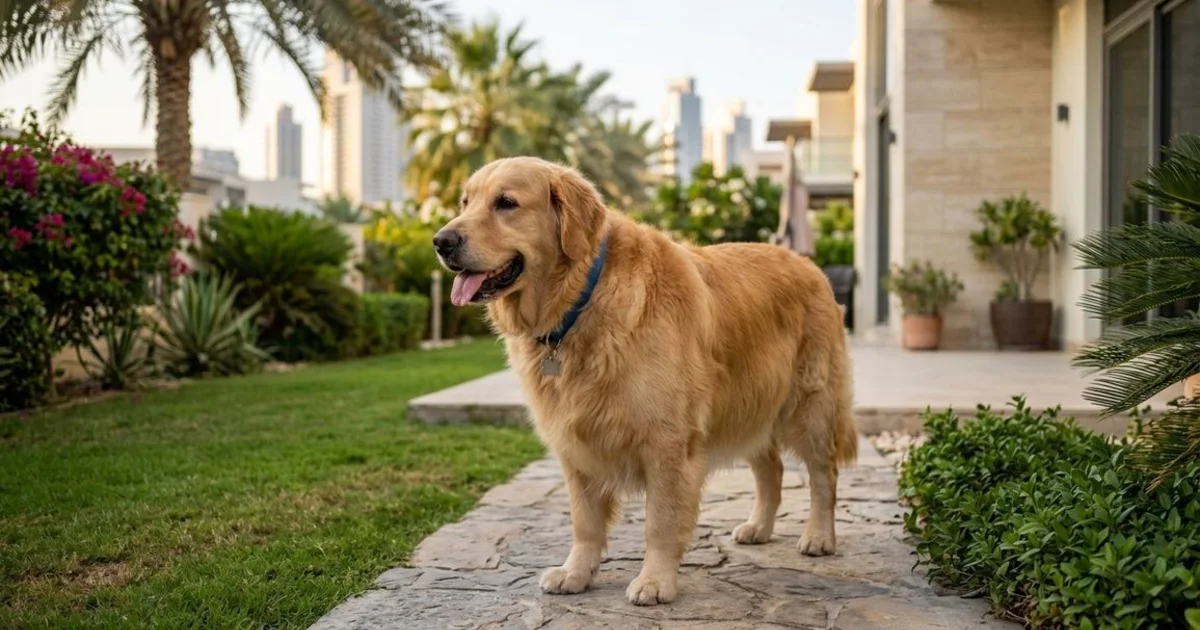
An overweight dog needs a measured, veterinarian-guided plan rather than a crash diet. Start by confirming body and muscle condition, reviewing every food and treat, checking for pain or disease, setting an appropriate calorie starting point and scheduling reassessment. A veterinary checkup in Dubai is the safest first step before cutting food or increasing exercise.
Key takeaways
- Weight alone cannot diagnose excess body fat. Use rib feel, waist, abdominal tuck, body-condition score and muscle condition together.
- A veterinarian should review medical causes, pain, medicines, food, treats and household feeding before setting the plan.
- Weigh food in grams when practical and count every treat, chew and table extra.
- Dubai heat changes when and where a dog can exercise. It does not make sudden strenuous exercise safe.
How can you tell if a dog is overweight?
Use a body-condition score rather than appearance or scale weight alone. The WSAVA dog body-condition chart assesses the ribs, waist, abdominal tuck and fat deposits together. On its nine-point scale, scores 4 to 5 are ideal and 6 to 9 are above ideal.
| Home observation | More consistent with ideal condition | Possible excess body fat |
|---|---|---|
| Ribs | Easy to feel under a thin fat covering | Difficult to feel without firm pressure |
| Waist from above | Visible behind the ribs | Reduced or absent |
| Abdomen from the side | Tucks upward behind the ribcage | Little tuck or a hanging fat pad |
| Fat deposits | Minimal | Noticeable over the back, tail base or abdomen |
| Muscle | Appropriate for age and build | Muscle may be reduced even when body weight is high |
One feature does not settle the diagnosis. Breed shape, coat, age and muscle loss can change appearance. A veterinary team can record body-condition score, muscle-condition score and weight trend consistently at each review.
Why should an overweight dog see a vet first?
A health and nutrition assessment helps distinguish overfeeding from a more complex problem. The 2021 AAHA Nutrition and Weight Management Guidelines recommend assessing the animal, diet, feeding management and environment together. The related AAHA screening evaluation includes weight, diet history, activity, body condition, muscle condition and physical examination.
Tell the veterinarian about:
- every food, topper, chew, supplement and table extra;
- who feeds the dog and how portions are measured;
- changes in thirst, urination, appetite, skin, coat or energy;
- current medicines, especially steroids or drugs that may change appetite;
- joint pain, stiffness, breathing problems or exercise intolerance;
- rapid weight gain, unexplained weight loss or muscle loss;
- neuter status, age and previous medical conditions.
Increased thirst or urination, weakness, hair or skin changes, rapid unexplained change and pain deserve medical assessment before a calorie reduction. A blood test or other investigation may be recommended from the history and exam, but no fixed panel is necessary for every overweight dog.
What health risks are linked to excess weight?

Excess body fat can worsen mobility, heat tolerance and quality of life, and it may complicate other disease. It is more accurate to discuss risk than to claim one amount of weight gain causes a particular illness.
One large retrospective study followed clinical records from 50,787 neutered dogs across 12 breeds. In that population, an overweight body condition was associated with a shorter median lifespan than normal condition. Read the Journal of Veterinary Internal Medicine study as observational evidence, not proof that every dog or breed will experience the same effect.
Extra weight may also:
- increase load on painful or arthritic joints;
- make physical activity and rehabilitation harder;
- reduce heat tolerance during Dubai walks;
- obscure muscle loss if only scale weight is tracked;
- complicate anaesthetic and chronic-disease planning.
Panting alone does not diagnose obesity. Rapid or distressed panting can signal heat illness, pain, airway disease, heart disease or another urgent problem.
How do you build a safe dog weight-loss plan?
A safe plan controls total calories while preserving nutrition and muscle. The veterinarian's initial calorie calculation is a starting estimate, not a permanent prescription. The AAHA weight-reduction guidance says it must be adjusted according to the dog's weight and body-condition response.
1. Record everything eaten
Keep a complete three-to-seven-day food record before changing the diet. Include meals, treats, chews, training rewards, food used for medicine and scraps from every household member. Note the product, flavour, amount and feeding time.
2. Measure food accurately
Use a kitchen scale and record grams when the food label provides energy information. Scoops and cups can vary with how they are filled. If several people feed the dog, pre-weigh the full daily allowance into one container so everyone can see what remains.
3. Select an appropriate diet with the vet
Simply shrinking a normal maintenance food to a very small portion can reduce essential nutrient intake. The veterinarian may recommend a complete weight-management diet, adjust the current diet or account for another disease. Do not assume that one high-protein or low-carbohydrate plan fits every dog. The site's dog and cat food guide can help you prepare product questions for the appointment.
4. Budget for treats
Treats count. Set aside part of the daily food allowance for training or use low-calorie options approved for the individual dog. Avoid grapes, raisins, chocolate, onions, garlic, xylitol, macadamia nuts and cooked bones. Do not use human diet tablets or unprescribed weight-loss supplements.
5. Make the household consistent
Post the daily plan where everyone can see it. Record each meal and treat, and prevent access to other pets' bowls or bins. If begging is the main challenge, replace food with play, grooming or attention when appropriate.
How should an overweight dog exercise in Dubai?
Exercise should start below the dog's current limit and increase gradually. Heat, humidity, pavement, breed, fitness, joint pain, heart disease and airway health all affect what is safe. Follow the Dubai summer dog-walking guide and use indoor movement when outdoor conditions remain unsafe.
| Activity | Safer starting approach | Stop and seek advice if |
|---|---|---|
| Walking | Short, relaxed outings in the coolest safe conditions | Distressed panting, weakness, pain, coughing or poor coordination |
| Indoor play | Brief scent games, food puzzles and low-impact movement | Slipping, reluctance, pain or prolonged panting |
| Strength or rehabilitation | Exercises prescribed for the dog's joints and condition | Technique is uncertain or symptoms worsen |
| Swimming | Only if the dog is medically suitable and closely supervised | Panic, fatigue, coughing or difficulty exiting |
Never use a long, fast walk to compensate for an unplanned meal. A dog with joint pain may need treatment and a modified activity plan before exercise can safely increase. For an older dog, use the dog vet Dubai checkup guide to prepare mobility, muscle and medication questions.
How should progress be monitored?
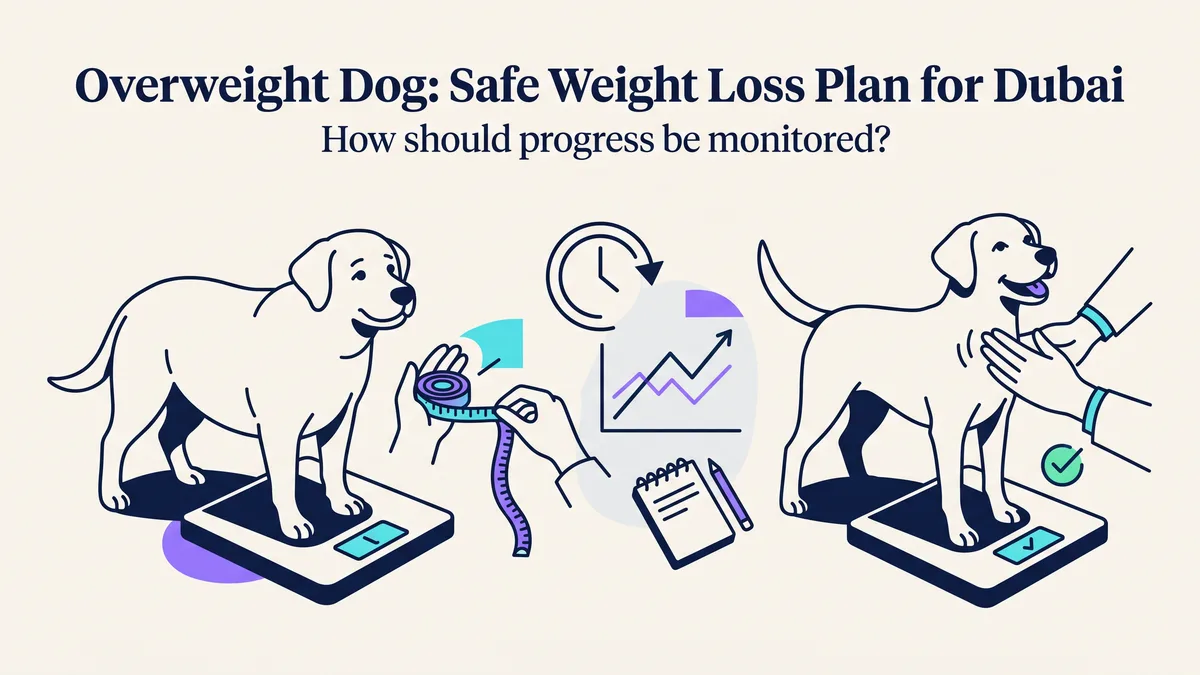
Monitor the trend, not one scale reading. The WSAVA nutrition guidelines and toolkit support consistent diet history, body-condition scoring, muscle-condition scoring, feeding instructions and follow-up.
| Measure | What to record | Why it matters |
|---|---|---|
| Body weight | Same scale and similar conditions when possible | Shows direction and pace over time |
| Body-condition score | Ribs, waist, tuck and fat deposits | Tracks change in body fat |
| Muscle condition | Spine, shoulder blades, skull and pelvis | Helps detect muscle loss hidden by body fat |
| Food and treats | Product and grams per day | Identifies calorie drift |
| Mobility and comfort | Stairs, rising, walking and play | Shows whether activity is becoming easier or painful |
| Medical signs | Thirst, urination, appetite, skin, breathing and energy | May reveal another reason the plan needs review |
The veterinarian should set the weighing interval and adjust calories from the response. Do not make repeated large cuts when the scale stalls. First check measurement accuracy, treat intake, access to other food, activity changes and possible medical factors.
Why does a weight-loss plan stall?
Most stalls need better measurement or a revised plan, not blame. Common reasons include:
- uncounted treats, chews and medication foods;
- several people feeding without a shared log;
- inaccurate cup or scoop portions;
- another pet's food being available;
- reduced activity because of pain or heat;
- the starting calorie estimate needing adjustment;
- changes in medicine or health;
- muscle loss making scale weight harder to interpret.
Bring the food record and packaging to reassessment. The Merck Veterinary Manual nutrition guidance supports combining an accurate diet history, calorie control, appropriate diet, exercise, follow-up and long-term maintenance.
Which warning signs need prompt care?
Weight management is not the priority when a dog is unstable. Breathing difficulty, collapse, repeated vomiting, a suddenly enlarged painful abdomen, inability to rise or marked heat distress needs urgent assessment. Use emergency veterinary services for severe or rapidly worsening signs.
Arrange a prompt check if there is increased thirst or urination, rapid unexplained weight change, weakness, significant pain, hair or skin changes, or no progress despite accurate feeding. If exercise triggers heavy panting, poor coordination or collapse, follow the site's heatstroke in dogs guide and seek emergency help.
Frequently asked questions
What body-condition score means a dog is overweight?
On the WSAVA nine-point chart, 4 to 5 is ideal and 6 to 9 is above ideal. A veterinarian should confirm the score and also assess muscle condition.
Should I feed less of the same food?
Sometimes a measured adjustment is appropriate, but severe restriction of a maintenance diet can reduce nutrient intake. Ask the veterinarian whether a weight-management diet or another change fits the dog.
Are vegetables free treats?
No treat is calorie-free, and not every food is safe for every dog. Count approved treats within the daily allowance and avoid known toxic foods.
How quickly should my dog lose weight?
The veterinarian should set the target and review interval from the dog's health and starting condition. Do not use a crash-diet target from a generic online calculator.
What if my dog cannot exercise much?
Weight loss can still start with accurate feeding. Pain, heart, breathing or mobility limits need assessment so activity can be adapted safely.
About this guidance
This article was materially reviewed on 23 August 2026 against current AAHA, WSAVA and Merck nutrition guidance. It cannot diagnose obesity or prescribe a calorie target. For a measured food and monitoring plan, book a weight assessment.