Tick Treatment for Dogs in Dubai: Safe Flea Care
Medically reviewed by Dr. Hasan AlDahhak, DVM ·

Tick treatment for dogs in Dubai must match the dog's age, weight, health history, parasite exposure and the exact product label. Remove an attached tick safely if you can, then contact a veterinarian if the dog is unwell, the bite looks abnormal or product choice is uncertain. Dogs with fever, weakness, pale gums, bleeding or dark urine may need pet diagnostic services in Dubai, but testing is not automatically required after every isolated tick.
Key takeaways
- Fleas, ticks and lice are different parasites. One product may not cover all of them.
- Never use a dog-only product on a cat. Some ingredients used safely in dogs can poison cats.
- Product format does not determine which option is best. Species, age, weight, health, household and label all matter.
- A flea infestation usually needs a plan for every pet in the home plus environmental cleaning.
How to choose safe tick treatment for dogs in Dubai
Start with the patient, not a brand ranking. The safest choice depends on which parasite needs control, whether there is an active infestation, the pet's species and weight, and whether there is a history of seizures, skin reactions, pregnancy, nursing or other medicines.
The FDA guide to safe flea and tick product use advises owners to follow the exact species, age and weight directions, prevent pets from licking wet topical products and monitor for adverse reactions. A label for dogs is not permission to use the product on a cat.
| Situation | Safe next step | What to avoid |
|---|---|---|
| One attached tick, dog otherwise well | Remove it with an appropriate tool or ask a clinic for help; monitor the dog and bite site | Burning, coating, twisting or crushing the tick |
| Fleas seen on one household pet | Ask for species-appropriate treatment for every pet and an environmental plan | Treating only the pet with visible fleas |
| Dog develops illness after tick exposure | Arrange veterinary assessment; testing is selected from the signs and timing | Assuming one negative test rules out every disease |
| Reaction after a flea or tick product | Stop further exposure, prevent licking and contact a veterinarian or emergency clinic | Redosing, combining products or trying a home antidote |
| Dog and cat share the home | Confirm every product is safe for the exact species and keep pets apart as directed after topical use | Applying dog-only products to the cat |
The Companion Animal Parasite Council tick guideline recommends regular tick checks and consistent control. It also notes that the brown dog tick can establish indoor infestations. That supports an ongoing plan, but it does not create a Dubai month-by-month calendar or one universal dosing interval.
Fleas and ticks require different plans

Ticks attach and feed for an extended period. Fleas move between the pet and environment through a life cycle that includes eggs, larvae, pupae and adults. A few adult fleas on the coat can therefore represent only part of an infestation.
The CAPC flea guideline recommends treating every pet in an affected household with an appropriate product and addressing the environment when needed. Vacuuming pet resting areas and washing suitable bedding can help remove life stages. Established infestations can take time to control because new adults may continue emerging.
Do not switch between the words flea, tick and lice as if they describe the same problem. Identification changes treatment. A veterinarian may use coat examination, flea dirt, parasite identification, skin findings and household history to decide what is present. Itchy or damaged skin may also need a pet dermatology assessment.
How a veterinarian selects a product
A useful consultation covers more than convenience. Bring the packaging or a clear photo of every parasite product used recently.
The veterinarian may ask about:
- species, exact age and current weight;
- pregnancy, nursing or planned breeding;
- seizure or other neurologic history;
- skin disease, allergies or previous reactions;
- current medicines and supplements;
- swimming and bathing frequency;
- indoor and outdoor access;
- travel, boarding and contact with other animals;
- every dog and cat in the household.
Oral medicines, topical products and collars can all be appropriate in the right patient. Their parasites covered, age limits, weight bands, contraindications and duration differ by label. This is why a product ranking without the patient details can be unsafe.
The FDA fact sheet on isoxazoline products says this drug class is effective and has been safely used in most dogs and cats, while also being associated with neurologic adverse events such as tremors, poor coordination and seizures. Discuss any neurologic history before use and contact a veterinarian if concerning signs appear.
Dog products can be dangerous to cats
Never divide, dilute or repurpose a dog product for a cat. The UK Veterinary Medicines Directorate warns that permethrin spot-on products made for dogs can poison cats. Exposure can also happen when a cat licks a recently treated dog or has close contact before the topical product has dried.
Read the full label before every dose, even if the packaging looks familiar. Weight bands, minimum age and application directions can change between formulations. Keep topical products in their original packaging so the active ingredient and strength are available if a reaction occurs.
If a cat contacts a dog-only product, or any pet develops drooling, tremors, weakness, vomiting, poor coordination, seizure or breathing difficulty after treatment, contact a veterinarian immediately. Active seizure, collapse or breathing difficulty needs emergency veterinary care.
How to remove an attached tick
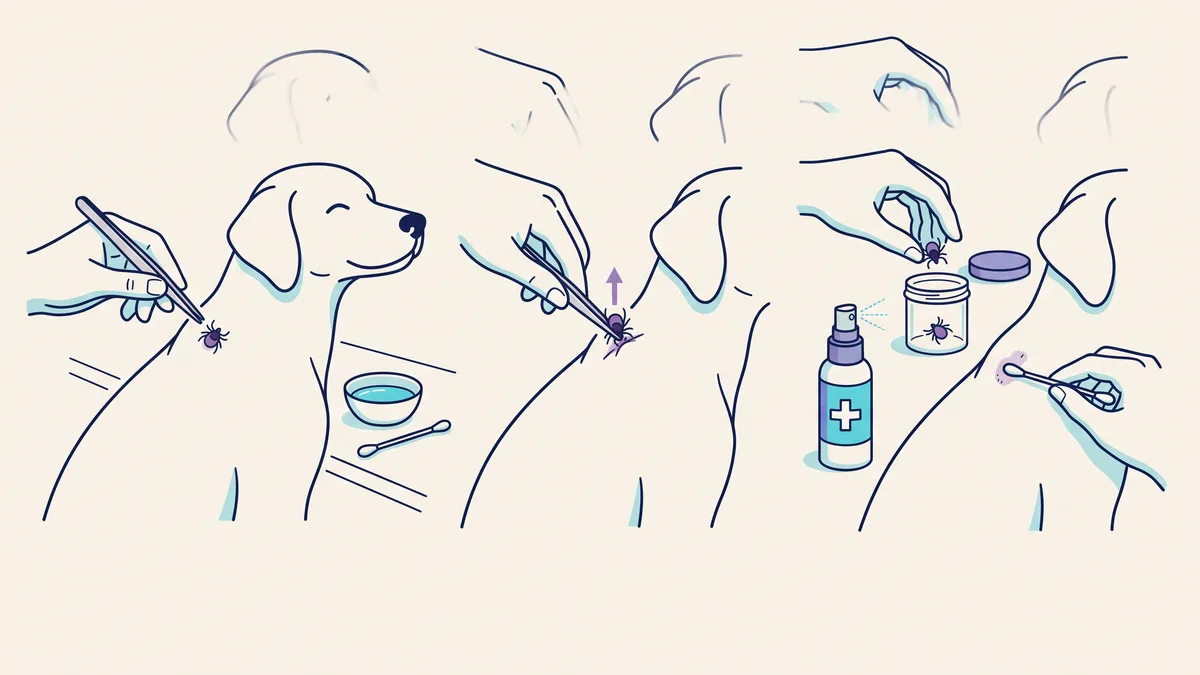
Remove a tick promptly if the dog can be handled safely and the tick is easy to reach. The CDC tick-removal guidance is written for people, but its core mechanical principle is useful: grasp the tick close to the skin with clean fine-tipped tweezers and pull upward with steady pressure. Pet-specific handling may require another person or veterinary help.
- Put on gloves and keep the dog still without forceful restraint.
- Part the coat and grasp the tick as close to the skin as possible.
- Pull upward with slow, steady pressure. Do not jerk or twist.
- Place the tick in a sealed container or dispose of it securely.
- Clean the tool, your hands and the bite area with an appropriate product.
- Check the site and the dog's general health over the following days.
Do not burn the tick, cover it with oil or chemicals, squeeze its body or dig at the skin with a needle. If part remains, the skin is painful or swollen, the tick is near an eye or ear canal, or the dog resists strongly, stop and seek veterinary help.
When tick exposure may justify testing
Testing is guided by symptoms, exposure timing, travel history, examination and the disease being considered. Different tests detect different organisms, antibodies or antigens, and results can depend on when the sample is taken. A well dog with one tick does not automatically need every blood test.
Arrange prompt assessment after tick exposure if you notice:
- fever or marked lethargy;
- poor appetite or unexplained weight loss;
- pale or yellow gums;
- bruising, nosebleeds or other abnormal bleeding;
- dark or red urine;
- weakness, lameness or swollen joints;
- poor coordination, tremors or collapse.
The CDC guide to preventing ticks on pets also recommends checking pets after outdoor exposure and asking a veterinarian which prevention fits the pet. A routine veterinary checkup is a good place to review exposure before a problem occurs.
Household control without an invented calendar
Dubai weather alone cannot tell you which parasite is in a home or how often a product should be given. The CAPC general guidelines support consistent, risk-based parasite control rather than seasonal guesswork. Travel, building environment, outdoor access, contact animals and previous infestation all change the plan.
For a flea problem, vacuum areas where pets rest, wash suitable bedding and follow the veterinary product plan for every pet. For repeated brown dog ticks indoors, environmental pest management may be needed. Ask what preparation, ventilation and pet-exclusion steps are required before any pesticide is used.
Mosquito prevention is a separate discussion. Some products cover more than one parasite, but no flea or tick product should be assumed to cover heartworm. Review the heartworm in dogs guide and ask which prevention is appropriate for your dog's travel and exposure.
Frequently asked questions
What is the best tick treatment for dogs in Dubai?
There is no single best product for every dog. The choice depends on the dog's age, weight, health, neurologic history, other medicines, exposure and household. The exact label determines species, dose and interval.
Do indoor dogs need flea and tick prevention?
Some indoor dogs still have exposure through shared spaces, visiting animals, boarding, travel or ticks carried indoors. Risk is individual, so discuss the home and lifestyle rather than assuming every indoor dog has the same need.
Can I use my dog's flea product on my cat?
No. Dog-only products can contain ingredients that are dangerous to cats. Use only a product labelled or prescribed for that cat's species, age and weight.
Should I save a tick after removal?
A clear photo or sealed specimen may sometimes help identification, but it does not replace examination or testing. Do not delay care for an unwell dog while trying to preserve the tick.
How often should flea and tick treatment be given?
Follow the exact product label and veterinarian's plan. Intervals differ by product, parasite, patient and route of administration. Never redose early or combine products without advice.
If you need a patient-specific plan, book a parasite consultation and bring all recent product packaging.
About this guidance
The Paw Sisters Veterinary Team prepared this educational guide from current CAPC, CDC and FDA parasite guidance. It does not select a medicine or diagnose tick-borne disease for an individual pet. See our editorial policy for sourcing and update standards.