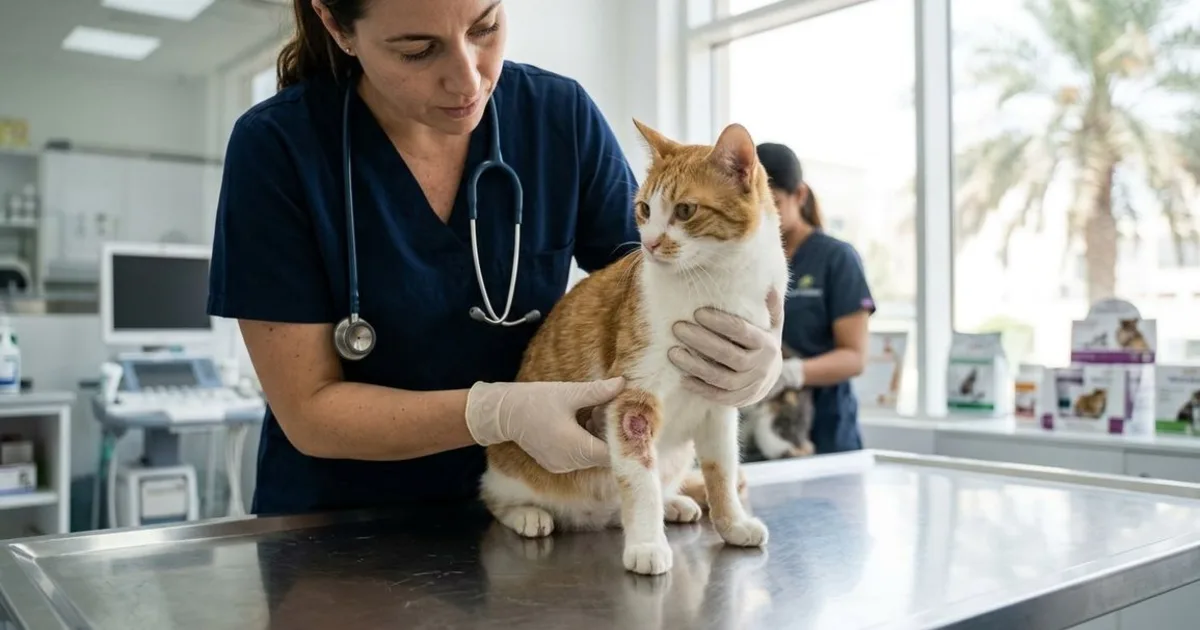
Cat Diabetes Symptoms: Testing and Care in Dubai
Sources and guidance checked
Medically reviewed by Dr. Hasan AlDahhak, DVM ·
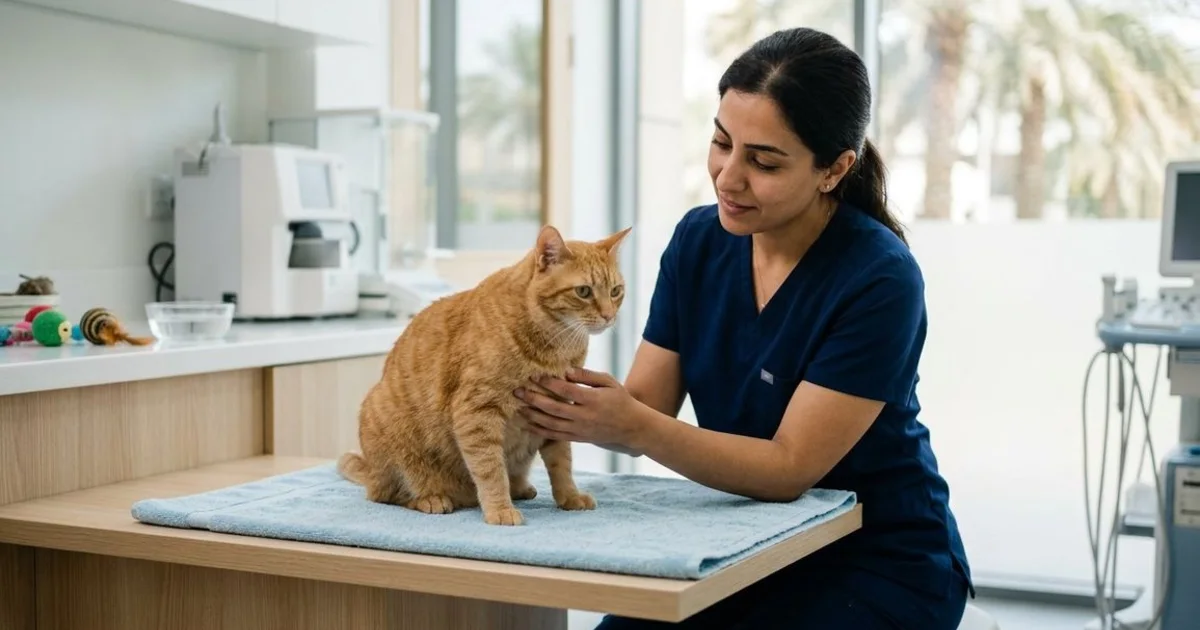
Common cat diabetes symptoms include increased thirst and urination, weight loss despite a normal or increased appetite, reduced energy and weakness. Some cats walk with their hocks lowered toward the floor. These signs overlap with kidney, thyroid and other disease, so diagnosis requires veterinary blood and urine testing. Diagnostic testing for suspected diabetes should happen promptly when several signs appear together.
Key takeaways
- Thirst, larger urine clumps and weight loss are warning signs, not proof of diabetes.
- A stressed cat can have a temporary rise in blood glucose, so diagnosis may require persistent blood and urine findings plus supporting tests.
- Vomiting, refusal of food, marked weakness, dehydration, collapse or breathing changes can indicate diabetic ketoacidosis and needs emergency care.
- Never start, stop or change insulin or oral diabetes medicine from an online rule. The treating veterinarian must individualise treatment and monitoring.
What are the most common cat diabetes symptoms?
Diabetes mellitus prevents the body from using glucose normally because insulin is insufficient or no longer works effectively. Glucose remains in the blood and spills into urine, drawing more water with it. That explains the typical combination of thirst and increased urination.
The Cornell Feline Health Center diabetes guide describes increased thirst and urination, weight loss and increased appetite among common signs. Not every cat shows the full pattern.
| Possible sign | What an owner may notice | Important overlap |
|---|---|---|
| Increased thirst | Water bowls empty faster or the cat seeks taps | Kidney disease and other conditions can do this too |
| Increased urination | More or larger litter clumps | Kidney, thyroid and urinary disease can alter urination |
| Weight loss | Ribs or spine become more prominent | Many chronic diseases cause weight or muscle loss |
| Increased appetite | Cat asks for food but keeps losing weight | Hyperthyroidism and poor nutrient absorption can overlap |
| Reduced appetite | Food intake falls, especially when unwell | Raises concern for DKA or another concurrent illness |
| Plantigrade stance | Hocks are lowered when standing or walking | Neurological and orthopaedic problems also need assessment |
| Lethargy or weakness | Less play, difficulty jumping, poor grooming | Nonspecific and can signal urgent illness |
Record changes over days, not just one unusual bowl or litter-box visit. A veterinary checkup can assess hydration, body condition, muscle, mouth, abdomen and other clues before testing is selected.
Which signs suggest diabetic ketoacidosis?
Diabetic ketoacidosis, or DKA, is a life-threatening complication. A known or suspected diabetic cat with vomiting, refusal of food, marked lethargy, weakness, dehydration, weight loss, collapse or abnormal breathing needs urgent veterinary assessment.
The 2026 AAHA DKA guidance explains that affected cats are often sick enough to need hospital care. Do not give a generic medicine dose, force food or wait for the next routine appointment. Call the nearest available emergency veterinary hospital and start travelling.
Other emergency signs in a treated cat include disorientation, tremors, seizures, collapse or profound weakness, which can occur with dangerously low blood glucose. Follow the treating team's emergency instructions. Do not make an improvised long-term dose change after first aid.
How does a veterinarian confirm feline diabetes?
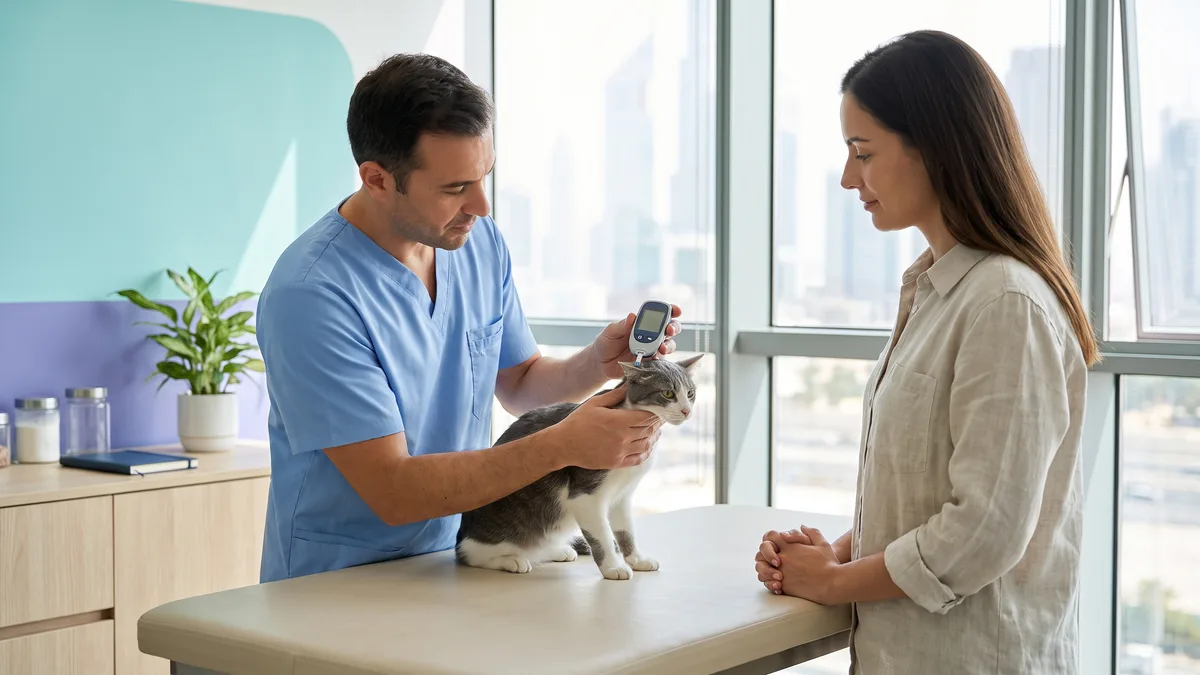
Diagnosis combines clinical signs with persistent evidence of high blood glucose and glucose in the urine. One elevated clinic reading may not be enough because stress can temporarily raise a cat's blood glucose.
The veterinarian may use:
- repeat or serial blood glucose measurements
- urinalysis for glucose, ketones, infection and other abnormalities
- fructosamine to estimate average glucose over a longer period
- blood count and chemistry to assess hydration and concurrent disease
- additional tests guided by age, examination and symptoms
| Test or finding | What it contributes | What it cannot do alone |
|---|---|---|
| Blood glucose | Shows glucose at that moment | One high value may reflect stress |
| Urine glucose | Supports persistent excess blood glucose | Does not show the full treatment picture |
| Urine or blood ketones | Helps identify ketoacidosis risk | A sick cat still needs clinical assessment |
| Fructosamine | Reflects glucose over a longer interval | Must be interpreted with signs and other results |
| General blood and urine tests | Finds dehydration or concurrent disease | Results need patient-specific interpretation |
The current 2026 AAHA Diabetes Management Guidelines for Cats separate recognition, diagnosis, treatment selection and monitoring because each step changes the next.
How is feline diabetes treated?
Treatment aims to control clinical signs, avoid dangerously low glucose, support healthy weight and muscle, and maintain quality of life. Insulin remains a common treatment. Newer oral medicines may be considered for carefully selected cats, but they are not simple substitutes for insulin and are unsafe for some patients.
The veterinarian selects treatment after evaluating whether the cat is newly diagnosed, eating, hydrated, ketone-free and free of exclusions that make an oral option unsafe. The US FDA's owner guide to oral diabetes drugs for cats stresses strict patient selection and the risk of ketoacidosis.
Owners should not switch between treatments, reuse another cat's medicine or change a dose based on a single appetite or glucose reading. If a treated cat will not eat or drink, contact the treating veterinarian immediately for patient-specific instructions.
How do food, weight and muscle affect the plan?
Food choice must match the treatment, appetite, body condition, muscle condition and any kidney, urinary or digestive disease. No single low-carbohydrate product is correct for every diabetic cat. Maintaining adequate calorie and protein intake can become more urgent than an ideal diet profile when a cat is ill or refusing food.
The AAHA dietary management section recommends an individual nutrition plan and ongoing body and muscle monitoring. For an overweight patient, use a safe cat weight-management plan rather than abruptly cutting food.
Keep feeding times, portions and medicine routines consistent with the treatment plan. Report vomiting, poor appetite, food refusal or unintended weight loss promptly. Do not hide missed meals or medicine problems from the veterinary team, because those details affect safe decisions.
What should owners monitor at home?
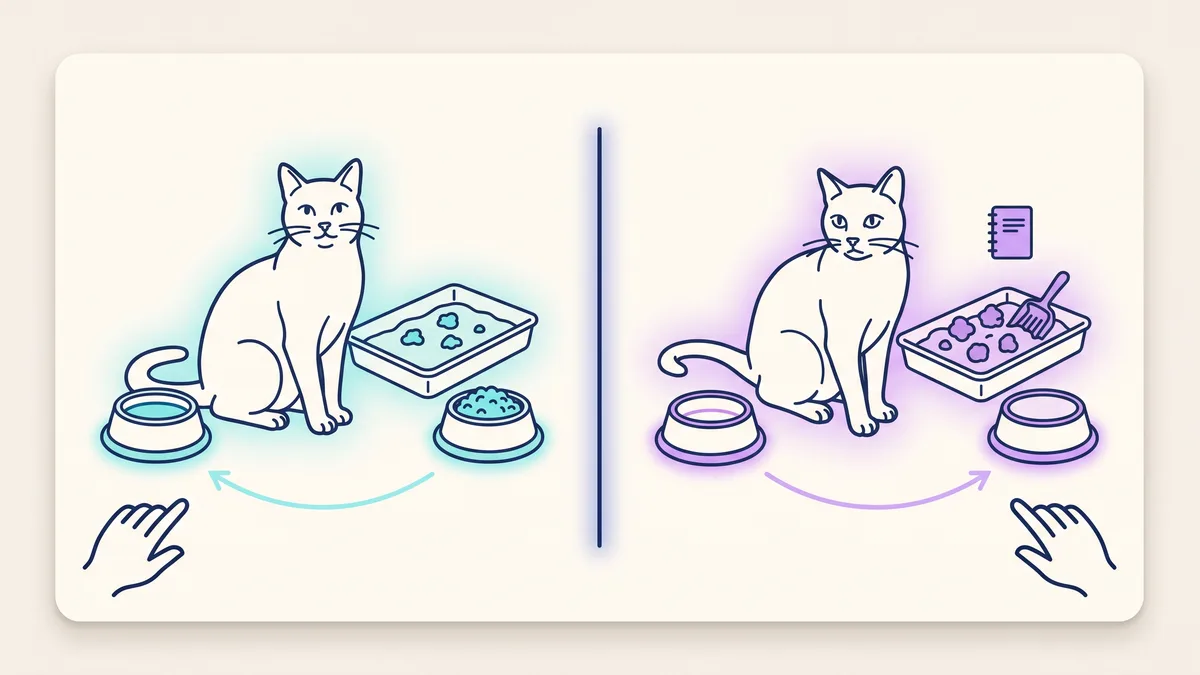
Home monitoring should focus on both glucose control and quality of life. Record:
- appetite and the amount actually eaten
- water intake trend and litter-clump size or frequency
- body weight and muscle condition at the advised interval
- energy, grooming, jumping and walking posture
- vomiting, diarrhoea or other illness signs
- medicine administration and any problems giving it
The veterinarian may teach blood or interstitial glucose monitoring, urine ketone checks or another method. Use the device, schedule and action thresholds they provide. Never use one number to adjust medicine without the agreed protocol.
Rechecks are used to interpret trends, confirm technique and look for conditions that interfere with control. Kidney disease can also change thirst, urination and weight; compare the distinct cat kidney disease symptom pattern while remembering that only testing separates them.
Can a cat with diabetes go into remission?
Some cats can enter diabetic remission, meaning they maintain acceptable glucose control without diabetes medicine for a period. Remission is not guaranteed and is not the same as a permanent cure. Relapse can occur, so monitoring continues.
AAHA's diabetic remission guidance explains that remission depends on the individual disease course and treatment. Owners should never stop medicine because symptoms appear better. The veterinary team confirms remission through an appropriate monitoring plan.
What affects cat diabetes care costs in Dubai?
There is no responsible universal or typical cost. The total changes with diagnostic findings, treatment selection, supplies, response and concurrent disease. Ask for an itemised estimate and the likely monitoring schedule after examination.
| Cost component | Why it varies | Useful question |
|---|---|---|
| Initial examination and tests | The symptom pattern determines which tests are needed | Which tests confirm diabetes and check for other disease? |
| Medicine and equipment | Treatment type, device and supply use differ | What recurring supplies does this plan require? |
| Training | Owners may need injection or monitoring instruction | Is technique training included? |
| Rechecks and glucose assessment | Frequency depends on stability and treatment stage | What is the planned review schedule? |
| Complication care | DKA or severe hypoglycaemia can require hospital care | Which signs mean emergency care? |
| Concurrent disease | Dental, kidney, thyroid or other illness may need separate care | Which findings alter the diabetes plan? |
Frequently asked questions
Can I diagnose cat diabetes from increased thirst?
No. Thirst and increased urination overlap with kidney, thyroid and other disease. Diagnosis requires veterinary blood and urine assessment.
What should I do if my diabetic cat will not eat?
Contact the treating veterinarian immediately for patient-specific medicine and feeding instructions. Vomiting, weakness, dehydration, collapse or breathing changes need emergency care.
Is insulin always the only option?
Insulin is a common treatment. Some newly diagnosed cats may qualify for an oral option after strict veterinary screening, but the treatments are not interchangeable and oral medicine is unsafe for some cats.
Is diabetic remission a cure?
No. Remission can occur, but it is not guaranteed, relapse remains possible and monitoring must continue.
How much does feline diabetes treatment cost in Dubai?
Costs depend on tests, treatment, supplies, monitoring and other health problems. Request an itemised plan after the cat has been examined and diagnosed.
About this guidance
This article is general education, not a diagnosis, medicine instruction or individual monitoring protocol. It was materially updated on 23 August 2026 using the 2026 AAHA feline diabetes guidelines, Cornell University and US FDA safety information.
To investigate compatible signs, book a diagnostic consultation with Paw Sisters Veterinary Clinic. For vomiting, food refusal, collapse, seizures or breathing changes in a known or suspected diabetic cat, seek emergency veterinary care now.