Overweight Cat: Safe Weight Loss and Feeding Plan
Sources and guidance checked
Medically reviewed by Dr. Hasan AlDahhak, DVM ·
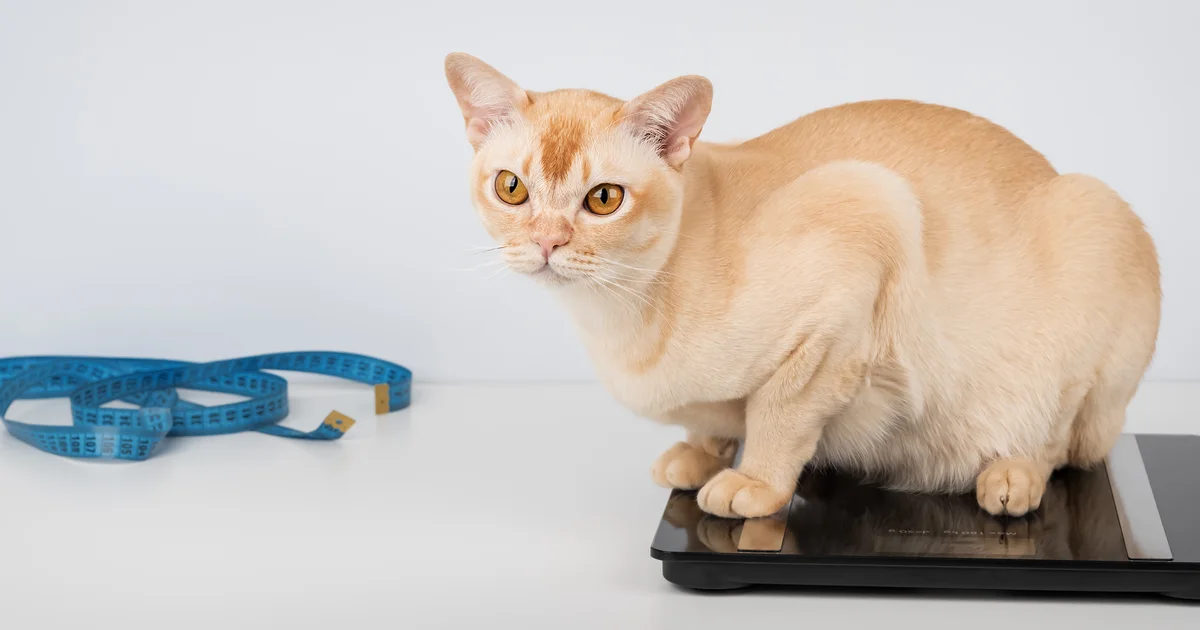
An overweight cat needs a measured, veterinarian-guided plan, not a crash diet. Sudden food restriction can leave a cat short of essential nutrients and can contribute to hepatic lipidosis, especially if an overweight cat stops eating. Start with a weight and health check so the target, food, calories, activity and monitoring schedule fit your cat.
Key takeaways
- Body weight alone does not show how much fat and muscle a cat carries. Body and muscle condition should be assessed together.
- Measure all meals and treats. The veterinarian should calculate a safe starting intake from the individual cat, not simply halve the current portion.
- Diet format matters less than total calories, nutritional completeness and suitability for the cat's health conditions.
- If a cat stops eating, vomits, becomes very lethargic, looks jaundiced or loses weight without a plan, seek veterinary advice promptly.
How can you tell if your cat is overweight?
Use body condition, not appearance or breed stereotypes alone. A healthy-condition cat generally has ribs that can be felt with a light fat covering, a visible waist from above and an abdominal tuck from the side. An overweight cat may have ribs that are harder to feel, little waist definition and a rounded abdomen.
Long coats and a loose abdominal skin fold can mislead owners. Muscle loss can also occur underneath excess fat, particularly in older or ill cats. The AAHA pet weight guide recommends combining weight, body condition and regular monitoring rather than relying on one glance.
| Home observation | What it may suggest | Limitation |
|---|---|---|
| Ribs are difficult to feel | Excess fat may cover the ribs | Thick coat or poor technique can mislead |
| Waist is absent from above | Body condition may be above ideal | Body shape varies between cats |
| Abdomen looks rounded | Fat may have accumulated | Pregnancy, fluid or illness can also enlarge the abdomen |
| Weight is rising over time | Intake may exceed energy use | Fluid changes and disease can affect weight |
| Spine feels sharp despite a broad body | Muscle loss may coexist with fat | Needs professional muscle assessment |
A veterinary team can record a repeatable body condition score, muscle condition and current weight. Photos from above and the side can help track shape, but they do not replace hands-on assessment.
Why should an overweight cat see a vet first?
The first visit sets a safe baseline and looks for factors that change the plan. Age, arthritis, dental pain, diabetes, kidney disease, urinary disease, digestive disease, medication and previous pancreatitis can all affect food or activity choices.
The 2021 AAHA Nutrition and Weight Management Guidelines recommend an individual nutritional assessment throughout life. That includes the current diet, treats, feeding method, body and muscle condition, disease, home environment and owner goals.
Tell the veterinarian if weight loss is already happening without an intentional plan. Increased thirst or urination, a larger appetite with weight loss, vomiting or muscle loss can indicate disease. For example, cat diabetes symptoms and cat kidney disease symptoms can overlap with what owners first describe as a weight problem.
Build a measured feeding plan, not a crash diet
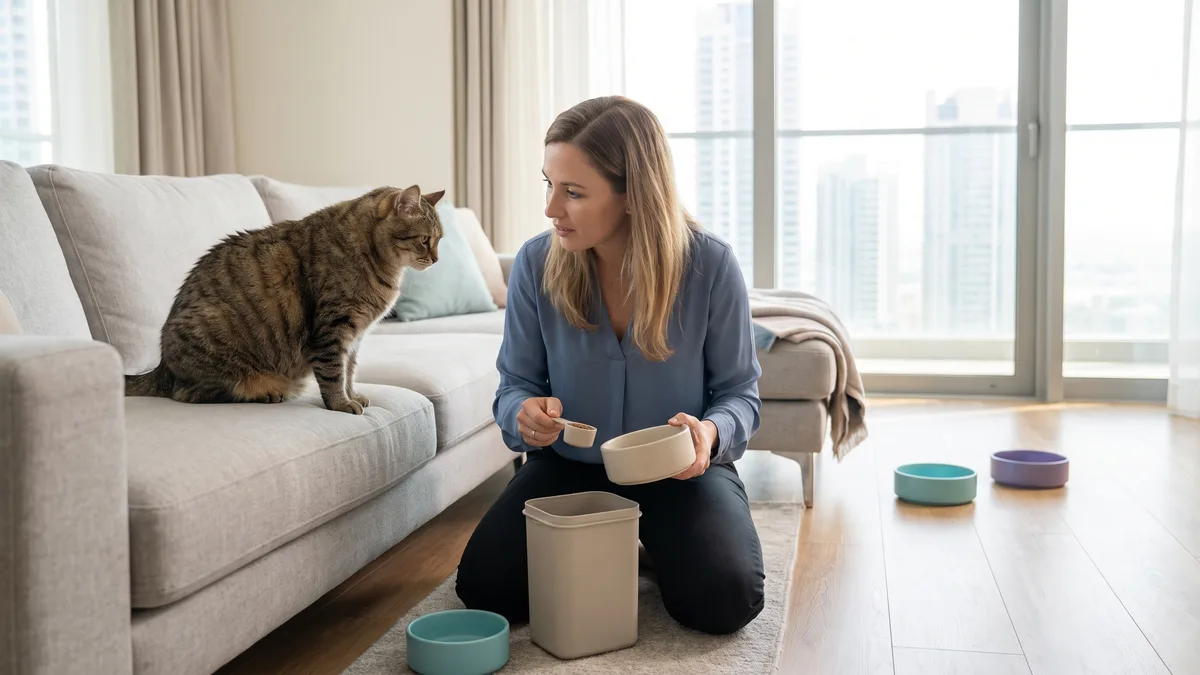
Start by recording everything the cat receives for several normal days: main meals, treats, dental products, table food, food stolen from other pets and medicine given with food. Include the product name and amount. This shows where calories enter the plan.
The veterinarian can then calculate a starting intake and choose a review interval. AAHA's guidance on weight reduction in an obese pet supports planned monitoring and adjusting the plan when progress falls outside the intended range.
| Plan element | Practical method | Common mistake |
|---|---|---|
| Daily food allowance | Weigh the full day's portion with a kitchen scale | Refilling an unmeasured bowl |
| Meal schedule | Divide the allowance into meals that suit the household | Adding extra food because the bowl looks empty |
| Treat allowance | Count treats within the daily total | Treats from several family members |
| Multi-cat feeding | Feed separately or use controlled access | Assuming each cat eats an equal share |
| Progress check | Use the same scale and record body and muscle condition | Reacting to one isolated measurement |
Do not starve a cat, skip meals to compensate for treats or cut the portion abruptly. Cornell's guide to feeding frequency in cats warns that an overweight cat put on a sudden starvation diet is at risk of hepatic lipidosis.
How should you choose food for weight loss?
Choose food by calories, nutritional completeness and the cat's medical needs. Wet food may help some plans with portion volume and water intake, but it is not automatically lower in calories. Dry food is not automatically unsuitable. Compare calories per gram or serving, use the pet-product buying checklist to verify labels and storage, and follow the veterinarian's calculated plan.
A therapeutic weight-management food may help preserve nutrient intake while calories are restricted, but not every cat needs the same product. Cats with diabetes, chronic kidney disease, urinary disease, food sensitivity or digestive problems need a plan that balances all conditions. The MSD Veterinary Manual cat nutrition overview supports complete and balanced food and cautions against table scraps and raw meat.
If a diet change is advised, transition at the pace given by the veterinarian. A cat refusing the new food should not be left to go hungry. Use the cat appetite warning guide if intake falls, and contact the clinic promptly.
How can treats fit the plan?
Treats must come from the daily allowance rather than sit on top of it. Options include reserving part of the regular food for training or using small portions of a veterinarian-approved treat. Avoid sharing raw meat, fatty scraps or ingredients that are unsafe for cats.
Create one treat container holding the day's total. Everyone in the home takes from that container, so the cat does not receive several invisible allowances. Use non-food rewards too: brushing, play, attention, a window perch or access to a favourite resting place.
Add gentle activity and feeding enrichment
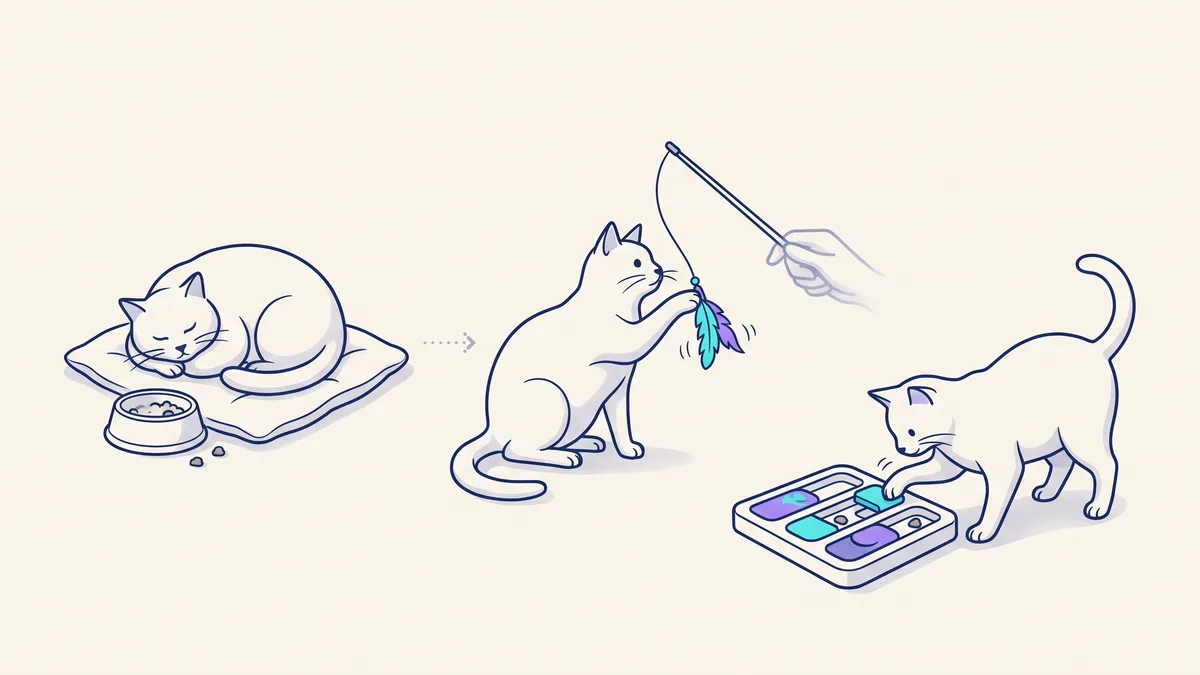
Activity should match mobility, breathing, age and confidence. A painful or severely overweight cat may need an examination before jumping or chasing games. Start with short, low-stress opportunities and build gradually as directed.
Useful options include:
- moving part of the measured meal through a puzzle feeder
- placing small portions at several accessible locations
- wand-toy play that allows the cat to catch the toy
- rolling a piece of measured kibble along the floor
- adding safe steps to a low perch for a mobile cat
- rotating toys to renew interest without increasing food
Never use a laser without ending with something tangible the cat can catch. Stop if the cat pants, limps, hides, coughs or appears distressed. There is no universal daily exercise duration that suits every cat.
How do you monitor progress safely?
Use the same scale and method at the interval set by the veterinary team. Record weight, body condition, muscle condition, appetite, stool, activity and any new signs. The goal is steady improvement while preserving muscle and normal behaviour, not the fastest number change.
Older cats need extra attention to muscle. The AAHA and AAFP life-stage nutrition guidance highlights the need to account for ageing and concurrent disease when assessing nutrition.
If progress is slower or faster than intended, do not make a large home adjustment. Review measurement accuracy, hidden treats, access to other food, activity limits and health changes with the veterinarian, then revise the plan.
When does weight or appetite change need urgent care?
Contact a veterinarian promptly if an overweight cat stops eating, repeatedly vomits, becomes markedly lethargic, seems painful, develops yellow eyes or gums, or loses weight without an intentional plan. Trouble breathing, collapse, seizures, inability to urinate or profound weakness needs emergency care.
Unplanned weight loss is not a successful diet result. It may reflect diabetes, kidney disease, hyperthyroidism, cancer, gastrointestinal disease or another condition. The cause needs diagnosis before weight-management advice continues.
Frequently asked questions
How much should I feed an overweight cat?
There is no universal amount. Food calorie density, current intake, target condition, age, activity, muscle and disease all matter. A veterinarian should calculate the starting allowance and review the response.
Is wet food better for cat weight loss?
It can suit some cats, but the total calories and nutritional fit matter more than format alone. Both wet and dry products vary widely, so compare the actual food and portion.
How fast should a cat lose weight?
The veterinarian should set the target and monitoring interval for the individual cat. Do not chase a generic online percentage or make abrupt cuts when the scale changes slowly.
Can I exercise my cat instead of changing food?
Activity supports health and muscle, but food intake usually needs measurement too. Exercise must be adjusted for pain, mobility, breathing and fitness.
What if my overweight cat refuses the diet food?
Do not let the cat go without eating. Offer the plan's approved familiar option and contact the veterinarian for a safer transition or alternative.
About this guidance
This article is general education, not a calorie prescription or diagnosis. It was materially updated on 23 August 2026 using AAHA, AAFP, Cornell University and MSD Veterinary Manual guidance. The plan from a veterinarian who has assessed your cat takes priority.
To establish a safe target and feeding plan, book a weight-management check with Paw Sisters Veterinary Clinic.