Cat Kidney Disease Symptoms: Tests and Care in Dubai
Sources and guidance checked
Medically reviewed by Dr. Hasan AlDahhak, DVM ·

Common cat kidney disease symptoms include increased thirst and urination, weight or muscle loss, reduced appetite, vomiting, dehydration, lethargy and a poorer coat. These signs overlap with diabetes, thyroid and urinary disease, so they do not confirm kidney disease at home. Diagnosis usually combines examination, blood pressure, blood and urine assessment. Diagnostic testing for suspected kidney disease should begin promptly when several signs appear together.
Key takeaways
- Chronic kidney disease, or CKD, is generally progressive and manageable, not curable.
- Increased thirst is common, but some cats show only subtle weight, appetite or grooming changes.
- IRIS staging applies after kidney disease is diagnosed and the patient is stable. Online creatinine values cannot safely stage a cat by themselves.
- No urine, repeated vomiting, inability to keep water down, severe weakness, collapse or suspected toxin exposure need urgent care.
What are common cat kidney disease symptoms?
Kidneys filter waste, regulate fluid and electrolytes, support blood pressure control and contribute to red blood cell production. When kidney function declines, changes may develop gradually and can be easy to mistake for normal ageing.
Cornell University's chronic kidney disease overview identifies increased thirst and urination, weight loss, poor appetite, lethargy and an unkempt coat among possible signs. A cat can have early disease without dramatic symptoms.
| Possible sign | What an owner may notice | Important overlap |
|---|---|---|
| Increased thirst | More bowl visits or seeking taps | Diabetes and hyperthyroidism can do this too |
| Increased urine volume | Larger or more frequent litter clumps | Diabetes and medicine effects may overlap |
| Weight or muscle loss | Spine or hips become more prominent | Cancer, thyroid and digestive disease can also cause loss |
| Reduced appetite | Smaller meals, food refusal or nausea behaviour | Dental and gastrointestinal disease are common alternatives |
| Vomiting | Intermittent or repeated episodes | Toxins, obstruction and pancreatitis may be urgent causes |
| Lethargy or poor coat | Less play, grooming or interaction | Nonspecific and needs examination |
| Dehydration | Tacky gums or reduced skin elasticity | Home checks are unreliable and do not grade severity |
Do not wait for every sign. Record water, litter, appetite and weight trends, then arrange a veterinary checkup. Unintended weight loss despite appetite can also fit cat diabetes symptoms.
When are kidney or urinary signs an emergency?
Go to the nearest available emergency veterinary hospital if a cat is straining but producing little or no urine, cannot keep water down, repeatedly vomits, becomes severely weak, collapses, has a seizure, develops breathing difficulty or may have encountered lilies, antifreeze, human pain medicine or another toxin.
No urine can indicate urethral obstruction rather than CKD. This is especially dangerous in male cats and cannot wait for a routine kidney appointment. The cat urinary signs guide explains why infection and obstruction can look similar at home.
Acute kidney injury can occur suddenly after toxins, severe dehydration, infection, obstruction or another insult. CKD develops over time. The immediate treatment, possible reversibility and prognosis differ, so owners should not assume every abnormal kidney value means the same disease.
How does a veterinarian diagnose CKD?
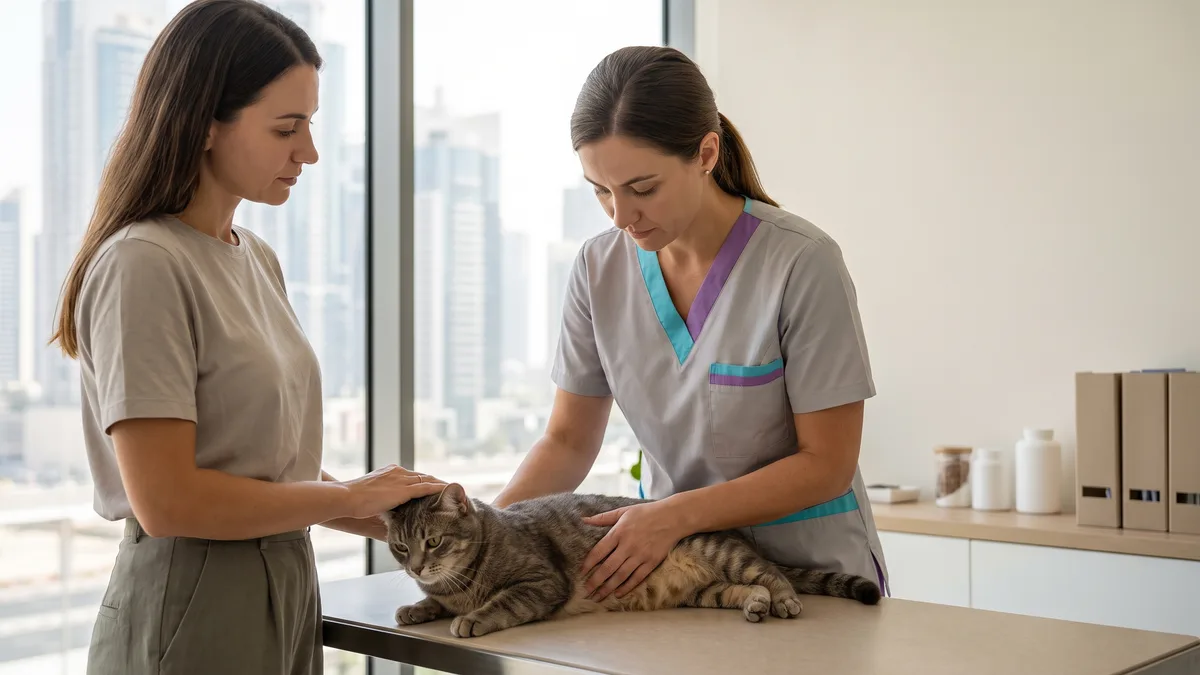
Diagnosis uses patterns across history, examination and repeatable findings. Hydration, diet, muscle and recent illness can affect kidney markers, so one isolated blood result may not establish chronic disease.
The assessment may include:
- body weight, body condition and muscle condition
- blood chemistry, including creatinine and SDMA in context
- complete blood count to assess anaemia and other changes
- urinalysis and urine specific gravity
- urine protein-to-creatinine ratio when indicated
- urine culture when infection is possible
- blood pressure measurement
- imaging when structure, stones or obstruction need evaluation
The MSD Veterinary Manual's cat urinary-system disease guide describes blood, urine, blood pressure and imaging as parts of kidney assessment. Results must be interpreted together and may need confirmation when the cat is stable.
What do IRIS stages and substages mean?
The International Renal Interest Society, or IRIS, provides a framework for diagnosed CKD. The IRIS staging system requires a stable patient and interprets creatinine or SDMA in context. Protein loss in urine and blood pressure are then used to substage risk.
| IRIS element | What it describes | Why it matters |
|---|---|---|
| CKD stage | Degree of kidney dysfunction in a stable, diagnosed patient | Helps organise monitoring and treatment priorities |
| Creatinine and SDMA | Filtration markers interpreted with hydration, muscle and trends | Neither should be read as a home diagnosis alone |
| Proteinuria substage | Whether excess protein is lost in urine | Can change progression risk and management |
| Blood pressure substage | Risk of organ damage from hypertension | Guides monitoring and treatment decisions |
| Response over time | Stability or progression across rechecks | Often matters more than one isolated result |
IRIS stages are numbered, but copying a laboratory value into an online table is not enough. Acute kidney injury, dehydration and muscle loss can alter interpretation. The current IRIS guidelines should be applied by the treating veterinarian after diagnosis.
What are the treatment goals for chronic kidney disease?
Treatment aims to slow progression where possible, correct complications, maintain hydration and nutrition, control nausea or other symptoms, and protect quality of life. The plan changes with stage, appetite, blood pressure, urine protein, potassium, phosphorus, anaemia and concurrent disease.
Possible veterinary strategies include a therapeutic renal diet, hydration support, treatment of documented hypertension or proteinuria, and management of nausea, appetite or electrolyte problems. These are not home protocols. Do not give fluids, potassium, phosphate binders, blood pressure medicine, appetite medicine or anti-nausea medicine without the treating veterinarian's prescription and monitoring plan.
The MSD professional review of renal dysfunction in dogs and cats supports individual management of nutrition, proteinuria, blood pressure and complications rather than one treatment package for every patient.
How do nutrition, hydration and appetite fit together?
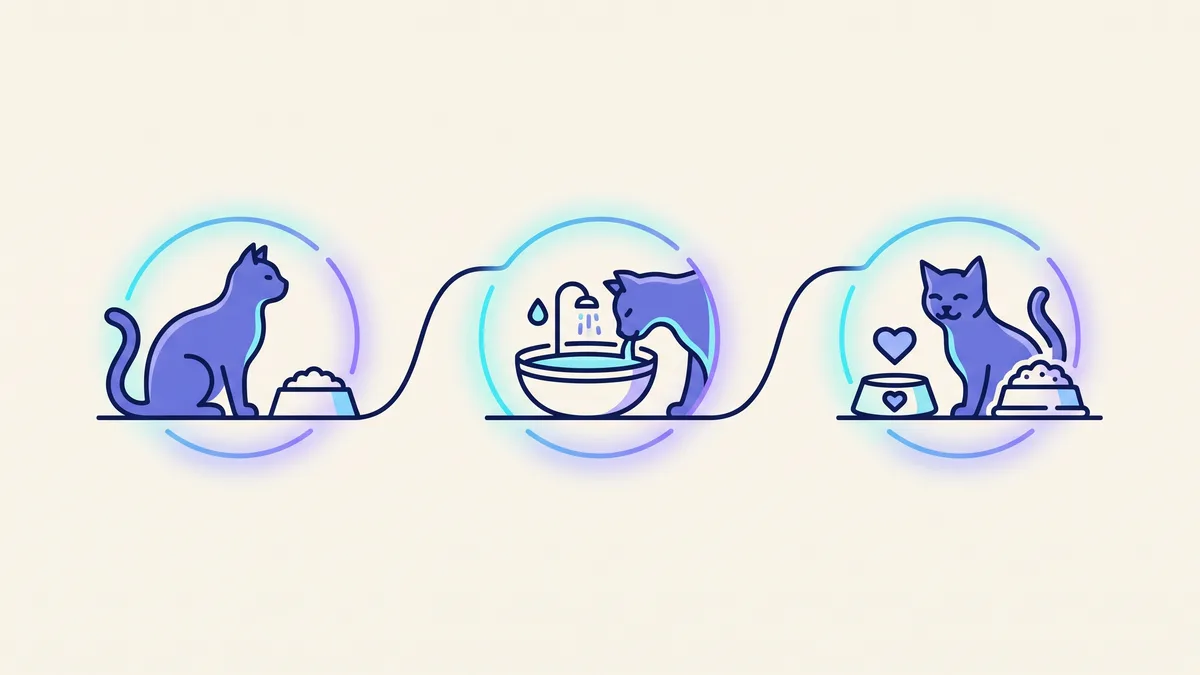
Veterinary renal diets have evidence for supporting cats with CKD, but the transition must protect calorie intake. A cat refusing the new food should not be left to go hungry. Tell the veterinary team promptly so it can address nausea, pain, food aversion or another cause and adjust the plan.
Offer fresh water in several accessible locations if the cat prefers that setup. Wet food may increase water intake for some cats, but food selection must still fit kidney stage, calories, muscle, other disease and preference. The daily cat-care guide covers practical bowl, litter and home-observation routines for the wider household. Do not add salt, supplements or homemade electrolyte mixtures.
Track how much the cat eats rather than simply whether it approaches the bowl. The cat appetite warning guide explains why reduced intake can become dangerous. Rapid or unexplained weight loss also needs review, not an automatic reduction in dietary protein.
What happens at CKD rechecks?
Rechecks show whether kidney markers, hydration, weight, muscle, blood pressure, urine protein and symptoms are stable. Frequency depends on stage, recent changes and treatment response. A cat starting or changing treatment may need a different schedule from a stable patient.
Bring a simple home record:
- appetite and food amount
- water-intake trend and litter changes
- vomiting or stool changes
- weight if measured consistently
- activity, grooming and interaction
- every medicine and supplement
- any problem giving food, fluids or medicine
Do not change prescribed treatment before a recheck unless the veterinary team tells you to. Report poor appetite, vomiting or weakness rather than waiting to see whether the next laboratory result explains it.
What does prognosis depend on?
There is no reliable fixed survival time for an IRIS stage. Prognosis depends on the cause, stage, rate of progression, appetite, muscle, hydration, blood pressure, urine protein, anaemia, phosphorus, other disease and response to treatment.
Some cats remain stable for meaningful periods with monitoring and supportive care, while others progress more quickly. The useful question is not a generic number of months or years. Ask what the current trends show, which complications are present and how comfort and daily function will be monitored.
Age alone does not diagnose CKD. The AAHA and AAFP feline life-stage guidelines support individual screening based on life stage and risk. Persian and related cats can have an inherited risk of polycystic kidney disease, described in Cornell's polycystic kidney disease guide, but broad breed lists should not replace testing.
Frequently asked questions
Can chronic kidney disease in cats be cured?
CKD is generally progressive and not curable. Treatment can slow progression in some cats, manage complications and support comfort and quality of life.
Can I stage my cat from a creatinine result?
No. IRIS staging is used after kidney disease is diagnosed in a stable patient. Hydration, muscle, SDMA, urine protein and blood pressure all affect interpretation.
Should a cat with CKD drink more water?
Many cats with CKD lose more water through urine and need hydration support, but the safest method depends on the individual. Provide easy access to fresh water and follow the veterinary plan.
What if my cat refuses a renal diet?
Do not let the cat go without eating. Contact the veterinary team to address nausea, pain, transition speed and alternative nutritionally appropriate options.
Are increased thirst and urination always kidney disease?
No. Diabetes, hyperthyroidism, medicine effects and other conditions can look similar. Blood and urine testing is needed to identify the cause.
About this guidance
This article is general education, not a diagnosis, IRIS stage or treatment prescription. It was materially updated on 23 August 2026 using IRIS, Cornell University, MSD Veterinary Manual and AAHA and AAFP guidance.
To investigate compatible signs, book a kidney diagnostic consultation with Paw Sisters Veterinary Clinic. For no urine, repeated vomiting, collapse, severe weakness or suspected toxin exposure, seek emergency veterinary care now.