Cat Tooth Resorption: Signs of Hidden Dental Pain and When to Book a Vet in Dubai
Sources and guidance checked
Medically reviewed by Dr Hassan ·
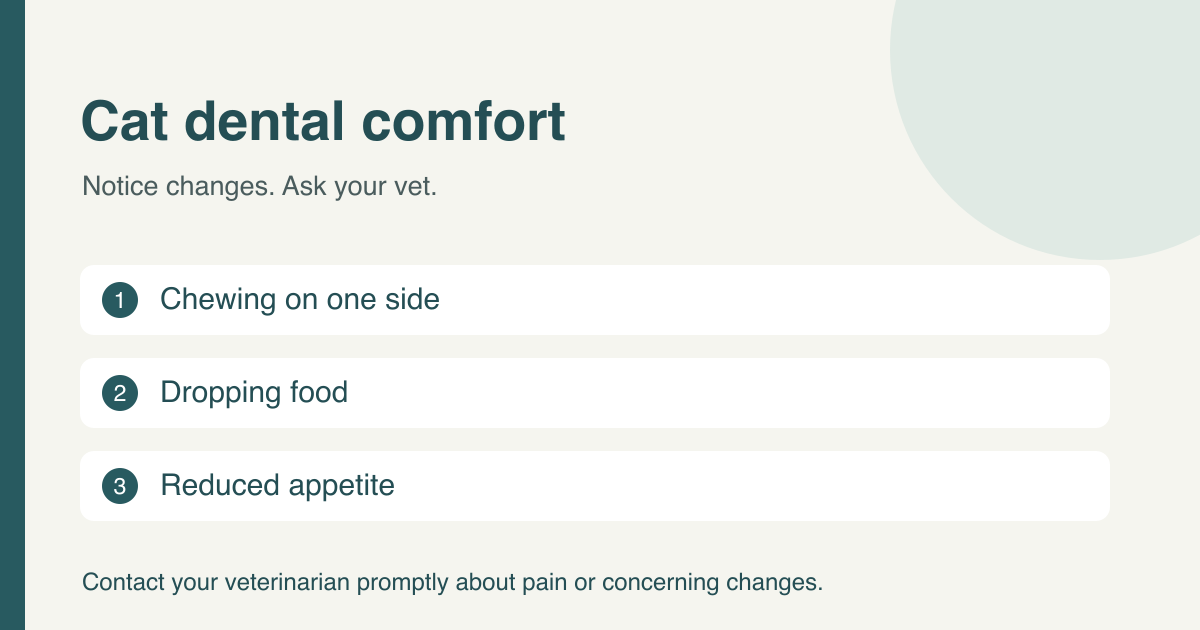
Cats can hide dental pain, even when they still seem interested in food. You might notice a small change first: chewing on one side, dropping food, or choosing softer food. These observations are useful, but they cannot tell you which dental problem your cat has. [1]
Cat tooth resorption is one possible cause. If your cat's eating or behaviour changes, arrange a veterinary examination rather than waiting for an obvious damaged tooth.
What Is Cat Tooth Resorption?
Tooth resorption is the progressive loss of a tooth's hard tissue. In cats, it typically starts in cementum, the tissue covering the root, and can spread into dentin and the crown. One or several teeth may be affected. Damage below the gumline can be hidden from view. [3]
This is different from inflamed gums or tartar buildup. A veterinary assessment is needed to identify the problem and plan care; appearances alone do not show how much of the tooth is affected. [2],[5]
Signs of Cat Dental Pain Owners Should Watch For
Possible signs include: [1],[2]
- Chewing on one side, tilting the head while eating, or dropping food
- Swallowing food with less chewing or a new preference for soft food
- Eating less than usual or refusing food
- Drooling or becoming irritable around the mouth
Some cats show few obvious changes. These signs can also occur with other dental or medical conditions, so they are reasons to seek help, not a diagnosis of resorption. [1],[2]
If your cat stops eating or seems painful
Contact a veterinarian promptly for advice on how urgently your cat needs to be seen. Do not delay care while completing a checklist or waiting for a routine online booking response.
A Simple Observation Checklist for Your Cat
Use these notes to explain what has changed. Observe normal meals without provoking pain or trying to test a tooth yourself. A short video may help if you can take it without disturbing your cat.
| Sign to observe | What to record | What to tell the vet |
|---|---|---|
| Chewing on one side | When it began; whether it happens at every meal | Is this new, and does it happen with wet food, dry food, or both? |
| Dropping food | Food type and how often it falls out | Does your cat try again, leave the food, or walk away? |
| Food preference changes | Usual diet and the recent change | Has your cat started refusing a familiar food? |
| Reduced appetite | Approximate amount eaten and last normal meal | Is your cat eating less, or refusing food completely? Contact the vet promptly. |
| Drooling or irritability | When it started and other changes | Does it happen around meals or at other times? |
| Previous dental problems | Dates and any available reports | Has resorption or another dental condition been diagnosed before? |
Original editorial checklist, revised from the supplied draft and informed by the signs and history guidance in references 1, 2 and 6. It is an observation aid, not a diagnostic or severity-scoring tool.
Gingivitis vs. Periodontitis vs. Tooth Resorption
These conditions can share symptoms and can occur together. The differences below describe the affected structures; they cannot be used to diagnose a cat at home. [2]
| Condition | What it affects | Key distinction |
|---|---|---|
| Gingivitis | Gums around the teeth | Inflammation may cause redness, swelling or bleeding. |
| Periodontitis | Tissues anchoring teeth, including supporting bone | Loss of support can cause loose teeth; established damage is irreversible. |
| Tooth resorption | The tooth itself, including root and crown | Hard tooth tissue breaks down; hidden root changes need imaging. |
How Vets Diagnose Cat Tooth Resorption
An awake examination is a starting point. It can reveal a suspicious area, but it cannot reliably establish the full extent of disease below the gums. [5]
1. Reviewing the cat's health history
The vet reviews eating changes, previous dental care, current medicines and other health conditions, alongside a physical examination. [6]
2. Examining the gums and teeth
A complete assessment requires general anesthesia so the veterinary team can examine and chart each tooth and assess the tissues around it. [4]
3. Taking dental X-rays
Intraoral dental radiographs are necessary for proper treatment planning when resorption is suspected. Full-mouth images help assess hidden root changes and other affected teeth. The vet combines these with examination findings to decide what each tooth needs. [3],[4]
4. Assessing health before treatment
The team selects any pre-anesthetic tests and tailors the anesthetic plan to the individual cat. Ask how risks, monitoring and pain control will be discussed before consent. [6]
Treatment and Recovery for Feline Tooth Resorption
Treatment depends on the examination and radiographs. Extraction is commonly needed for affected teeth with crown damage. In selected cases with advanced root replacement and no conflicting disease, a vet may consider removing the crown while leaving resorbing roots. This requires specific radiographic criteria; it is not suitable for every tooth. [3]
A vet may monitor selected root-only lesions with planned rechecks. Pain relief supports care but does not restore lost tooth structure or replace treatment when indicated. Do not assume that an apparently comfortable cat needs no follow-up. [2],[3]
What happens after treatment?
Before discharge, request written instructions for medicines, food texture, when feeding can restart, and warning signs that need a call. Ask when a recheck is due and when normal dental care can resume. Recovery varies with the cat and the procedure; follow the treating vet's plan rather than a fixed online timeline. [7]
What to Bring to a Cat Dental Examination in Dubai
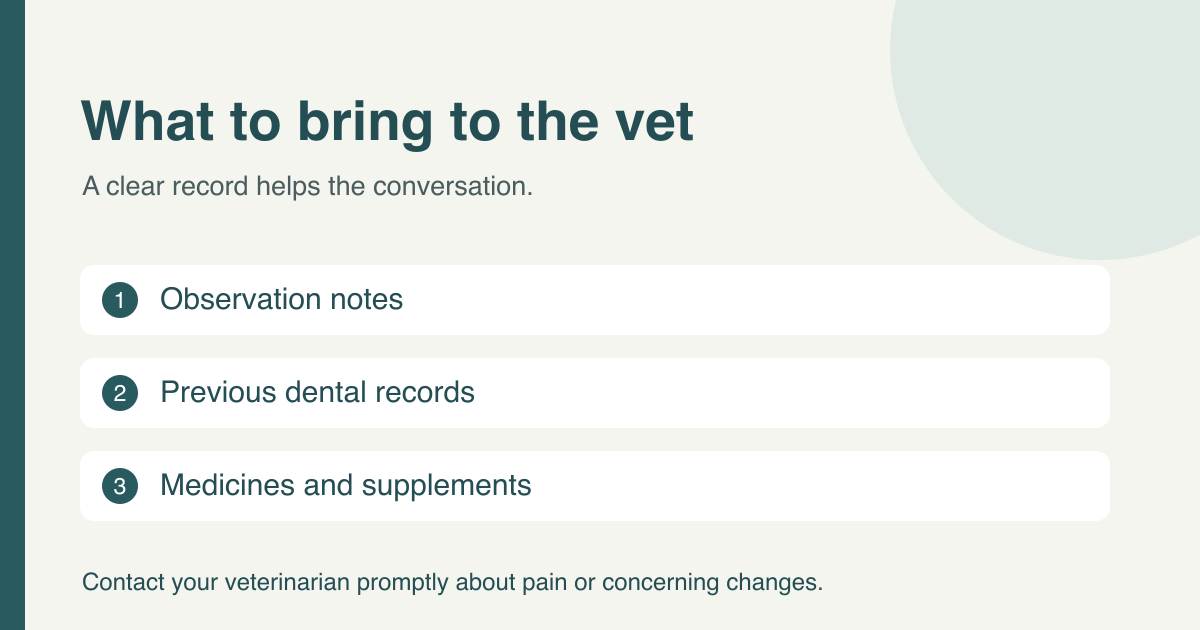
Bring your observation notes, any previous dental records or radiographs, recent test results, and a list of medicines and supplements. Tell the team about other health conditions and past anesthetic concerns. A brief video of an ordinary meal can help explain the change. [6]
Ask the clinic beforehand whether there are any food, water or medication instructions for this appointment. Do not assume a consultation and an anesthetized procedure have the same preparation requirements.
What Affects the Cost of Assessment and Treatment?
Ask for an itemized estimate that makes clear what is included and what could change after examination and imaging. No fixed price can be given here for an individual cat. Useful components to ask about include:
- Consultation, pre-anesthetic assessment and any recommended tests
- Full-mouth intraoral radiographs, anesthesia and monitoring
- Treatment of affected teeth and any additional disease found
- Pain control, take-home medicines, follow-up visits and repeat imaging
Ask which items are included in the initial estimate, which are optional or conditional, and how the team will obtain your consent if the findings change the plan. These are estimate questions, not a statement of Paw Sisters' prices or package inclusions.
Questions to Ask During the Consultation
- What findings suggest resorption, and could another problem explain these signs?
- Will full-mouth intraoral dental radiographs be taken? What is the next step if the required imaging or treatment is not available here?
- Which teeth need treatment, and what do the images show? If monitoring or crown removal is suggested, why is it appropriate for this tooth?
- What are my cat's anesthetic risks, and how will pain be managed?
- What should I expect when my cat eats after treatment, and which changes mean I should call you?
- When are the next examination and dental X-rays due, and what costs should I plan for?
For general appointment information, see Paw Sisters' pet dental care page . For background on a dental procedure, read pet dental cleaning: a step-by-step process . These explain broader dental care; your cat's resorption plan must be individualized.
When to Book a Vet for Cat Dental Pain
Book an examination if you notice a persistent change in chewing, food falling from the mouth, drooling or new mouth-related discomfort. If your cat stops eating, eats markedly less, or seems painful, contact a vet promptly for triage rather than waiting for the next routine slot. [1],[2]
In Dubai, you can use the Paw Sisters appointment page to request a visit. When booking, ask about full-mouth intraoral dental imaging and the next step if additional expertise or equipment is needed. An online request should not delay urgent veterinary advice.
FAQs
Can cats have tooth resorption without obvious symptoms?
Yes. A cat may continue eating despite disease, so a normal-looking appetite does not rule out a dental problem. [1]
Can a vet diagnose tooth resorption without dental X-rays?
A vet may identify a visible lesion, but a visual exam alone cannot establish the full extent or guide appropriate treatment. Intraoral dental radiographs are needed to assess roots and plan care. [4],[5]
Is tooth resorption the same as gum disease?
No. Gingivitis and periodontitis affect gums and supporting tissues; resorption destroys tooth tissue. More than one condition can be present. [2]
Can cats eat after a tooth extraction?
Your vet will explain when feeding can restart and what food texture to use. Ask what appetite changes are expected and when reduced intake needs a call. [7]
When should I book a cat dental examination in Dubai?
Arrange a check for new eating changes or oral discomfort. Refusal of food or clear pain needs prompt veterinary contact, not a wait for symptoms to become more obvious.
Conclusion
Cat tooth resorption can be hidden. Your observations help the vet, while a complete oral assessment and dental radiographs guide the diagnosis and treatment. Bring your notes, ask about the plan and costs, and seek help promptly when your cat's eating or comfort changes.
Educational information only. This article cannot diagnose your cat or replace advice from the veterinarian who examines them. Clinical sources are listed below.
Clinical sources
- Cornell Feline Health Center: Tooth Resorption
- Cornell Feline Health Center: Feline Dental Disease
- American Veterinary Dental College: Feline Tooth Resorption
- AAHA: Unconscious oral evaluation
- AAHA: Conscious oral evaluation
- AAHA: Patient assessment, evaluation, and documentation
- AAHA: Discussion at the discharge appointment