Pet Grooming Home Service: Dubai Booking Guide
Medically reviewed by Dr. Hasan AlDahhak, DVM ·
A pet grooming home service can reduce travel and give some pets a familiar setting, but home grooming is not automatically safer or calmer. The right choice depends on the pet's health, behavior, coat condition and the provider's equipment. Paw Sisters currently provides professional in-clinic pet grooming in Al Garhoud, not a mobile home service.
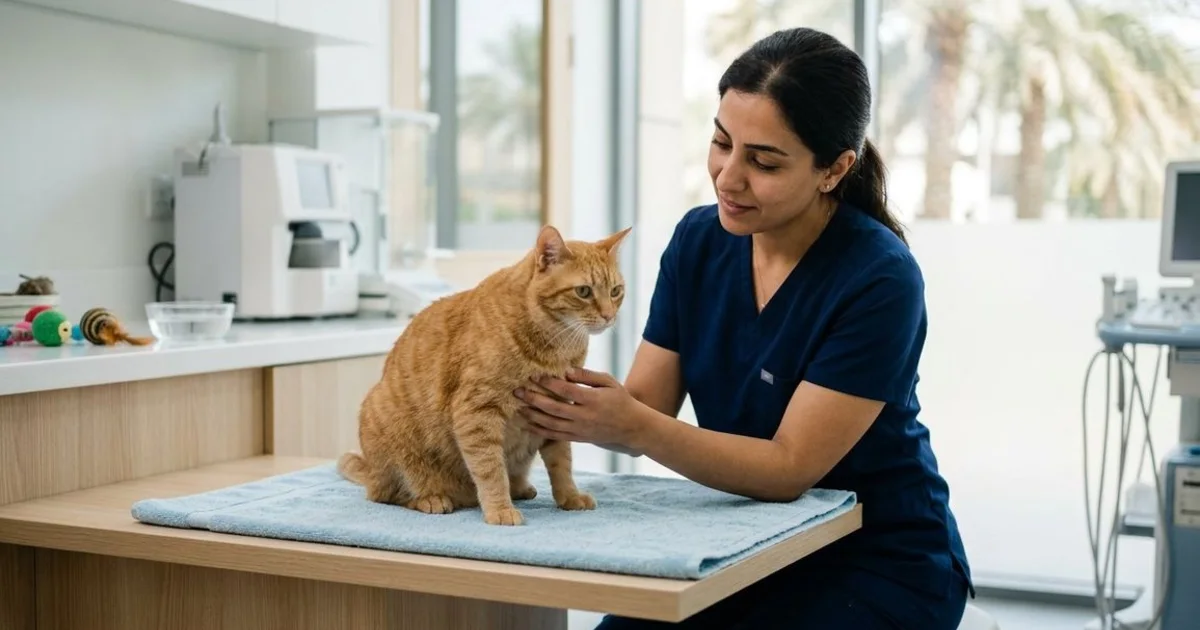
Choose the setting that can manage your pet safely. A stable pet needing routine coat care may do well at home. A painful, medically fragile, severely matted or highly reactive pet may benefit from grooming in a veterinary clinic where health concerns can be assessed.
Key takeaways
- Confirm whether the provider works inside your home or in a fitted mobile van because setup, drainage and containment differ.
- Ask how equipment is disinfected, which species-specific products are used and what signs make the groomer stop.
- Home surroundings can be familiar, but doorbells, children, other pets and slippery floors may add stress.
- Skin pain, wounds, ear discharge, severe mats or sudden behavior change should be checked by a veterinarian first.
Home grooming or in-clinic grooming: which fits your pet?
Neither setting is best for every animal. Match the environment to the task and the risk.
| Decision factor | Home or mobile service may suit | In-clinic grooming may suit |
|---|---|---|
| Travel response | Pet becomes unsettled during car travel | Pet travels comfortably or needs clinical support |
| Grooming need | Routine bath, brush, trim or nail care | Severe matting, painful skin, ear disease or medical fragility |
| Home environment | Quiet room, secure doors and no interruptions | Busy home, loose pets, children or poor containment |
| Handling | Pet accepts touch and routine grooming | Bite risk, intense fear, collapse history or pain response |
| Equipment | Provider brings safe water, drying, restraint and sanitation setup | Clinic has purpose-built tables, bathing, drying and veterinary access |
Familiar surroundings may help some pets, but they do not guarantee low stress. The AAHA behavior management guidelines support observing behavior, reducing fear triggers and using cooperative handling. Those principles apply in either setting.
What should a pet grooming home service include?
The booking confirmation should describe the work, limits and price before the groomer arrives. Do not assume that every package includes the same tasks.
A routine service may include:
- Coat assessment, brushing and detangling
- A species-appropriate bath and controlled drying
- A coat trim agreed with the owner
- Nail trimming and basic paw checks
- External ear and eye-area cleaning only when safe
- A visual check for lumps, wounds, parasites and skin irritation
Ear cleaning should not mean probing a painful ear canal. Anal-gland expression, medicated bathing, sedation, parasite treatment and care of infected skin are not generic extras. They need a clear veterinary reason and, where appropriate, veterinary direction.
Ask the provider to name any task they will not perform at home. Clear limits are a safety signal, not poor service.
A seven-point safety checklist before booking
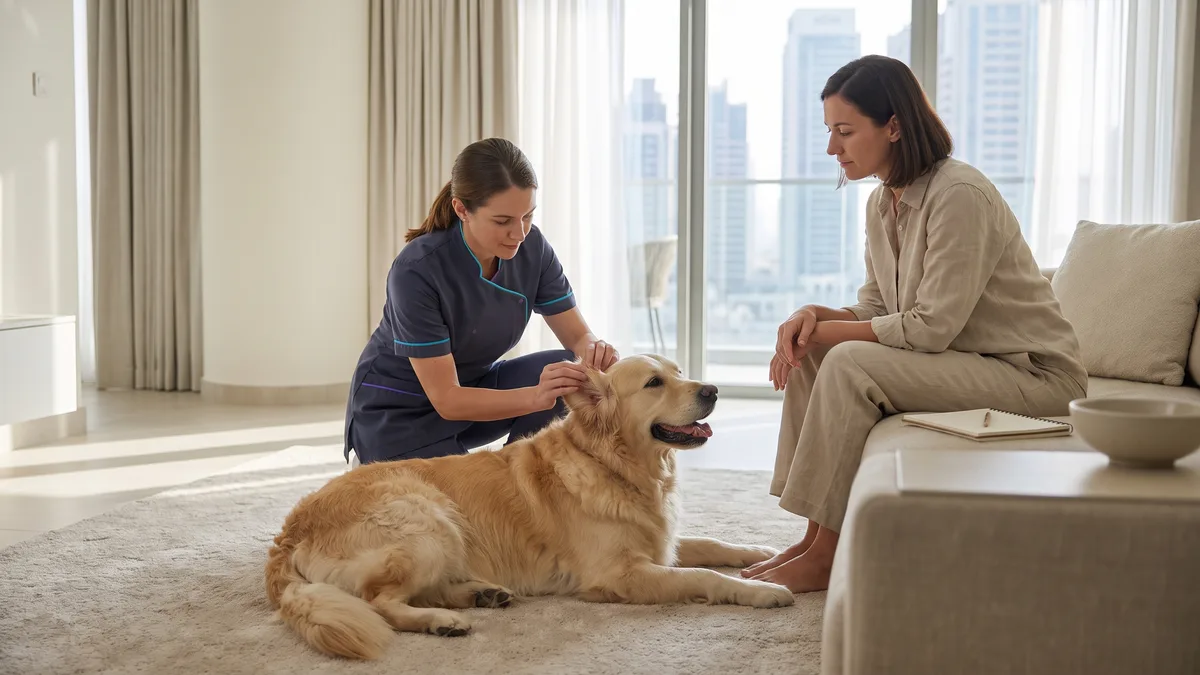
Use this checklist when comparing a mobile groomer, an in-home groomer or a clinic:
- Cat and dog experience: Ask how often the individual groomer handles your species, coat type and behavior concern.
- Behavior plan: Ask which stress signs make them pause, modify or end a session.
- Equipment hygiene: Confirm how clippers, combs, nail tools, tables, tubs and towels are cleaned between pets.
- Species-safe products: Request the product names and check that they are labeled for cats or dogs as appropriate.
- Temperature control: Ask how water, clipper blades and dryers are kept at safe temperatures.
- Containment: Agree which doors remain closed and how the pet is prevented from escaping during arrival and pack-up.
- Emergency plan: Confirm who contacts the owner, where the nearest veterinary clinic is and what happens after an injury or medical concern.
The RSPCA guide to choosing a dog groomer recommends checking safety procedures, hygiene, handling skills, behavior monitoring and first-aid knowledge. Ask practical questions about those skills instead of relying on labels such as "expert" or "fear free."
Prepare a safe grooming area at home
A quiet, contained workspace helps the groomer focus. Decide on the room before the appointment rather than moving an already nervous pet through the home.
- Secure balconies, garden gates, windows and external doors.
- Keep children and other pets in a separate room.
- Clear cords, breakable objects, food and cleaning chemicals.
- Provide non-slip footing and access to power or water only if the provider requested it.
- Tell building security or household staff when the groomer is expected.
- Keep the pet's medical and behavior information available.
- Show the groomer any lump, mat, sore area or handling trigger before work begins.
Do not feed a large meal just before an appointment if your pet becomes nauseated with handling. Do not withhold prescribed medicines or give calming medicine unless your veterinarian provided instructions for that specific visit.
Help an anxious pet without forcing the session
Preparation should build a positive association in small steps. It should not imitate a full groom or hold the pet down until it stops resisting.
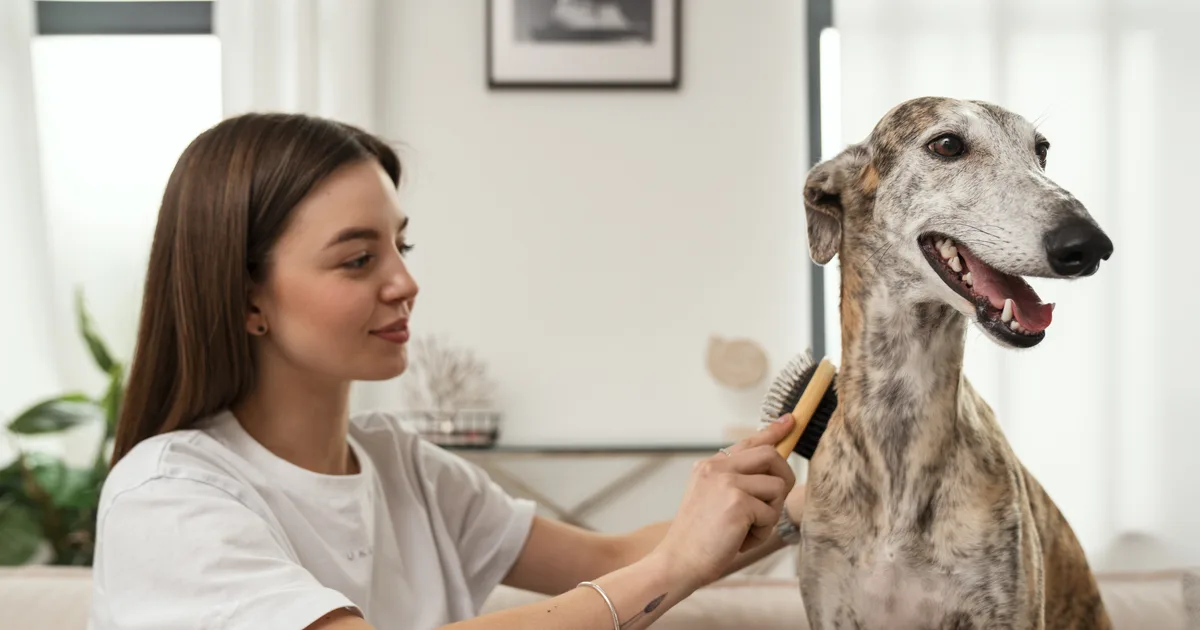
For dogs, practise standing briefly on a non-slip mat, gentle brushing and short paw touches. The Blue Cross dog grooming guide recommends early, gradual introduction to grooming and warns that frightened dogs need the problem addressed rather than pushed through it.
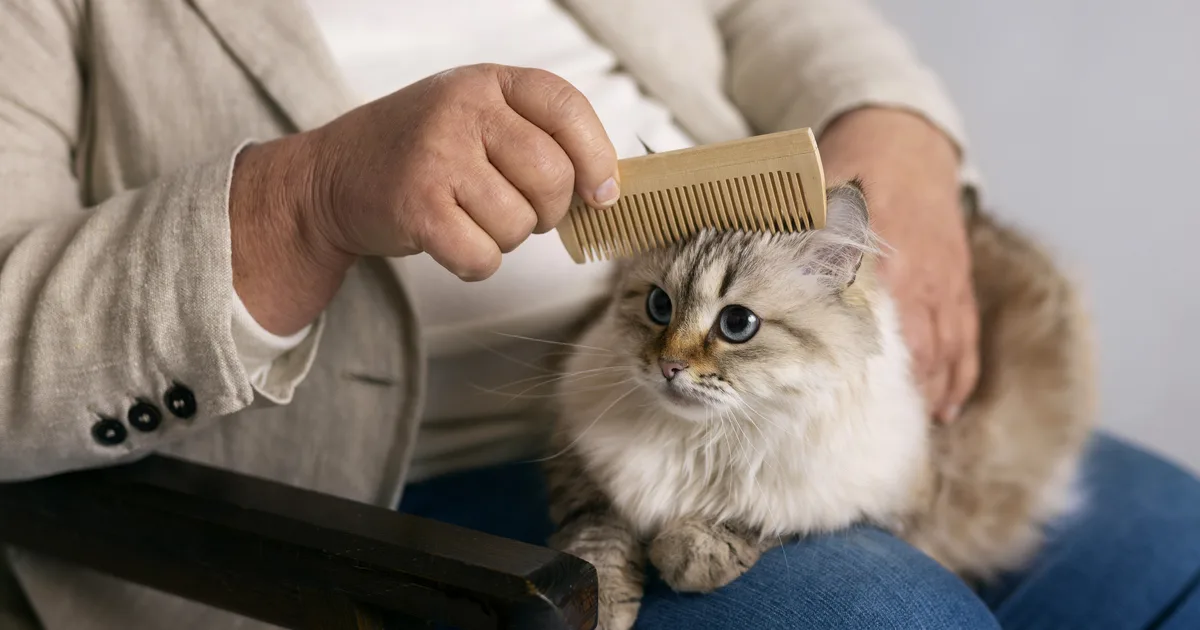
For cats, introduce the brush and handling over several short sessions. The RSPCA cat grooming guide advises stopping when a cat shows discomfort through twitching, tail swishing, growling or hissing.
For feline-specific coat, mat and handling questions, use the cat grooming Dubai safety guide when you compare home and clinic providers.
During the appointment, stop and reassess if the pet:
- Freezes, repeatedly tries to escape or cannot settle
- Growls, hisses, snaps, bites or redirects aggression
- Pants heavily when not hot or exercising
- Cries out or reacts sharply when one area is touched
- Becomes weak, collapses or has pale or blue gums
Collapse, breathing difficulty or blue gums is an emergency. Behavior that appears suddenly may also reflect pain, so arrange a veterinary checkup rather than assuming the pet is simply difficult.
Product safety for cats, dogs and sensitive skin
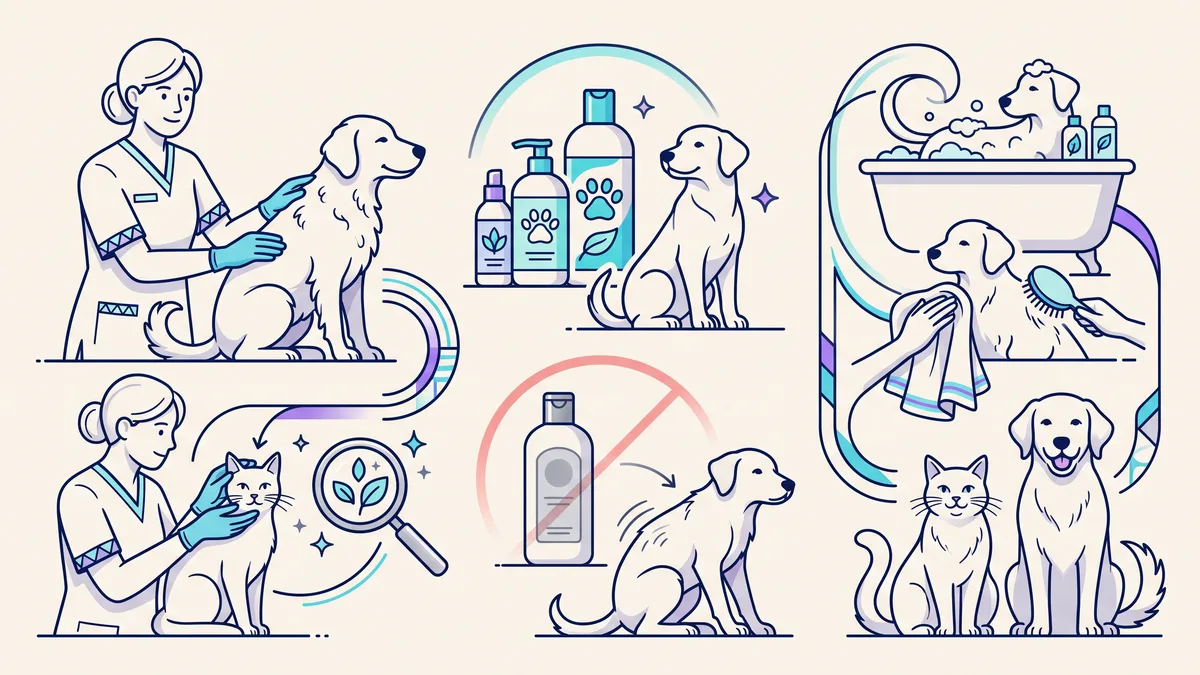
The product must match the species and the skin problem. "Organic," "herbal" or "natural" does not prove that a shampoo, fragrance or essential oil is safe.
The VCA shampoo selection guide advises using feline products for cats and dog products for dogs, not human shampoo. Cats may ingest residue during self-grooming, which makes correct selection and thorough rinsing especially important.
Tell the provider about:
- Known allergies or previous reactions
- Prescription shampoos or topical medicines
- Open wounds, hot spots, scabs or recent surgery
- Ear disease, eye disease or seizures
- Current flea or tick products
A groomer should not diagnose an allergy or select a medicated treatment without veterinary direction. If the skin is red, wet, crusted, painful or losing hair, use a pet dermatology service before booking routine grooming.
Mats, nails and ears: common risk points
Small tasks can cause injury when the pet moves or the anatomy is hidden.
Mats
Do not use scissors under a tight mat. Skin can be pulled into the knot and cut. Severe or widespread matting may need clippers, multiple sessions or veterinary support. Bathing first can make some mats tighter.
Nails
Nails contain a sensitive quick. Ask how bleeding is managed and whether the groomer stops when a pet cannot keep the paw safely still. Overgrown or curled nails that press into a pad need prompt veterinary attention.
Ears
External wiping is different from treating an ear problem. Bad odor, thick discharge, redness, swelling, head shaking or pain can indicate disease. Those signs need an examination, not deeper cleaning.
You can compare these safeguards with the case for vet-supervised grooming when your pet has a known health or handling concern.
When to postpone grooming and call a vet
Postpone a routine groom when handling or bathing could worsen pain, spread infection or hide a medical sign. The Cats Protection skin-problem guide lists redness, wounds, scabs, oozing, bald areas, excessive grooming and matting among changes that warrant veterinary attention.
Contact a veterinarian first for:
- A wound, abscess, hot spot, burn or recent surgical site
- Suspected ringworm or another contagious skin problem
- Fleas or ticks with marked irritation, weakness or pale gums
- Ear pain, discharge or a head tilt
- A new lump or swelling
- Severe matting attached close to sore skin
- Sudden aggression, reduced mobility or pain on touch
- Breathing difficulty, collapse or heat illness
Grooming can reveal a problem, but it cannot diagnose or treat the cause. Use a veterinarian-directed tick and flea treatment plan if parasites are found.
Questions to ask about price and service scope
Get the quote in writing and ask which conditions can change it. Useful questions include:
- Is travel included, and does the appointment occur in my home or in a mobile van?
- Which grooming steps are included for this coat and pet size?
- Are mat removal, behavior breaks or additional handling charged separately?
- What happens if the groom cannot be completed safely?
- Is there a cancellation fee if a veterinary concern is found?
- Who pays for accidental injury care, and is the business insured?
Do not choose solely by the lowest starting price. A transparent provider will explain what is included, what needs owner approval and when they would refer the pet to a veterinarian.
Frequently asked questions
Is home grooming less stressful than a salon?
It can be for some pets because travel is removed, but it is not guaranteed. Household noise, other animals, strangers entering the home and unfamiliar equipment may still cause fear. Judge the pet's response and the groomer's handling plan.
What should I provide for a home groomer?
Follow the provider's setup list. In general, provide a quiet secure area, non-slip footing and safe access to water or power if requested. Keep children and other pets separate.
Can a mobile groomer handle a severely matted pet?
It depends on the matting, skin condition, equipment and pet behavior. Tight, painful or widespread mats may be safer in a veterinary clinic, especially when medical assessment or prescribed sedation could be needed.
How often should I book pet grooming?
There is no fixed schedule for every pet. Coat type, shedding, lifestyle, age, nail growth, skin health and home brushing all change the interval. Ask for a plan after the groomer assesses the individual pet.
Can a groomer treat fleas or a skin allergy?
A groomer can notice parasites or skin changes, but diagnosis and treatment belong with a veterinarian. Avoid unprescribed pesticides, essential oils or medicated products.
About this guidance
This guide explains how to compare grooming settings and does not guarantee that home service suits every pet. If in-clinic care is the safer fit, book a grooming appointment and disclose medical or behavior concerns in advance.