Dog C-Section Dubai: Emergency Signs and Care
Sources and guidance checked
Medically reviewed by Dr. Hasan AlDahhak, DVM ·

If you are searching for a dog C-section in Dubai, labor may already be underway. Difficult birth, called dystocia, is an emergency when labor is not progressing or the mother becomes unwell. Contact a veterinarian immediately if there is green discharge before the first puppy, strong contractions for 20 to 30 minutes without a puppy, heavy bleeding, foul discharge, collapse, severe pain, fever, breathing difficulty, or obvious distress.
Do not give oxytocin, calcium, human pain medicine, food, or home remedies unless the examining veterinarian directs you. If urgent surgical care is recommended after assessment, review the pet surgery service in Dubai while following the clinic's immediate transport instructions.
Key takeaways
- Dystocia is a veterinary emergency. Do not wait for an online checklist to identify its cause.
- A C-section may be planned for a high-risk pregnancy or recommended urgently when natural delivery is unsafe or failing.
- Medication is appropriate only in carefully selected non-obstructive cases. It can be dangerous when a puppy is obstructed.
- Surgery and anesthesia carry real maternal and newborn risks, so timing and patient-specific assessment matter.
- Recovery includes incision care, safe nursing, nutrition, medication, and close observation of both mother and puppies.
Call a veterinarian now for these difficult-birth signs
Dystocia means labor is difficult or has stopped progressing. The Cornell University guide to dystocia in dogs advises immediate veterinary contact for several owner-visible warning signs.
| Warning sign | Why it cannot wait |
|---|---|
| Green discharge before the first puppy | May indicate placental separation before delivery |
| Strong contractions for 20 to 30 minutes without a puppy | Can indicate obstruction or failed progression |
| Weak contractions that continue without delivery | The uterus may not be moving puppies effectively |
| A long interval with puppies still expected | The mother and remaining puppies need assessment |
| Heavy bleeding or foul-smelling discharge | May signal hemorrhage, tissue damage, infection, or fetal compromise |
| Collapse, fever, marked weakness, severe pain, or breathing difficulty | The mother's condition may be unstable |
| A puppy visible but not delivered | Physical obstruction may be present |
Call the nearest available veterinary emergency service and begin travelling as directed. The clinic may ask about mating dates, temperature changes, discharge, contraction timing, puppies already delivered, previous births, and any known imaging results. Bring those records if they are ready, but do not delay departure to collect them.
Use the emergency veterinary care page for urgent routing information. Never rely on a routine online booking form when the mother is in active distress.
Why might a veterinarian recommend a C-section?
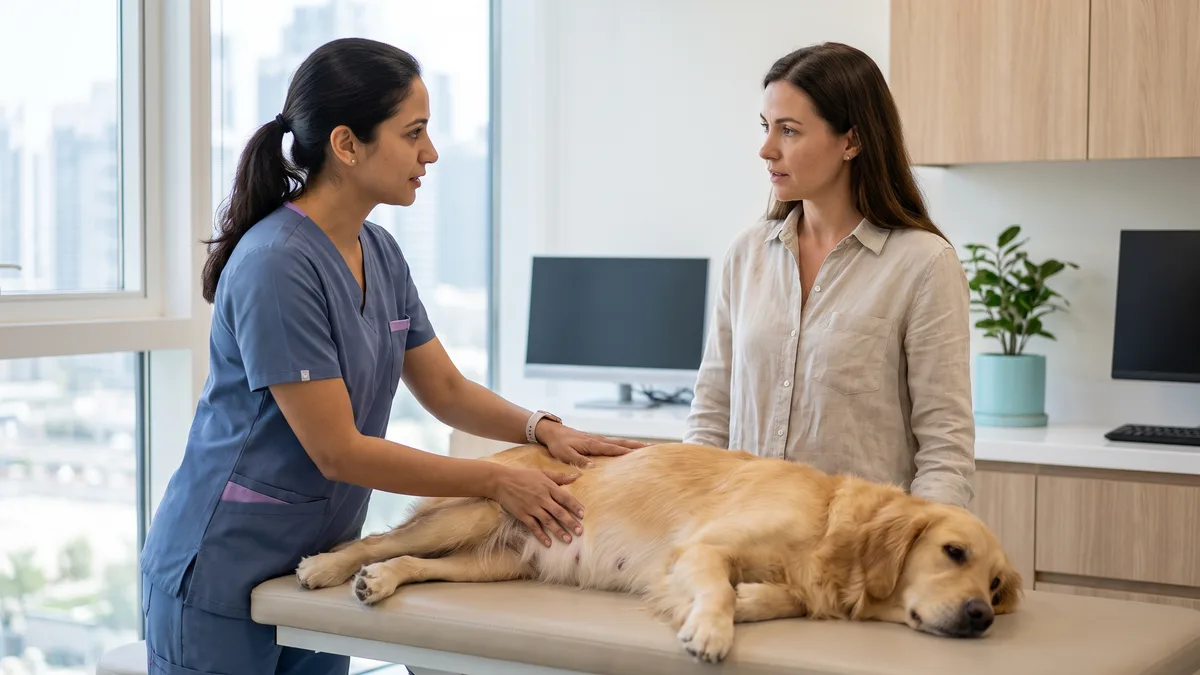
A veterinarian may recommend a C-section when vaginal delivery poses more risk than surgery. The cause can involve the mother, a puppy, or both.
The Merck Veterinary Manual dystocia review distinguishes obstructive causes from non-obstructive causes. Obstruction can involve fetal position, size, pelvic anatomy, or a problem in the birth canal. Non-obstructive dystocia can involve inadequate uterine contractions or maternal illness.
Common decision factors include:
- evidence that a puppy cannot pass through the birth canal
- fetal distress or concern that puppies are becoming compromised
- maternal exhaustion, illness, pain, or instability
- labor that has failed to progress
- failed medical management in a case where medication was initially appropriate
- a known high-risk pregnancy for which the veterinary team planned surgery in advance
A previous C-section does not automatically determine the next delivery. The original cause, maternal health, anatomy, litter, and current pregnancy all affect the plan.
How does the veterinary team assess dystocia?
Assessment identifies whether delivery can continue safely and how quickly intervention is needed. The exact steps depend on the mother's stability and stage of labor.
The veterinarian may combine:
- pregnancy and labor history
- physical and obstetrical examination when safe
- assessment of the mother's circulation, temperature, pain, hydration, and general condition
- imaging to assess fetal number, position, size, or heart activity
- blood testing when it can change anesthesia, surgery, or stabilization decisions
- monitoring of puppies already delivered
Preoperative tests are selected for the patient. They are not a fixed package. The pet diagnostic services guide explains why examination findings determine which tests are useful.
Do not attempt an internal examination or pull on a visible puppy without direct veterinary instruction. Incorrect manipulation can injure the mother and puppy.
What happens during a canine C-section?
A canine C-section is abdominal surgery performed under general anesthesia. The team prepares and monitors the mother, delivers the puppies through the uterus, provides newborn support, and closes the surgical sites. The details and duration vary with the cause of dystocia, maternal stability, number and condition of puppies, and any complications.
| Stage | What the team is trying to achieve | What varies by patient |
|---|---|---|
| Stabilization | Support the mother's breathing and circulation | Fluids, oxygen, urgency, and additional treatment |
| Anesthesia | Provide unconsciousness, pain control, and safe operating conditions | Drug selection and monitoring plan |
| Delivery | Remove puppies efficiently and address the uterus | Surgical findings and whether other treatment is required |
| Newborn support | Warm, clear airways, stimulate, and assess each puppy | Level and duration of resuscitation |
| Recovery | Monitor the mother as anesthesia wears off | Pain relief, nursing supervision, and discharge timing |
No article can responsibly promise that the procedure is risk free or guarantee that every puppy will survive. A retrospective study of emergency C-sections in 78 dogs supports the importance of prompt surgical management in obstructive emergencies, but its findings do not predict an individual dog's outcome.
UAE law also sets a clear welfare boundary. Federal Law No. 16 of 2007 Concerning the Protection of Animals requires painful treatment interventions to be performed by a veterinarian or specialist and surgical interventions to use appropriate anesthesia in a medically equipped place.
Preparing for a planned C-section
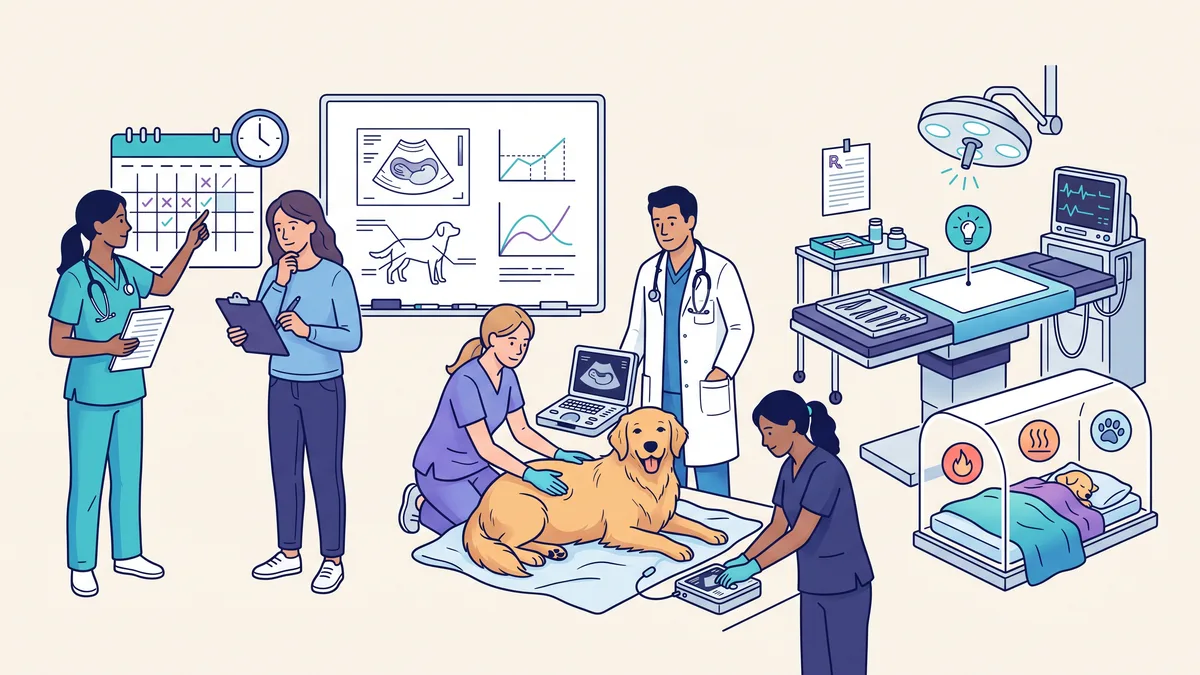
A planned C-section still needs an individual written plan. Ask the treating veterinarian when to call, where to go outside routine hours, what signs change the timing, and what to do if labor starts before the scheduled date.
Useful preparation includes:
- Keep the hospital and transport plan ready.
- Save pregnancy records, imaging, medicine details, and the expected delivery window.
- Follow only the clinic's instructions about food, water, and medicines.
- Prepare a warm, clean, draft-free area for supervised recovery and nursing.
- Arrange help to observe the mother and puppies after discharge.
- Ask who will support newborns while the surgeon treats the mother.
Do not apply a generic fasting schedule from the internet. Labor, diabetes, age, illness, and surgical timing can change instructions.
Care of the mother and puppies after discharge
The mother and puppies need close supervision after a C-section. Follow the discharge plan exactly and contact the treating team if any instruction is unclear.
Monitor the mother for:
- increasing pain, restlessness, weakness, or collapse
- bleeding, discharge, fever, vomiting, or poor appetite
- incision redness, swelling, opening, discharge, or persistent licking
- painful, hot, hard, or abnormal mammary glands
- poor interest in the puppies or difficulty allowing safe nursing
- tremors, stiffness, seizures, or other sudden neurological signs
Monitor each puppy for warmth, breathing, nursing, activity, and weight trend using the veterinary team's method. Newborns can deteriorate quickly. A cold, weak, continuously crying, poorly nursing, or breathing-abnormally puppy needs prompt advice.
The mother may be sleepy or uncoordinated during early recovery. Supervise nursing so a puppy is not trapped beneath her. Give only prescribed medicines and never use human pain relief. For broader incision and activity guidance, use the pet surgery recovery guide alongside the individual discharge sheet.
Questions to ask the surgical team
Ask questions before a planned procedure or as soon as the emergency is stable enough for a discussion:
- Why is surgery recommended in this case?
- What are the main risks for the mother and puppies?
- What assessment or stabilization is needed first?
- How will anesthesia and recovery be monitored?
- Who will assess and support the newborns?
- Could another procedure become necessary based on surgical findings?
- What will discharge depend on?
- Which signs mean an immediate return?
- When is the first recheck?
- What is included in the written estimate?
Frequently asked questions
Is a dog C-section always an emergency?
No. Some are planned because the pregnancy is considered high risk. Others become urgent when labor fails, obstruction is suspected, puppies show signs of compromise, or the mother becomes unwell.
Is a C-section safe for every dog?
No surgery is risk free. The balance depends on the mother's condition, the puppies, the cause of dystocia, anesthesia, timing, and available newborn support. In some cases, delaying surgery carries greater risk than proceeding.
Can medicine help a dog deliver without surgery?
Only in selected non-obstructive cases after veterinary assessment. Drugs that stimulate contractions can be dangerous if a puppy is obstructed, so owners should never give them without direct veterinary supervision.
How long does a dog C-section take?
There is no responsible universal time. Stabilization, anesthesia, fetal number and condition, surgical findings, newborn support, and recovery all affect the timeline.
Can a dog give birth naturally after a previous C-section?
Possibly, but it is case specific. The veterinarian considers the reason for the previous surgery, anatomy, breed, maternal health, current litter, and pregnancy findings before recommending a delivery plan.
About this guidance
This article provides general education and cannot diagnose dystocia or replace immediate veterinary assessment. It was materially updated on 23 August 2026 using Merck Veterinary Manual, Cornell University, peer-reviewed surgical evidence, and official UAE legislation.
For planned care, book a surgical consultation with Paw Sisters Veterinary Clinic. During difficult labor or maternal distress, contact the nearest available emergency veterinary service immediately rather than waiting for a routine appointment.