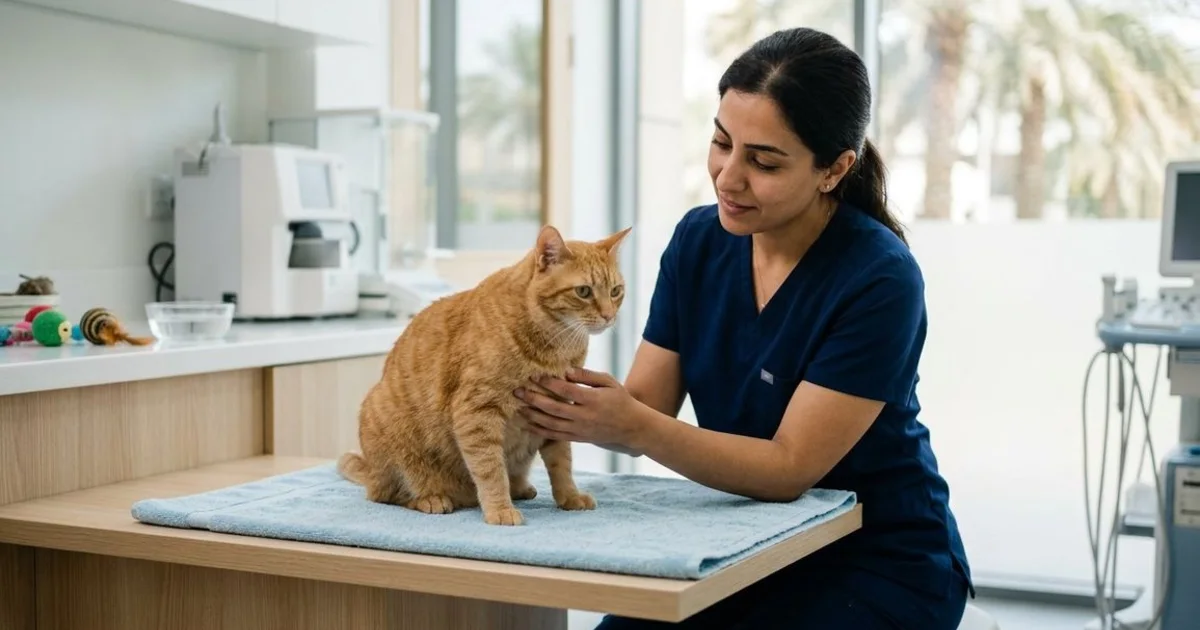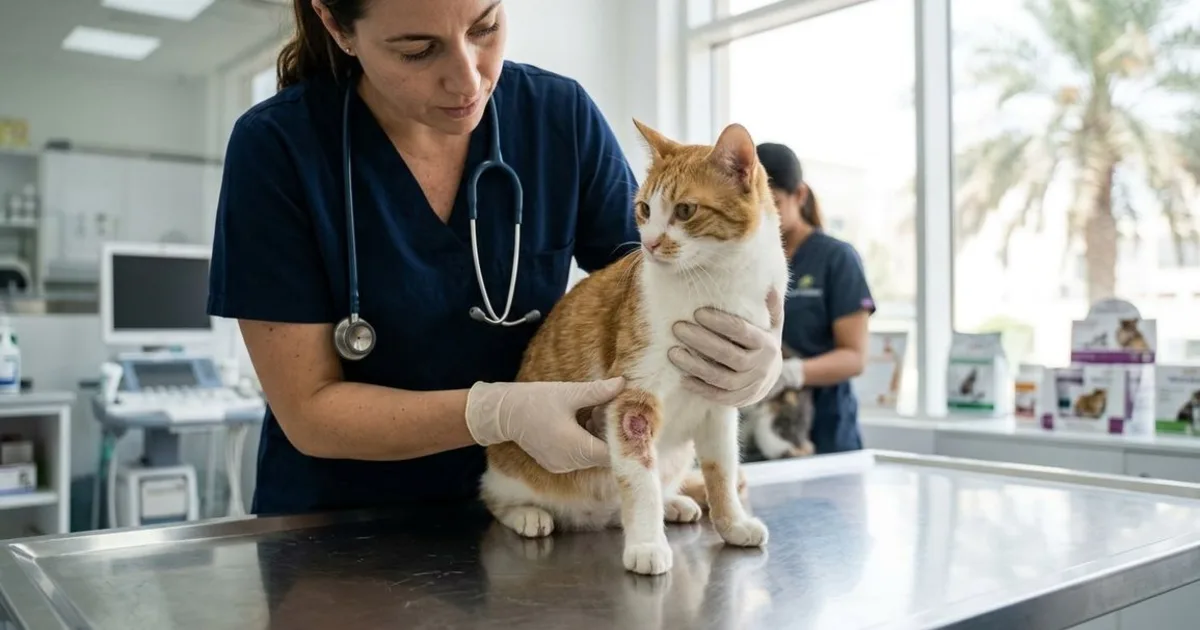
Pet Heat Stress in Dubai: Prevention and First Aid
Sources and guidance checked
Medically reviewed by Dr. Hasan AlDahhak, DVM ·
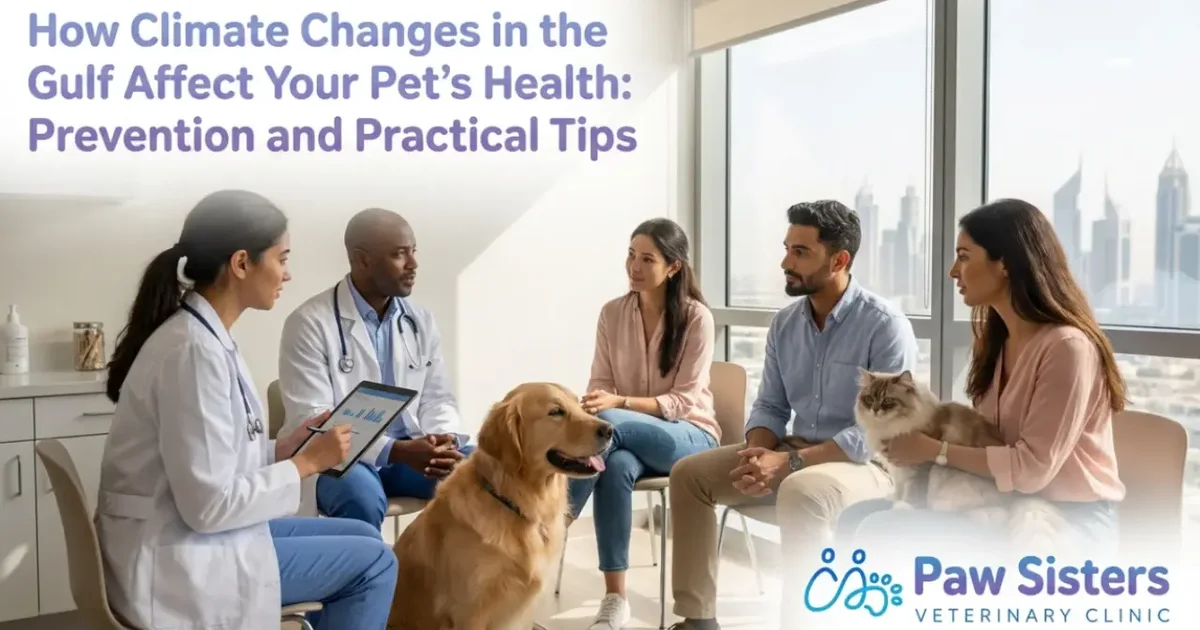
Heat stress in pets in Dubai can progress from heavy panting and slowing down to confusion, vomiting, weakness, collapse or seizures. Stop exertion and move the animal into shade or air conditioning. For an overheated dog, start cooling immediately with water cooler than the dog and moving air, call a veterinary hospital while cooling, then continue cooling during prompt transport. Do not delay cooling while waiting for instructions.
Cats, birds, rabbits and other species need immediate veterinary advice because dog immersion guidance may not be safe for them. A preventive veterinary checkup can identify heart, breathing, weight or mobility factors that increase individual heat risk.
Key takeaways
- There is no universal safe walking hour. Check current temperature, humidity, air quality, shade and the actual surface before each outing.
- Flat-faced, overweight, very young, older and medically vulnerable pets need extra caution, but any pet can overheat.
- Collapse, confusion, repeated vomiting, seizures, inability to stand or breathing distress mean emergency care now.
- Cars, enclosed balconies, unventilated rooms and hot pavement can become dangerous even when the outing is brief.
What is the difference between heat stress and heatstroke?
Heat stress is an early warning that the animal is struggling to lose body heat. The pet may pant harder, seek shade, slow down or refuse to continue. Heatstroke is a life-threatening failure of temperature control that can damage multiple organs.
The boundary is not safe to diagnose at home. If signs are marked, rapidly worsening or accompanied by weakness, altered awareness, vomiting or abnormal breathing, treat the situation as an emergency. The AAHA heatstroke guide describes heatstroke as a medical emergency and lists weakness, poor coordination, confusion, vomiting, collapse and seizures among warning signs. Dog owners can use the Dubai dog heatstroke guide for dog-specific cooling and transport detail.
| Sign | Risk level | What to do |
|---|---|---|
| Seeking shade, slowing down, heavier panting | Possible early heat stress | Stop activity, move indoors, offer cool water and observe closely |
| Thick drool, weakness, vomiting or poor coordination | High risk | Call a veterinary hospital and begin transport |
| Confusion, collapse, seizure or inability to stand | Emergency | For dogs, start water cooling before transport and maintain airflow while travelling; call ahead |
| Laboured breathing, blue or very pale gums | Emergency | Minimise handling and go to the nearest available emergency hospital |
| Open-mouth breathing in a cat | Emergency warning | Keep calm, limit handling and seek immediate care |
What should you do if a pet is overheating?
Stop exertion immediately and move the animal to an air-conditioned space or shade. For dogs, cooling should begin before transport, not after arrival. The Royal Veterinary College's How to Cool Hot Dogs guidance reports that cold-water immersion was the fastest studied method for young, healthy, conscious dogs. Use whatever water is available that is cooler than the dog rather than delaying first aid.
For an older, unconscious, unwell or flat-faced dog, pour or spray water over the body and add moving air from a fan or air conditioning. Keep the airway clear and prevent the dog from inhaling water. Do not wrap the dog in wet towels because they can trap heat as they warm, and do not force drinking water into an animal that is confused, vomiting or struggling to breathe. Call the receiving hospital while cooling, cool the vehicle before loading, and continue airflow during transport. For a cat or another species, move it to a cool ventilated place, minimise stressful handling and get species-specific veterinary instructions immediately.
Even when the pet seems to improve, veterinary assessment may still be needed because organ injury can continue after the visible signs ease. The clinic receiving the pet should decide when cooling has gone far enough and what monitoring is required. For red-flag signs, use the emergency veterinary service information while travelling to an available hospital.
Check live Dubai conditions before going outside
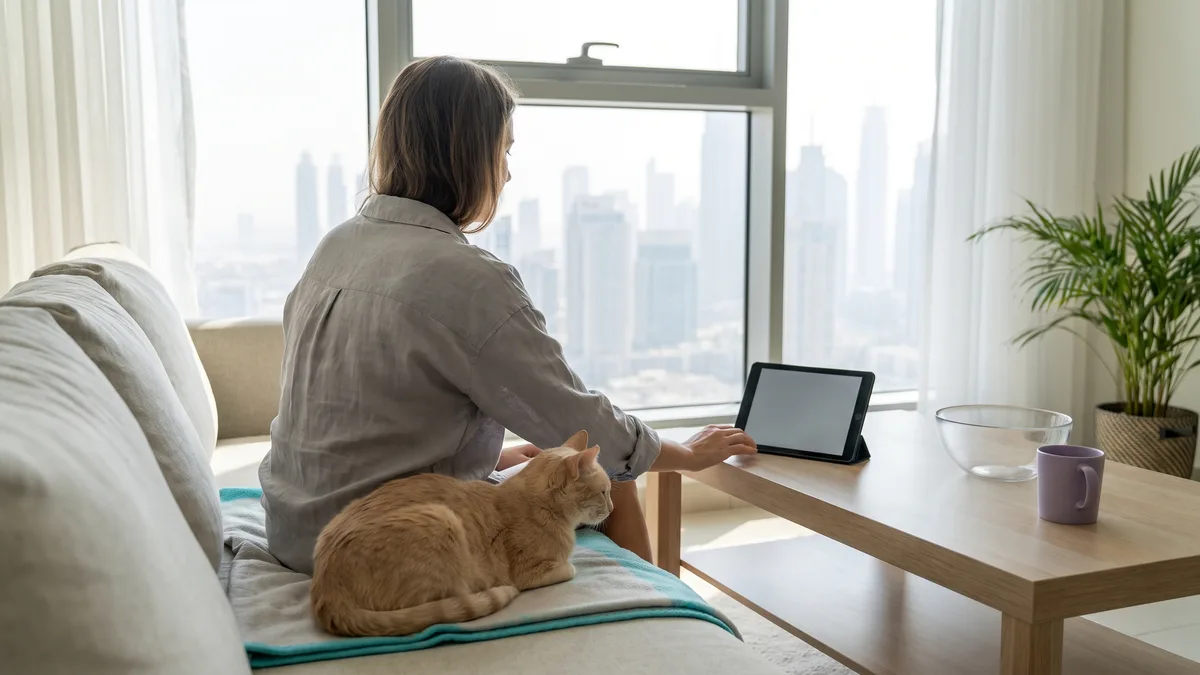
Use current local conditions, not a fixed schedule copied from social media. The UAE National Center of Meteorology provides live Dubai weather information and a national air-quality platform. Temperature is only one part of the decision.
| Check | Why it matters | Safer response when risk is high |
|---|---|---|
| Air temperature | Hot air reduces the body's ability to release heat | Shorten or postpone outdoor activity |
| Humidity | High humidity can make evaporative cooling less effective | Reduce exertion and monitor breathing closely |
| Direct sun and shade | Radiant heat changes conditions along the route | Choose continuous shade or stay indoors |
| Surface temperature | Pavement can injure paw pads even when air feels tolerable | Test the route and use a cooler surface |
| Air quality and dust | Poor conditions may aggravate some breathing problems | Move enrichment indoors, especially for vulnerable pets |
| Pet's condition today | Illness, fatigue and medicine can change tolerance | Skip the outing and call the vet if unwell |
Forecasts do not reveal every pavement, car park or exposed path. Check the actual walking surface with the back of your hand for several seconds. If it is too hot to hold comfortably, avoid it. The Cornell summer heat guide also recommends adjusting exercise and checking surfaces rather than relying on air temperature alone.
Plan safer outdoor activity without fixed hours
Choose the coolest available conditions and reassess immediately before leaving. Keep outings shorter, slower and closer to home than in mild weather. Carry water, stay near shade and turn back at the first change in breathing, pace or behaviour.
Dogs do not need to finish a route. Use short toilet breaks and shift exercise to indoor play when conditions are unsafe. The summer dog-walking guide offers route and activity ideas, while the hot pavement paw guide focuses on surface decisions and pad care.
Cats should not be placed on a hot balcony or encouraged to exercise in a warm enclosed room. Birds, rabbits and other small pets also need species-specific temperature, ventilation and transport planning. Ask an exotic-pet veterinarian rather than applying dog-cooling advice to every species.
Hydration, shade and transport safety
Provide fresh water in more than one accessible location. Bring water for outdoor activity and travel, but do not rely on drinking alone to prevent heat illness. A pet can overheat even when water is available.
Never leave an animal in a parked vehicle. Air conditioning must be running reliably with an adult present. A cracked window is not protection. Plan for parking, delays and carrier ventilation before starting the journey.
At home, make sure pets can move away from sunny windows and reach a cooler area. Check outdoor kennels, balconies and utility rooms through the day because shade and airflow change. AAHA's heat safety planning advice highlights water, shade, schedule changes and vehicle safety. If swimming is part of the cooling plan, first review the dog pool-safety checklist because water access does not remove heat, fatigue or drowning risk.
Which pets need extra precautions?
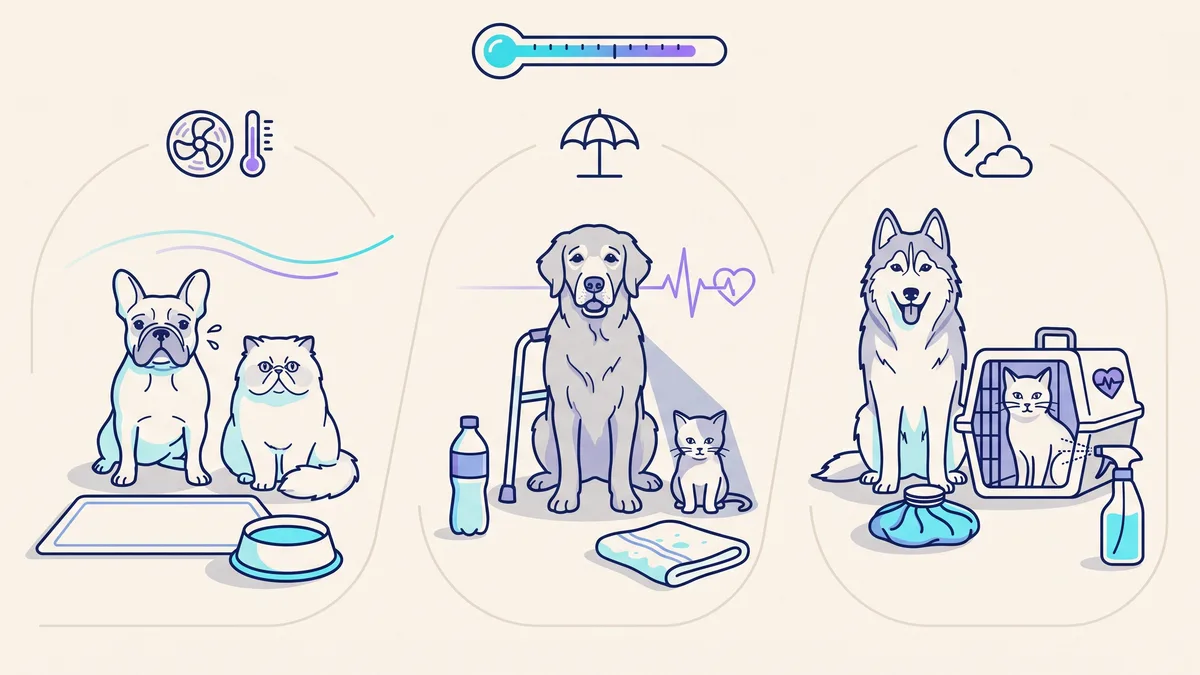
Flat-faced dogs and cats can have less effective airflow and panting. Overweight pets retain more heat and may have reduced exercise tolerance. Puppies, kittens and older animals regulate temperature less reliably, while heart, airway, lung, kidney or neurological disease can narrow the safety margin.
Other factors include thick coat, poor fitness, anxiety, pain, recent illness and medicines that affect temperature control or hydration. Do not shave a double-coated or long-coated pet as a universal solution. Coat care should fit the species and coat type, and clipping does not remove the need for shade and activity limits.
Any pet can still be affected. A young, fit dog running hard in humidity may overheat, while a high-risk dog may struggle during a short toilet break.
What can pets do indoors on high-risk days?
Replace outdoor distance with several short indoor sessions. Use scent searches, food puzzles made from the measured meal, gentle training, tug or chase games that match the pet's mobility. Cats may enjoy wand play, cardboard boxes and rotated climbing or hiding options.
Watch for panting, coughing, limping or distress indoors too. Stop before the pet is exhausted. Pets that become anxious when routines change may benefit from a predictable indoor schedule and gradual changes.
Check paws and skin after an outing
Inspect paw pads for redness, darkened areas, blisters, raw skin or unusual licking. Do not apply ice, human burn creams, disinfectants or adhesive dressings without veterinary direction. Move the pet off the hot surface and call a veterinarian if pain or damage is present.
The MSD Veterinary Manual's hot-weather safety overview includes hot-surface injury prevention as part of summer protection. Coat or skin redness, itching and ear trouble may have causes unrelated to heat, so persistent signs need assessment rather than repeated bathing or home treatments.
Frequently asked questions
What are the first signs of heat stress in pets?
Heavier panting, seeking shade, slowing down, restlessness or refusing activity can be early warnings. Stop the activity and cool the environment before signs progress.
What heat signs mean emergency care now?
Confusion, repeated vomiting, marked weakness, poor coordination, collapse, seizures, inability to stand or breathing distress require immediate veterinary care.
Should I use cold water on an overheated dog?
Yes. Start with water cooler than the dog instead of waiting for tepid water. Cold-water immersion is appropriate for a young, healthy, conscious dog when it can be done safely, while water plus moving air is suitable for older, unconscious or unwell dogs. Keep the airway clear, call the receiving hospital while cooling and cool before transport.
What is the safest time to walk a dog in Dubai?
There is no fixed hour that is safe every day. Check live weather, humidity, sun, shade and the actual surface, then account for the individual dog's health and activity.
Does shaving prevent heatstroke?
Not reliably. Coat function differs by species and coat type, and shaving does not remove heatstroke risk. Ask a veterinarian or qualified groomer about appropriate coat care.
About this guidance
This article is general safety education, not a temperature threshold or substitute for emergency triage. It was materially updated on 23 August 2026 using AAHA, Cornell University, MSD Veterinary Manual and UAE National Center of Meteorology information.
To review your pet's individual heat risk, book a climate-aware health check with Paw Sisters Veterinary Clinic. For collapse, confusion, seizures or breathing distress, go to the nearest available emergency veterinary hospital without waiting for an online reply.