
Dog Skin Allergy Treatment: Tests and Relief in Dubai
Sources and guidance checked
Medically reviewed by Dr. Hasan AlDahhak, DVM ·

Dog skin allergy treatment works best when the cause is investigated before the itch is repeatedly suppressed. Fleas, mites, bacterial or yeast overgrowth, food reactions, environmental allergy and contact irritation can look similar. A veterinarian may therefore combine the history, skin tests and treatment trials rather than rely on one definitive allergy test.
For a dog with recurring itch, ear trouble or paw licking, start with a Dubai pet dermatology assessment. The aim is to relieve discomfort now, identify treatable lookalikes and build a plan that reduces future flares.
Emergency warning: Facial swelling, widespread hives, breathing difficulty, collapse or repeated vomiting after a suspected exposure can signal a severe allergic reaction. Go to an emergency veterinary service rather than waiting for a routine skin appointment.
Key Takeaways
- There is no single test that proves every type of dog allergy.
- Parasites and secondary skin or ear infections should be checked because they can cause or amplify itch.
- A food allergy is assessed with a strict veterinary elimination diet followed by a controlled challenge, not a commercial blood or saliva panel.
- Intradermal or serum allergy testing is mainly used to select environmental allergens for immunotherapy after other causes have been assessed.
- Long-term control often combines trigger management, consistent parasite prevention, skin-barrier care and veterinarian-selected treatment.
What Could Be Causing the Itch?

An itchy dog may have more than one problem at the same time. The AAHA allergic skin disease guidelines recommend a structured workup that considers ectoparasites, infection, food allergy and environmental allergy. The pattern below helps organize a consultation, but it cannot diagnose the cause at home.
| Possible cause or lookalike | Clues worth reporting | Common first checks |
|---|---|---|
| Fleas or flea allergy | Itch around the back, tail base or thighs; flea exposure may not be obvious | Coat examination, flea-comb findings and parasite-control history |
| Mites | Intense itch, crusts, hair loss or affected pets and people in the home | Skin sampling and, in some cases, a veterinarian-directed treatment trial |
| Bacterial or yeast overgrowth | Odour, greasy skin, redness, pustules or recurrent ear discharge | Skin or ear cytology |
| Food allergy | Nonseasonal itch, recurrent ear or skin signs, sometimes digestive signs | Strict elimination diet and controlled food challenge |
| Environmental allergy | Recurrent paw, face, ear, armpit or belly itch after other causes are addressed | Clinical history, examination and rule-out process |
| Contact irritation | Signs limited to areas touching a cleaner, plant, fabric or grooming product | Exposure history and improvement after safe avoidance |
Breed, age of onset, seasonality, travel, boarding, grooming products, diet and response to previous medicines all provide useful clues. Take clear photos of flares and bring the names of foods, treats, supplements and parasite products used.
Signs That Merit a Veterinary Skin Assessment
Book an examination when itch persists, keeps returning or disrupts sleep and normal activity. Relevant signs include:
- frequent scratching, chewing, rubbing or paw licking
- red, thickened, darkened, flaky or greasy skin
- hair loss, scabs, sores, pustules or unpleasant odour
- repeated head shaking or ear redness and discharge
- hot spots or moist, painful patches
- digestive signs occurring alongside chronic skin trouble
Open wounds, rapidly spreading painful lesions, marked lethargy or a dog that cannot settle deserve prompt attention. A circular patch is not automatically allergy: contagious fungal disease is one reason a veterinarian may investigate further. Review practical precautions in this guide to ringworm in pets.
How Vets Diagnose Itchy Skin
The diagnostic sequence changes with the dog, but it commonly starts with the least invasive checks that can find treatable causes. The Merck Veterinary Manual overview of small-animal skin diagnosis describes history, lesion distribution and targeted testing as connected parts of the workup.
1. History and full skin and ear examination
The veterinarian maps where signs occur, checks the ears and feet, and asks when the problem began. A medication that reduced itch does not by itself identify the underlying cause.
2. Tests for parasites and infection
Depending on the lesions, this can include a flea comb, skin scraping, hair examination, cytology or culture. Cytology helps show whether bacteria or yeast are contributing to the flare. Because flea allergy may occur with limited visible evidence, the Companion Animal Parasite Council flea guidance emphasizes consistent control for all susceptible pets in a household. Owners can also review tick and flea prevention in Dubai.
3. A properly controlled food trial when indicated
A food trial uses a veterinarian-selected novel or hydrolysed diet with no unapproved treats, chews, flavoured medicines or table food. If signs improve, the previous diet is reintroduced in a controlled challenge to see whether signs return. The Merck Veterinary Manual food-allergy guidance explains why elimination followed by challenge is needed for diagnosis.
Do not change foods repeatedly before the appointment. That can complicate diet selection. Bring a complete diet history, including rewards and supplements, and discuss any nutrition change with the veterinarian. This dog and cat nutrition guide can help you prepare questions.
4. Environmental allergy testing for a specific purpose
Intradermal testing and allergen-specific serum testing do not independently prove that environmental allergy caused the symptoms. After the clinical diagnosis and rule-outs, they can help select allergens for allergen-specific immunotherapy. The AAHA owner guide to dog allergy testing also distinguishes food trials from environmental allergy testing.
| Test or trial | What it can help answer | What it cannot establish alone |
|---|---|---|
| Skin or ear cytology | Whether bacteria, yeast or inflammatory cells are present in the sample | The original trigger for every flare |
| Skin scraping or related sampling | Whether certain mites or other skin abnormalities are found | Environmental or food allergy |
| Elimination diet plus challenge | Whether food is contributing when the protocol is completed correctly | Which environmental allergen matters |
| Intradermal or serum allergen testing | Which environmental allergens may be suitable for immunotherapy | A stand-alone diagnosis of atopic dermatitis |
What Dog Skin Allergy Treatment May Include
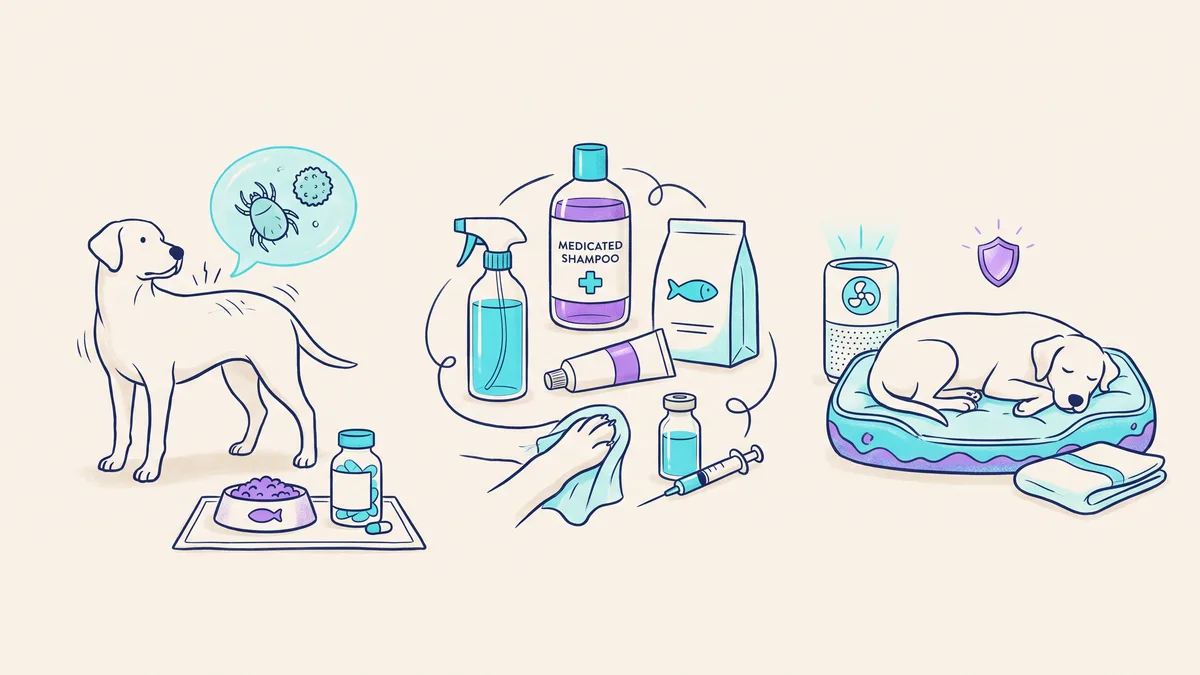
Treatment is individualized around severity, test findings, other illnesses and whether the goal is rapid flare control or long-term prevention. It may combine several of the following.
Relieving itch safely
A veterinarian may choose prescription anti-itch or anti-inflammatory therapy after assessing the dog. The right option depends on age, examination findings, concurrent disease and other medicines. Do not give human antihistamines, painkillers, steroid creams or leftover prescriptions without veterinary direction.
Treating secondary infection
Bacterial and yeast overgrowth can intensify itch. Treatment may be topical, systemic or both based on lesion extent and test findings. Repeated empirical treatment without checking why infections recur can miss the underlying pattern.
Controlling parasites consistently
The household plan needs to suit every pet species, weight and health status. Never apply a dog product to a cat unless the product is specifically approved for cats. Ask how environmental management fits with the veterinary prevention plan.
Supporting the skin barrier
Veterinary shampoos, mousses, rinses or other topical products may be recommended for cleansing, infection control or barrier support. Product choice and bathing frequency depend on the diagnosis. Overbathing or using fragranced human products can aggravate irritated skin.
Managing food-responsive disease
If the food challenge supports the diagnosis, the veterinarian can help choose a nutritionally complete long-term diet that avoids the relevant ingredient or formulation. An improvement during a diet trial should still be interpreted with the planned challenge unless there is a medical reason not to perform it.
Considering allergen-specific immunotherapy
For appropriately diagnosed environmental allergy, customized immunotherapy may be considered as a long-term management tool. Response varies, monitoring is needed and short-term flare control may still be required.
A Practical Flare Plan for Dubai Dog Owners
- Stop self-directed product changes. Avoid introducing new shampoos, foods and supplements all at once.
- Record the pattern. Photograph affected areas and note walks, grooming, boarding, diet changes and parasite doses.
- Prevent further trauma. Discourage licking or chewing with a veterinarian-approved barrier while arranging care.
- Attend the assessment. Bring previous records and packaging or photos of all current products.
- Follow one plan consistently. Complete prescribed treatment and attend rechecks so response can be interpreted.
- Plan for recurrence. Ask which early signs should trigger home measures, a routine recheck or urgent care.
A routine veterinary checkup is also a useful time to review parasite prevention, diet and early skin changes before a severe flare develops.
Frequently Asked Questions
Is there one definitive test for dog skin allergies?
No. Diagnosis usually combines history, examination, tests for parasites and infection, and targeted trials. Environmental allergen testing is generally used after the clinical diagnosis to help formulate immunotherapy.
Can a blood test diagnose my dog's food allergy?
Commercial blood, hair and saliva panels are not a substitute for a properly controlled elimination diet followed by a food challenge. Your veterinarian should design the diet trial and explain how to avoid accidental exposures.
Why does my dog's itching return after medicine?
An anti-itch medicine can control a symptom without removing fleas, infection, a food trigger or environmental exposure. Recurrence is a reason for reassessment, not simply repeated unsupervised medication.
Can I treat an itchy dog with human allergy medicine?
Do not give a human product unless a veterinarian who knows your dog advises it. Ingredients, combinations, dose requirements and interactions can make self-treatment unsafe or ineffective.
When should an itchy dog see a dermatologist?
Consider referral or a focused dermatology visit when signs are recurrent, severe, treatment-resistant, associated with repeated infections or require a structured food trial or immunotherapy plan. You can book a veterinary appointment for an examination and next-step plan.
About this guidance
This article was prepared by the Paw Sisters Veterinary Team for dog owners in Dubai and updated on 23 August 2026. It provides general education based on veterinary guidance available on that date and does not diagnose an individual dog. Allergy tests, diets and treatments should be selected after a veterinary examination.