How to Take Care of a Cat: Daily and Lifelong Guide
Medically reviewed by Dr. Hasan AlDahhak, DVM ·

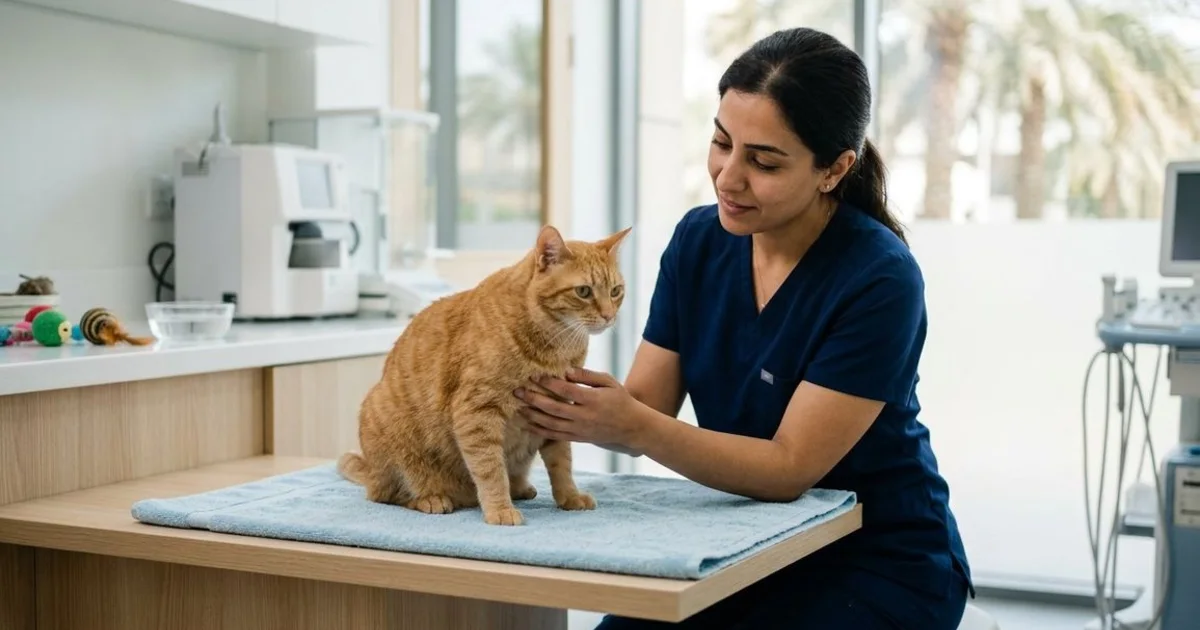
Learning how to take care of a cat means building predictable routines for nutrition, water, litter, play, rest, grooming and preventive health. Start with a cat veterinary checkup in Dubai to review age, weight, vaccination, parasite risk and any existing condition, then use the home framework below.
Key takeaways
- Feed a complete and balanced cat food suited to life stage and health, with measured portions and fresh water.
- Separate key resources such as food, water, litter trays, sleeping places and scratching areas.
- Provide daily play, safe vertical space, hiding options and predictable positive interaction.
- Check coat, claws, mouth and litter habits regularly, but avoid forced grooming or routine bathing without a reason.
- A cat that stops eating, strains to urinate, repeatedly vomits or suddenly hides needs prompt veterinary advice.
Cat care at a glance
Use this schedule as a practical starting point. Age, coat, mobility, medical needs and individual preference may change it.
| Rhythm | Care tasks |
|---|---|
| Daily | Measured meals, fresh water, litter waste removal, play, observation and calm interaction |
| Several times weekly | Brush if the coat or cat benefits, inspect visible claws and note appetite or stool trends |
| Regularly | Wash bowls, clean litter trays, rotate toys and check the home for hazards |
| At least annually | Veterinary examination for every cat, more often by age and health |
| At least every six months for seniors | Life-stage examination and veterinarian-selected monitoring |
| Any time a new symptom appears | Call earlier and use urgency guidance rather than waiting for the routine date |
The 2021 AAHA/AAFP Feline Life Stage Guidelines place behavior, environment, elimination, nutrition, weight, oral health, parasites, vaccination and diagnostics within lifelong feline care.
Feed for life stage, health and body condition
Choose a complete and balanced food formulated for cats and suited to kitten, adult or senior needs. The right diet is not simply "high protein and low fat." Health conditions, energy needs, body condition, muscle condition and feeding environment all matter.
The WSAVA Global Nutrition Guidelines recommend assessing the animal, diet, feeding management and environment together. Measure the total daily amount and include treats, table food and supplements in the history you give the veterinarian.
Practical habits:
- Follow the food label as a starting point, then adjust with veterinary guidance using weight and body-condition trends.
- Use several small meals or food puzzles if they suit the cat.
- Keep fresh water in clean bowls or fountains in more than one location.
- Place water away from litter and consider separating it from food if the cat prefers.
- Change diets gradually unless a veterinarian directs otherwise.
Do not add vitamins or supplements to a complete diet without veterinary review. Do not offer human food as a category because ingredients, fat, salt and toxic-food risks vary. Use the pet food selection guide when comparing labels and feeding options.
Build a litter setup the cat can use safely
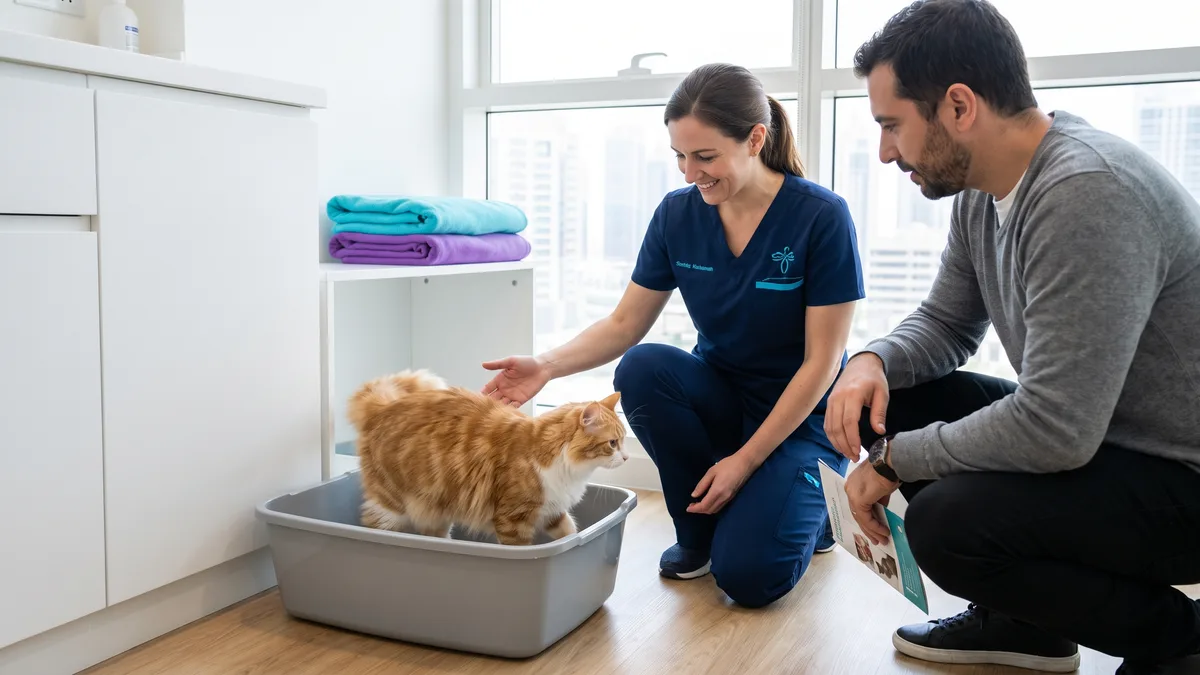
A common starting rule is one litter box per cat plus one extra, placed in separate accessible locations. One row of trays in the same room may function like a single resource if another cat can block access.
The Cat Friendly Homes litter-box guide recommends removing waste at least daily and adapting box size, location and litter to the cat's preferences and mobility.
| Litter-box factor | Practical starting point |
|---|---|
| Number | One per cat plus one extra |
| Location | Quiet, accessible and distributed across the home |
| Size | Large enough to turn and dig comfortably |
| Entry | Low enough for kittens, senior cats or cats with pain |
| Cleaning | Remove waste daily and clean the tray without strong lingering fragrance |
| Multi-cat access | Avoid locations where one cat can guard a doorway or narrow passage |
Never punish house-soiling. A sudden change can signal urinary pain, constipation, mobility difficulty, stress or conflict. Frequent trips, straining, crying or little to no urine needs prompt care. Inability to urinate is an emergency.
Provide safe space, height, scratching and play
Indoor care must give cats choice and control. The FelineVMA 2025 Indoor Cat Position Statement identifies safe places, separated resources, opportunities for play and predatory behavior, predictable positive interaction and respect for feline sensory needs as core environmental principles.
Provide:
- A quiet hiding place where the cat is not disturbed
- Stable elevated resting or observation areas
- Vertical and horizontal scratching surfaces
- Short daily play sessions that imitate stalk, chase and capture
- Puzzle feeding or food-search opportunities
- Positive interaction on the cat's terms
- Multiple resource locations in multi-cat homes
Rotate toys instead of leaving every toy out. Put string, ribbon and small swallowable objects away after supervised play. Window and balcony access must be securely screened for cats.
Grooming, claws, ears and teeth
Many healthy short-haired cats maintain their own coats. Long-haired, older, overweight, arthritic or unwell cats may need more assistance. The Cats Protection grooming guide recommends short, low-restraint sessions matched to coat and tolerance.
Check the coat for mats, parasites, wounds or sudden overgrooming. Do not cut a tight mat with scissors near the skin. A groomer or veterinary team can remove difficult mats safely.
Bathing is not a routine requirement for most healthy cats. It may be needed after contamination or for a medical reason, but ask before washing off a chemical or applying a product. Some substances should be handled as toxin exposures.
Check claws regularly and trim only the clear tip when needed and when the cat accepts handling. Provide scratching options to support normal claw maintenance. If a claw is torn, embedded or bleeding, seek veterinary help.
At home, use cat-safe toothpaste and gradual handling for dental care. Human toothpaste is not safe for swallowing. Bad breath, drooling, dropping food or red gums warrants an oral examination.
Vaccination, parasites and identification
Preventive plans should match age, health, lifestyle, environment and exposure. The 2020 AAHA/AAFP Feline Vaccination Guidelines support individualized vaccine decisions rather than one schedule for every cat.
Review:
- Core and lifestyle vaccination with the veterinarian
- Flea, tick and internal-parasite risk
- Microchip number and current owner details
- Travel, boarding, outdoor access and contact with other cats
- Sterilization timing and reproductive status
Indoor cats still need preventive care. Indoor living reduces some exposure but does not remove dental, urinary, nutritional or age-related medical risk. Keep the official vaccination record and microchip details current, especially before boarding or travel. Use the pet vaccination service for an individual record review.
How care changes by life stage
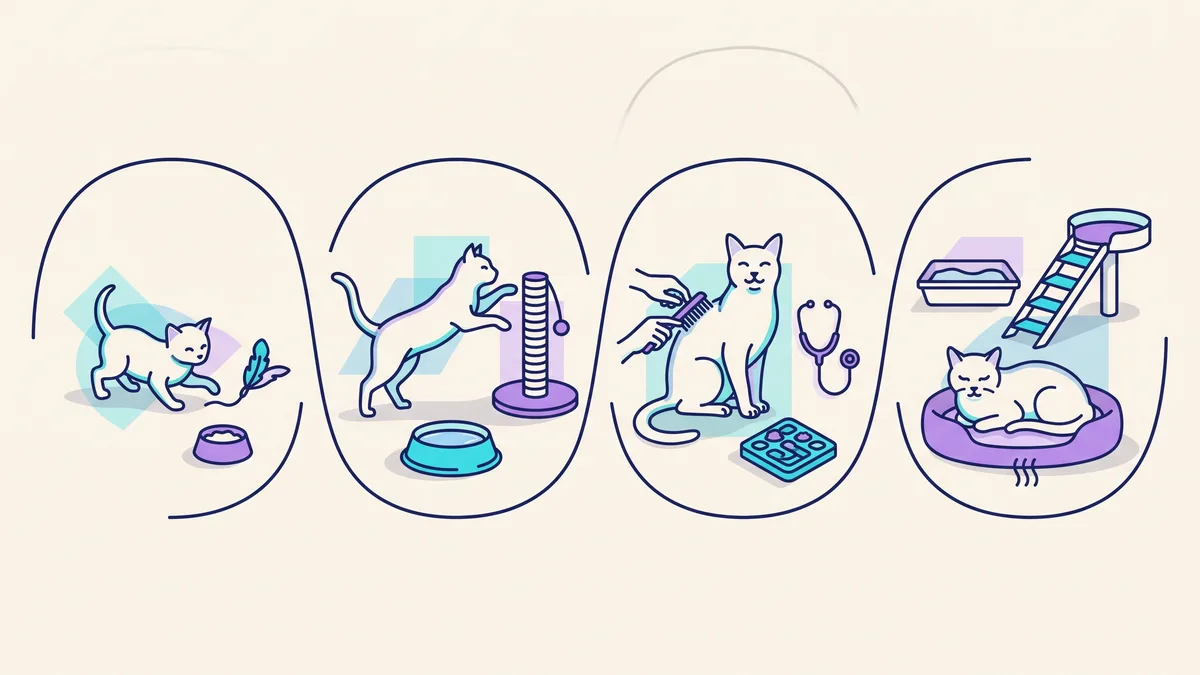
Kittens need repeated veterinary visits, growth monitoring, a vaccine series, parasite assessment, safe socialization and frequent age-appropriate meals. Do not treat an unwell kitten as if it can wait for the next scheduled vaccine appointment.
Young and mature adults benefit from at least annual examinations, body and muscle condition tracking, dental review and environmental assessment. Changes in weight, jumping, grooming or social behavior may be early clues.
Senior cats over ten should generally be examined at least every six months. The veterinarian may discuss blood pressure, blood or urine testing, pain, mobility, cognition and home adaptations based on history and findings. The full cat checkup schedule explains these intervals.
Early illness and emergency warning signs
Call promptly for a cat that stops eating, repeatedly vomits, has diarrhoea, suddenly hides, becomes weak, drinks or urinates much more, or appears painful.
| Sign | Action |
|---|---|
| Appetite loss, repeated vomiting or marked lethargy | Request prompt veterinary advice |
| Frequent painful litter-box trips or blood in urine | Same-day assessment |
| Inability to pass urine | Emergency care now |
| Open-mouth breathing or severe breathing effort | Emergency care now |
| Collapse, repeated seizure, major trauma or uncontrolled bleeding | Emergency care now |
| Suspected toxin exposure | Call an emergency clinic immediately and keep the packaging |
Do not give human medication, essential oils or a home remedy. For severe signs, use emergency veterinary services rather than waiting for a routine appointment.
Prepare the carrier before travel
Leave the carrier open in the home with familiar bedding so it becomes part of the environment. Reward voluntary exploration and avoid using it only for stressful trips.
The Cat Friendly Homes veterinary-visit guide recommends building carrier familiarity well before an appointment. Secure the carrier in the vehicle and cover part of it if doing so appears to reduce distress without restricting ventilation.
If the cat has severe travel anxiety, ask the veterinarian for a pre-visit plan. Do not use another pet's sedative or an unprescribed calming product. The cat anxiety guide has additional preparation ideas.
Frequently asked questions
What should I feed an indoor cat?
Choose a complete and balanced cat food suited to life stage, health, body condition and activity. Portion needs vary, so monitor weight and ask the veterinarian to adjust the plan.
How many litter boxes do two cats need?
Three is a common starting point, using one per cat plus one extra. Place them in separate accessible areas so one cat cannot block every route.
How often should I groom my cat?
It depends on coat length, matting, age, mobility and tolerance. Many short-haired cats need little help, while long-haired or less mobile cats may need frequent gentle brushing.
How often should a cat see a vet?
At least annually for every healthy cat and at least every six months for seniors, with more frequent visits for kittens, chronic conditions, medication monitoring or new symptoms.
Can I give my cat vitamins or human food?
Do not add vitamins to a complete diet unless a veterinarian identifies a need. Human food is not automatically safe and can disrupt nutrition or contain toxic ingredients.
About this guidance
This guide provides a safe care framework, not an individual diagnosis or feeding prescription. Seek prompt advice for appetite loss, repeated vomiting, urinary straining, weakness or sudden behavior change. For a personalized preventive plan, book with Paw Sisters.