Senior Dog Care: A Practical Guide for Dubai Homes
Sources and guidance checked
Medically reviewed by Dr. Hasan AlDahhak, DVM ·

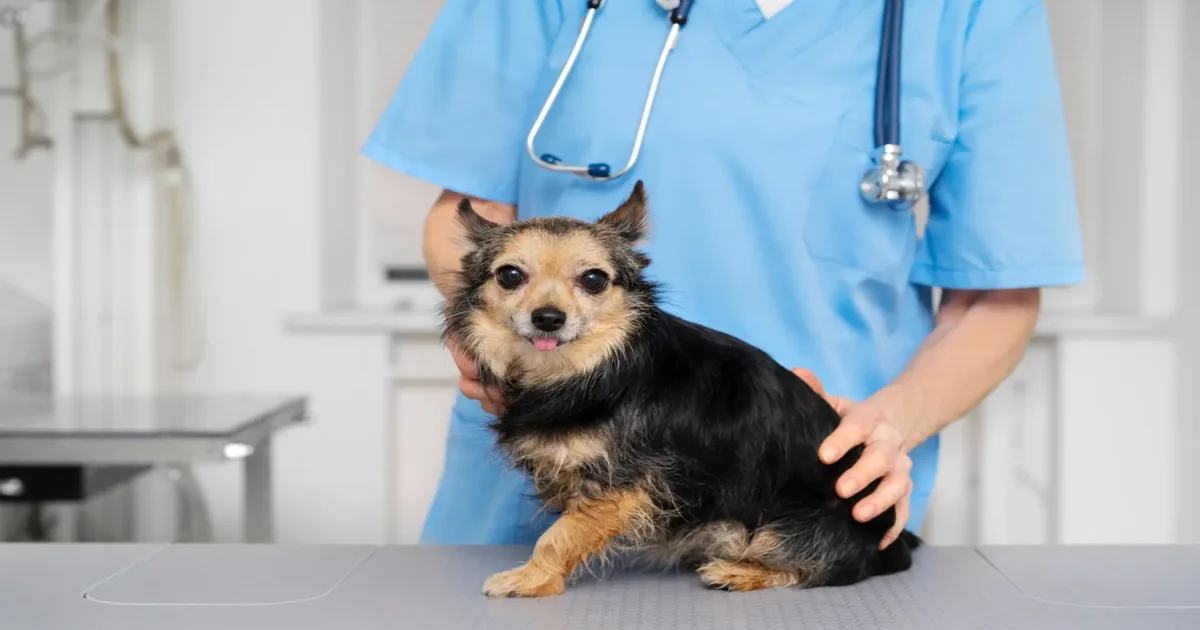
Good senior dog care adapts veterinary visits, movement, food, dental care, mental support, and the home environment to the individual dog. There is no single age when every dog becomes senior. Size, breed, expected lifespan, current health, and the pace of change all matter.
New pain, reduced appetite, house-soiling, confusion, withdrawal, or slower movement should not be dismissed as normal aging. A senior veterinary checkup can separate age-related change from disease and build a monitoring plan before a crisis develops.
Key takeaways
- The seven-human-years rule is not accurate, and larger dogs often enter the senior life stage earlier than smaller dogs.
- Senior visits review weight, muscle, mobility, teeth, nutrition, behavior, medicines, and disease risks.
- Screening tests are selected by age, health, examination, breed, and treatment. They are not one fixed package.
- Dubai heat can change safe exercise, but fixed walking hours are not reliable. Check current conditions and surfaces.
- Breathing difficulty, collapse, seizure, inability to rise, severe pain, a swollen abdomen, or inability to urinate needs urgent care.
When is a dog considered senior?
A dog's senior stage depends on expected lifespan rather than a universal birthday. The AAHA definition of the senior patient describes the senior life stage as approximately the final 25 percent of estimated lifespan. It also stresses variation by size, breed, species, and individual health.
The common seven-to-one conversion does not reflect how dogs age. The AVMA senior-pet guide explains that larger dogs may reach senior status earlier than smaller dogs.
Instead of converting age into a human number, ask three practical questions:
- Has your dog's movement, appetite, sleep, behavior, weight, or toileting changed?
- Does size, breed, or medical history increase a particular risk?
- Would more frequent assessment change comfort or treatment decisions?
A practical senior dog care checklist
Use this checklist to record patterns between visits. One unusual day may not be meaningful, but a persistent or sudden change deserves veterinary advice.
| Care area | What to watch at home | What to discuss at the visit |
|---|---|---|
| Weight and muscle | Ribs, spine, waist, thigh and shoulder muscle | Body and muscle condition trend, calorie needs |
| Mobility and pain | Rising, stairs, slipping, pace, posture, reluctance | Joint, spine, nail, paw, and neurological assessment |
| Food and water | Appetite, chewing, thirst, vomiting | Diet fit, dental pain, organ disease, medicine effects |
| Urine and stool | Frequency, accidents, straining, color, consistency | Urinalysis or other testing when indicated |
| Teeth and mouth | Breath, drooling, chewing side, dropped food | Oral examination and need for dental diagnostics |
| Behavior and sleep | Confusion, pacing, withdrawal, night waking | Pain, sensory loss, anxiety, cognitive or medical causes |
| Skin and coat | Lumps, wounds, hair loss, grooming change | Measurement, sampling, or monitoring plan |
| Breathing and stamina | Cough, effort, recovery after activity | Heart, lung, pain, anemia, and fitness assessment |
Take short videos of movement, coughing, nighttime behavior, or unusual episodes. Record when the change began and whether it is stable, improving, or worsening.
How often should a senior dog see the veterinarian?

Twice-yearly physical examinations are a useful guideline starting point for many senior dogs, but the right frequency is individual. The AAHA senior canine life-stage guidance recommends examinations at least twice yearly during the senior stage, with additional screening when clinically indicated.
A senior visit may review:
- body weight and muscle condition
- mouth and dental health
- heart and lung sounds
- abdomen, lymph nodes, skin, and new masses
- gait, joints, spine, nails, and pain
- vision, hearing, sleep, behavior, and cognition
- food, water, urine, stool, and medication changes
- vaccination and parasite prevention based on lifestyle and risk
Dogs with a new diagnosis, medicine change, unstable disease, or meaningful symptoms may need earlier follow-up. A stable senior dog may follow the clinician's routine schedule.
Which screening tests may be recommended?
Screening aims to identify changes that an examination alone cannot show. It does not guarantee early detection, and every senior dog does not need every test at every visit.
The AAHA senior diagnostic testing table lists blood count, chemistry, and urinalysis at intervals of 6 to 12 months for senior dogs, with annual blood pressure and other risk-based tests. Treat that table as a discussion framework, not a universal prescription.
| Possible assessment | What it can help evaluate | Why it may not be automatic |
|---|---|---|
| Complete blood count | Red cells, white cells, and platelets | Timing depends on health and prior findings |
| Chemistry profile | Kidney, liver, glucose, proteins, and electrolytes | Test selection and interpretation are patient specific |
| Urinalysis | Concentration, glucose, protein, blood, and sediment | Collection method and other results affect meaning |
| Blood pressure | Hypertension or low-pressure concerns | Technique and repeated readings matter |
| Imaging | Heart, lungs, abdomen, bones, or joints | Used when examination or symptoms justify it |
| Additional endocrine or disease tests | A specific suspected condition | Not a routine full panel for every dog |
The pet diagnostic services guide explains how examination findings guide further testing. Ask what each proposed test could change in the care plan.
Mobility, pain, weight, and muscle condition
Slowing down is not automatically normal. Arthritis, spinal pain, nail problems, paw injury, muscle loss, heart or lung disease, and neurological conditions can all reduce activity.
Useful home changes include:
- secure non-slip runners on smooth floors
- a supportive bed that is easy to enter and leave
- ramps or assistance where stairs are difficult
- food, water, and toileting areas on an accessible level
- shorter, lower-intensity activity matched to the dog's current ability
- regular nail and paw checks
Do not give human pain medicine unless a veterinarian specifically directs it. Do not start a supplement or change an existing medicine without checking interactions, calories, kidney or liver health, and evidence for the individual problem.
Weight alone can hide muscle loss. The WSAVA Global Nutrition Guidelines support assessing both body condition and muscle condition. A senior dog can be overweight and losing muscle at the same time.
If weight reduction is appropriate, use a veterinarian-guided dog weight plan rather than cutting food abruptly.
Nutrition and hydration need an individual plan
There is no single senior diet for every older dog. Energy needs, protein needs, appetite, muscle, dental health, kidney or liver disease, diabetes, gastrointestinal disease, and medicine all affect food choice.
Ask the veterinarian:
- Is the current food complete and balanced for this dog?
- Is weight stable, and is muscle being preserved?
- Does dental pain change texture or feeding ability?
- Does a diagnosed disease require a therapeutic diet?
- Are treats, chews, and supplements adding significant calories?
- Has thirst or urination changed from the dog's usual pattern?
Do not switch every older dog to fewer calories or lower protein. A dog that is thin, losing muscle, or living with a specific disease may need a different priority. Sudden appetite loss, repeated vomiting, or marked thirst requires assessment, not a generic food change.
Dental, sensory, and cognitive changes
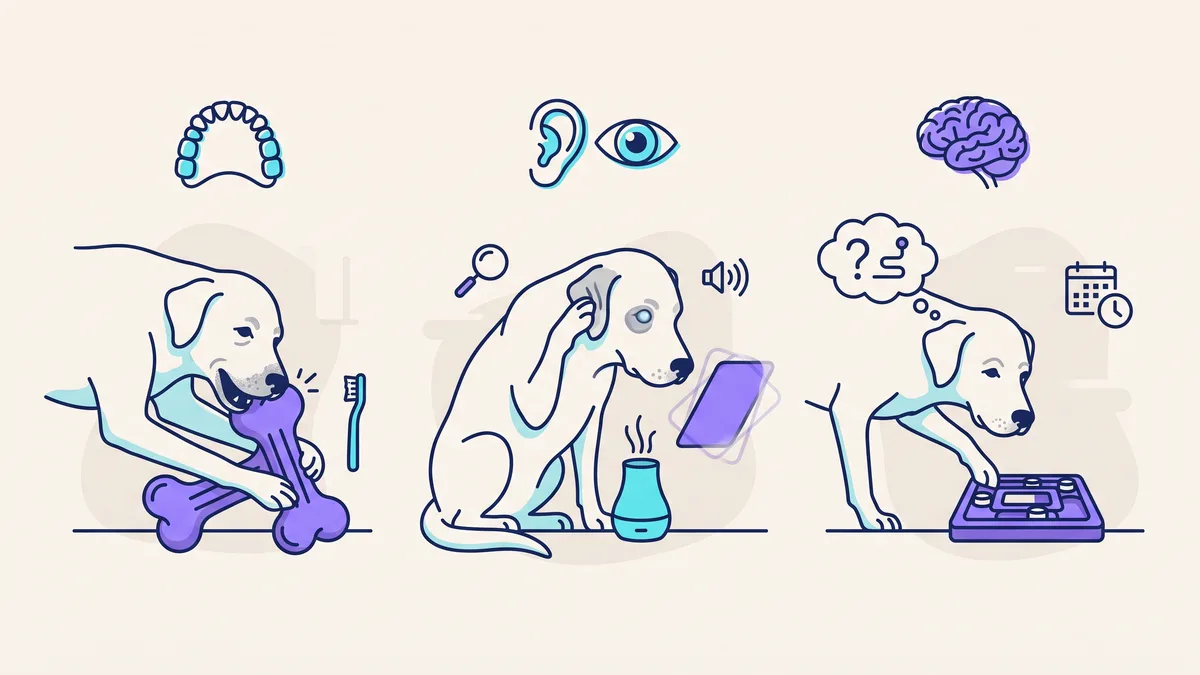
Dental pain can look like fussiness, slower eating, dropping food, chewing on one side, reduced interest in hard food, or withdrawal. Many dogs still eat despite oral pain. Arrange professional pet dental assessment for persistent bad breath, red or bleeding gums, loose or broken teeth, drooling, or facial swelling.
Vision and hearing changes can make a dog startle or hesitate. Approach predictably, keep furniture stable, improve lighting, use non-slip paths, and add scent or touch cues when appropriate.
Cognitive dysfunction can cause disorientation, changed social interaction, sleep-wake disruption, house-soiling, activity changes, or anxiety. The Cornell senior dog dementia guide uses the DISHAA pattern to organize these signs, but it also stresses that medical conditions can look similar. Cognitive dysfunction is a diagnosis of exclusion.
Senior dog care in Dubai heat
Dubai heat changes exercise decisions for older dogs. Reduced mobility, excess weight, flat-faced anatomy, heart or lung disease, and some medicines can add risk, but any dog can develop heat illness.
Use this routine:
- Check current weather and humidity before activity.
- Test the actual walking surface in shade and sun.
- Shorten or replace outdoor activity when conditions are harsh.
- Carry water and take breaks in a cool place.
- Use indoor scent games, food puzzles, and gentle movement on unsafe days.
- Stop for abnormal panting, weakness, confusion, vomiting, poor coordination, or collapse.
There is no fixed safe walking hour. Review the Dubai summer dog-walking guide for surface checks and lower-risk alternatives.
Urgent signs that should not wait
Seek urgent or emergency veterinary care for:
- breathing difficulty or blue, grey, or very pale gums
- collapse, seizure, or inability to rise
- uncontrolled pain or severe distress
- repeated vomiting with weakness or dehydration
- a suddenly swollen or painful abdomen
- repeated straining with little or no urine
- major bleeding, trauma, or suspected poisoning
- heatstroke signs such as confusion, vomiting, weakness, or collapse
Use the emergency veterinary service guide for current routing information. Online booking is for stable concerns and follow-up, not a pet in immediate distress.
Less dramatic but persistent changes also deserve assessment. Do not wait for the next routine visit when appetite, thirst, weight, mobility, sleep, behavior, or toileting has clearly changed.
When chronic disease is changing comfort but the dog is stable, the pet end-of-life decision guide can help a family prepare questions for the veterinarian before a crisis develops.
Frequently asked questions
Is a seven-year-old dog always a senior?
No. Senior status varies by size, breed, expected lifespan, and individual health. Use life stage and changing needs rather than a fixed human-age conversion.
How often should a senior dog have a checkup?
AAHA recommends at least twice-yearly examinations as a senior-stage starting point. A dog with symptoms, medicine changes, or unstable disease may need more frequent care.
Should every older dog eat senior food?
No. Food should match calorie needs, muscle condition, dental ability, appetite, and diagnosed disease. Ask for an individual nutrition assessment before changing diets.
Is sleeping more just part of aging?
Some routine change can occur, but a sudden increase, night waking, pacing, pain, withdrawal, or difficulty rising warrants assessment. Medical and cognitive causes can overlap.
Can senior dogs still exercise in Dubai?
Yes, when activity is adapted to health, mobility, heat, humidity, and surface conditions. Shorter indoor or cooler-condition sessions may be safer than a fixed outdoor schedule.
About this guidance
This article is general education, not a diagnosis or a universal screening, diet, supplement, or exercise prescription. It was materially updated on 23 August 2026 using AAHA, WSAVA, Cornell University, and AVMA senior-care guidance.
To build an individual plan, book a senior dog assessment with Paw Sisters Veterinary Clinic. For breathing difficulty, collapse, seizure, inability to rise, severe pain, or inability to urinate, seek emergency veterinary care now.