Cat Vet in Dubai | Paw Sisters Visits & Care Guide
Medically reviewed by Dr. Hasan AlDahhak, DVM ·

For a cat vet in Dubai, Paw Sisters in Al Garhoud offers feline checkups, vaccinations, in-house diagnostics and dental care at 31 61B Street. Book a cat vet appointment and share your cat's records, symptoms and handling preferences when arranging the visit.
The guide below explains how to choose a clinic, prepare for the appointment and recognise signs that need urgent care.
A preventive cat veterinary checkup in Dubai lets you establish care before your cat is sick and test whether the clinic is a good fit.
Key takeaways
- Verify the facility and veterinarian are licensed to practise in Dubai.
- Ask how the team reduces fear and records your cat's handling preferences.
- Expect care to change with age, lifestyle, medical history and temperament.
- Know which urinary, breathing and collapse signs need urgent help.
What makes a cat vet in Dubai suitable?
A suitable clinic understands that feline care is both medical and behavioural. Cats can hide illness, become distressed during travel and react differently to restraint, noise and unfamiliar animals.
The 2021 AAHA/AAFP Feline Life Stage Guidelines recommend an individual strategy covering behaviour, environment, elimination, nutrition, oral health, parasite control, vaccination and diagnostics. The guidelines also emphasise feline-friendly handling and overcoming barriers to examination visits.
| Clinic feature | What to ask | What a useful answer sounds like |
|---|---|---|
| Calm arrival | Where should I wait with my cat? | A quiet option or direct move to the exam room when possible |
| Individual handling | How do you approach a fearful cat? | The team observes body language and uses the least restraint needed |
| Life-stage care | Does the plan change with age? | Exams and screening are tailored to age, risks and history |
| Diagnostics | Which tests are available? | Clear explanation of on-site tests and referral limits |
| Continuity | How are preferences recorded? | Successful handling methods and reactions are saved in the record |
| Urgent care | What if my cat cannot urinate or breathe? | A clear call-ahead and emergency pathway |
How do you verify a cat vet clinic in Dubai?
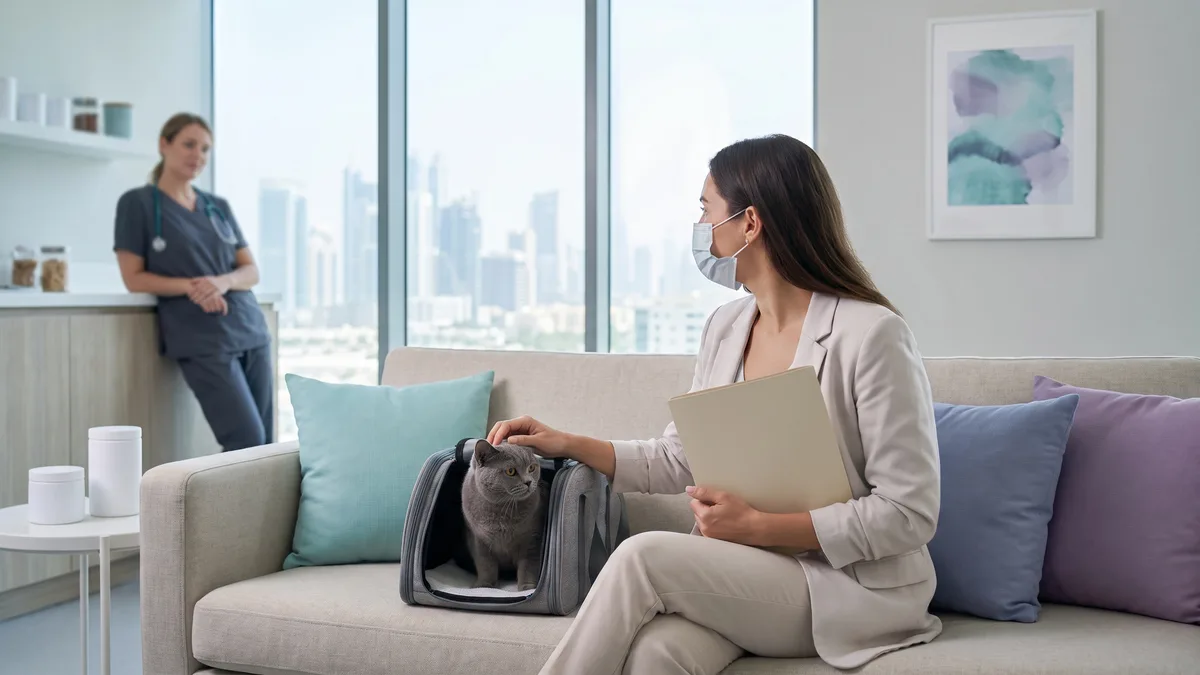
Start with licensing, not advertising. Dubai Municipality's Veterinary Services Section states that it monitors and certifies veterinary establishments, clinics and pharmacies for compliance with applied health conditions.
Federal Ministerial Resolution No. 27 of 2026 requires facilities to obtain federal and relevant local licences and sets technical requirements by facility type. Ask the clinic for its legal name and licensing details, then review the credentials of the practitioner who will see your cat.
Avoid assuming that "cat specialist" is a credential. Ask what feline training, protocols or professional qualifications support the claim.
What should happen at a routine feline appointment?
A routine visit should combine a full history with an examination that reflects your cat's life stage. Tell the vet about appetite, water intake, litter-tray habits, weight changes, activity, grooming, vomiting, medication and indoor or outdoor access. Between visits, use the daily and lifelong cat-care guide to track the home routines that help reveal gradual changes.
The AAHA/AAFP guidelines define kitten, young adult, mature adult and senior life stages and recommend different areas of focus as cats age. Their feline life-stage checklist includes weight and body-condition recording at all ages, oral examination, behaviour and environmental questions, parasite risk and vaccination planning.
| Life stage | Useful visit focus |
|---|---|
| Kitten | Growth, congenital findings, infectious-disease risk, nutrition, socialisation and vaccination |
| Young adult | Weight gain, dental and skin findings, urinary habits, activity and lifestyle risk |
| Mature adult | Weight change, oral health, pain, abdominal and cardiorespiratory examination |
| Senior | Mobility, pain, appetite, thyroid and kidney assessment, and individual screening needs |
Vaccination should be based on history, exposure and applicable local requirements. Bring every certificate you have and review the clinic's cat vaccination service rather than requesting an injection without an examination. If exposure or symptoms are a concern, the feline panleukopenia guide explains why prompt isolation and veterinary assessment matter.
How can you make a cat vet visit less stressful?
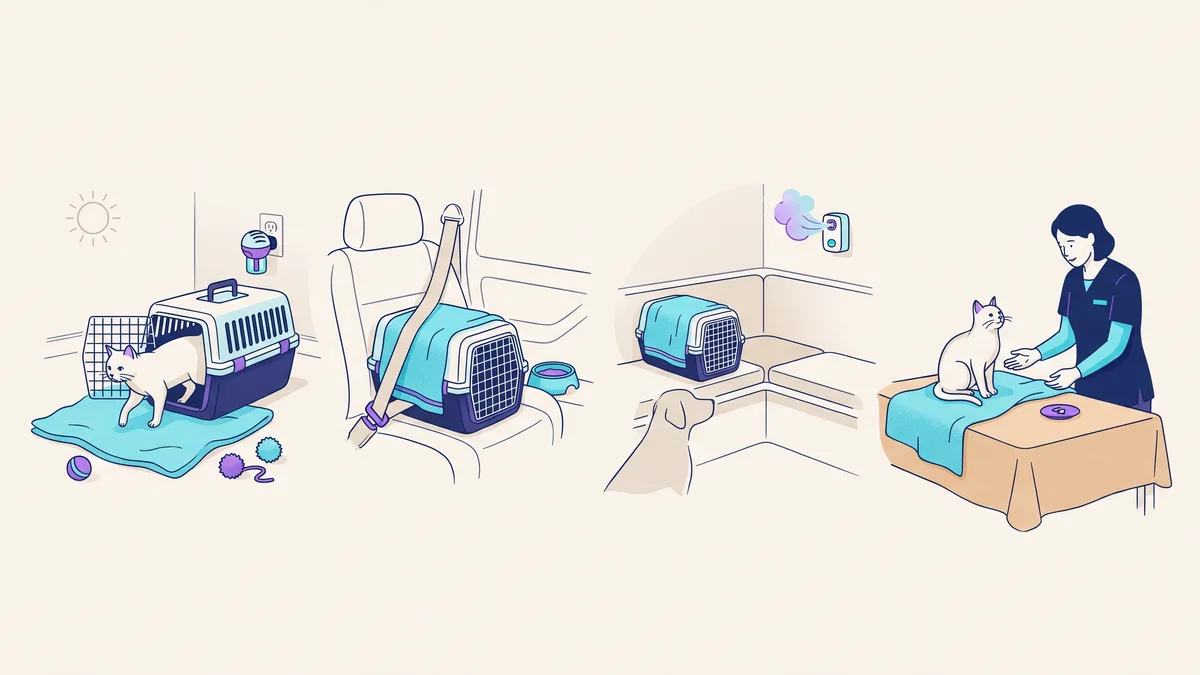
Preparation starts before appointment day. Leave the carrier out as familiar furniture, place a washable blanket inside and reward calm exploration. Do not wait until the visit to bring the carrier out.
The AAHA guide to successful veterinary visits recommends gradual carrier practice and short car trips. The Feline Veterinary Medical Association caregiver resources also explain how cat-friendly practices and preparation can reduce visit stress.
Before leaving home:
- Confirm whether the clinic wants your cat to eat normally or fast for a planned test.
- Secure the carrier in the car so it cannot slide.
- Bring medical records, medicine names and a fresh symptom timeline.
- Cover part of the carrier if visual stimulation increases fear, while keeping airflow clear.
- Tell the clinic in advance about biting, scratching, panic or previous sedation.
Do not give human sedatives, leftover medicines or another pet's prescription. If travel fear is severe, ask the veterinarian before the visit whether a prescribed pre-visit plan is suitable.
Which feline symptoms need urgent veterinary care?
Breathing difficulty, collapse, severe trauma, ongoing seizures and suspected poisoning require urgent contact. Repeated straining with little or no urine is also an emergency, especially in a male cat. Cornell's feline lower urinary tract disease guide explains that a urethral obstruction is a true medical emergency and is more common in male and neutered male cats.
The Merck Veterinary Manual emergency guide recommends contacting the clinic, following transport instructions and avoiding unapproved treatment. If your cat is making repeated unproductive litter-tray visits, use the cat urinary-symptoms guide and seek emergency veterinary care now.
Arrange prompt assessment for:
- A clear drop in appetite or energy
- Repeated vomiting or diarrhoea
- Blood in urine or painful urination
- Sudden weight loss or increased thirst
- Eye pain, injury or persistent discharge
- New hiding, aggression or reluctance to jump
These signs have many possible causes. A list cannot diagnose them.
What questions should you ask a cat vet in Dubai?
Ask questions that reveal how the clinic works:
- How do you adapt handling for fearful or painful cats?
- Will my cat's successful handling preferences be recorded?
- Which tests are available on site?
- When do you refer to another clinic or specialist?
- How will I receive results and written instructions?
- What is your after-hours emergency process?
- Can I receive an estimate before non-urgent tests or treatment?
For oral pain, tartar or eating difficulty, ask what a complete cat dental assessment involves. For unexplained weight or appetite changes, the vet may recommend an individual diagnostic plan rather than a standard package.
Frequently asked questions
How often should my cat see a vet?
The AAHA/AAFP guidelines recommend at least annual exams for kittens, young adults and mature adults, increasing to every six months for senior cats. Health conditions and treatment monitoring can require a different schedule.
Does an indoor cat still need veterinary visits?
Yes. Indoor living changes some exposure risks but does not remove dental disease, weight problems, urinary disease, pain or age-related illness. The plan should reflect the cat's actual lifestyle.
What should I bring to my cat's first appointment?
Bring vaccination and medical records, medicine and supplement names, diet details, litter-tray observations, and photos or videos of intermittent signs. Transport the cat in a secure carrier.
Can a vet prescribe something for travel anxiety?
A veterinarian can assess whether a pre-visit medicine is appropriate for that individual cat. Never use an unprescribed sedative or a medicine supplied for another animal.
Is a cat-only clinic always better than a mixed practice?
Not automatically. Feline handling, practitioner experience, equipment, licensing, emergency planning and communication matter more than the label alone.
About this guidance
This article supports clinic selection and visit preparation. It does not replace an examination. Share your cat's records and handling history with the veterinary team to establish an individual care plan.